Cheers Casey.

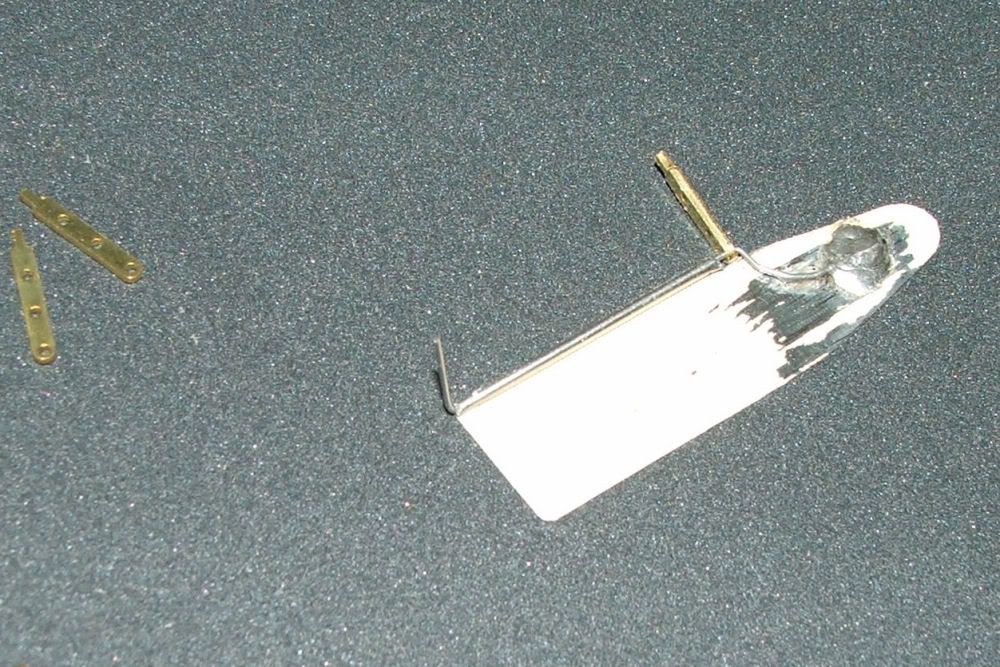
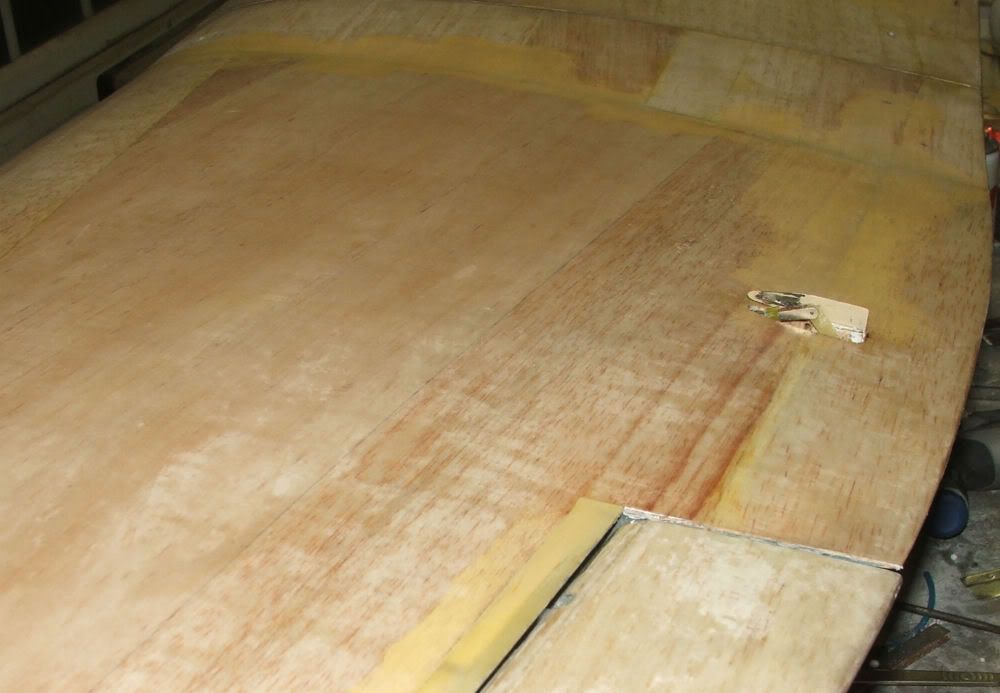
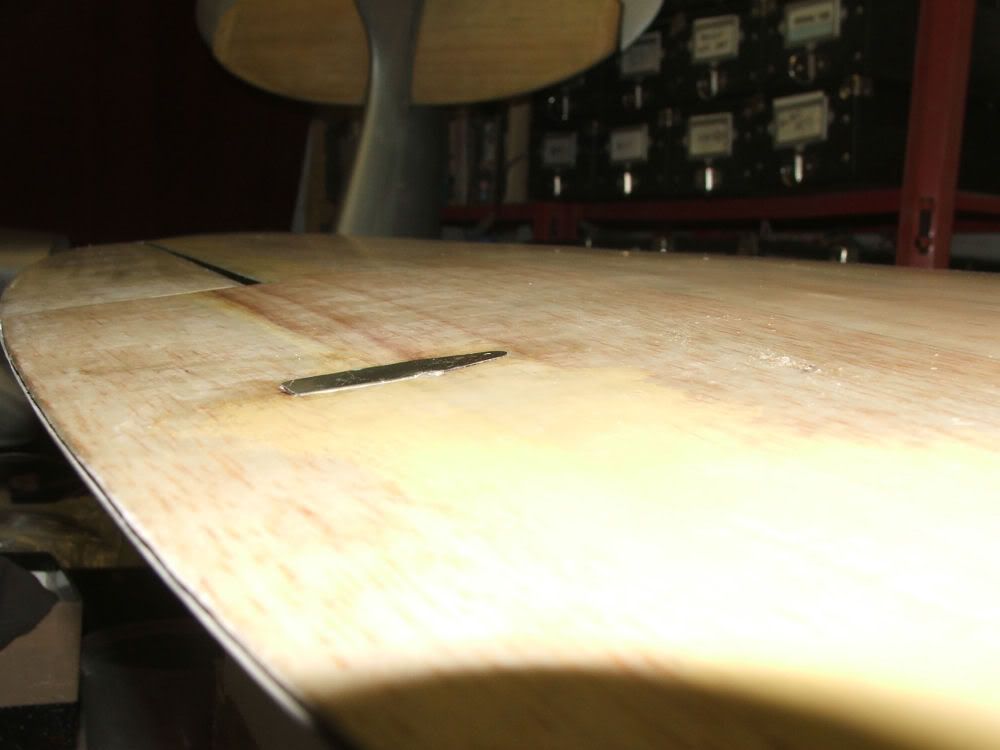
While I had the tinplate out, I made up one of the flap linkage doors, to make sure my ideas work. Tinplate boxes (old Strepsil type tins etc) have a rolled edge round the rim. This rim is ace for making little hinged doors etc. Simply use the rolled edge as the hinge line, the hinge formed by a piano wire pin down the middle. The doors on the Spitfire are spring loaded shut, and simply pushed open by the linkage. On this model the trailing edge is thick sheet and I didn't want to chop any more out to get a smooth reliable return spring installed. So I used the hinge pin as the spring too. The pic hopefully explains it well enough.
The hinge wire is one piece with two bends. Just using it as a hinge the two bends would be in the same line, simply glue the ends into the model. On these doors though, one bend goes into the airframe, the other bends in a different direction and lies, soldered to in fact, the underside of the door. The angle between the two bends depends on how much spring action you want. These are set up to pull the door shut, but not very tightly. Because I've used one end of the wire for closure, I need to introduce another mounting at that end, simply threading on a brass fitting (from model ship people) works great. The springing is from the length of the hinge and wire, if too short it'll simply not work. The longer the hinge the smoother the spring. When assembling, I rubber grease the hingeline and the hinge pin, just to ensure no glue gets into the hinge itself. Where the wire is soldered onto the door, I bent the wire forwards so it supported the what would be unsupported front end of the door. This also keeps the rest of the door smooth so the linkage rubs against a smooth surface.
Ian.