











ORIGINAL: rcairboater
ORIGINAL: av8tor1977
Numerous times the experts have weighed in saying that there are no issues with todays fuel with regards to fuel lines and carb diagrams. I have mentioned myself though, that I certainly have had problems, and I often repair yard equipment and fully 90% of the problems with them that I find are rotten fuel lines and/or carb diaphragms gone stiff.
I recently needed to get my 25 year old chainsaw going quickly to help a friend that needed it. It had not been run in 5 years and in the 25 years I have owned it I have never once changed the fuel lines nor rebuilt the carb. (I swear that is true, and it has cut literally tons of wood.) I thought ''there is virtually no way the fuel lines and carb are going to be ok, but I don't have time to service them so I'll just try to start it.'' There was some congealed oil/gas in the tank, so I poured some acetone in the tank, and let it soak while I checked/cleaned the spark plug. I then sloshed the acetone around, poured it out, and fueled the saw up. To my utter and complete amazement, it started on the second pull and ran perfectly!
I had the same thing happen with another chainsaw just the other day. A different saw I have hadn't been run in several years. On this one I needed to prime it with a squirt of fuel into the cylinder, but then it started up and ran on the first pull, and ran perfectly. I cut a bunch of wood with it with no problems.
Now on the other hand, I have had airplanes give me fuel system problems, sometimes in as little as 6 weeks of non-use. My brother had a plane with a Ryobi 31cc engine on it. He came to visit and we tuned and flew the plane. 6 weeks later he came back and it wouldn't run right. I fought with it for a bit, because I couldn't believe it could have carb problems after only 6 weeks of sitting. But finally I gave in and pulled the engine and carb, and sure enough, the diaphragm was ''stiff as a board.'' I had a similar incident with my own Giles 30cc and other planes. It is really embarrassing for the local engine ''guru'' (ME), to show up at the field and have engine problems!! It was so bad that I finally started de-fueling all my planes after flying, and running them briefly on Coleman fuel with Sta-Bil and 20:1 Pennzoil before storing them. That solved all fuel system problems with all my planes. The neoprene fuel line in my fueling jug gets completely stiff on the part that is not submerged in gas. I have tried Tygothane, Neoprene, etc., but they all seem to be affected by the fuel to varying degrees.
So, either the materials in the fuel systems in those old saws was much better, or the fuel has changed and DOES affect carbs and fuel lines.
NOTE: I personally do not use, nor endorse, flying with Coleman fuel in any engine. (Yes, I know, some claim to use it with no problems. Not me.)
AV8TOR
Hi Robert! Have a question for you. Being in Ohio, after the season is over which is around November, and doesn't pick up again until April how do you recommend I store the engine for the winter months? What do I need to do with the engine?
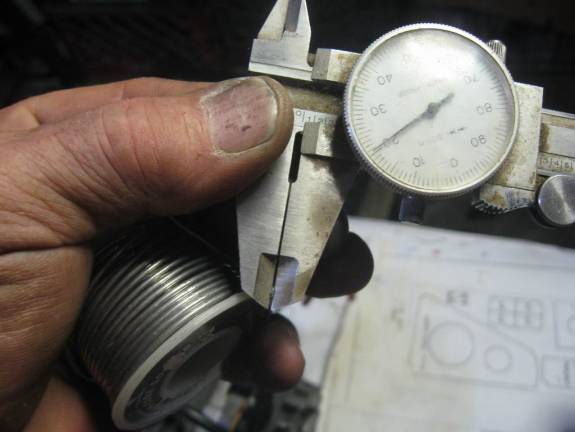
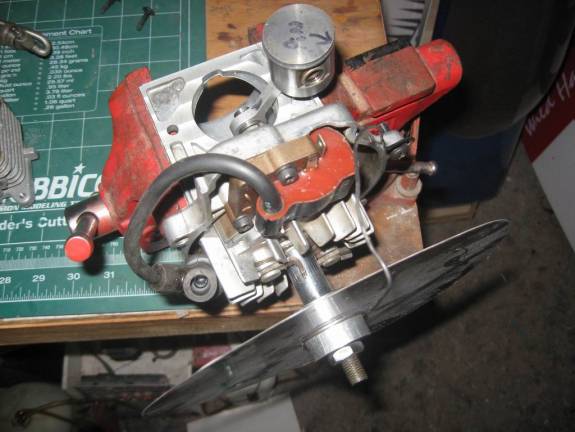
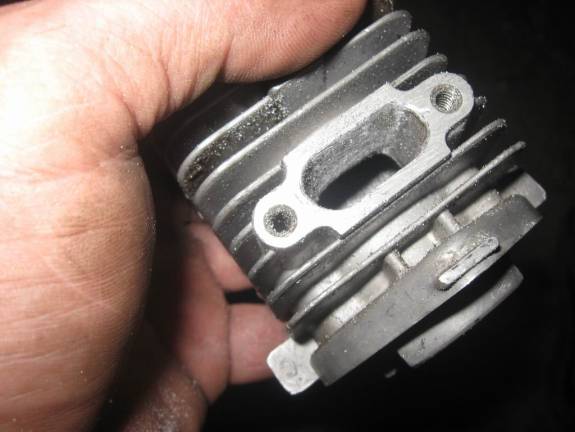
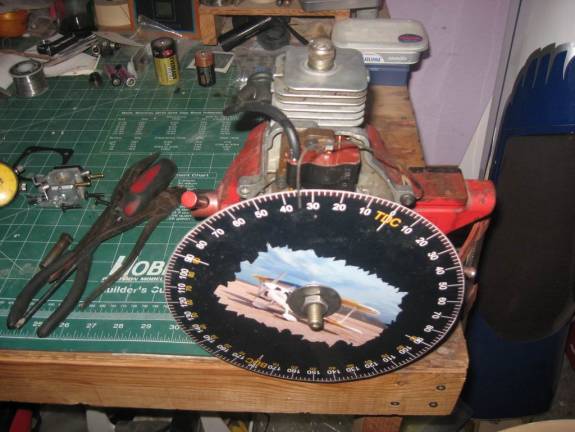
Also, I want to thank you for a amazing engine you did for me. If anyone is looking for a conversion engine Robert is your man. I received my Stihl conversion about a week ago. Robert dismantled the engine to check the bearings, cylinder, seals etc. The engine was completely cleaned and new seals were added. Additionally Robert made some carb mods and machined me a polished hub and turned down the flywheel and added paint as well.
My muffler was painted and a exhaust pipe outlet was added as well. I highly recommend Robert for any of your engine needs. Robert has excellent communications and does the job correctly. This is my third engine from Robert and this is where I will continue to do business with in the future.
Thanks again Robert for another awesome engine.
-Gary
Hi Gary and thanks,
If you haven't run the engine since I sent it to you, then you are ok until you want to run it in April because I already ran it with my "storage fuel", which is Coleman fuel with Sta-Bil and 20:1 Pennzoil, on the last run before I sent it to you, and then I capped the fuel tubes. If you
have run it since you received it, then I would just leave the fuel in the carb, cap the inlet and primer tubes, and go ahead and store it. The fuel that is in it should keep the diaphragms wet and pliable, (hopefully), especially if it is with my special "storage fuel."
Thanks again,
AV8TOR