Yo Ho this is a great experiment, thank you! PLEASE post links to clips of the raw video somewhere, too, as would love to see it in live action.
For all you SSS doubters, I am a spiral slipstream faithful - I admit. But mainly from the photographic evidence I've seen, some of which I share here. I always loved this picture (giant scale Cap 232):
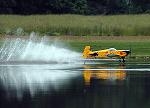
I am quite confident the prop itself never touched the water as if it had the wheels would have been so deep as not to bounce off the water. Therefore, the spiral is due to the spiraling of the airflow.
Another point: if you're looking at tufts such as these pictured to determine whether spiral slipstream affects the airframe, I don't believe you're looking at the right thing. The thrust vector that spiral slipstream creates which makes an aircraft change its path is not one that tufts would show since such a vector is perpendicular to the flight path on the horizontal plane (level flight); it pushes sideways against the rudder and fuselage, not so much up and down. The tufts only show airflow being deflected up and down. Last point - near the fuselage, spiral slipstream is the weakest. It's much more powerful at prop-tip distance from the centerline.
If you would like to use tufts to check for spiral slipstream, put a small wire mast on the turtledeck between the rudder and the canopy - the tip of which is about as high as the rudder - and attach a tuft to the tip. Attach your keychain camera to the top of the rudder. Check for lateral displacement of the tuft in powered uplines vs. neutral power downlines.
Roasting popcorn waiting for the videos!
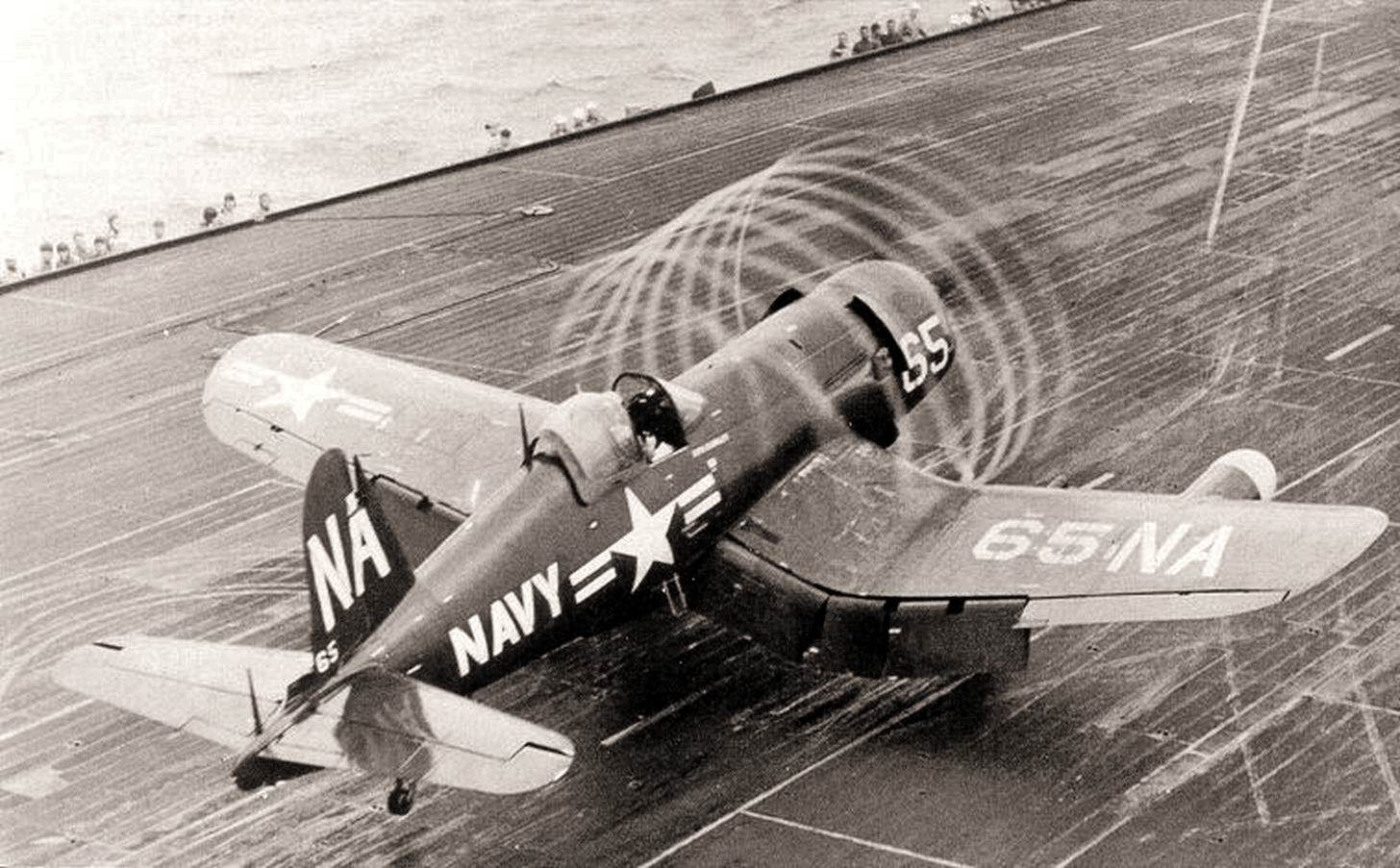
Just for fun, a couple other pictures of spiral slipstream from the full-size world. If you drill into the photo of the Corsair, you can see the prodigious amount of right rudder the pilot is applying (yes I know there is p-factor and gyroscopic precession in play as well).

Bill