Thanks Bob, I really hope this will be useful to others as well.
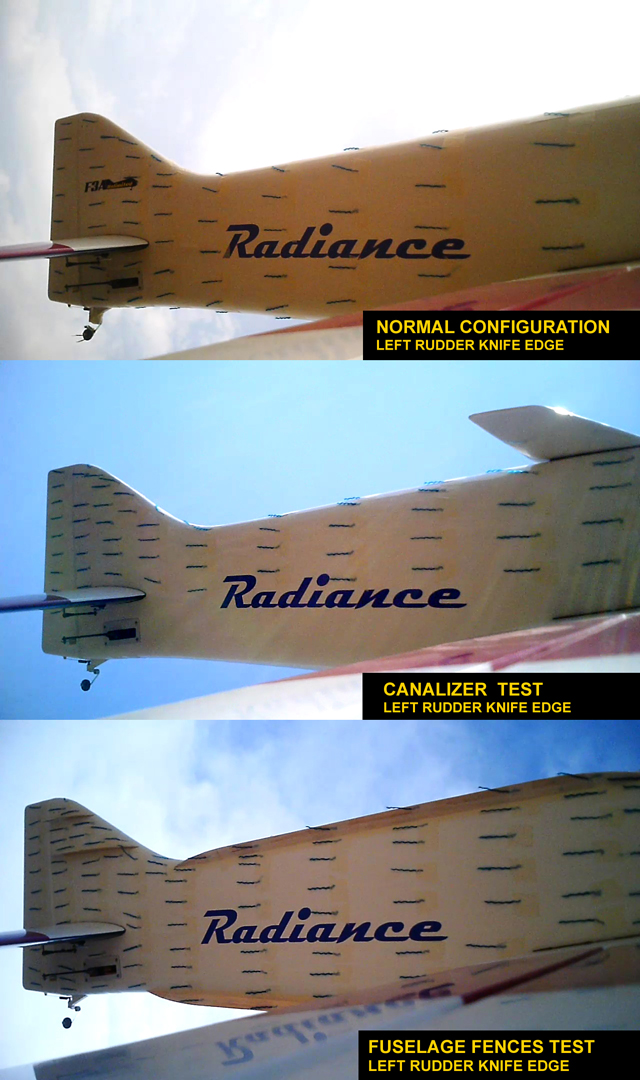
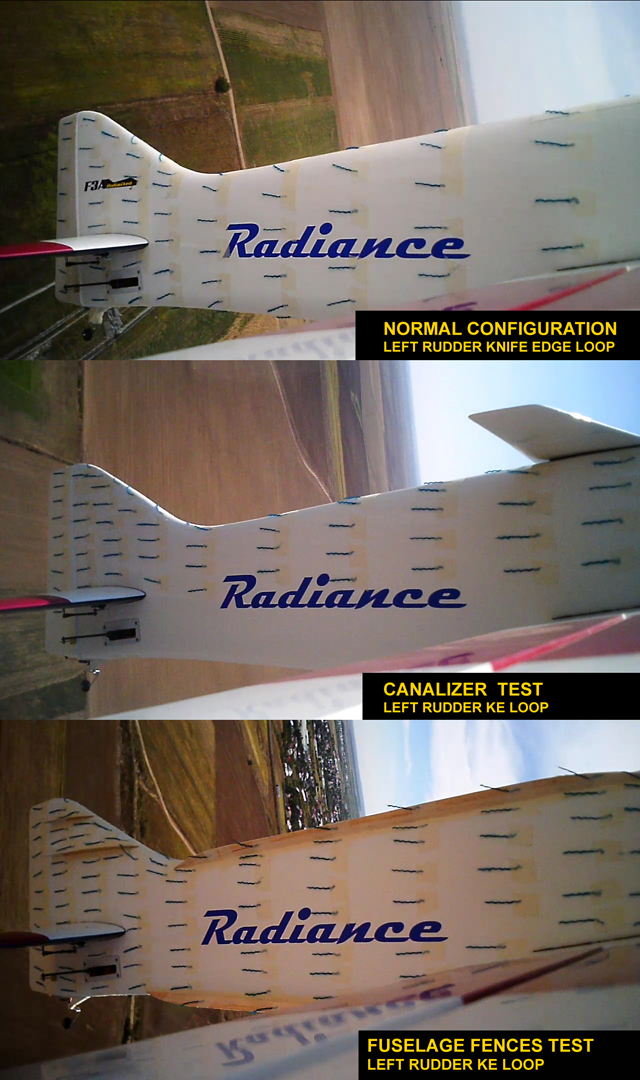
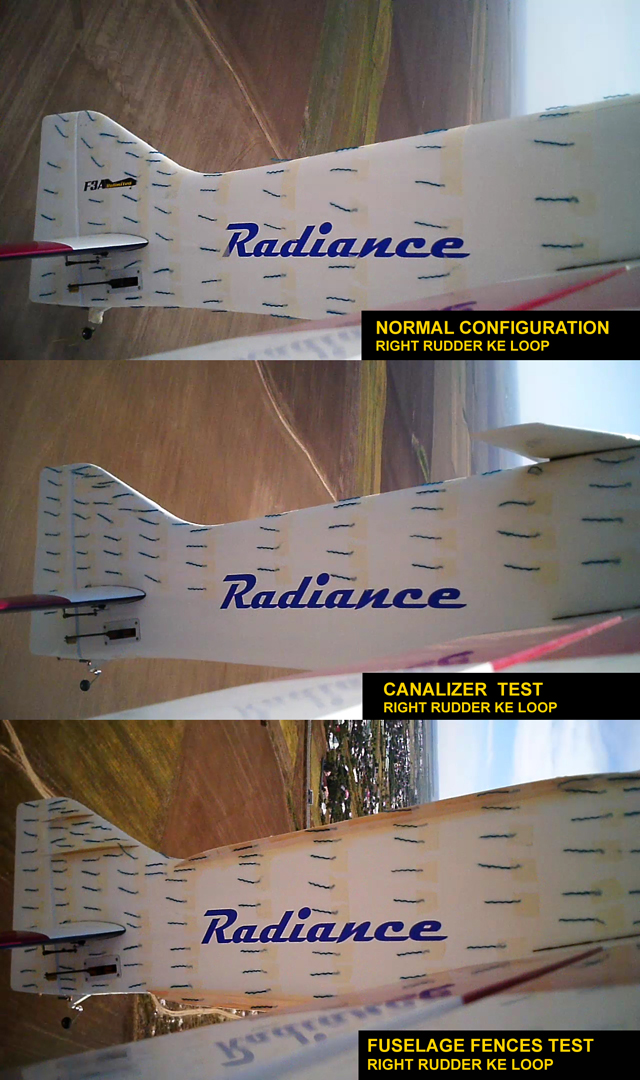
To sum up all the material presented before, I put together a few images to show the improvements in airflow for the canalizer and fuselage/fin fences.
In
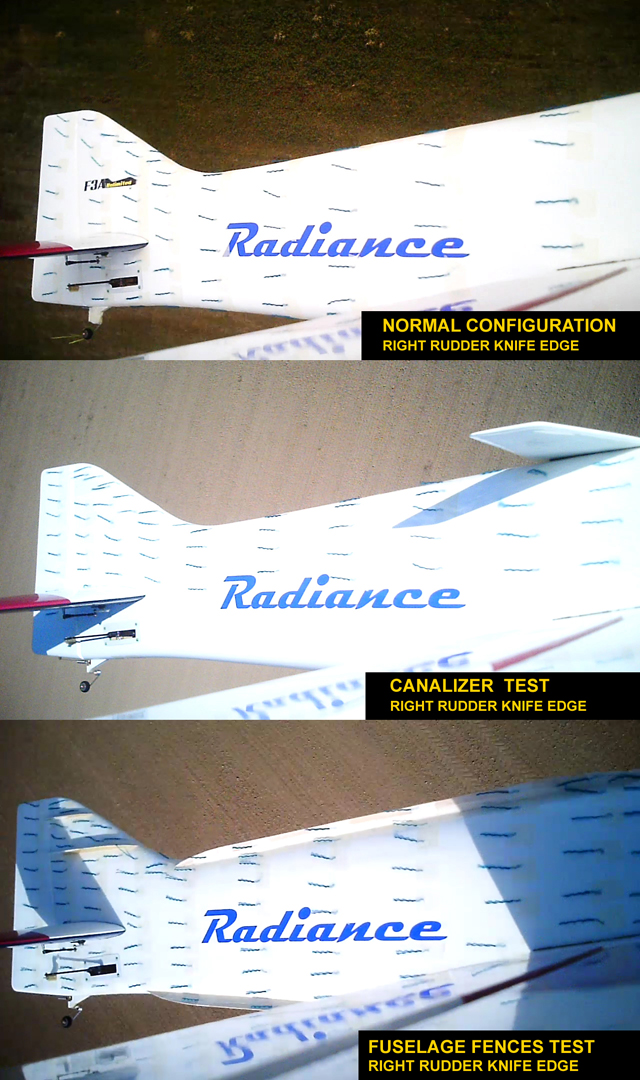
Right Rudder KE maneuvers, the fuselage side facing the camera is the
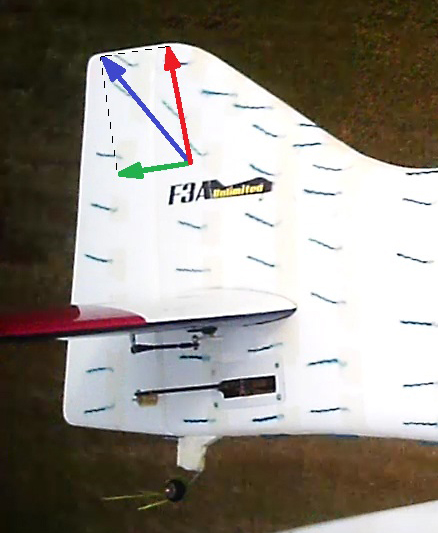
low pressure side. You can see in normal configuration there’s a strong spanwise flow on the vertical tail. This is not desirable because only the component of the velocity vector that is parallel to the flight path (green vector in the image below) is actually contributing to creating lift, meaning a less effective rudder.
You can see in the comparison images below that the fin fences and canalizer are limiting the spanwise flow on the vertical tail, thus improving the rudder authority. In KE loops the canalizer seems slightly less efficient though, probably because it’s too far away from the fin to help in all situations.
In
Left Rudder KE maneuvers, the fuselage side facing the camera is the
high pressure side. In normal configuration you can see from the direction of the tufts that the airflow is moving from the high pressure side to the low pressure side of the fuselage, going around the turtle deck and belly pan. This tendency of equalizing the pressures on both sides of the fuselage means a lower lift force provided by the fuselage in KE.
The canalizer does a pretty good job at limiting this effect, although you can see it doesn’t stop it completely. It only does half the job though, as there’s nothing to stop the air going around the belly pan to the low pressure side. Probably a canalizer at the bottom of the fuselage would help a lot, which seems to be confirmed by Isaac Najary’s tests with his canalizer/airbrake:
http://www.rcuniverse.com/forum/rc-p...jarylyzer.html
By looking at the tufts direction, I would say the fuselage fences are effectively stopping the air migrating from one side of the fuselage to the other, thus improving the fuselage lift and efficiency. It really felt like a major improvement in flight, reducing the fuselage incidence in horizontal KE by a large margin.