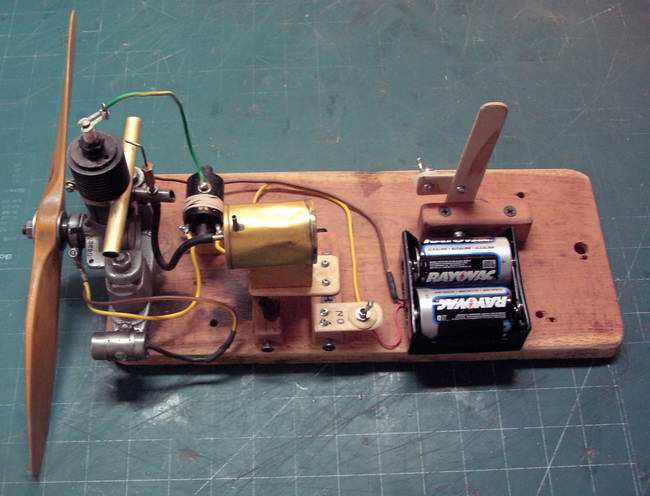
Hi, The timer that Gray Beard is talking about were called Flight timers and that spring loaded plunger worked by opening the primary circuit of the battery powered spark ignition system for the old spark ignition engines. I will add another photo of that basic ignition system on my Brown Junior in a few more minutes.
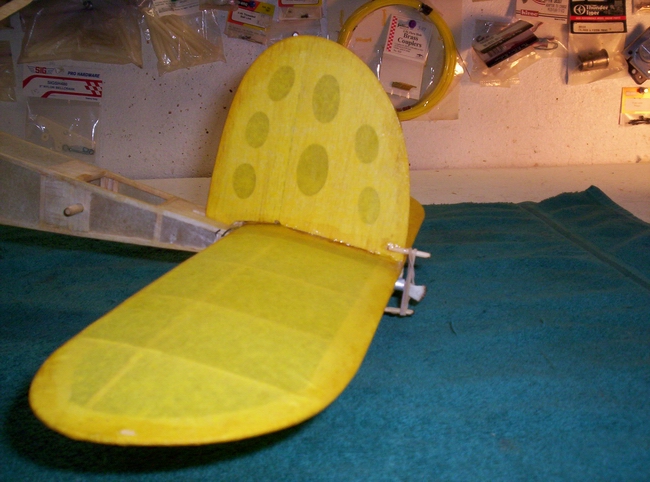
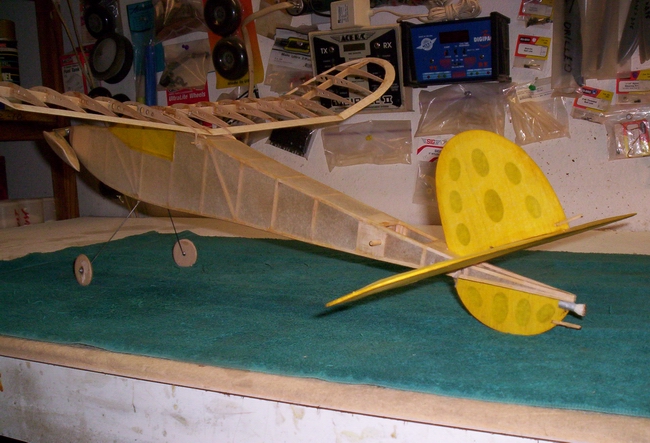
The first two photos of my little John Pond rubber job shows the two position of the stablizer. A rubber tensioned to raise it and in this case a rubber band at the rear held it down. A fuse passed through this band and into an aluminum snubber at the rear and when it reached the band the trailing edge was released and the stab when to a full 45 or so degree forcing a deep stall and most all forward motion stopped as the aircraft descended almost straight like a parachute.
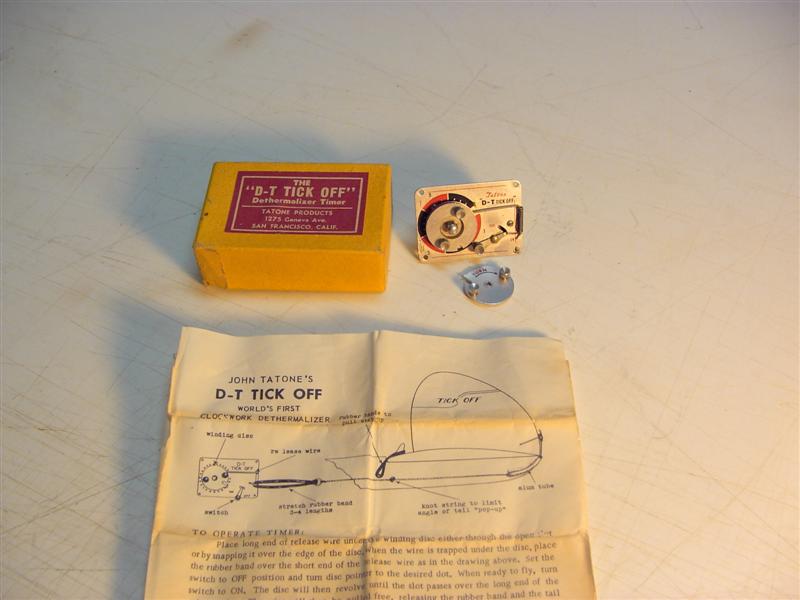
In the third photo is a Tatone Tick Off timer a wind up mechanism as the spool rotated the trip wire riding in the spoole was released and the rubber tensioned cord released the stabilizer. There is also a double spool so that a second trip wire could be used to kill the engine by a number of different methods.
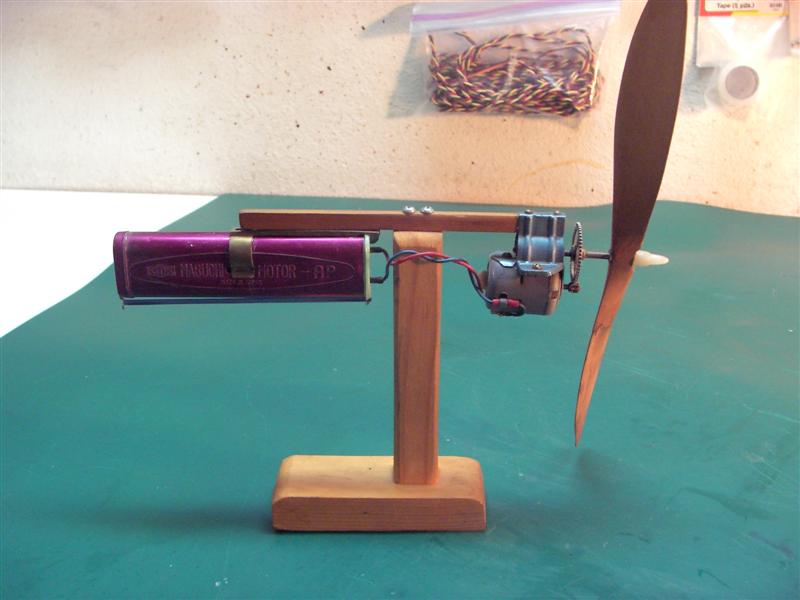
The last photo is very interesting and was the power system for my first electric airplane. It was built from a Japanese kit called the TK-1. It was an extreme lite airplane of bamboo and balsa that used four pen cell flashlight batterys of the time and it was a free flight. I purchased the kit from Reginal Dennys about 1961. Look closely at the bottom of the battery case and you will see a rubber band that kept a spring switch closed. A fuse was inserted in this rubber band and lit before launch to prevent flyaway. when the fuse burned through the rubber band the circuit opened stopping the motor and propellor would push back on a spring disengaging the gears allowing the prop to freewheel.
John