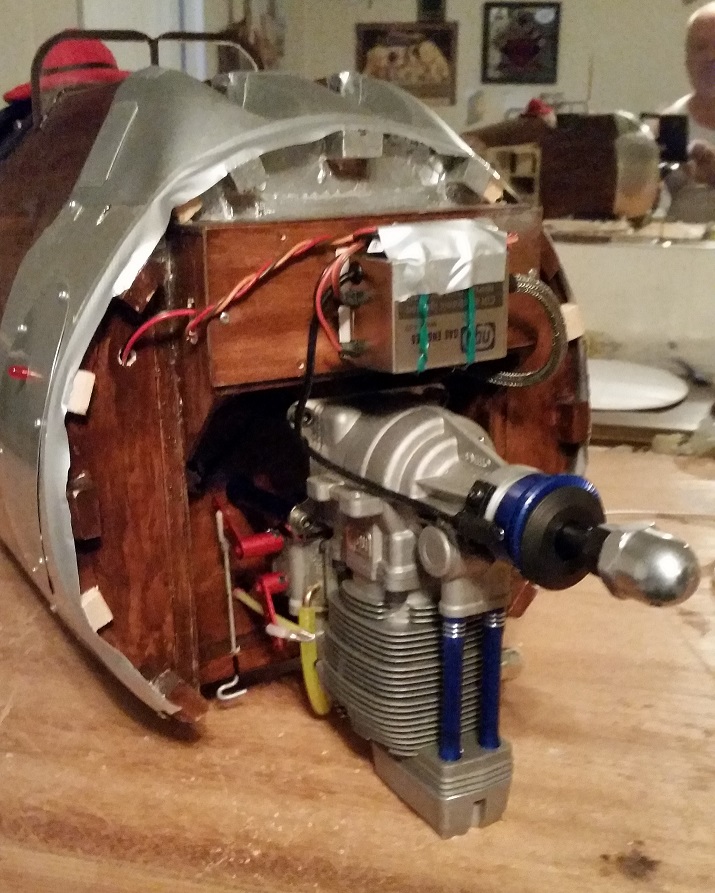
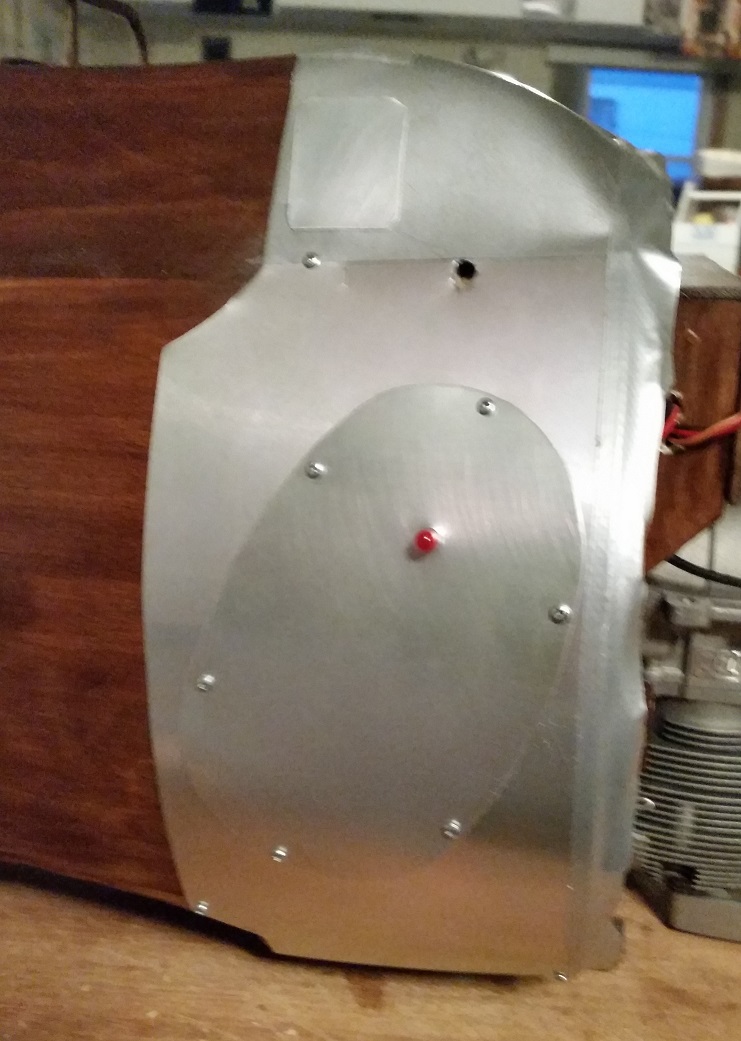
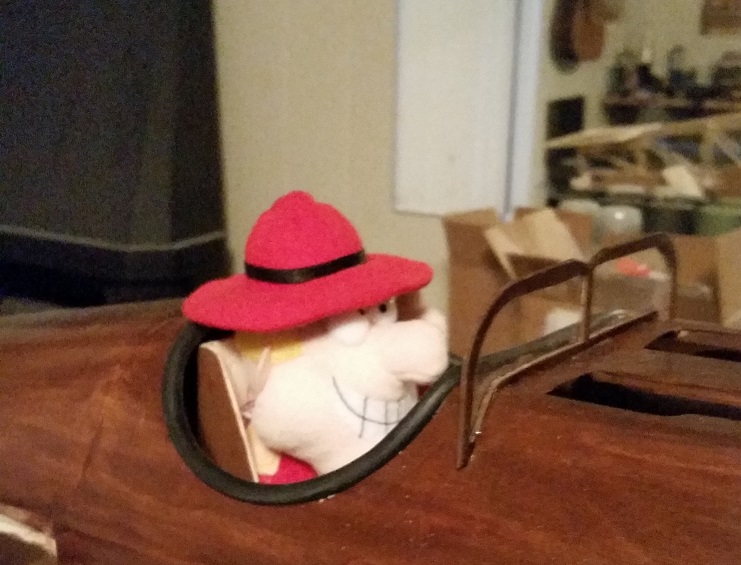
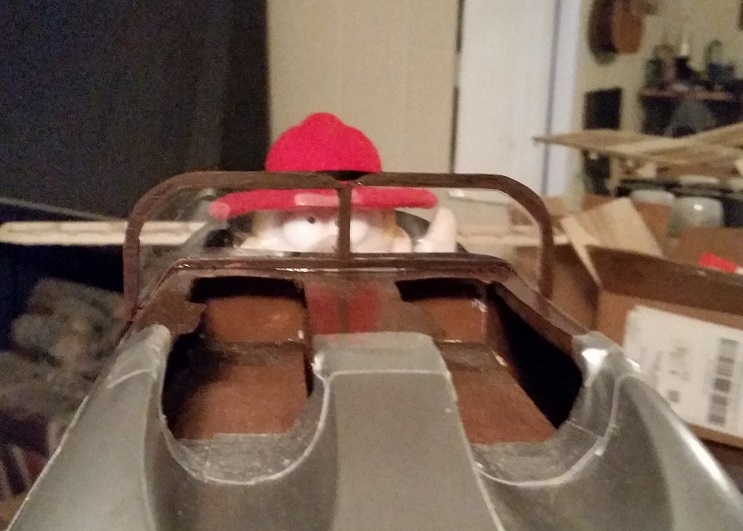
Greetings and welcome to the first Monday of January 2015. The work on the Camel is rapidly coming to a close. Today saw the business end of the airplane being finished. Photo #1 shows the engine installed along with the CDI, the throttle pushrod, and the choke pushrod. If you look close at photo #1 you'll see the throttle and choke levers have been replaced with red anodized levers that I got from Troy Built Models. It's a lot easier than futzing around with the levers that come with the engine. What you can't see in photo #1 is the fuel tank, fuel filler, overflow, switch, and fuel lines have been installed. This little tedious stuff take up time but must be done. What's being featured in photo #2 is the power light for the battery elimination board that has been installed on the left side inspection plate. The board is installed in the battery box and supplies the ignition power through the receiver and works off the gear switch. When I flip the gear switch, the red light comes on and tells me the engine ignition is on. You can use any unused channel for the board so I use the gear channel as WWI aircraft don't have retracts. That's another reason why I like WWI aircraft; no retracts! They're a royal pain in the you know what. I've decided my Camel is from the Royal Canadian Air Force so I've chosen Dudley Doright of the Mounties as my pilot. He makes an imposing figure as he stares through the windscreen in photo #4, doesn't he? Another thing you can't see is my rudder, which is covered in white Solartex, is in the works of being painted, so it will be red, white, and blue. My guns arrived from Mother Tower so I'll be able to build and install then and start covering the fuselage. It's interesting that the wings are usually the first thing I build and the last thing I cover. Oh well!
Tune in tomorrow when I talk on end about something else. The sermon is ended, glue in peace.