Not sure what prop you have. I have the 21x10 wpn which weighs about 195 as i recall. It's been a year or more since I weighed it tho.
Here are a few photos

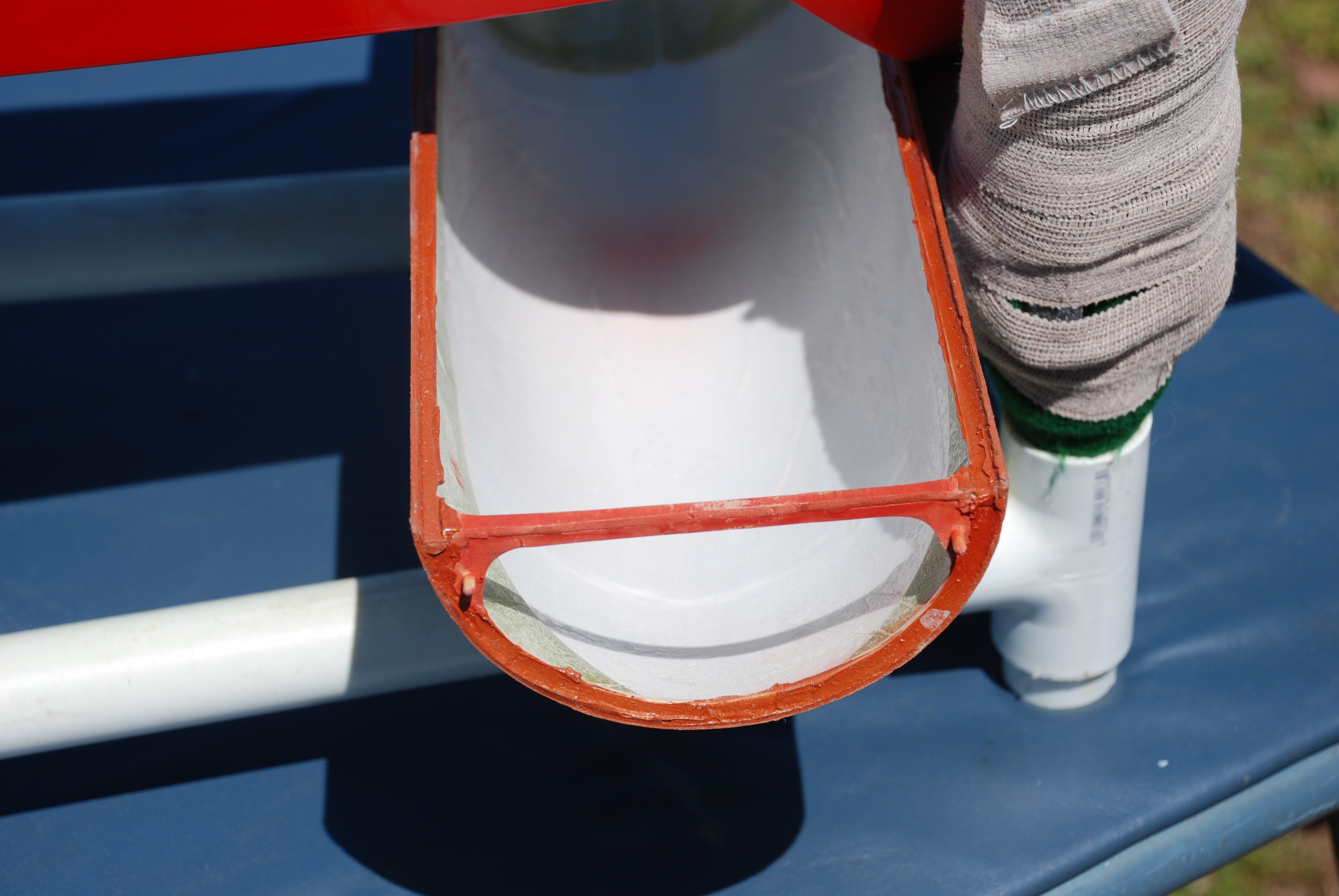
Canopy was modified from electric full length to gas partial length like old times.
.
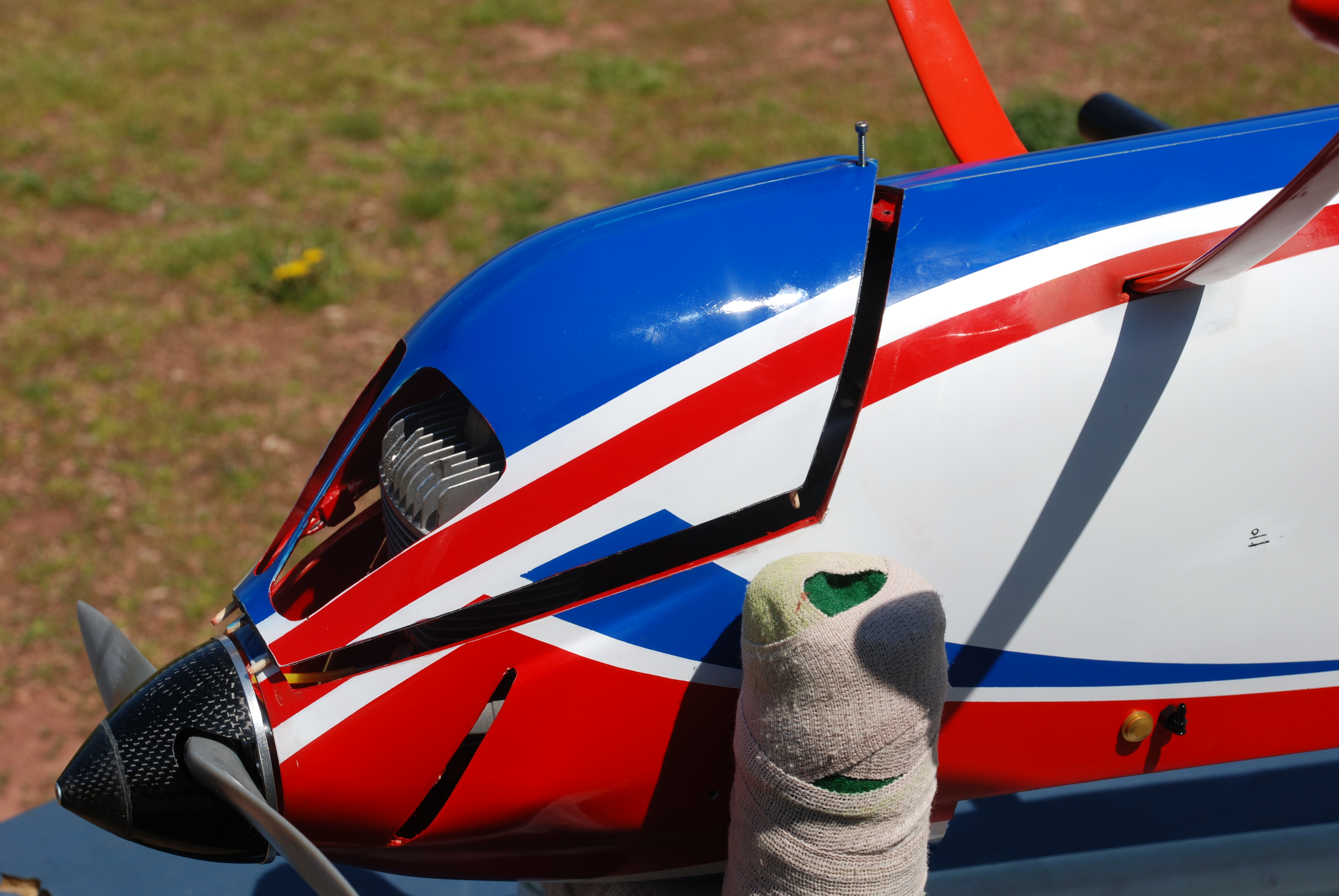
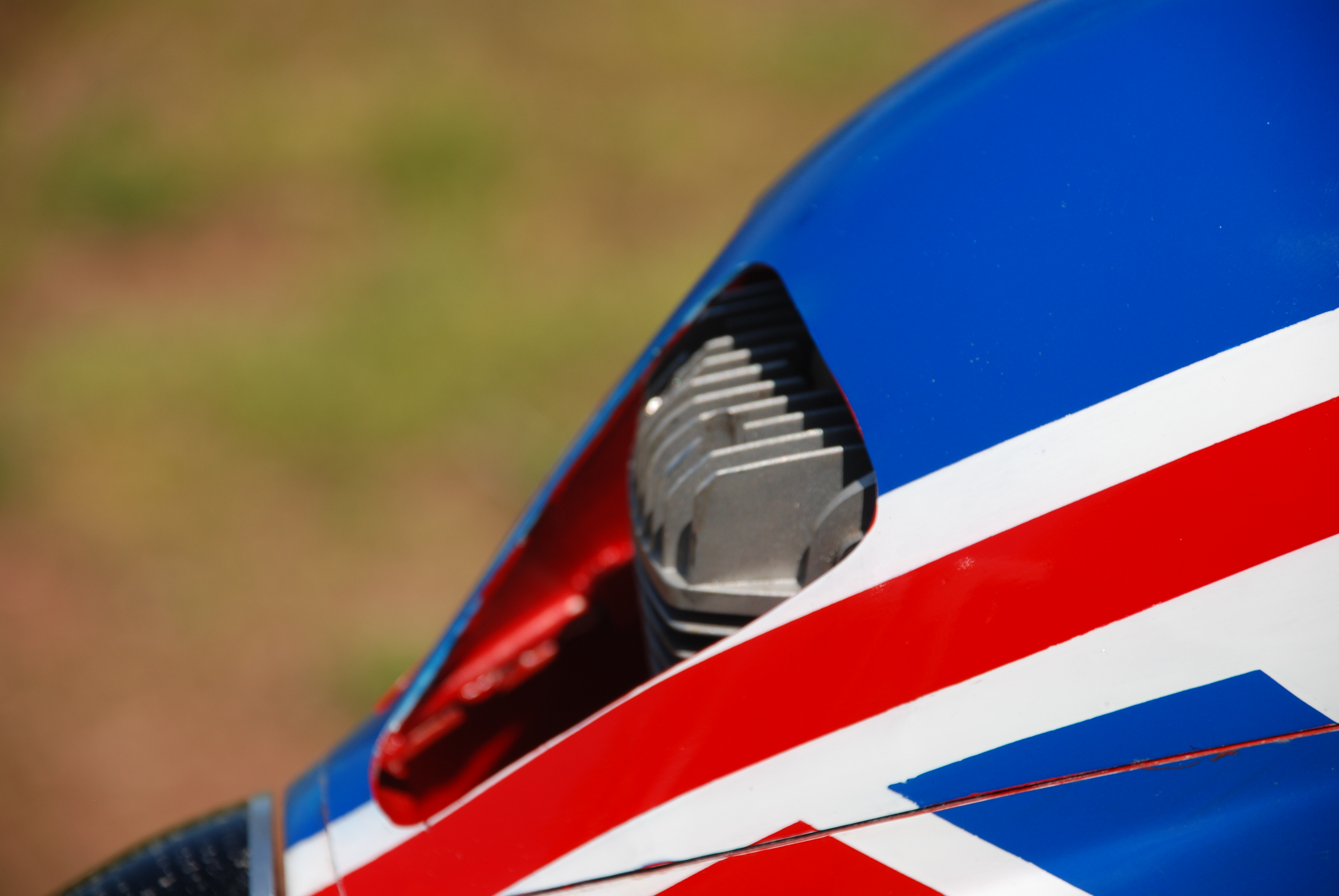
Chin cowl was cut from the fuse. Electric only planes apparently have done away with chins. Not difficult .

Pull-pull on elevator removes weight from the tail (servos and wire extensions). It produces better overall trim capability.

Engine offset 5 degrees to accommodate the header. As it turned out the model is so light, a lesser engine than the GT33, such as the DLE 35 RA might have been a better choice due to the rear exhaust configuration. No offset would have been required. It's just that the GT33 is simply the best for this type of thing. Your milage may vary, as always.
Even this engine is, after all, a rebuild. The failure was very strange; you just don't hear of gas engines chucking their circlips after a backfire. That's what happened to this one last year after terrific service for over 3 years (some 130 hours of operation)
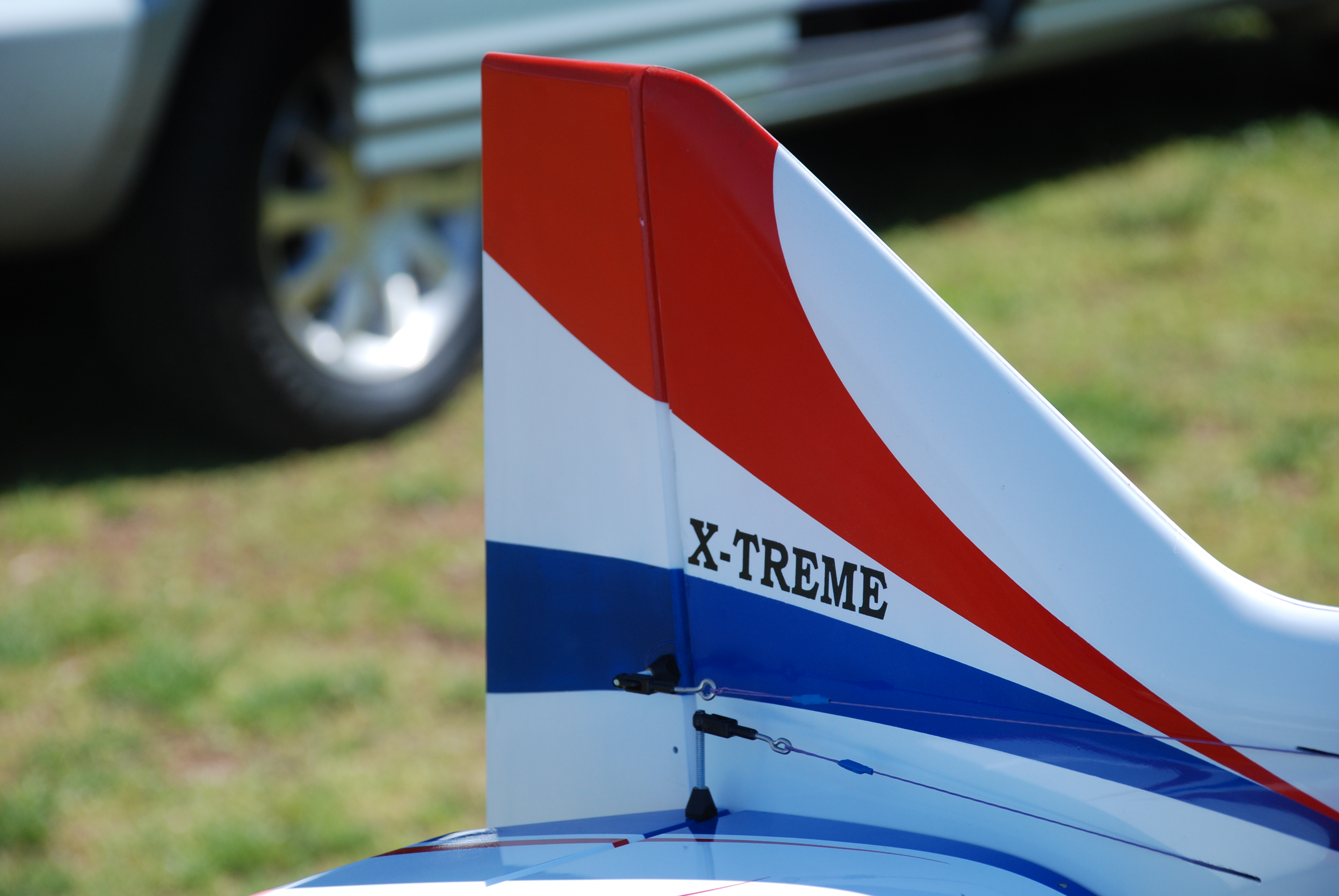
The rudder was changed to a built up unit finished in Esaki Jap tissue and water colors. The rudder alone saved well over 1 ounce off the tail.


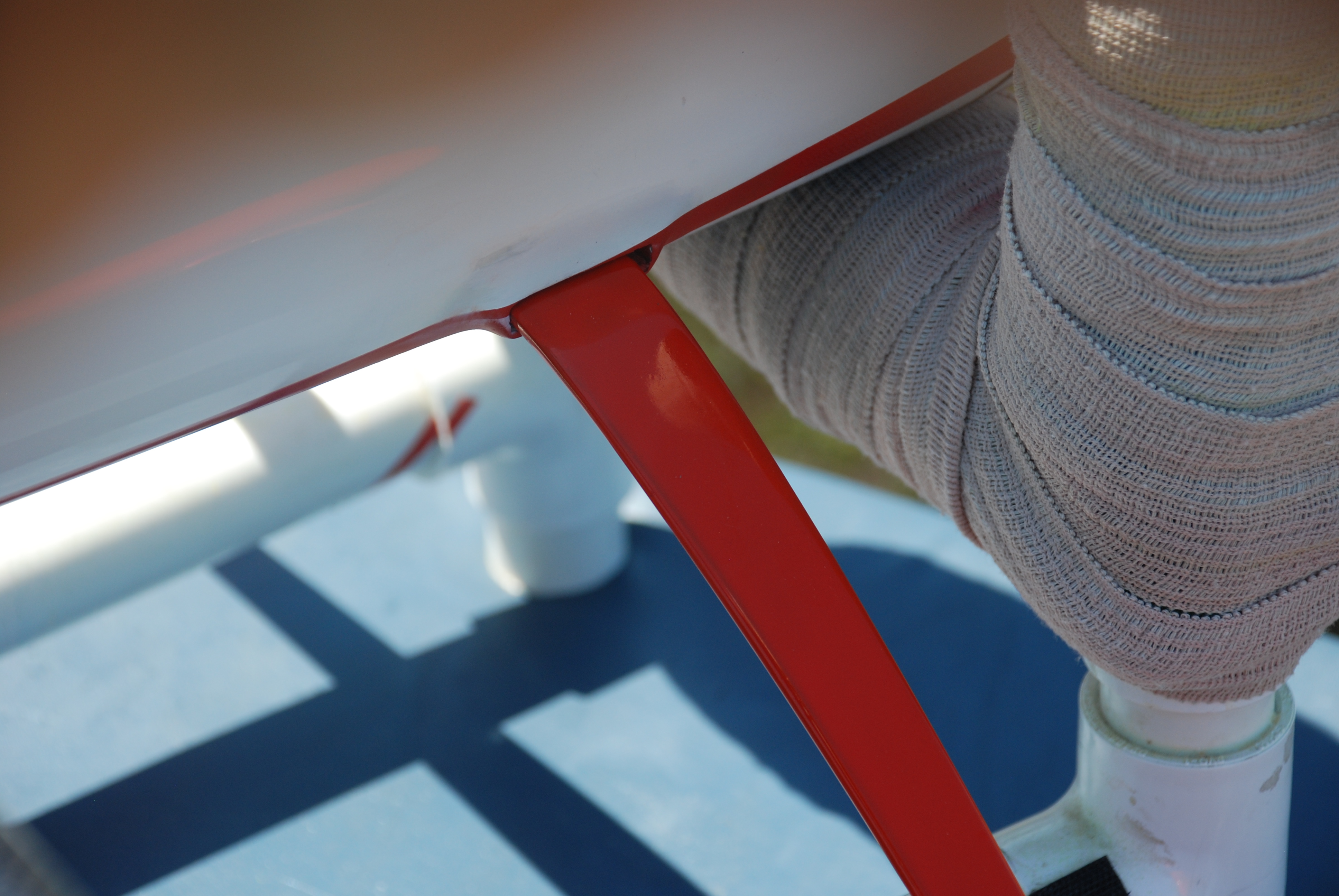
The landing gear was changed to my design. This type of gear simply plugs into sockets on the side of the fuse and is secured by those sockets. A single 4-40 screw holds each strut in place. I've written about this approach several times and have used the method for 6 years now..... It is lighter and much stronger than the stock mounting blocks. All up weight for the complete gear set including the fuse mount, pants, wheels and axles is about 6 ounces. The axle, pants and struts are constructed in monocoque fashion. Pants stay on even flying off relatively rough grass strip. Of course there are special design features built in that enable this kind of strength.

I added the near full depth center bulkhead just in front of the wing tube. Also added a pair of stiffeners along the radio cavity in the fuse near the top of the compartment. The shake at idle was better managed with these small but important mods. With wings on, the wing tip shake is almost nil. The thin foam I use to form the pipe tunnel floor should be visible. It is very light yet fully functional. The pipe does not attach to the pipe floor; pipe is attached to the outside fuse shell.

It's hard to see in this shot. The engine mount was deepened slightly to allow just about 1" of rubber. This helps the soft feel of the mount, snubbing vibes better. Notice that I had to grind the head fins a little to clear the chin cowl's center rib.

The mount has a large hole in its center aligning with a corresponding hole in the firewall. The balsa/carbon composite firewall weighed a scant 18 grams as I recall after the hole was cut.