Was this airbrush or rattlecan? What was the ambient temperature and humidity when you painted the top coat?
As far as fixing it, I would roll with it. Use a stiff brush to chip away the orange peel, then determine if you want to respray, or somehow incorporate the chips surface into your weathering.
If the orange peel is down to the plastic, though, that's another story. That would imply poor adhesion of the primer, possibly due to an oily surface? Or overly thinned paint or overly thick application of it. In any case, that would complicate your call to paint over, integrate as weathering, or strip and start from scratch.
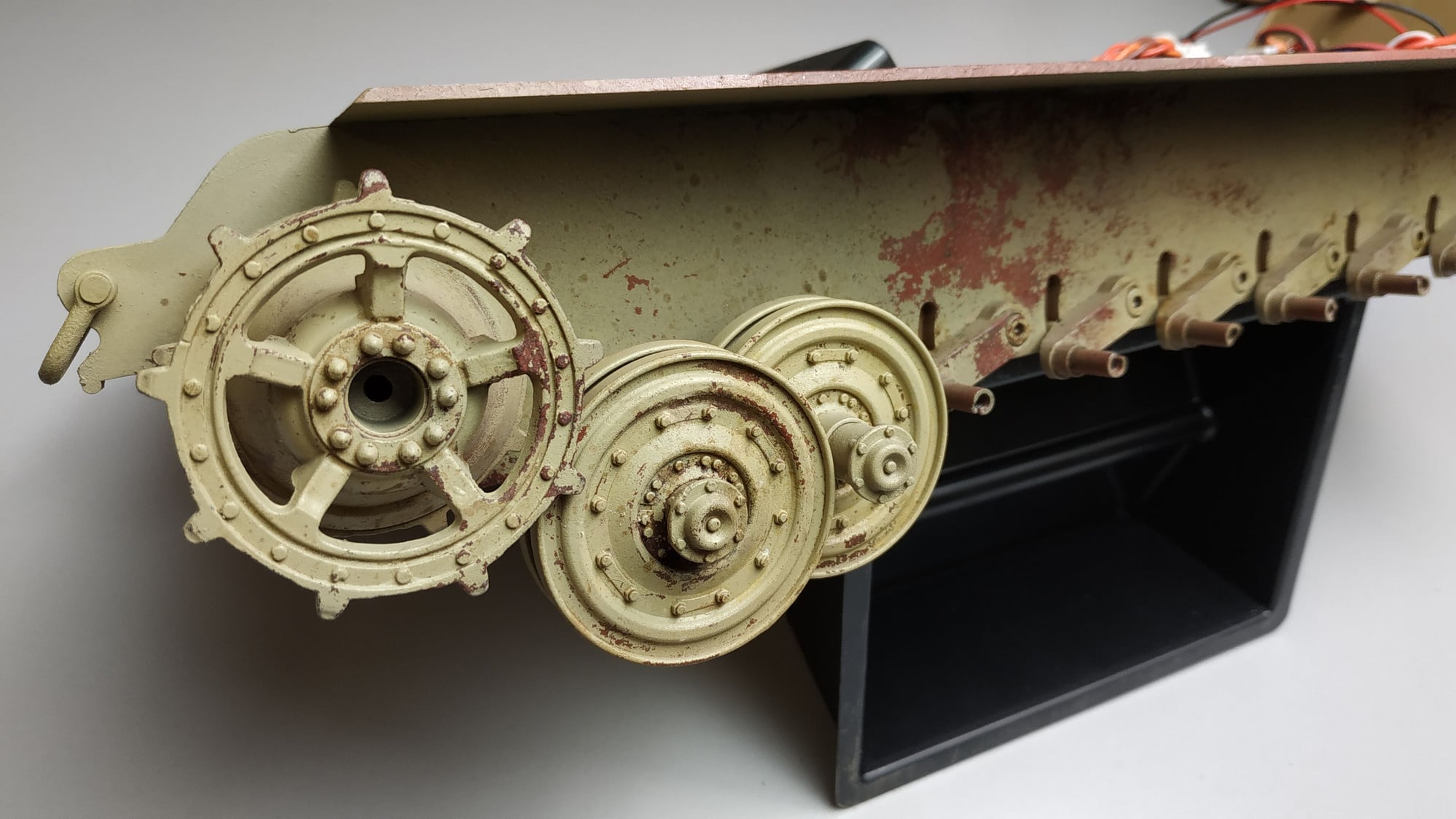
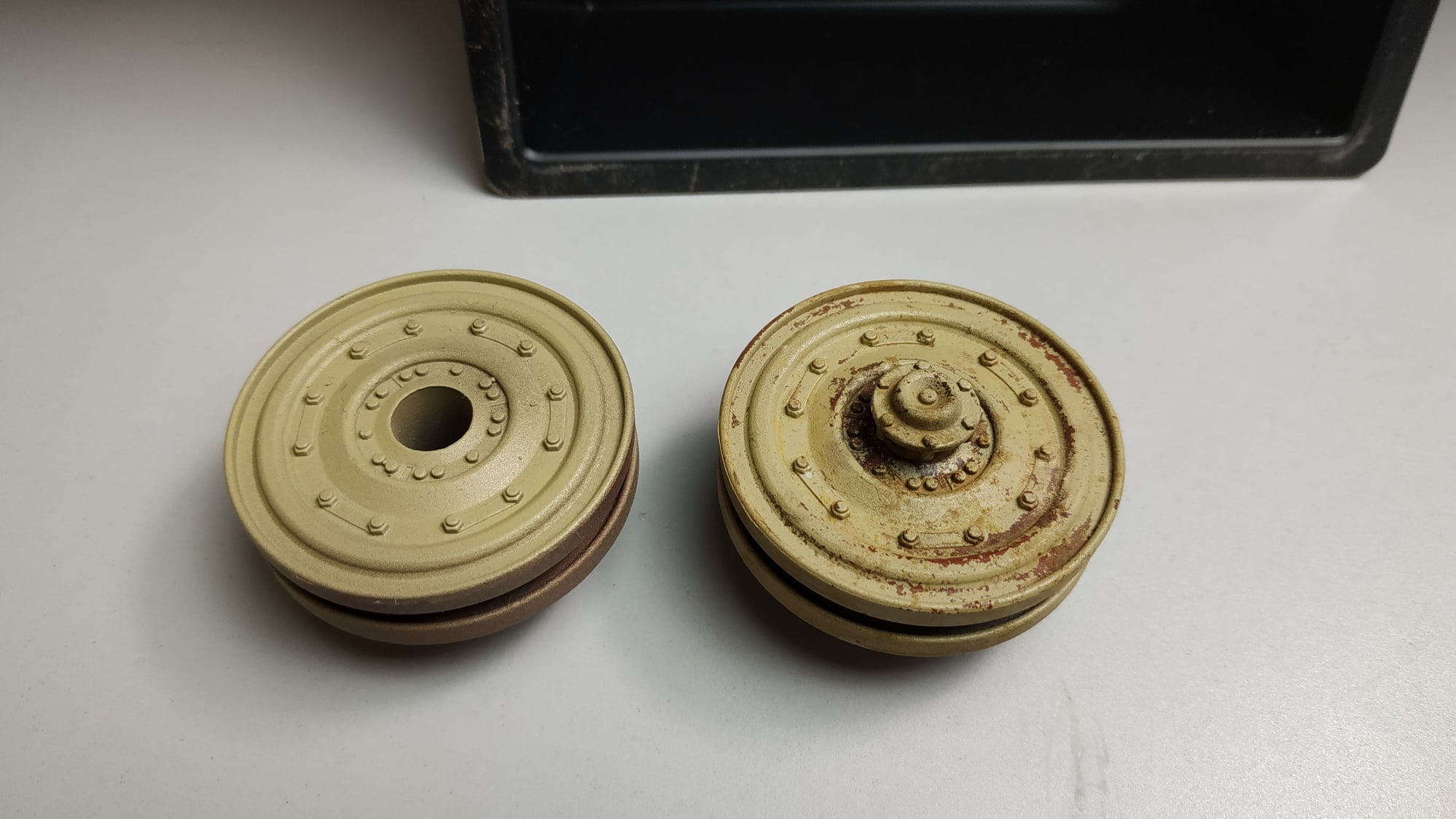
Sometimes I'll use purposeful orange peel to accentuate weathering. Sometimes it can be used to mimic paint flaking, which I'll bring out with pigments, then sealed in several coats of lacquer.
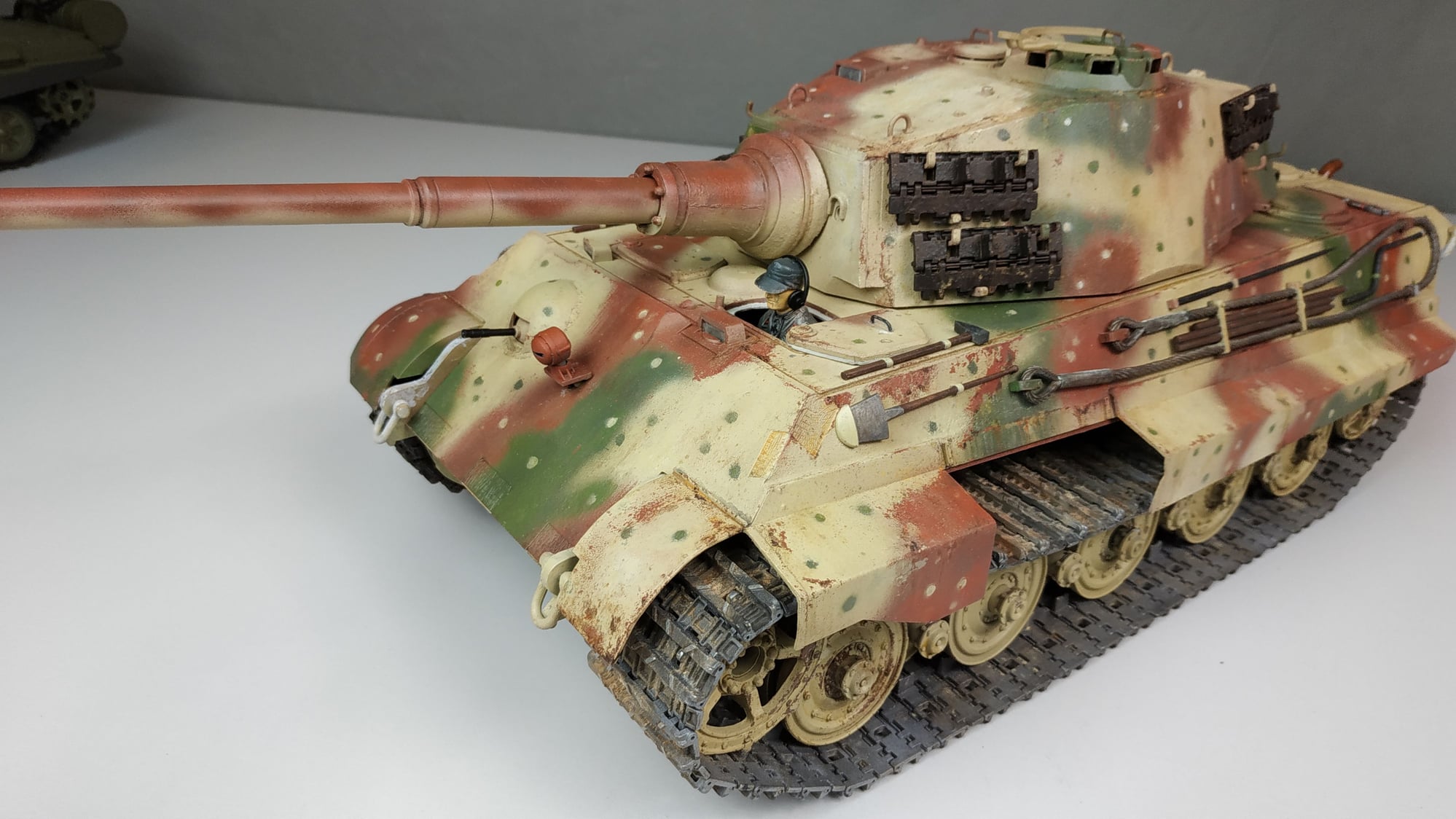
Here's a work in progress I'm working on, below. Several areas were orange-peeled down to the primer with thick paint in a cold environment (outside at night). Before I chipped at it, it looked a lot like your photo in terms of pattern and severity. The sprocket and road wheels are intentionally loaded up with thinned paint for the top two coats, sprayed on each other when wet, to induce the surface cracking.
My point is, orange peel doesn't have to be a death knell.