I FINALLY have had the chance to look at the boats. I know I said I'd post a few pictures and, as of today, I've gotten a few that I can post that relate to this build.
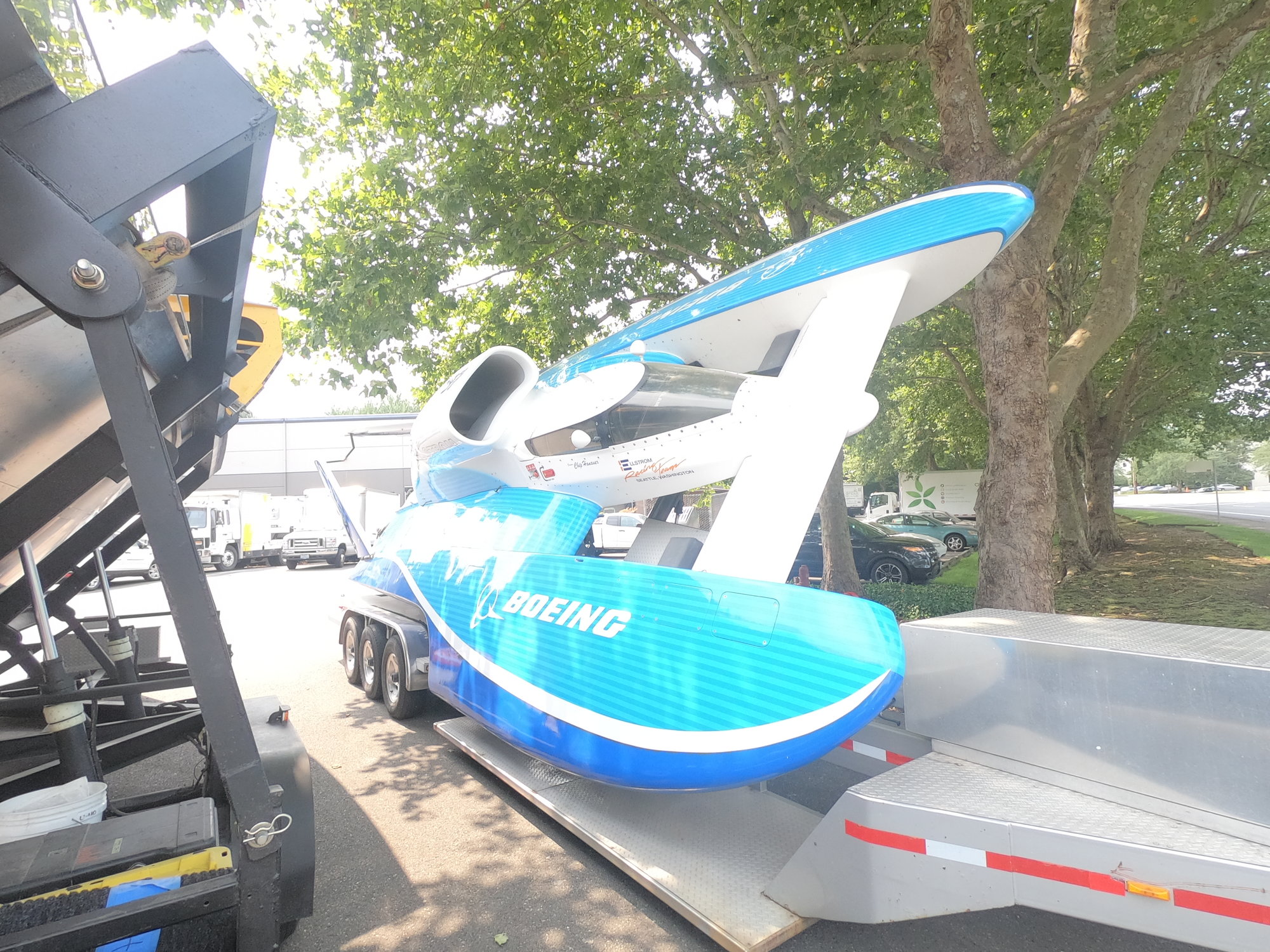
To start with, I figured it would be nice to get a shot of the Pak, sitting on its trailer. Sorry about the engine and cockpit being covered, that was apparently due to the boat being readied to go on a road trip. One thing of interest is the different shade of orange the trailer was painted. The trailer actually has the correct orange for the boat. The painter didn't like it, compared to the black, so he darkened it slightly when painting the stripes and lettering
This shot shows the running surface and sponson transom of the left sponson. The right sponson was a mirror image of this one, other than the metal brackets used to secure the turn fin, when the boat was originally built back in 1972. When the right sponson was pretty much destroyed in 1981, it was replaced with a molded fiberglass sponson that is still on the boat today. What isn't well known is that the fiberglass sponson is actually 3" wider than the built up one shown above.

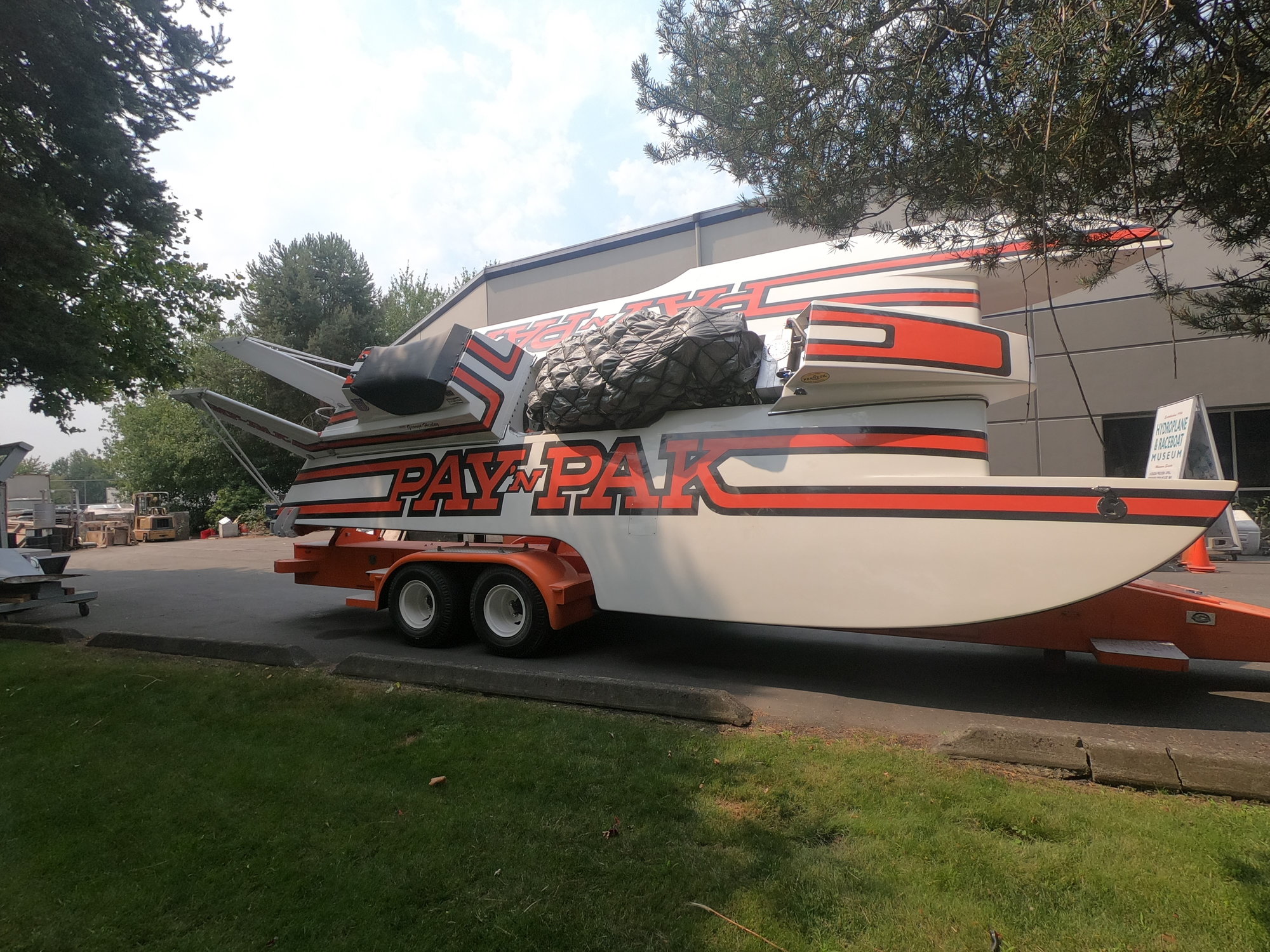
This picture shows the transom of the boat. Four things can be seen in this shot:
1) The vertical tails are directly above the engine bay walls as can be seen by the location of the screws through the transom directly below the tails. These screws show the locations of the brackets securing the engine bay walls to the transom.
2) The tail braces are secured to fittings on the transom, not to fittings on the deck as some believe. The top of the braces are connected to the wing's mounts at the top of the tails, visible in the first shot.
3) The rudder is mounted outside of the left engine bay wall. This is due to where the linkage is installed under the deck. The pushrod, visible to the left of the rudder, is connected to a large sprocket under the deck that is, in turn, wrapped with a heavy bicycle style chain that is connected to the steering cables from the cockpit.
4) Most model builders believe the bottom and sides of the boat are flush with the transom. On many boats, however, the aluminum honeycomb extends past the transom, as shown here. In the case of the Pak, the 1" thick honeycomb extends past the transom by an inch, preventing the water from pulling the boat down when it's travelling at slow speeds heading out from and back to the dock
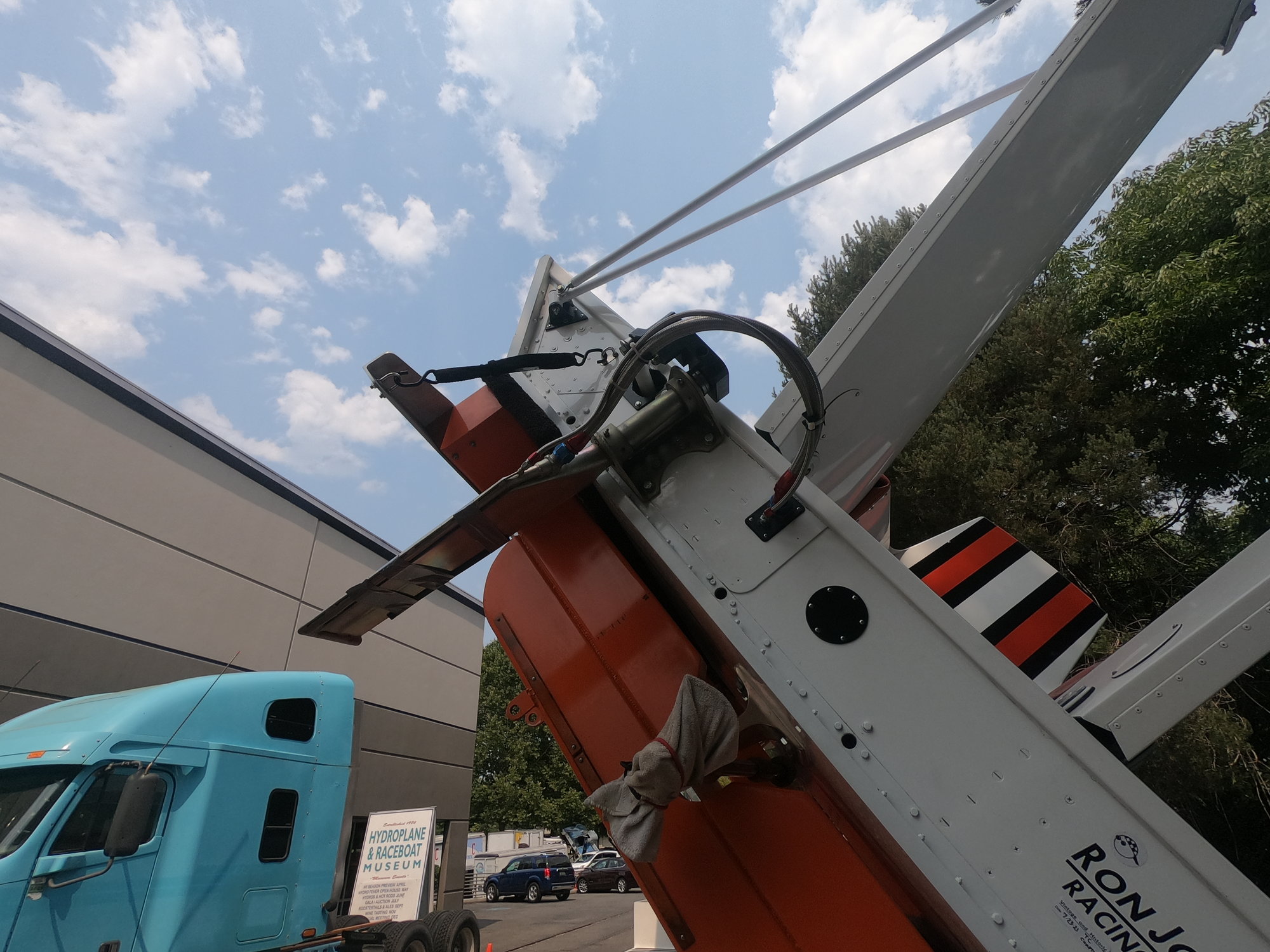
One last shot, this time of the boat I posted a picture of earlier. Six posts back, I posted a picture of my 2000 Elam Plus. This last picture is of the full-sized boat sporting the last paint job it ran with in 2007, a variation of the paint scheme used on the flight test versions of the 787 Dreamliner. It ran a demo heat with a replica of Bill Boeing's Miss Wahoo, powered by an experimental biofuel. It had earlier qualified for the event with the fastest average speed of any competition boat. This wasn't a real surprise to many as the driver for the qualification laps and demo run was "Chip" Hanauer.
AFAIK, "Chip" was the last one to drive the boat, which itself hadn't been on the water, other than during biofuel tests, since the end of the 2000 season where Mark Evans drove it to a victory on the Columbia River at the race in Tri-Cities