Originally Posted by
tooth_dr
I photograph stuff in space in my spare time.
Great image of the Horsehead and Flame nebulae, Alnitak and Alnilam and a streamer of Barnard's Loop. I think Orion is my favorite part of the sky, and then Scorpio and Sagittarius. I'm also a sky watcher, mostly observing; I haven't tried my hand at serious astrophotography, but I've done quite a bit of single image time exposures and the Solar Eclipse of 2017. What are the details on that image? I'm guessing a Newtonian reflector or RCT, because of the diffraction lines, but what exposure and focal length?
I've got two Schmidt-Cassegrain, a 6" and 8", the 8" is aplanatic, and I have a f/5.9 apochromatic refractor, and two computerized EQ mounts and a manual EQ. I haven't had any of them out in a while, I need to remedy that. I hope to make the trip to get in the path of totality of the total solar eclipse in April 2024. That's about 5 hours drive for me, the one in 2017 was only an hour.
I've had a bunch of hobbies over my 68 years; they always seemed to grow bigger and more expensive as time passed. I flew high power model rockets in the early 1990's, which spurred my interest in RC planes, and have been an avid shooter since the mid-1970's, which has grown to include collecting S&W revolvers and reloading.
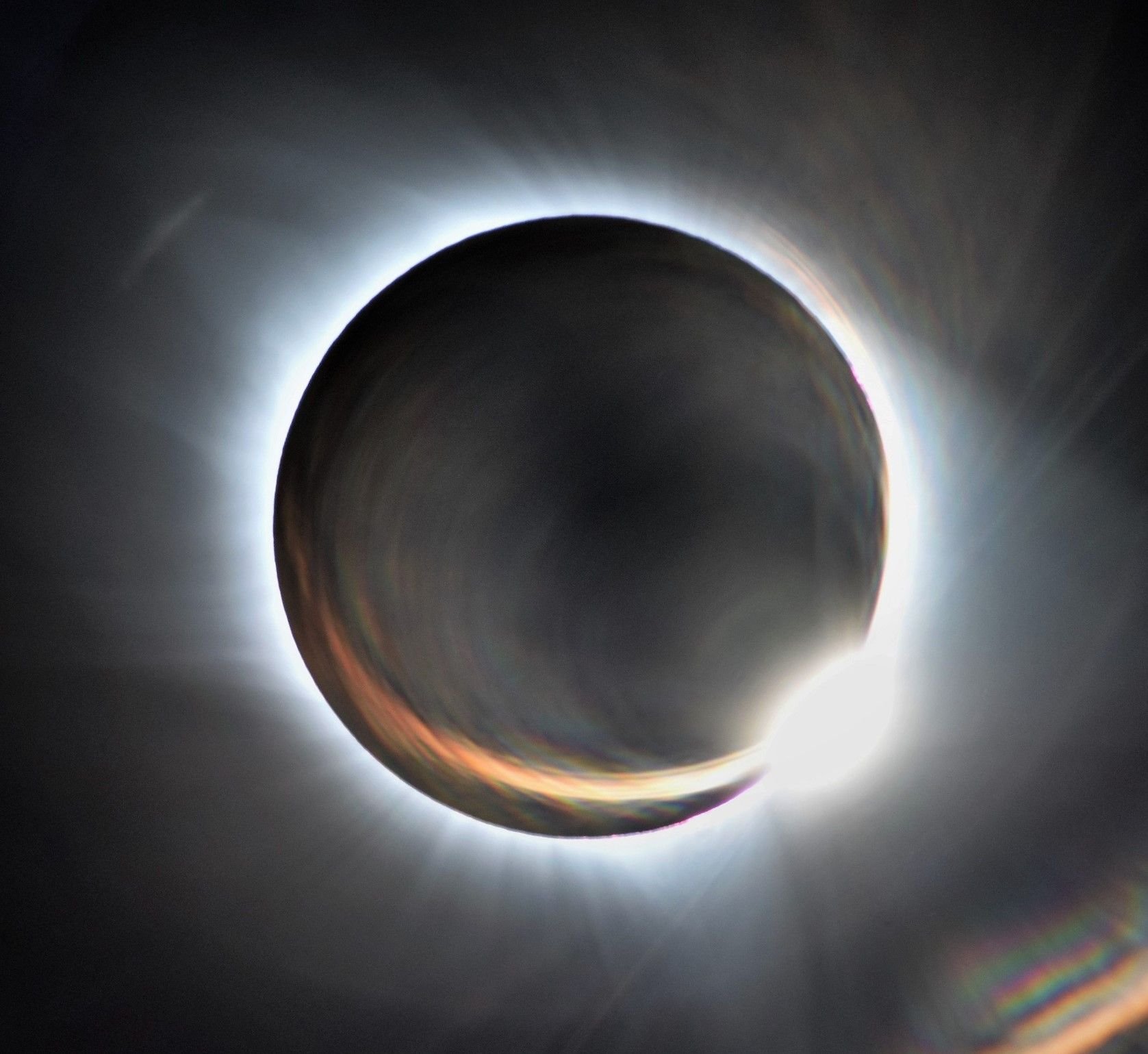
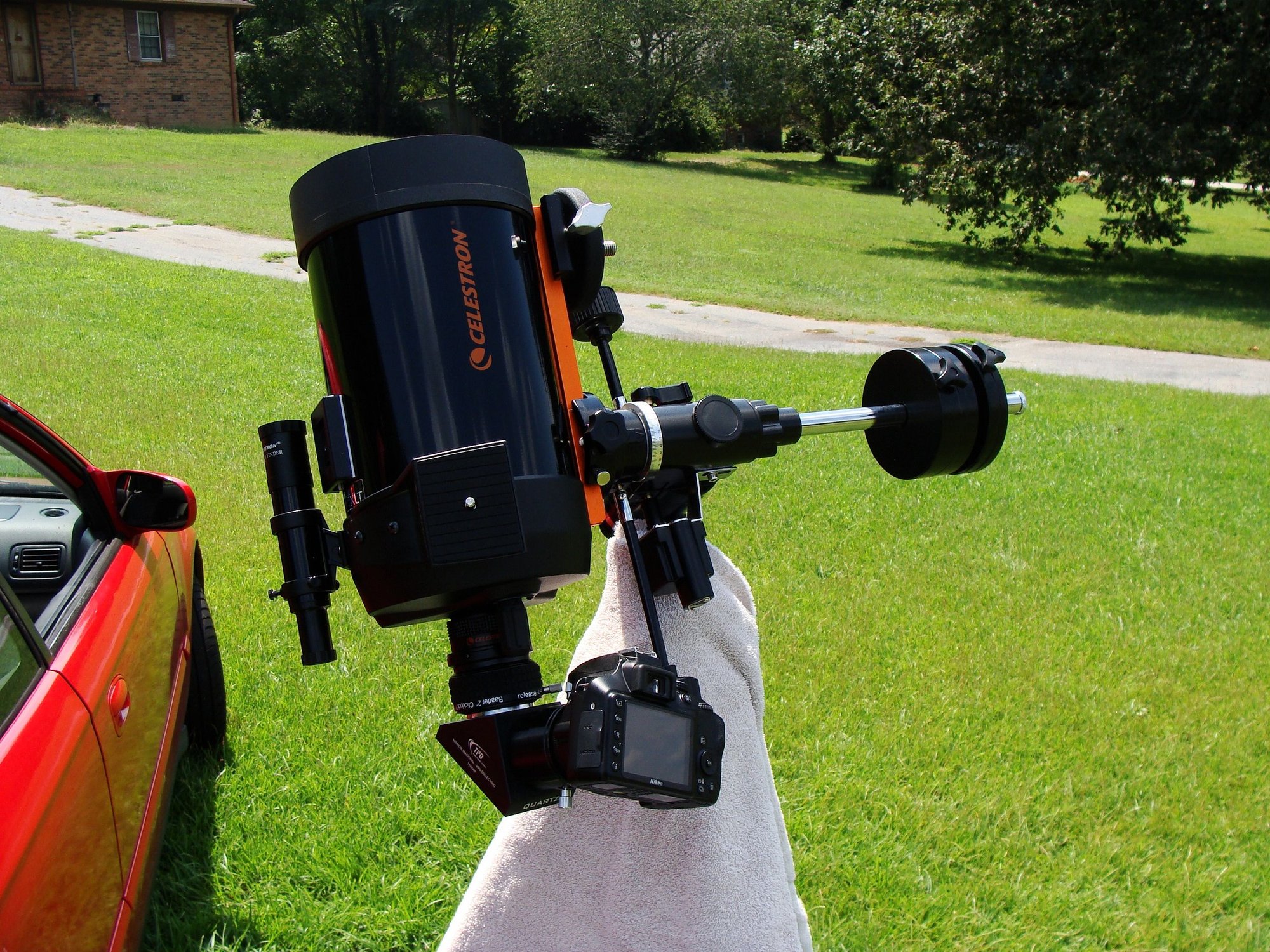
Here's an image of what's called a "Diamond Ring" I took during the 2017 eclipse. It's made at the instant the Moon begins to uncover the solar disc after the couple of minutes of totality: The gold-colored band is a reflection, which enhanced the 'ring' effect. I shot this with my 6" S-C and a Nikon DSLR at prime focus and a f/6.3 focal reducer.