Hi Tom, Yes you have it right. The main reason for covering the leading and trailing edges prior to attaching the hinges is because once the hinges are finished, the leading and trailing edges are no longer accessible to be covered. Not a problem with dope but it is with film. The top layer of film will also help anchor the hinge straps in place. If the hinge were to be highly stressed, then yes, covering more of the leading and trailing edges would provide for a more secure hinge strap attachment because the UltraCote sticks better to itself than it does to raw balsa wood. Also the hinges can be cut wider than 1/2" if desired for extra strength. Attached are some photos of the flap assembly for a Sig Twister I am building. Since the flap has to slide through the wing hole before inserting the wing, it is not possible to hinge the flap to the wing prior to installing the wing. The hinge straps will be ironed onto the wing after the wing is glued to the fuselage. As you can see, it was possible to entirely cover the flap after ironing the hinge straps onto the flap.
Assuming you are going to cover your .35 Buster with UltraCote or Monokote, then film hinges would be perfect for hinging the thin elevator to the stabilizer... no holes, no slots. Hope this helps. Let me know if you have any questions.
David
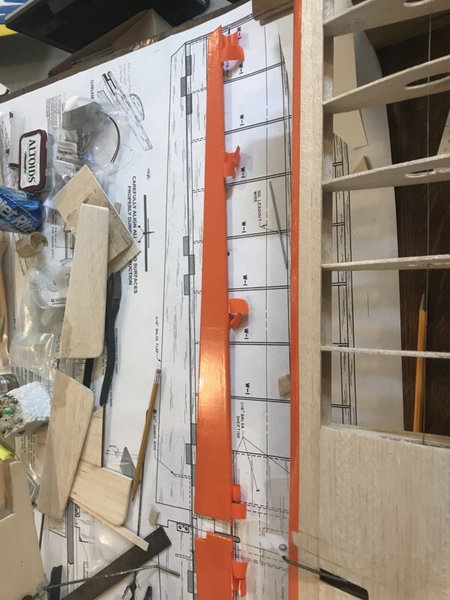 Leading edge of flap was covered prior to installing hinge straps. then the entire flap was covered.
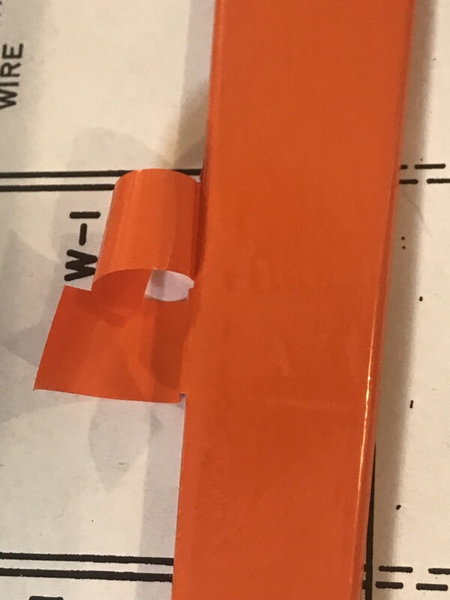 Flap hinge is almost invisible once the top layer of film is applied over the hinge straps.
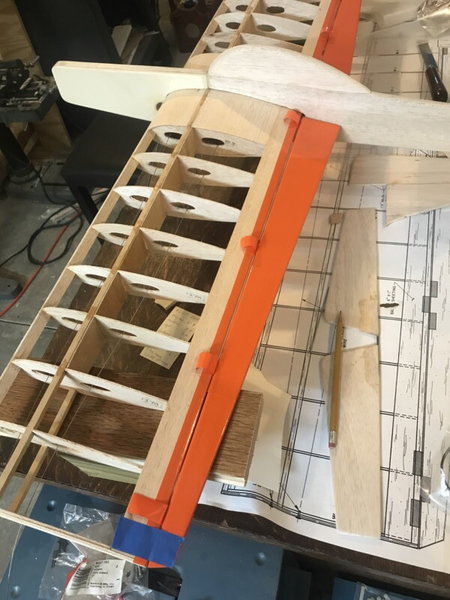 hinges ready to be ironed on after wing is glued to fuselage
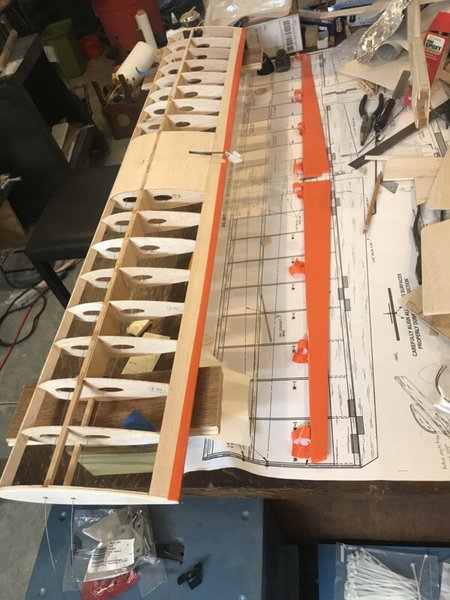 Wing trailing edge covered prior to hinging. Flap has hinge straps installed and then covered to seal in the hinge straps.