


Air foils for Avro Vulcan delta wing 48"
 03-19-2019 | 05:19 PM
#1

Thread Starter

 Air foils for Avro Vulcan delta wing 48"

Scale appearance is a 3" thick root next to the body. HUGE leading edge air inlets to the engines...….. It is to be a sport plane. Stability when inverted would be nice. I will fly it as a bomber. Can I use a symmetrical airfoil for the main portion of the wing ? & a more stall resistant washout airfoil on the outer 3" of the wing for better stall resistance ? Like a Clark Y if I can find the pattern.
4 S F of wing area. The 2 wing panels are 8 oz. body will be about 3 oz. single tail pusher prop.
I do not mind having to use more power for the thick wing section. Please see if the scale wing shapes below are O K. Do I need any of the reflex curvature ?
Thank you.
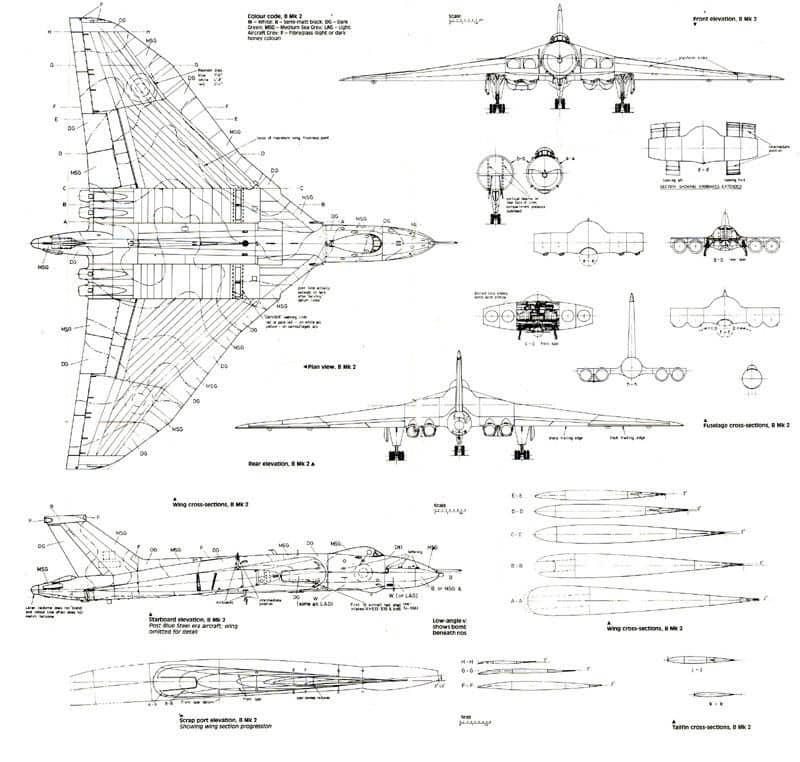
Last edited by cyclops2; 03-19-2019 at 05:57 PM.
 04-02-2019 | 11:09 PM
#2


Cyclops, since the Vulcan is basically a flying wing you'll both want and need to use a wing airfoil with some reflex rather than a flat bottom wing with a strong camber value. That wing airfoil will act like you're holding a lot of down elevator in it.
I'd suggest you go for the pretty much scale symmetrical airfoil with some washout and reflex at the tip airfoils. In fact for a change even with a 48" span the chord will be so large that even at moderate flying speeds the Reynolds numbers will be so high that you will get away with the super thick root airfoil even with the funky inlet leading edge.
I'd suggest you go for the pretty much scale symmetrical airfoil with some washout and reflex at the tip airfoils. In fact for a change even with a 48" span the chord will be so large that even at moderate flying speeds the Reynolds numbers will be so high that you will get away with the super thick root airfoil even with the funky inlet leading edge.
 06-27-2024 | 07:55 AM
#5

If you are wanting the excercise of doing your own design there are a lot of delta wings to study over on Outerzone. Laddie Mikulasko designs in particular fly well. There are even a couple of Vulcans that you could refer to.
04-14-2025 | 10:32 AM
#6
I think I should point out that a sharply swept delta like the Vulcan a reflex airfoil is not a necessity. The full size did not use one.
The stability of such a delta comes from the vortices created over the wing upper surface. The more acute the delta the greater the stability.
My suggestion is to simply use an airfoil similar to the full size and then fly it like a Vulcan.
A conventional airfoil and particularly a reflex one does not work at all well as a delta for inverted flight.
I have four scale RC deltas.
Douglas F4d Skyray.

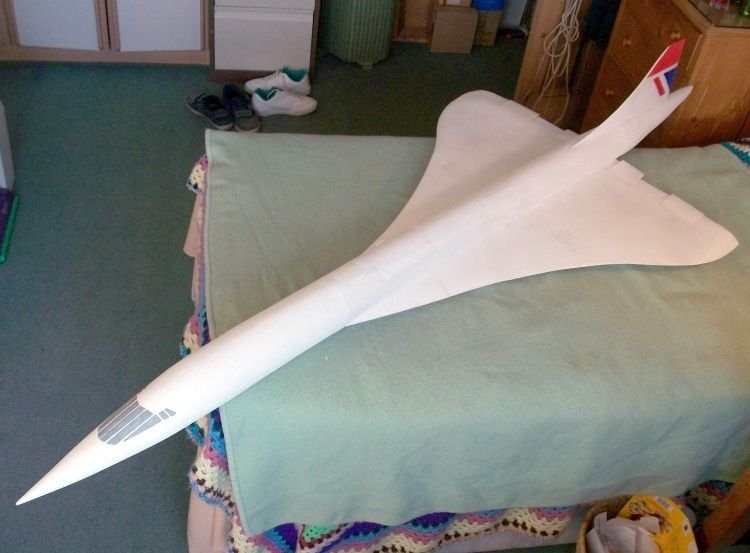
Concorde
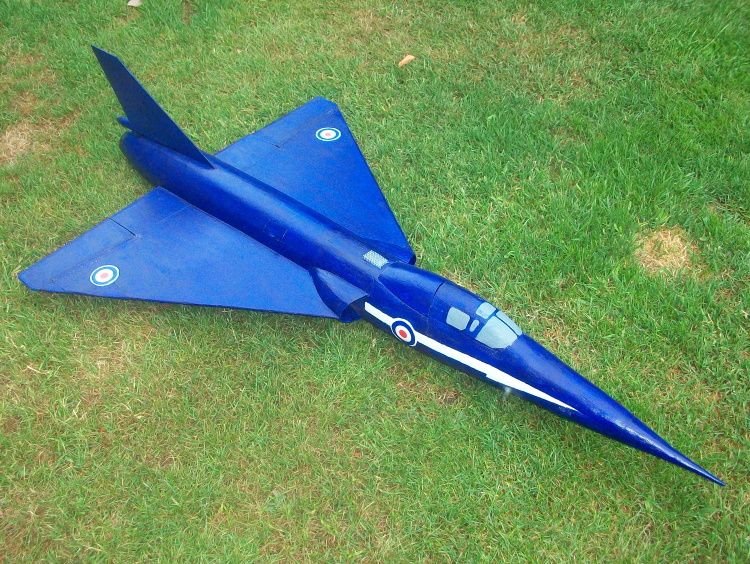
Fairey FD2
The XB70 Valkyrie

None use a reflex airfoil and all are perfectly stable.
The only drawback with such delta configurations is that at high angles of attack, or even a steep turn, they need a lot of power to maintain it.
The stability of such a delta comes from the vortices created over the wing upper surface. The more acute the delta the greater the stability.
My suggestion is to simply use an airfoil similar to the full size and then fly it like a Vulcan.
A conventional airfoil and particularly a reflex one does not work at all well as a delta for inverted flight.
I have four scale RC deltas.
Douglas F4d Skyray.
Concorde
Fairey FD2
The XB70 Valkyrie
None use a reflex airfoil and all are perfectly stable.
The only drawback with such delta configurations is that at high angles of attack, or even a steep turn, they need a lot of power to maintain it.


