


Horizontel stab dihedral

 08-20-2010 | 07:10 AM
#2
Senior Member
 RE: Horizontel stab dihedral
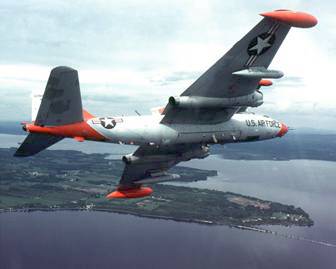
Like the F-4's anhedral?
It's my understanding that they wanted the stab/elevator lower relative to the centerline. Since there wasn't fuselage below to move the stab down, the next best thing was anhedral.
It's my understanding that they wanted the stab/elevator lower relative to the centerline. Since there wasn't fuselage below to move the stab down, the next best thing was anhedral.
08-20-2010 | 09:06 AM
#3
Senior Member
My Feedback: (1)
Joined: May 2003
Posts: 345
Likes: 0
Received 0 Likes
on
0 Posts
From: Quinlan,
TX
RE: Horizontel stab dihedral
The anhedral or dihedral of the horizontal tail is usually to correct unwanted pitching moments when the plane is yawed off the heading C/L. This was the case in the older pattern planes that used anhedral in the stab. But, in some cases (including the F-4) it also is a way to get more of the stab in clean air in a high AOA situation when the stab airflow might be blanked by the wing flaps. Most of time though, it's a correction for yaw/pitch coupling.
Paul
Paul
08-20-2010 | 10:55 AM
#4

Thread Starter
Senior Member
My Feedback: (5)
Joined: Mar 2009
Posts: 504
Likes: 0
Received 0 Likes
on
0 Posts
From: Wolf,
WY
RE: Horizontel stab dihedral
ORIGINAL: da Rock
Like the F-4's anhedral?
Like the F-4's anhedral?
08-20-2010 | 03:49 PM
#5
Senior Member
RE: Horizontel stab dihedral
ORIGINAL: rc airplane nut
Yes and if I remember right at least one version of the F-86 dihedral instead of anhedral like the F-4, or straight.
ORIGINAL: da Rock
Like the F-4's anhedral?
Like the F-4's anhedral?
08-23-2010 | 10:37 AM
#6

 RE: Horizontel stab dihedral
On some airliners, like Boeing 757, 767 etc having dihedral on the tail avoids scraping the tips when landing in extreme crosswind conditions with a wing down and the nose up.
It might still be possible to scrape a tailplane tip, but only just
It might still be possible to scrape a tailplane tip, but only just
08-23-2010 | 11:24 AM
#7
Senior Member
RE: Horizontel stab dihedral
On full scales, horizontal tail dihedral frequently is added after flight testing reveals unsatisfactory lateral stability. It's cheaper than building new surfaces or moving them.
08-23-2010 | 11:47 PM
#8
 RE: Horizontel stab dihedral
And big airliners don't land xwind with one wing down. No need for anyone to do that. Actually almost all the commercial jets have tailplane dihedral and it's more likely to do with keeping a bit of the surface out of the wing wash when those big flaps etc are all hanging out at high AOA, that and a bit of lateral stability aid at high yaw angles, as someone already said.
Evan, WB #12.
Evan, WB #12.
08-27-2010 | 06:02 AM
#9
RE: Horizontel stab dihedral
ORIGINAL: pimmnz
And big airliners don't land xwind with one wing down. No need for anyone to do that.
And big airliners don't land xwind with one wing down. No need for anyone to do that.
When I started, in the seventies on HS Tridents, we used the kick-off-drift in the flare technique. Timing is critical.
Kick off drift too early (before touchdown) and you start drifting towards the edge of the runway.
Leave it too late and you land with yaw. Some of the recent aircraft are designed so that landing with yaw is acceptable, but not elegant.
On the Lockheed L1011 Tristar the autopilot was programmed to autoland in a crosswind as follows
At 300 feet radio height (AGL) the autopilot used the rudder to line up the aircraft centreline with the runway centreline (rudder away from wind direction).
At the same time the ailerons were used (aileron into wind) to dip the into-wind wing to produce a sideslip into wind to counteract the downwind drift.
At about 30 feet on the radio altimeter the flare commenced and shortly afterwards the throttles closed to idle.
When flying manually we used the same procedure, but often started lower, 200 or 100 feet radio. For example for a wind from the left you squeezed the right rudder to make the aircraft heading equal the runway heading (displaying heading on the INS was useful). Then dip the left wing with left aileron to prevent drift to the right. At the usual height (if I remember correctly the flight engineer called 100 feet, 50, 30, 20, 10) you start the flare, close the throttles, land on the into-wind wheel with crossed controls (left aileron, right rudder) then you let the right wheel land and then lower the nose, but still keep some left aileron. Steer with rudder, and keep into-wind aileron all the way down the rollout.
The beauty of this technique is that timing is not critical. You can do one step at a time and get each right. Try it in the simulator first.
Having learned in the L1011 I used this technique on twin props (HS 748 and ATP) and on Boeing 757 and 767 (but NOT 747) and I can recommend it.
In the B767 Flying Manual there is a chart giving the roll and pitch limitations, the angles and combinations at which various parts scrape the runway, for take off and for landing. I don't have one but maybe somebody online will have, and could look up what combination of pitch and roll could scrape a tailplane tip.
WARNING
Don't try it with 4 engined aeroplanes whose outer nacelles scrape the runway with more than a couple of degrees of drift.
Further to the original enquiry, I was told by a British Aerospace designer that the tailplane dihedral is often chosen to ensure that the tail remains wholly in, or wholly out of the prop wash throughout the range of pitch angles. You never want it to be sometimes in, sometimes out.
08-27-2010 | 09:14 AM
#10
RE: Horizontel stab dihedral
Prop wash Alisdair? On a big jet? Hmmm. You may be right on the last bits of approach with your examples, but not with the jumbos, as you point out. When I learnt to fly, on much smaller things, of course, we was taught to maintain the normal approach , wings level etc, and just fly a bit into the x-wind. The amount is real easy to judge, from the seat, cause your track is still straight down the runway, stall speed remains the same, easy, then just a squeeze of rudder to point the airplane down the runway as the mains touch. Was much easier than slipping it in, cause when slipping the drift is still there, and now you still have to point a bit into the x-wind, and also juggle the slip, skid and height loss, with a higher, and not placarded, stall speed. It all seemed a bit pointless, unless you were high, had a really short vector, and a bit of clutter at the approach end of the runway, and a xwind, of course. The point being, that so far as models are concerned, it is so much simpler to just point up a bit into the xwind and watch the model straight down the strip, than trying to juggle both added power, cross control of the model, still needing to point a bit into the wind to account for drift, and a higher stalling speed, specially as you are now standing on the ground watching from the outside, not sitting in the cockpit. Why make the thing way more difficult than it actually is?
FWIW.
Evan, WB #12.
FWIW.
Evan, WB #12.
08-27-2010 | 11:59 AM
#11
 RE: Horizontel stab dihedral
ORIGINAL: rc airplane nut
I've noticed some full scale jets have dihedral or in the horizontal stab, What does it do?
I've noticed some full scale jets have dihedral or in the horizontal stab, What does it do?
08-27-2010 | 12:07 PM
#12
RE: Horizontel stab dihedral
ORIGINAL: alasdair
They do when I land them!
ORIGINAL: pimmnz
And big airliners don't land xwind with one wing down. No need for anyone to do that.
And big airliners don't land xwind with one wing down. No need for anyone to do that.

http://www.youtube.com/watch?v=5X_7X...eature=related
08-28-2010 | 03:41 AM
#13
RE: Horizontel stab dihedral
ORIGINAL: rc airplane nut
I've noticed some full scale jets have dihedral or in the horizontal stab, What does it do?
I've noticed some full scale jets have dihedral or in the horizontal stab, What does it do?
One answer I have offered is that it keeps the tailplane tips further off the ground on landing without having to raise the mounting position.
Sweep back has to do with Mach number, dihedral does not. Main wing dihedral (and sweep) affects lateral stability, but tail dihedral has a negligible effect.
Lnewqban.
That hairy scary video does not show how it ought to be done, though the ones of the new Boeing Dreamliner are good, the first showing how the U/C can take landing still with drift, and on the second touchdown is on the into-wind wheel.
08-28-2010 | 03:51 AM
#14
RE: Horizontel stab dihedral
ORIGINAL: pimmnz
When I learnt to fly, on much smaller things, of course, we was taught to maintain the normal approach , wings level etc, and just fly a bit into the x-wind. FWIW.
Evan, WB #12.
When I learnt to fly, on much smaller things, of course, we was taught to maintain the normal approach , wings level etc, and just fly a bit into the x-wind. FWIW.
Evan, WB #12.
sorry to continue off topic, but I have used both techniques on big jets (L1011, 757, 767 and Trident) and I found the perfectly judged kick off drift in the flare far more difficult. Try the cross-control landing some time, on a suitable aeroplane.
On models in a cross-wind I usually use the technique seen on that video - Throw it at the ground and trust to strong U/C design.
08-28-2010 | 06:41 AM
#15
RE: Horizontel stab dihedral
ORIGINAL: alasdair
Lnewqban.
That hairy scary video does not show how it ought to be done, though the ones of the new Boeing Dreamliner are good, the first showing how the U/C can take landing still with drift, and on the second touchdown is on the into-wind wheel.
Lnewqban.
That hairy scary video does not show how it ought to be done, though the ones of the new Boeing Dreamliner are good, the first showing how the U/C can take landing still with drift, and on the second touchdown is on the into-wind wheel.
You are one of the few pilots that can control full size and model aircrafts with proficiency.
08-28-2010 | 11:41 AM
#16
Senior Member
RE: Horizontel stab dihedral
The Autoland on the L-1011 crabbed the plane relative to the localizer beam, pointing the nose into the wind.
At 5 feet, the rudder pushes the nose to align with the runway heading (decrab), so there's no large lateral forces on the landing gear.
I watched a DC-10 look like it was going to tear the gear off, landing crabbed at Plant 42, years back.
At 5 feet, the rudder pushes the nose to align with the runway heading (decrab), so there's no large lateral forces on the landing gear.
I watched a DC-10 look like it was going to tear the gear off, landing crabbed at Plant 42, years back.
08-28-2010 | 05:06 PM
#17
RE: Horizontel stab dihedral
Seems there are as many ways to land xwind as pilots...I had a look around the hangar and all our a/c have dihedral tailplanes, 767, 777, A320, 747, 737, only changes a bit with the feeder (prop) types, 'T' tails don't, but being high out of the propwash probably doesn't need it. I'll ask one of the rocket scientists if he knows why. Might see if I can find one of our sim instructors and see what the airline policy is on the xwind stuff, you often find that different operators have different ways.
Evan, WB #12.
Evan, WB #12.
08-28-2010 | 05:29 PM
#18
RE: Horizontel stab dihedral
ORIGINAL: Tall Paul
The Autoland on the L-1011 crabbed the plane relative to the localizer beam, pointing the nose into the wind.
At 5 feet, the rudder pushes the nose to align with the runway heading (decrab), so there's no large lateral forces on the landing gear.
The Autoland on the L-1011 crabbed the plane relative to the localizer beam, pointing the nose into the wind.
At 5 feet, the rudder pushes the nose to align with the runway heading (decrab), so there's no large lateral forces on the landing gear.
It was definitely around 300 feet on the radio alt when the L1011 autopilot aligned the aircraft centreline with the runway.
pimmnz,
If you have access to a 767 check the Flying Manual for the chart that shows the pitch and roll angles at which the various extremities (wing tip, tail bumper, tailplane tips) scrape the ground. Then figure out how much less angle it could take if the tailplane did not have dihedral. BA had their own Flying Manual, but it was probably a copy of Boeing's.
BTW I was copilot on the last scheduled BA flight from Brisbane to Auckland on March 25 1995. What a shame we pulled out and handed the route over to Quantas.
 08-28-2010 | 08:35 PM
#20
Senior Member
RE: Horizontel stab dihedral
All the big commercial busses probably have dihedral in the back, not to keep the tail outa turbulence, but to keep the frickin' baggage carts from ripping into them.

 08-28-2010 | 11:44 PM
#22
Senior Member
RE: Horizontel stab dihedral
ORIGINAL: Lnewqban
Thanks, alasdair
You are one of the few pilots that can control full size and model aircrafts with proficiency.
Thanks, alasdair
You are one of the few pilots that can control full size and model aircrafts with proficiency.
 09-02-2010 | 02:11 PM
#23
RE: Horizontel stab dihedral
I thought he might be having a go at me, pulling my leg, for describing my model crosswind landing technique as
Throw it at the ground and trust to strong U/C design.
Are you jetting at Machrihanish this weekend?
Throw it at the ground and trust to strong U/C design.
Are you jetting at Machrihanish this weekend?
09-02-2010 | 03:03 PM
#24
Senior Member
RE: Horizontel stab dihedral
ORIGINAL: alasdair
Are you jetting at Machrihanish this weekend?
Are you jetting at Machrihanish this weekend?

The car`s all but packed already !
09-02-2010 | 08:24 PM
#25
RE: Horizontel stab dihedral
The compliment was sincere; no leg pulling[ ]
]
I was referering to two members of my club, who are active commercial pilots; however, they need to improve their RC piloting skills.
I have learned more than one thing from many interesting posts written by alasdair.[sm=thumbs_up.gif]
]I was referering to two members of my club, who are active commercial pilots; however, they need to improve their RC piloting skills.
I have learned more than one thing from many interesting posts written by alasdair.[sm=thumbs_up.gif]

