Engine mount on firewall
 05-29-2021 | 06:19 PM
#1
Thread Starter

 Engine mount on firewall
Apart from taking care of the down and right thrusts ,can I mount the engine an inch or so below the center of the firewall? The plane is an open cowl high wing trainer.
Cheers.
Cheers.

 05-29-2021 | 07:43 PM
#3

Senior Member
My Feedback: (2)
Since the thrust line is not necessarily at the centerline of the firewall itself (since we don't know which plane this is  ), I don't think you will be causing any aerodynamic problems by having the centerline of the engine one inch below the centerline of the firewall. However, if the plane was designed such that the the two are supposed to be in the same place, then I think you may have a very minor trim issue: When you increase throttle, the aircraft may tend to pitch up slightly. Key words being very minor and slightly, if anything. If that is noticeable to you, then just increase the downthrust a little. More than likely, nothing will seem amiss. OTOH, 1" isn't all that much on a 1/3 scale plane, while 1" is a pretty significant number on a 36" wingspan plane.
), I don't think you will be causing any aerodynamic problems by having the centerline of the engine one inch below the centerline of the firewall. However, if the plane was designed such that the the two are supposed to be in the same place, then I think you may have a very minor trim issue: When you increase throttle, the aircraft may tend to pitch up slightly. Key words being very minor and slightly, if anything. If that is noticeable to you, then just increase the downthrust a little. More than likely, nothing will seem amiss. OTOH, 1" isn't all that much on a 1/3 scale plane, while 1" is a pretty significant number on a 36" wingspan plane.
06-01-2021 | 07:27 AM
#5
The question on my mind is why do you want to do this? The plane was designed for the engine to be in its place, so why mess with it? A change in engine location that drastic will also probably cause fuel feed problems, notably flooding at idle and fuel siphoning into the engine while it isn't running. That's assuming the plane was designed with the tank in the right place to begin with.
So what's your reason for wanting to change the engine mount location?
So what's your reason for wanting to change the engine mount location?
06-01-2021 | 03:51 PM
#6
Thread Starter
Placing the engine at a lower location looks better and I hear that it should not affect the flying characteristics. As for the tank location it will not be an issue with the YS70 engine I Intend to use.
Cheers.
Cheers.
 06-22-2021 | 03:10 AM
#9
Thread Starter
Good evening. the project of re-building my mid-aired crashed trainer plane is now finished. Over 3 months work ,$160 NZ materials and use of parts from other crashed planes. I used whatever films I had to cover the plane thus it is a bit unconventional !
Pics of crashed parts: almost good 1/2 wing and fuse saddle that I started with and the final product are attached. Cheers
WS 74 inches
fuse 1550
WS 74 inches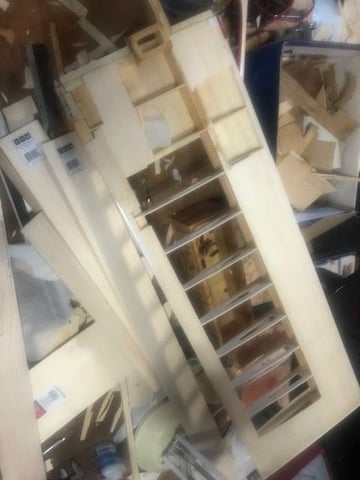
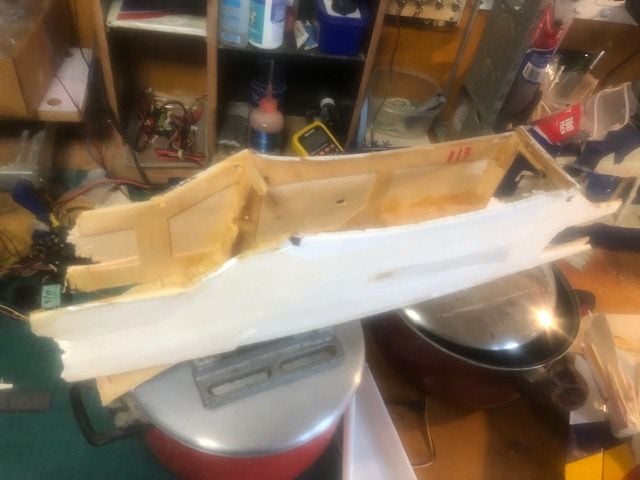
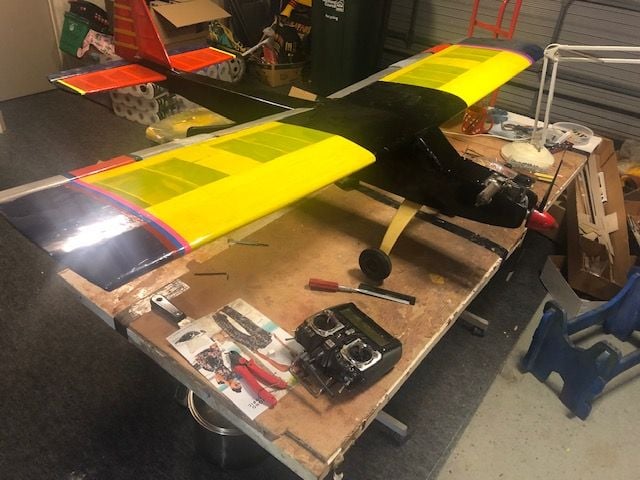
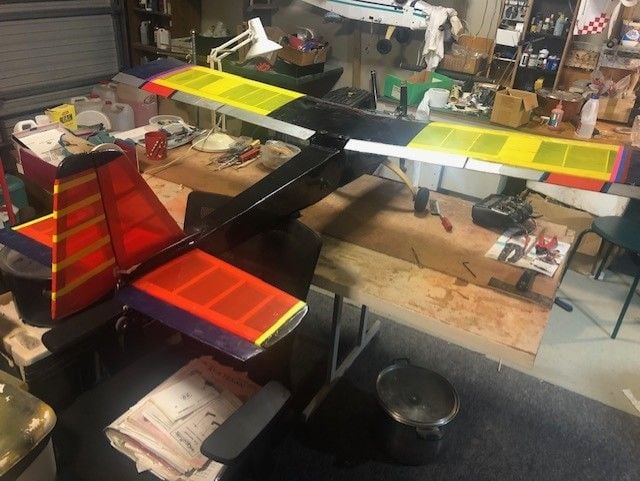
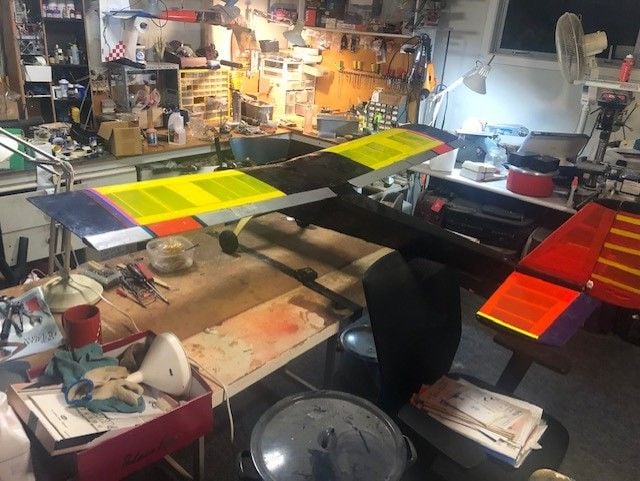
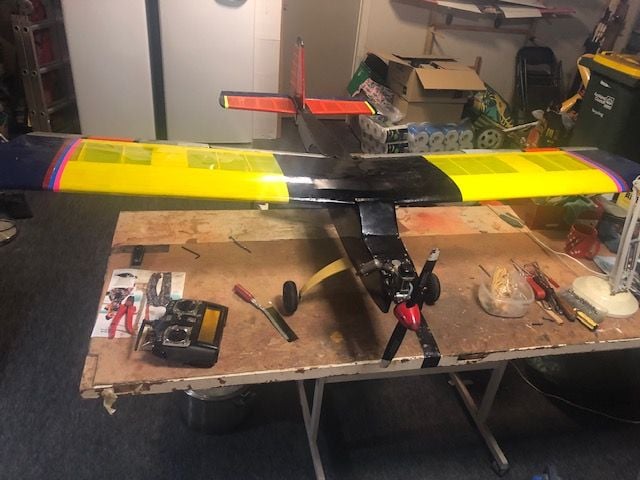
Pics of crashed parts: almost good 1/2 wing and fuse saddle that I started with and the final product are attached. Cheers
WS 74 inches
fuse 1550
WS 74 inches
06-25-2021 | 08:04 PM
#11
My Feedback: (4)
Looks good and you have bright color / contrast for visibility. Interesting to read you have one of the few glow engines you can place anywhere relative to the fuel tank and not have a fuel delivery issue. First time I've seen a YS on a trainer though. I had a FZ63, and a 2 stroke 45 and 60 years ago on my Super Sportsters. Good running engines. These days it's harder for me in my area to find compatible fuel to run them.
What are you using for an after run oil on your YS engine? It's got its quirks there too. YS engine after run oil
Other engines like OS Engines with internal/external pumps also give you flexibility. Perry seems to be still kicking too. Perry Pumps - Pumps
So, when are you going to get her back in the air?
What are you using for an after run oil on your YS engine? It's got its quirks there too. YS engine after run oil
Other engines like OS Engines with internal/external pumps also give you flexibility. Perry seems to be still kicking too. Perry Pumps - Pumps
So, when are you going to get her back in the air?
06-26-2021 | 04:13 AM
#12
Thread Starter
Weather permitting it will probably be maiden next week.The plane ended up needing some 250 grams and the 5 cell battery placed right behind the prop under the engine in order to get the c.g correct. All up weight stands now at 3.7 Kg. I guess YS 70 will do the job. All my 4 stroke engines run on 10:20:70 fuel including the Ys .I only use synthetic oil in the mix(20%) .Avoiding caster is a must for the Ys engine as it messes up with the diaphragm .Synthetic oil is also used for after run protection .
06-26-2021 | 10:09 AM
#14
My Feedback: (4)
The question on my mind is why do you want to do this? The plane was designed for the engine to be in its place, so why mess with it? A change in engine location that drastic will also probably cause fuel feed problems, notably flooding at idle and fuel siphoning into the engine while it isn't running. That's assuming the plane was designed with the tank in the right place to begin with.
So what's your reason for wanting to change the engine mount location?
So what's your reason for wanting to change the engine mount location?
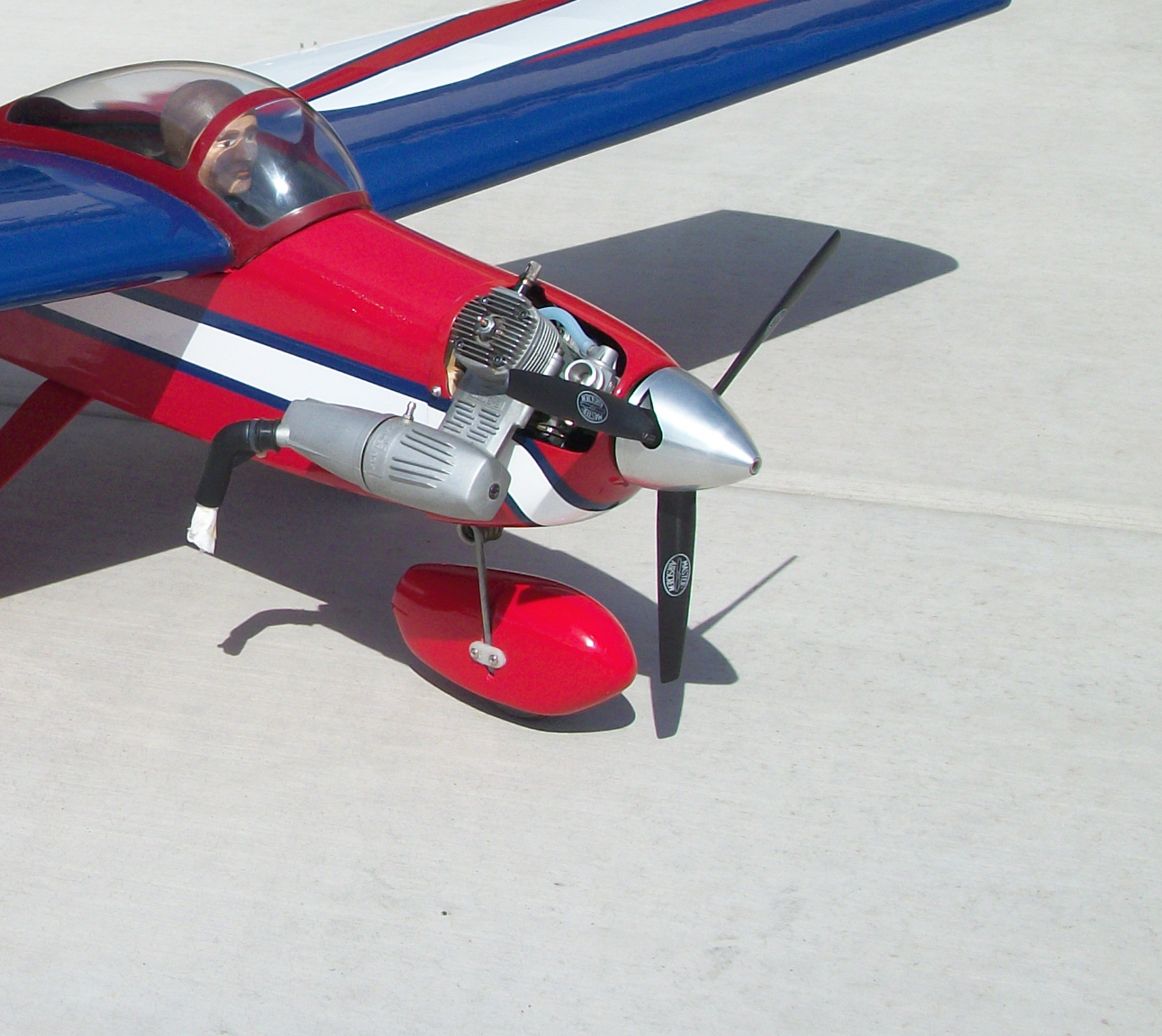
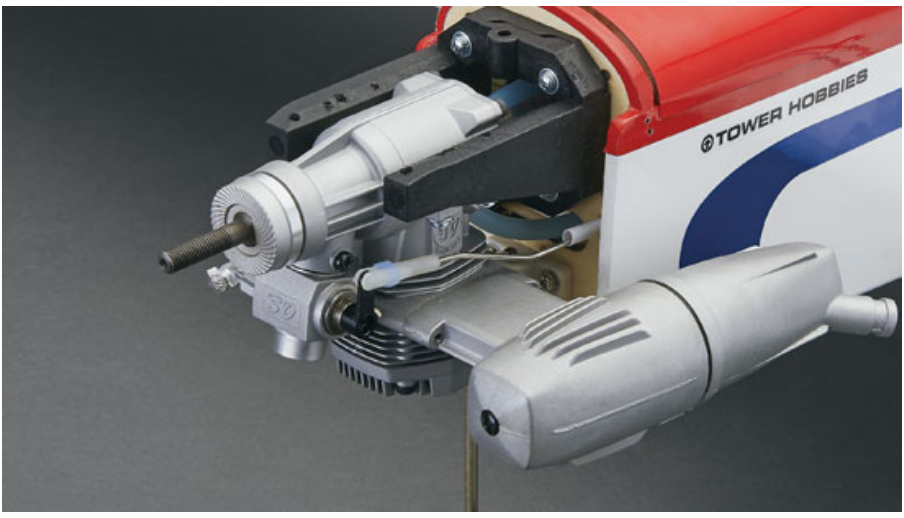
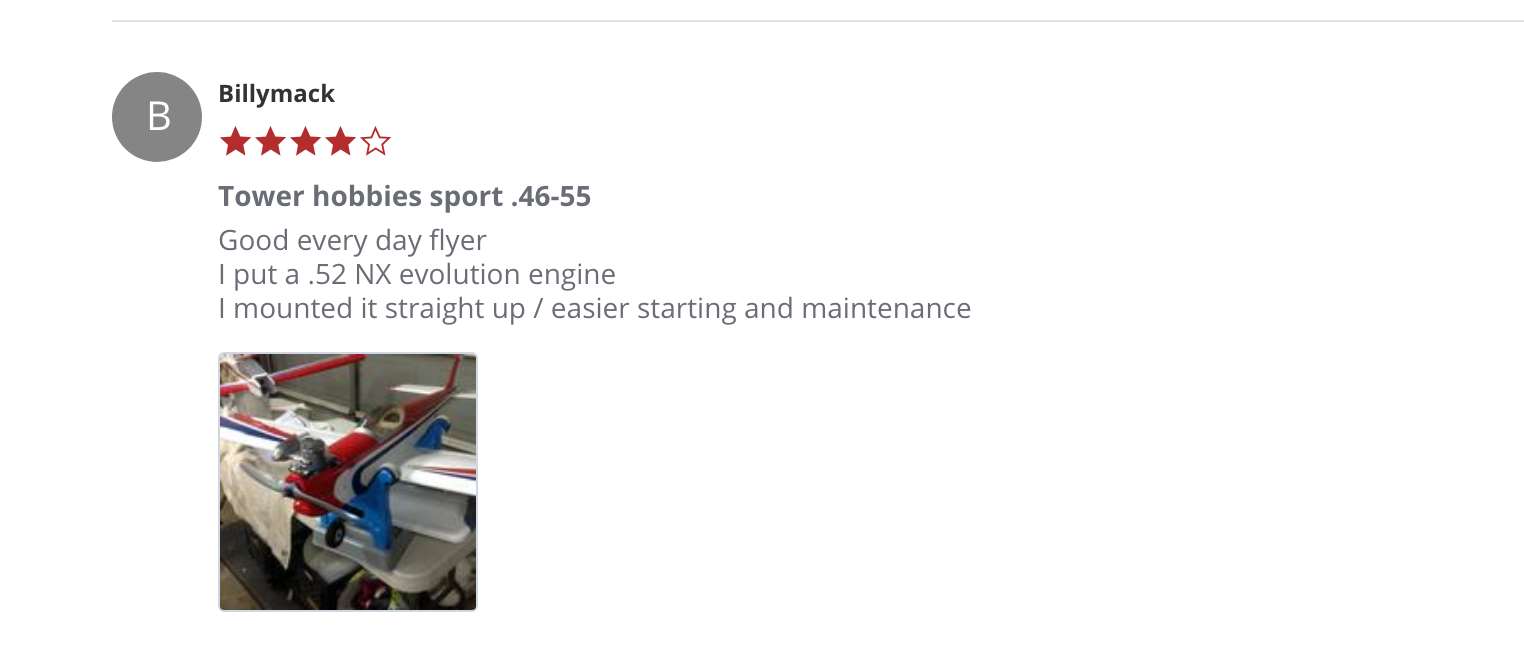
Since you brought this up, see this inverted glow engine set up on this ARF? What do you suppose would happen if the engine were placed on its side or upright instead, for easier starting, tuning, less flooding situations as inverted 2 strokes tend to do in an inverted configuration, being a low wing style plane? Any thoughts would be welcome on this topic. Note reviews from buyers in the link. I think the head sitting that high shows he maintained the factory thrust line, but being a low wing plane, I don't see a problem lowering it a tad? For just $104.99 (when they were in stock last month), I grabbed 2 of these to experiment with.
Last edited by J330; 06-26-2021 at 10:15 AM.
06-26-2021 | 04:03 PM
#15
Thread Starter
Yes I used to mix 20:20 for the Ys engine. However, I found out that I would only lose some 600 rpm using the lower nitro mix so I started taking one tank of fuel to the field for all engines.Once engine tuned correctly start up was good for both percentages.
The following users liked this post:
J330 (06-26-2021)
06-30-2021 | 06:16 AM
#16
The problem with lowering the engine on that particular plane is that the cowl wouldn't fit. The user who mounted his engine upright has it sitting really high. It looks goofy and is creating a lot of extra drag. It may or may not be influencing the rudder. It's also raising the vertical CG. Generally, planes are designed with the thrustline in a particular plane with consideration given for fitting into the cowl and where the muffler will go, then the rest of the aerodymanics (incidences and such) are worked out with that thrustline assumed.
https://www.towerhobbies.com/product.../TOWA2030.html
Since you brought this up, see this inverted glow engine set up on this ARF? What do you suppose would happen if the engine were placed on its side or upright instead, for easier starting, tuning, less flooding situations as inverted 2 strokes tend to do in an inverted configuration, being a low wing style plane? Any thoughts would be welcome on this topic. Note reviews from buyers in the link. I think the head sitting that high shows he maintained the factory thrust line, but being a low wing plane, I don't see a problem lowering it a tad? For just $104.99 (when they were in stock last month), I grabbed 2 of these to experiment with.
Since you brought this up, see this inverted glow engine set up on this ARF? What do you suppose would happen if the engine were placed on its side or upright instead, for easier starting, tuning, less flooding situations as inverted 2 strokes tend to do in an inverted configuration, being a low wing style plane? Any thoughts would be welcome on this topic. Note reviews from buyers in the link. I think the head sitting that high shows he maintained the factory thrust line, but being a low wing plane, I don't see a problem lowering it a tad? For just $104.99 (when they were in stock last month), I grabbed 2 of these to experiment with.
The following users liked this post:
J330 (06-30-2021)
06-30-2021 | 11:58 AM
#17
My Feedback: (4)
The problem with lowering the engine on that particular plane is that the cowl wouldn't fit. The user who mounted his engine upright has it sitting really high. It looks goofy and is creating a lot of extra drag. It may or may not be influencing the rudder. It's also raising the vertical CG. Generally, planes are designed with the thrustline in a particular plane with consideration given for fitting into the cowl and where the muffler will go, then the rest of the aerodymanics (incidences and such) are worked out with that thrustline assumed.
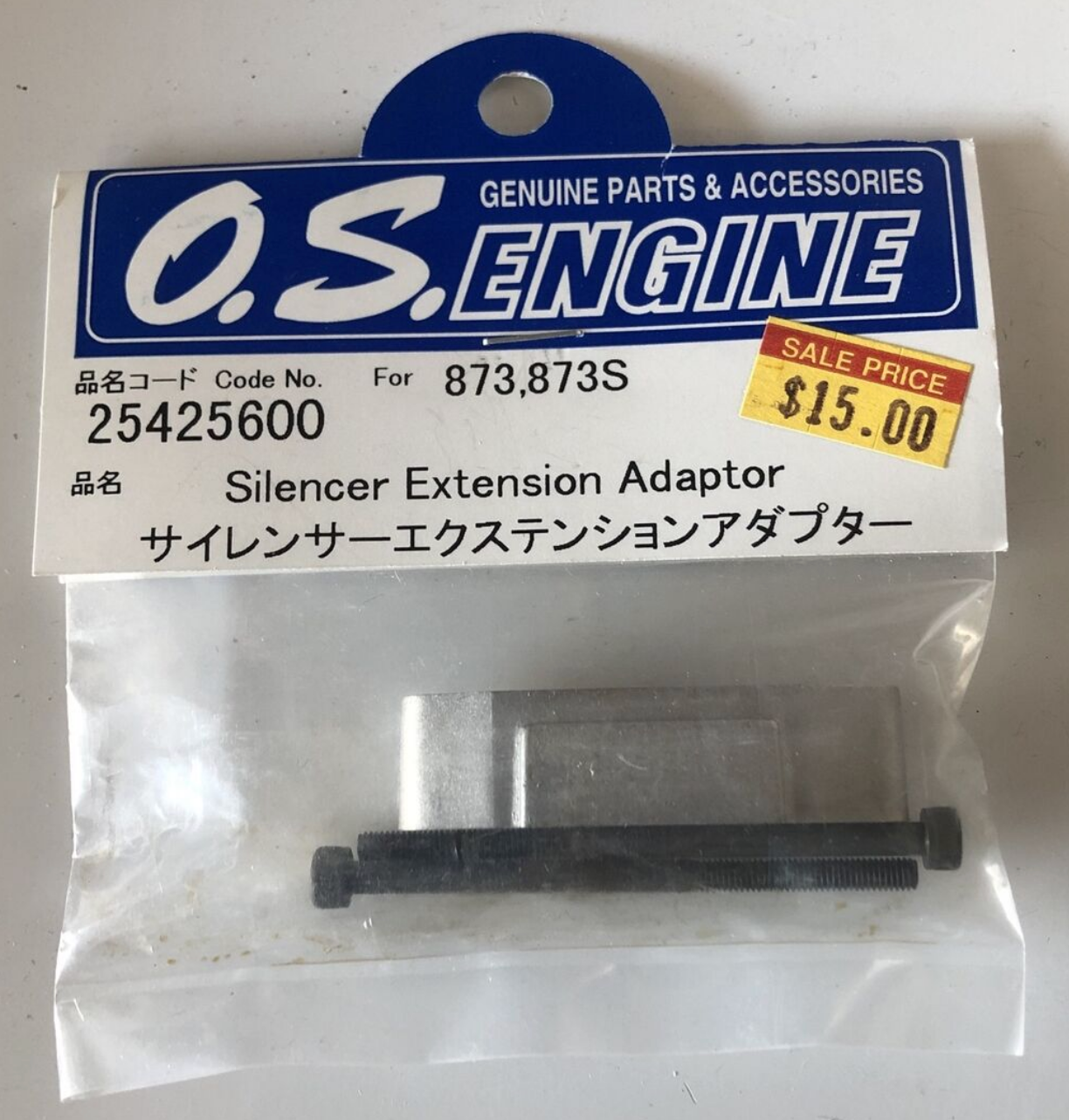
Perhaps on a sport plane with tri-gear drag and a wing that isn't very slippery like those on quickie planes, those influences aren't as pronounced, or the pilot doesn't notice since he's not in a pattern event using rudder often completing clean maneuvers? I could see the concern in some applications, but maybe on this sort of model one could get away with breaking some aerodynamic rules you've mentioned. As far as appearances, it is kind of ugly with an upright engine sticking up, not tidy at all. I would be more inclined to try a side mount position and add a muffler extension adaptor for clearance for the muffler to exit under the plane, convert it over to a tail dragger, or copy the offset engine position that works well with the SIG Kavalier and isn't inline with the rudder. I'll just have to experiment and see first hand how this goes.