


Receiver mounting positions
 05-08-2016 | 02:54 PM
#1
Thread Starter

My Feedback: (3)
 Receiver mounting positions
Hello,
I've noticed that some receivers are mounted on the side of the fuselage while some are mounted on a tray between the sides of the fuse?
Is there any advantages to either approach or is it personal preference?
I can't imagine the weight of a receiver on the side of the fuse would cause any issues with flexing the fuselage side, but maybe I'm wrong.
Thanks,
I've noticed that some receivers are mounted on the side of the fuselage while some are mounted on a tray between the sides of the fuse?
Is there any advantages to either approach or is it personal preference?
I can't imagine the weight of a receiver on the side of the fuse would cause any issues with flexing the fuselage side, but maybe I'm wrong.
Thanks,
 05-08-2016 | 03:53 PM
#2

Hi,
I have receiver mounted to the side of fuselage in my MythoS Pro and Galactika.
The reason is for me: very easy to mount, very low weight on the mounting plate and might help to keep servo lead length short and that way save a few grams in weight. I have moved over to S.BUS2 in my Galactika so the servo leads are are even less, saving more weight then otherwise.
I have not found any disadvantages with side mounted receiver (yet).
My receiver weight is 11 grams. It is no problem (in my planes) with flexing of fuselage side where receiver is mounted.
I use some welcro under the receiver and a thinner welcro like a loop holding it against the 1,5 mm plywood mounting plate (with two small plywwod pieces in th e ends of the plate so I get a "tunnel" for the welcro that is looped around the receiver).
Like this:
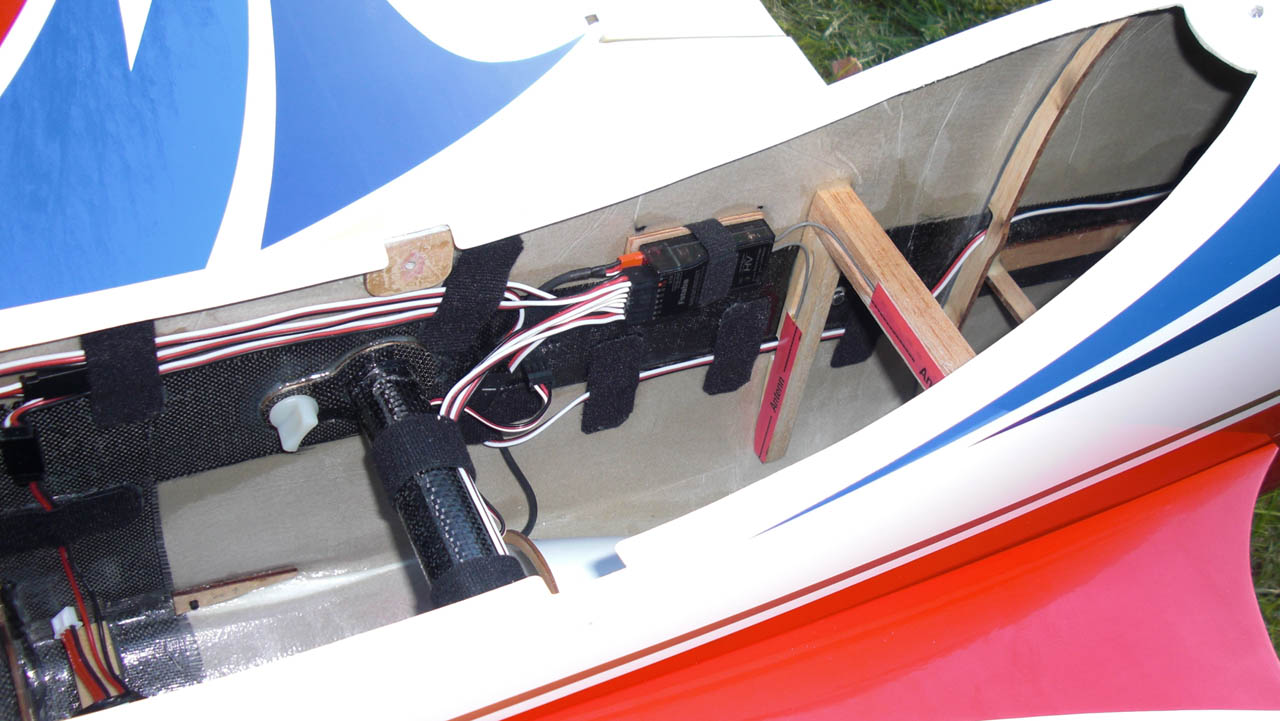
Receiver in my Sebart MythoS Pro.
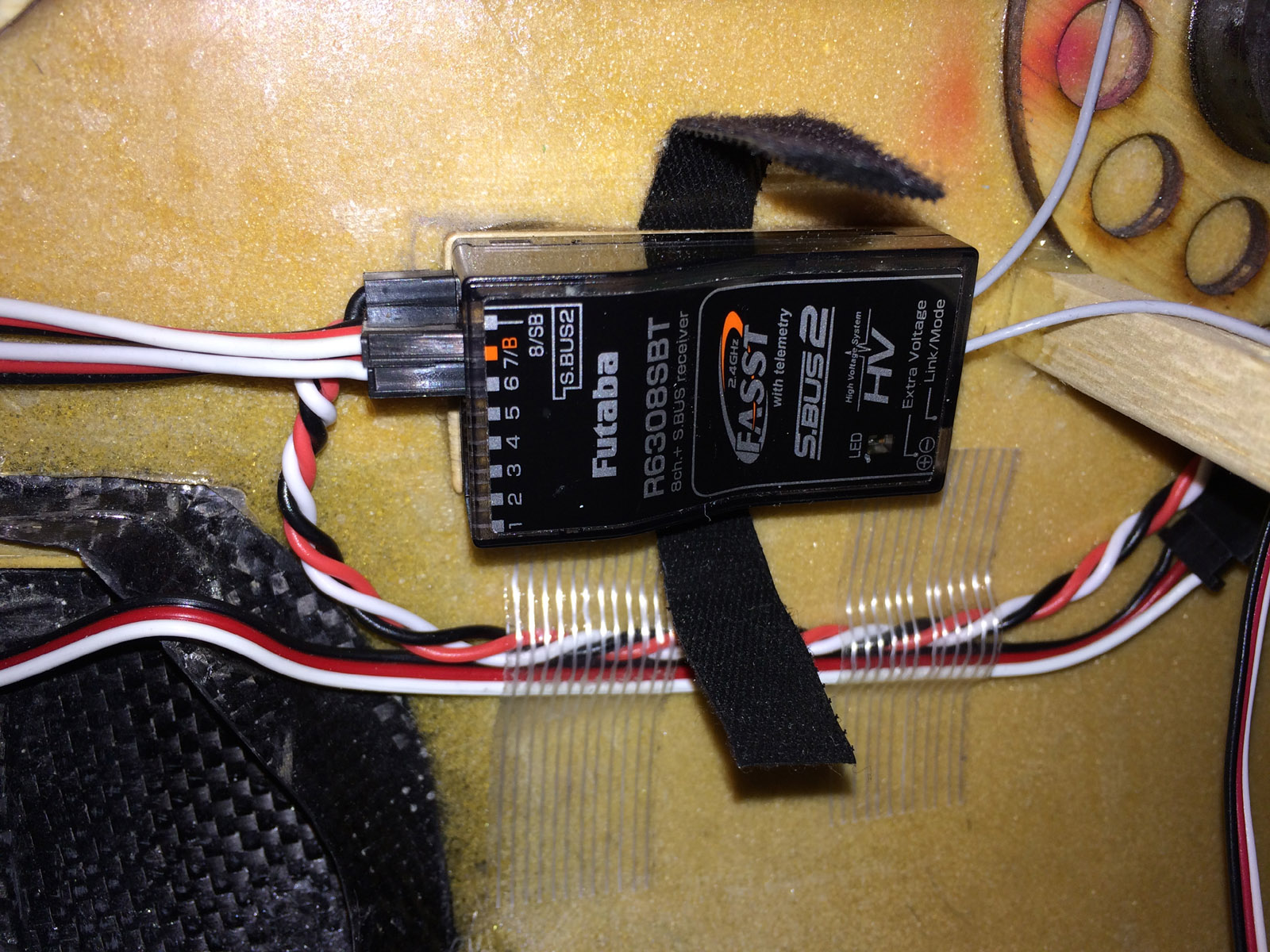
Receiver in my Galactika.
/Bo
I have receiver mounted to the side of fuselage in my MythoS Pro and Galactika.
The reason is for me: very easy to mount, very low weight on the mounting plate and might help to keep servo lead length short and that way save a few grams in weight. I have moved over to S.BUS2 in my Galactika so the servo leads are are even less, saving more weight then otherwise.
I have not found any disadvantages with side mounted receiver (yet).
My receiver weight is 11 grams. It is no problem (in my planes) with flexing of fuselage side where receiver is mounted.
I use some welcro under the receiver and a thinner welcro like a loop holding it against the 1,5 mm plywood mounting plate (with two small plywwod pieces in th e ends of the plate so I get a "tunnel" for the welcro that is looped around the receiver).
Like this:
Receiver in my Sebart MythoS Pro.
Receiver in my Galactika.
/Bo
Last edited by bem; 05-08-2016 at 03:55 PM.
05-08-2016 | 04:29 PM
#3
Thread Starter
My Feedback: (3)
Thank you.
I don't compete so weight is not a factor for me.
A good day at the field is bringing the plane home in one recognizable piece
I was going to use a Secraft receiver mount and Secraft battery mount. Each would be mounted against the side with small basswood blocks.
http://secraft.net/shop/step1.php?number=1178
I don't compete so weight is not a factor for me.
A good day at the field is bringing the plane home in one recognizable piece
I was going to use a Secraft receiver mount and Secraft battery mount. Each would be mounted against the side with small basswood blocks.
http://secraft.net/shop/step1.php?number=1178
05-09-2016 | 04:43 AM
#5
In my Spark, the RX sits in the middle on a very light honeycomb sandwich plate. I like symmetry but the benefits are as follows:
- Easy access to servo wiring
- The diversity antennas can be mount to the opposite sides of the fuselage. This way there's maximum spatial separation and minimum RF blocking from carbon fiber parts like the wing tube.
- Easy access to servo wiring
- The diversity antennas can be mount to the opposite sides of the fuselage. This way there's maximum spatial separation and minimum RF blocking from carbon fiber parts like the wing tube.


