


McCulloch conversion info, Pics
 03-28-2004 | 10:56 AM
#1
Thread Starter

My Feedback: (2)
Joined: Apr 2002
Posts: 638
Likes: 0
Received 0 Likes
on
0 Posts
From: Independence,
KY
 McCulloch conversion info, Pics
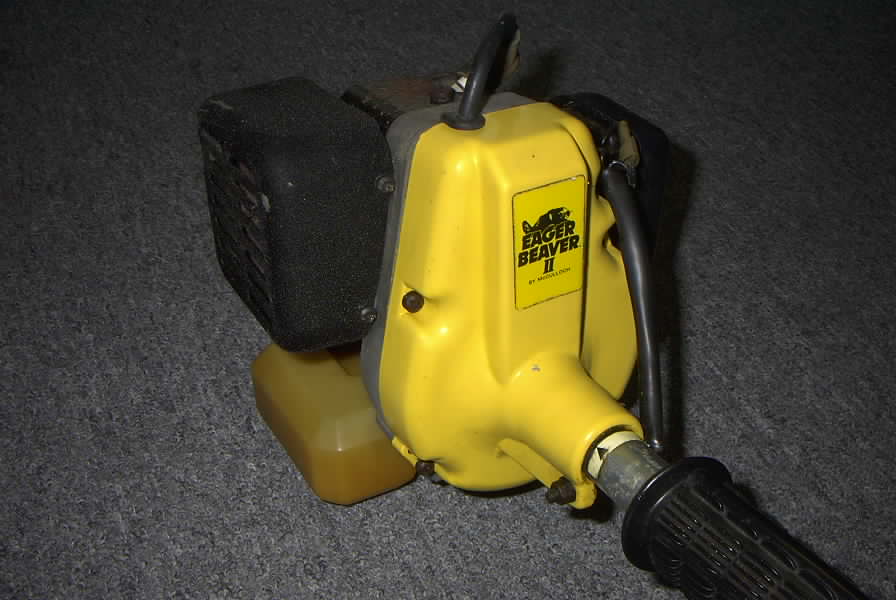
Does anyone know anything about this engine (or trimmer) I have read that the older Echos are more desireable than the new models, I am hoping the same holds true for McCulloch, I replaced this trimmer years ago with a Honda 4 stroke, and just recently got the "bug" for a conversion. I am going to build either a Stingray 120 or a Tree Hopper, something just for touch and goes, so lightweight would be nice. is this engine worth messing with? I'll post some bare pics once I get it apart.

 03-28-2004 | 12:08 PM
#2
Thread Starter
My Feedback: (2)
Joined: Apr 2002
Posts: 638
Likes: 0
Received 0 Likes
on
0 Posts
From: Independence,
KY
RE: McCulloch conversion info, Pics
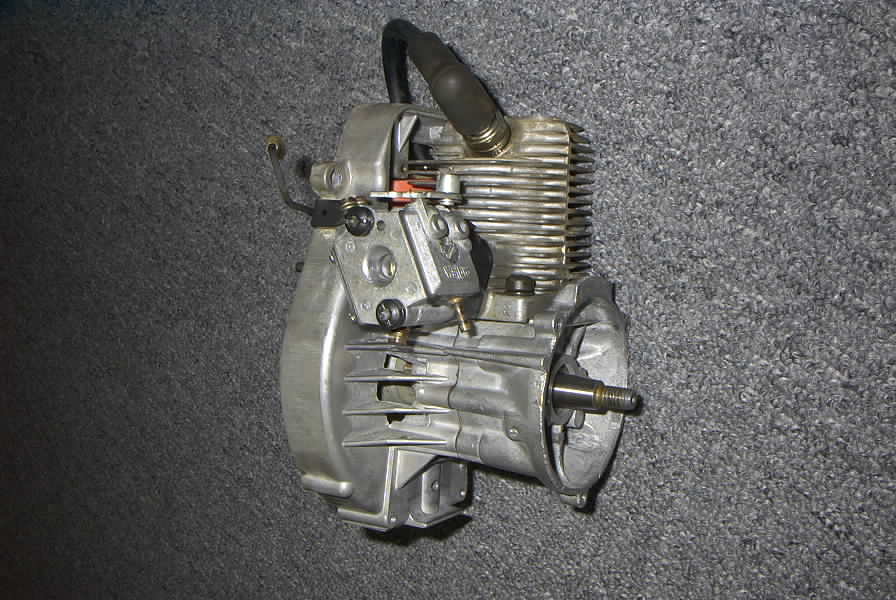
Well, after taking it apart, I have mixed thoughts on this conversion. At first I thought I'd have a nice light engine, (this trimmer is WAY lighter than the Honda) It looks like I could mount the prop on the "other" side, and have the flywheel and magneto in the back, like a G 23, that would look nice. There is lots of material to be removed on the flywheel side, I could get it down to a very small crankcase, and just make a bracket to hold the coil. But the whole thing looks rather chincy. The carb is very tiny, the piston has only one ring, the cylinder is held on with only two bolts, the connecting rod has no bearings, and the crankshaft has roller bearings (how big of a deal is that ?)


03-28-2004 | 03:31 PM
#3
Senior Member
Joined: Jul 2003
Posts: 502
Likes: 0
Received 0 Likes
on
0 Posts
From: Auckland, NEW ZEALAND
RE: McCulloch conversion info, Pics
I believe that this engine is actually a Kioritz ( Echo) 21 cc even though it it is badged McCulloch. I own one too - haven't taken it apart as yet but I believe they run ball bearings.
Seems they are used on many brands, but this model is not used a lot for model aircraft for some reason ,but it certainly makes a great Weedie!
Having said that, they have been used by some with good results. Check the thread "Don't Forget Echo", you may find a lot of useful info there.
Seems they are used on many brands, but this model is not used a lot for model aircraft for some reason ,but it certainly makes a great Weedie!
Having said that, they have been used by some with good results. Check the thread "Don't Forget Echo", you may find a lot of useful info there.
03-28-2004 | 05:46 PM
#4
Thread Starter
My Feedback: (2)
Joined: Apr 2002
Posts: 638
Likes: 0
Received 0 Likes
on
0 Posts
From: Independence,
KY
RE: McCulloch conversion info, Pics
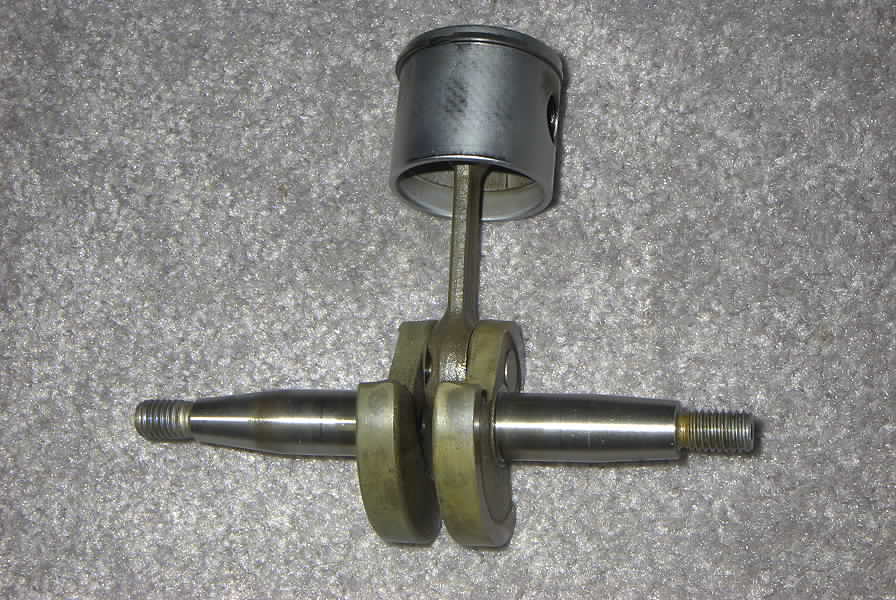
I have taken it apart, and the crankshaft has roller bearings, I heard they are no good for a/c use, due to the prop putting a side load on them. I wonder if the bearings can be changed to ball bearings? This crankshaft is totally unlike the homelite type, the homlites look kinda like a small glow engine crankshaft, where you can slide the connecting rod off the crank pin. This one is not like that, It's all one piece, pressed together, you cannot remove the connecting rod, and the crankshaft looks all most "double ended" It has a bearing on each side of the cylinder, which should help distribute the loads, but you end up with the crankshaft sticking out past the rear housing, (like a quadra 75) it doesn't have a typical backplate.
03-28-2004 | 09:09 PM
#5
Thread Starter
My Feedback: (2)
Joined: Apr 2002
Posts: 638
Likes: 0
Received 0 Likes
on
0 Posts
From: Independence,
KY
RE: McCulloch conversion info, Pics
At first I stated the con rod had no bearings, that is incorrect, there is a needle bearing on the bottom, and the top of the rod just has a bushing. Here is a pic of the Crank for those who have never seen this type.
03-29-2004 | 12:37 AM
#6
Senior Member
Joined: Jul 2003
Posts: 502
Likes: 0
Received 0 Likes
on
0 Posts
From: Auckland, NEW ZEALAND
RE: McCulloch conversion info, Pics
I would have sworn that they had ball bearings, anyway I should think you could fit some form of thrust bearing, maybe even bronze, it probably would need a bit of machining of the c/case, but not having seen it , couldn't say for sure if it's possible.
The small end bush might be a slight handicap and would probably be ok if it had a good sized lubrication hole on the small end eye, but it maybe could be replaced with a needle roller ( if the pin is hard enough).
The built up crank is very strong looking one, and in my opinion is a bonus, heavier but stronger than the single sided overhung type. The rear part of the shaft could be easily cut off. the seal taken out and be replaced by a blanking disk.
To convert to ball bearings would require machining out housings in the crankcase, and again it could be done ( with access to proper facilities), providing of course that there is enough "meat" in the cases.
I haven't seen the transfer ports so don't know if they are good for power. I do see your point about magneto etc., could be a challenge!
Maybe if I can find the time I'll tear mine down and check it out
Someone, somewhere, must have done this conversion with success, maybe they will see this and give you some good tips.
Good luck.
The small end bush might be a slight handicap and would probably be ok if it had a good sized lubrication hole on the small end eye, but it maybe could be replaced with a needle roller ( if the pin is hard enough).
The built up crank is very strong looking one, and in my opinion is a bonus, heavier but stronger than the single sided overhung type. The rear part of the shaft could be easily cut off. the seal taken out and be replaced by a blanking disk.
To convert to ball bearings would require machining out housings in the crankcase, and again it could be done ( with access to proper facilities), providing of course that there is enough "meat" in the cases.
I haven't seen the transfer ports so don't know if they are good for power. I do see your point about magneto etc., could be a challenge!
Maybe if I can find the time I'll tear mine down and check it out
Someone, somewhere, must have done this conversion with success, maybe they will see this and give you some good tips.
Good luck.
03-29-2004 | 09:52 AM
#7


My Feedback: (6)
RE: McCulloch conversion info, Pics
This engine sure looks like the Echo/Kioritz 16cc engine I had. I'm surprised it has roller bearings though, as mine had ball bearings. Mine also had no bearing at the wrist pin. At any rate, I think you will find it short on power. I would consider the 21cc to be a minimum for R/C use. As stated above, you can find a ton of info in the "Don't forget the Echo.." thread.
Good luck,
AV8TOR
Good luck,
AV8TOR
03-29-2004 | 12:05 PM
#8
Thread Starter
My Feedback: (2)
Joined: Apr 2002
Posts: 638
Likes: 0
Received 0 Likes
on
0 Posts
From: Independence,
KY
RE: McCulloch conversion info, Pics
ORIGINAL: av8tor1977
As stated above, you can find a ton of info in the "Don't forget the Echo.." thread.
Good luck,
AV8TOR
As stated above, you can find a ton of info in the "Don't forget the Echo.." thread.
Good luck,
AV8TOR
03-29-2004 | 02:04 PM
#9
Senior Member
Joined: Jul 2003
Posts: 502
Likes: 0
Received 0 Likes
on
0 Posts
From: Auckland, NEW ZEALAND
RE: McCulloch conversion info, Pics
Seeing you have got it apart, measure the bore and stroke and work out the capacity.
- It looks identical to my 21cc ( seems they are both based on the same crankcase).
The crankcase looks like it was made originally for ballbearings ( could be wrong) so there may be enough "meat" for ballbearing housings. - all a lot of work though.
I would give the formula for engine capacity now but I've never tried to type it in on an ordinary keyboard, so I'll try and find a link.
Found one:- http://www.appletreeauto.com/engcalc.htm
- all you need to do is, punch in is the bore and stroke in mm and the number of cylinders, - works!
(to measure the stroke, measure from crankshaft centre to crankpin centre and multiply by 2)
Please forgive me if you already know all this!
- It looks identical to my 21cc ( seems they are both based on the same crankcase).
The crankcase looks like it was made originally for ballbearings ( could be wrong) so there may be enough "meat" for ballbearing housings. - all a lot of work though.
I would give the formula for engine capacity now but I've never tried to type it in on an ordinary keyboard, so I'll try and find a link.
Found one:- http://www.appletreeauto.com/engcalc.htm
- all you need to do is, punch in is the bore and stroke in mm and the number of cylinders, - works!
(to measure the stroke, measure from crankshaft centre to crankpin centre and multiply by 2)
Please forgive me if you already know all this!
03-29-2004 | 07:44 PM
#11
Thread Starter
My Feedback: (2)
Joined: Apr 2002
Posts: 638
Likes: 0
Received 0 Likes
on
0 Posts
From: Independence,
KY
RE: McCulloch conversion info, Pics
ORIGINAL: av8tor1977
Hi,
......... you will get cubic inches. Multiply by .061 for cc's.
Hope this helps,
AV8TOR
Hi,
......... you will get cubic inches. Multiply by .061 for cc's.
Hope this helps,
AV8TOR

I was visiting the local mom and pop lawn mower shop today, and I found out there are no parts available for it, not even a piston ring, they said McCulloch has changed names so many times, and they don't have access to any parts for real old stuff, (they said this one is Pre-1987) They didn't think too highly of it anyway, their choice is stihl or tanaka, has anyone heard of tanaka ? They had a nice looking unit there, electric start, big carb, 4 bolts holding the cylinder on, nice model engine type backplate mount already there !! So I brought it home, (the addiction has begun
) He said it was a very expensive trimmer, I paid $25 for it. It was missing the starter battery, and a fuel tank and some of the shrouds, But I rigged up a battery and fuel system and had it running in no time, then starting stripping it down. I was very excited at first, since the cylinder is held on with 4 bolts, and it has the "normal" backplate and mount built in. The coil is mounted dead center, on two very nice cast lugs, with webbing, so I can grind away almost all of the flywheel housing and still have a strong mount for the coil, that will look nice too The flywheel on this one is backwards too, but the crankshaft is so long, I can slide on a spacer and probably install a prop with no adapter necessary. This one has a ball bearing on the crankshaft, BUT ONLY ONE !!! is that normal? with the piston at BDC (not up in the cylinder for stability) you can actually wiggle the crankshaft a little in the bearing, it's not lose per se, but with only one bearing, it kinda "pivots" since there is no other support, I'm not sure about this one. Also the carb is plastic, it's a walbro, but a plastic housing, and the throttle is a barrel type, similar to R/C carbs, not a butterfly, These things are intriguing, I'll take some pics, and hopefully someone can comment Oh, if this helps, the trimmer I bought was a Tanaka AST-5000
03-29-2004 | 09:50 PM
#12
Thread Starter
My Feedback: (2)
Joined: Apr 2002
Posts: 638
Likes: 0
Received 0 Likes
on
0 Posts
From: Independence,
KY
RE: McCulloch conversion info, Pics
Here is the little mac after plenty of grinding, and some sand blasting. I'm starting to like it more and more, But I don't like the ugly flywheel, that has to be mounted backwards (fins toward the engine) Does anyone know where I can get an electronic ignition system for it ?


I ground the fins off the flywheel, not so much to save weight, but I read that it reduces the drag, (air load) and makes a noticeable diff in RPM, I rebalanced it on a prop balancer. Of course, I'd like to do away with it altogether, and convert to electronic.
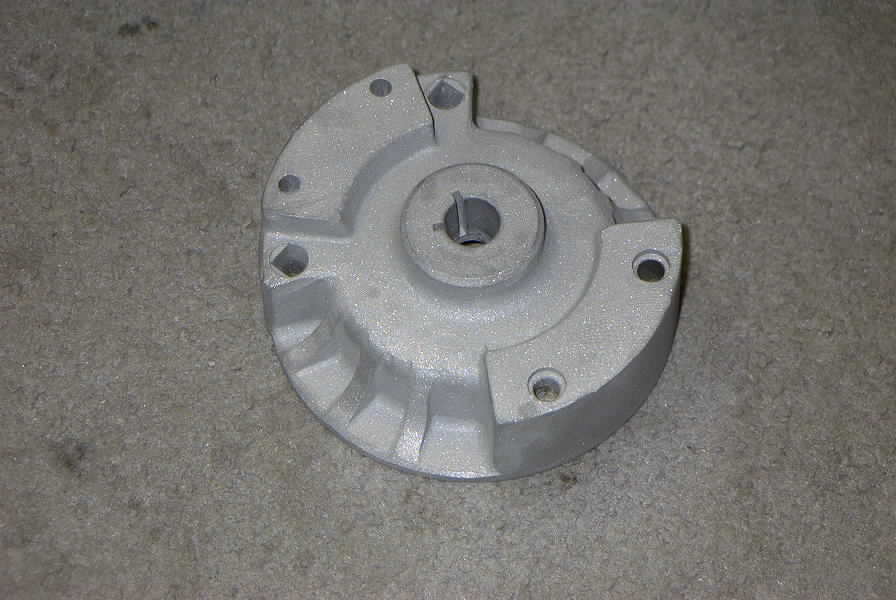
Here is the Tanaka I mentioned above, I would appreciate any comments, I'm not liking the SINGLE bearing on the crankshaft, I wonder if the drive shaft from the trimmer helped support the end of the crank, It may be far worse with a prop, than it was in the weed eater. or maybe I am worrying about nothing, Maybe this is normal, and the mac is just over-engineered.


I ground the fins off the flywheel, not so much to save weight, but I read that it reduces the drag, (air load) and makes a noticeable diff in RPM, I rebalanced it on a prop balancer. Of course, I'd like to do away with it altogether, and convert to electronic.
Here is the Tanaka I mentioned above, I would appreciate any comments, I'm not liking the SINGLE bearing on the crankshaft, I wonder if the drive shaft from the trimmer helped support the end of the crank, It may be far worse with a prop, than it was in the weed eater. or maybe I am worrying about nothing, Maybe this is normal, and the mac is just over-engineered.
03-30-2004 | 12:06 AM
#13
Senior Member
Joined: Jul 2003
Posts: 502
Likes: 0
Received 0 Likes
on
0 Posts
From: Auckland, NEW ZEALAND
RE: McCulloch conversion info, Pics
Normally there are 2 bearings in an overhung crank situation eg. as in the Mac 28cc & 32cc trimmers.
The Stihls are always good quality but expensive, don't know about Tanaka.
I do like the look of that crank on the little Mac 21cc!
You sure don't beat around the bush do you!
RCIGN1 - or Ralph Cunningham ( RC ignitions) sells a reliable inexpensive CD ignition system, - I have ordered one, and I will use it in conjunction with a small motorcycle coil.
http://www.rcuniverse.com/forum/m_16...tm.htm#1670614
Look at posts 24, 25, 26. on this thread, these guys are experts, - old and wise.
The Stihls are always good quality but expensive, don't know about Tanaka.
I do like the look of that crank on the little Mac 21cc!
You sure don't beat around the bush do you!
RCIGN1 - or Ralph Cunningham ( RC ignitions) sells a reliable inexpensive CD ignition system, - I have ordered one, and I will use it in conjunction with a small motorcycle coil.
http://www.rcuniverse.com/forum/m_16...tm.htm#1670614
Look at posts 24, 25, 26. on this thread, these guys are experts, - old and wise.
03-30-2004 | 12:02 PM
#14
Senior Member
Joined: Jul 2003
Posts: 502
Likes: 0
Received 0 Likes
on
0 Posts
From: Auckland, NEW ZEALAND
RE: McCulloch conversion info, Pics
I was told that the Mac engine was really an Echo / Kioritz, but after looking at the one in " Echo on a Funtana" thread, there is definitely a difference, so now doubts are creeping in!
However, the construction of our 21cc engine is also very different to to the 28/32 McCulloch weedies (which I have a few examples of). - they have cantilever cranks and model aircraft type mounting lugs.
I will definitely pull apart my 21 now! - Some people say that the overhung / cantilever crank is stiffer than the double sided type. ( I have my doubts ), but these guys have had a long practical experience on gas engines, and I would hate to argue with any of them.
Whichever answer is true doesn't really matter, but I would say ( from engineering experience ) that the cantilever crank must be supported by more than 1 bearing!! - it certainly will not be rigid without 2 bearings! ( Except perhaps in the case of a double row type ballbearing, or a long needle roller type), - that's improbable though.
You are obviously someone who gets things done quickly, so I would like to hear how you get on and what conclusions you come to.
Good luck. - Will.
However, the construction of our 21cc engine is also very different to to the 28/32 McCulloch weedies (which I have a few examples of). - they have cantilever cranks and model aircraft type mounting lugs.
I will definitely pull apart my 21 now! - Some people say that the overhung / cantilever crank is stiffer than the double sided type. ( I have my doubts ), but these guys have had a long practical experience on gas engines, and I would hate to argue with any of them.
Whichever answer is true doesn't really matter, but I would say ( from engineering experience ) that the cantilever crank must be supported by more than 1 bearing!! - it certainly will not be rigid without 2 bearings! ( Except perhaps in the case of a double row type ballbearing, or a long needle roller type), - that's improbable though.
You are obviously someone who gets things done quickly, so I would like to hear how you get on and what conclusions you come to.
Good luck. - Will.
04-01-2004 | 09:34 AM
#15
Thread Starter
My Feedback: (2)
Joined: Apr 2002
Posts: 638
Likes: 0
Received 0 Likes
on
0 Posts
From: Independence,
KY
RE: McCulloch conversion info, Pics
I ran the Tanaka yesterday. It started easily and idled real well. It turned a master airscrew 18x8 @ 6300 RPM, on 32:1 fuel mix. I think with an APC prop, and 50:1 mix, It might turn 7000. The only "issue" is the play in the crankshaft. At idle, you can see it wobble, it smooths out some at higher RPM, but I don't think this is a very good design. The engine looks real nice, and I had high hopes, You can see I did a lot of grinding on the flywheel, on the front and backside. It's seems fairly light too, 47oz as you see it here. The internal parts look real good too, I don't think it has much time on it, after cleaning it up, everything looks new, and fits well, It's just a poor design in my opinion.


04-02-2004 | 03:19 AM
#16
Senior Member
Joined: Jul 2003
Posts: 502
Likes: 0
Received 0 Likes
on
0 Posts
From: Auckland, NEW ZEALAND
RE: McCulloch conversion info, Pics
You just never stop do you?
The Tanaka looks good, pity about the bearings ( bearing) though.
What is the shiny part near the front end of the shaft? looks to me like it ran in an outrigger bearing in the trimmer housing.
I wouldn't run it too much like it is till you've found an answer, - the big end wouldn't take too kindly to it.
Not too keen on the ignition coil directly in front of the cylinder, it must block a lot of cooling air.
If that big flywheel was removed and a CD ignition kit fitted, (CD type is the way to go), it would be possible to extend the bearing housing to accomodate another bearing, ( providing you had the equipment and the expertise ).
I have both, but I live on the other side of the world, so help from me isn't really feasible!
You still going to go ahead with the little Mac?
The Tanaka looks good, pity about the bearings ( bearing) though.
What is the shiny part near the front end of the shaft? looks to me like it ran in an outrigger bearing in the trimmer housing.
I wouldn't run it too much like it is till you've found an answer, - the big end wouldn't take too kindly to it.
Not too keen on the ignition coil directly in front of the cylinder, it must block a lot of cooling air.
If that big flywheel was removed and a CD ignition kit fitted, (CD type is the way to go), it would be possible to extend the bearing housing to accomodate another bearing, ( providing you had the equipment and the expertise ).
I have both, but I live on the other side of the world, so help from me isn't really feasible!
You still going to go ahead with the little Mac?
04-02-2004 | 09:43 AM
#17
Thread Starter
My Feedback: (2)
Joined: Apr 2002
Posts: 638
Likes: 0
Received 0 Likes
on
0 Posts
From: Independence,
KY
RE: McCulloch conversion info, Pics
that shiny end is right were the clutch bearing was, I guess they relied heavily on that, rather than a decent stand alone engine, I guess they never had R/C in mind
I have no way to mount a prop to the Mac, I ordered a prop hub, so I can begin testing it, I hope next week.
Today I am working on a Stihl/ryobi I got a very old stihl trimmer, (FS 40 I think) one with a completely enclosed engine, the entire housing was an off white plastic, with the usual orange trim, recoil in the front, engine inverted, wrap around fuel tank under the bottom. You couldn't seen any part of the engine, it didnt' have the exposed bottom like a ryobi trimmer, and it had a very large 3" diameter knob on the back, that was the choke, strange. I think it was the air filter assembly too, and you rotated it back and forth to turn the chock on or off. It looked very "cheap" compared to the higher end stihl trimmers, I guess even stihl made some "price leaders" Once I got it apart, the engine is identical to a ryobi, with a plastic backplate, reed valve induction, the coil mounted to the cylinder, (no grinding required) I have been researching ryobis, and apparently they come in different varieties too, mine is a single ring, stamped steel con rod, and laminated counterweight on crankshaft. But it has two bearings !! and the crankshaft is rigid ! What I don't understand is why stihl would use that engine? Why would they put their name on something so cheap? Unfortunately it's nothing like the later stihls that have three radial mounts on the rear, and mounting lugs on the side too, like a typical r/c engine.
I have no way to mount a prop to the Mac, I ordered a prop hub, so I can begin testing it, I hope next week.
Today I am working on a Stihl/ryobi I got a very old stihl trimmer, (FS 40 I think) one with a completely enclosed engine, the entire housing was an off white plastic, with the usual orange trim, recoil in the front, engine inverted, wrap around fuel tank under the bottom. You couldn't seen any part of the engine, it didnt' have the exposed bottom like a ryobi trimmer, and it had a very large 3" diameter knob on the back, that was the choke, strange. I think it was the air filter assembly too, and you rotated it back and forth to turn the chock on or off. It looked very "cheap" compared to the higher end stihl trimmers, I guess even stihl made some "price leaders" Once I got it apart, the engine is identical to a ryobi, with a plastic backplate, reed valve induction, the coil mounted to the cylinder, (no grinding required) I have been researching ryobis, and apparently they come in different varieties too, mine is a single ring, stamped steel con rod, and laminated counterweight on crankshaft. But it has two bearings !! and the crankshaft is rigid ! What I don't understand is why stihl would use that engine? Why would they put their name on something so cheap? Unfortunately it's nothing like the later stihls that have three radial mounts on the rear, and mounting lugs on the side too, like a typical r/c engine.
04-02-2004 | 02:07 PM
#18
Senior Member
Joined: Jul 2003
Posts: 502
Likes: 0
Received 0 Likes
on
0 Posts
From: Auckland, NEW ZEALAND
RE: McCulloch conversion info, Pics
Yes, I'm not overly impressed with the bottom end on the Ryobi either, but I am using one at present as a weedie ( and it's ok for that), I also have an old one with a broken rod, (acquired from my neighbour), he broke by letting it run too slowly and suddenly snapping the throttle open and the rod just folded!
Don't know if Stihl manufacture them for Ryobi, or visa versa, - not at all up to the usual Stihl standard.
The little Mac bottom end is certainly a strong looking unit - I would definitely go for that even if it is a bit short, don't know how that engine would go for power, and it's still got that big coil up front.
If you get a chance have a look at the McCulloch 28 or 32 weedies, they have a few good features ( and shortcomings too), they may require a little porting, and have aluminium rods (not all that impressive). but they look promising with their cantilever cranks which are quite long and are mounted in two bearings, the coil sits clear of the fins, and they also have model aircraft type mounting lugs.
Soon you are going to have a massive arsenal of potential aircraft motors!
Don't know if Stihl manufacture them for Ryobi, or visa versa, - not at all up to the usual Stihl standard.
The little Mac bottom end is certainly a strong looking unit - I would definitely go for that even if it is a bit short, don't know how that engine would go for power, and it's still got that big coil up front.
If you get a chance have a look at the McCulloch 28 or 32 weedies, they have a few good features ( and shortcomings too), they may require a little porting, and have aluminium rods (not all that impressive). but they look promising with their cantilever cranks which are quite long and are mounted in two bearings, the coil sits clear of the fins, and they also have model aircraft type mounting lugs.
Soon you are going to have a massive arsenal of potential aircraft motors!
04-02-2004 | 02:36 PM
#19
Thread Starter
My Feedback: (2)
Joined: Apr 2002
Posts: 638
Likes: 0
Received 0 Likes
on
0 Posts
From: Independence,
KY
RE: McCulloch conversion info, Pics
ORIGINAL: Willdo
Soon you are going to have a massive arsenal of potential aircraft motors!
Soon you are going to have a massive arsenal of potential aircraft motors!
04-02-2004 | 06:15 PM
#20
Senior Member
Joined: Jul 2003
Posts: 502
Likes: 0
Received 0 Likes
on
0 Posts
From: Auckland, NEW ZEALAND
RE: McCulloch conversion info, Pics
The Hondas have been known to fly, - their best feature in my opinion is the seperate oil tank with an agitator which whips the oil into a mist in the air and gets pumped through the crankcase by the action of the piston and one way valves, then returns to the tank. This allows a four stroke to be used at any angle, and the oil is kept out of the combustion chamber with a normal oil scraper ring.
Their power to weight ratio is another story though.
Take a look here:- http://www.auav.net/honda/index.htm
http://www.auav.net/engines.htm
Their power to weight ratio is another story though.
Take a look here:- http://www.auav.net/honda/index.htm
http://www.auav.net/engines.htm
04-02-2004 | 10:05 PM
#21
Thread Starter
My Feedback: (2)
Joined: Apr 2002
Posts: 638
Likes: 0
Received 0 Likes
on
0 Posts
From: Independence,
KY
RE: McCulloch conversion info, Pics
I ran the Ryobi today, as I said before, mine is very old, the carb is different than the new ones, actually says stihl on it, but it had a choke, no primer bulb, and two real spring loaded needle valves. typical of the old walbros. anyway, turned the same master airscrew 18x8 @ 6800 on the 32:1 fuel. I think I am in the ball park, I read it should turn an 18x6 a little over 7000. So it's considerably heavier than the tanaka, but also more powerful, and much more difficult to start. Are the ignition systems weak on the ryobis? I had very little luck hand propping it, it didn't produce much spark unless you spun it fast. The tanaka started very easy by hand. I guess you can't have it all in one engine. I'm looking for a Homelite now, I think it should have a better power to weight ratio than the ryobi.
04-03-2004 | 12:26 AM
#22
Senior Member
Joined: Jul 2003
Posts: 502
Likes: 0
Received 0 Likes
on
0 Posts
From: Auckland, NEW ZEALAND
RE: McCulloch conversion info, Pics
Don't mean to be hogging all the advice giving!
I also noticed that the spark did seem a little weak on the old Ryobi, but I think that maybe the reed valve could be the cause of the harder starting, - they ( reed valves ) have a reputation for this and need to be in good condition.
It's not hard to try different carbs too, just so long as the bore sizes suit, and you get the pulse hole on the inlet flange connecting up with the pulse hole on the carb, a little juggling with throttle cables etc. may also be needed.
Homelites appear to be very popular, don't know anything about them yet.
I also noticed that the spark did seem a little weak on the old Ryobi, but I think that maybe the reed valve could be the cause of the harder starting, - they ( reed valves ) have a reputation for this and need to be in good condition.
It's not hard to try different carbs too, just so long as the bore sizes suit, and you get the pulse hole on the inlet flange connecting up with the pulse hole on the carb, a little juggling with throttle cables etc. may also be needed.
Homelites appear to be very popular, don't know anything about them yet.
04-03-2004 | 06:09 AM
#23
Thread Starter
My Feedback: (2)
Joined: Apr 2002
Posts: 638
Likes: 0
Received 0 Likes
on
0 Posts
From: Independence,
KY
RE: McCulloch conversion info, Pics
I tried the carb that was on it, and a zema that we had lying around, they both produced the same peak RPM, although the zema had a crisper transition, I think that might be just cause it was new. I never even took the old carb apart, I know for a fact it was hanging in the back of a tool shed for at least 3 years, I just wanted to see if it would run, and to my surprise, it did We tried two different coils, and two different spark plugs, both out of the engine, just holding them against the fins, and with all combinations, the spark was very weak when hand propping, I didn't think it would even start by hand, but a few times it did.
We tried two different coils, and two different spark plugs, both out of the engine, just holding them against the fins, and with all combinations, the spark was very weak when hand propping, I didn't think it would even start by hand, but a few times it did.
04-06-2004 | 11:11 AM
#24

My Feedback: (3)
Joined: Jul 2002
Posts: 245
Likes: 0
Received 0 Likes
on
0 Posts
From: O\'fallon,
MO
RE: McCulloch conversion info, Pics
I have an engine that appears to be identical to the one originally posted. It is a 21cc and originally came with roller bearings on the front and rear. The case castings appear to have been made with the option for ball bearings, so I bored out the front and anstalled a standard ball bearing ( 10mm X 32mm X 7mm) I left the rear roller bearing in as I didn' see the need to change it with the ball bearing on the front of the case to take the thrust. I also cut 60 thousands from the base of the cylinder and changed the exhaust and intake ports consistent with the info given in " Don't forget Echo". I used a ball end mill to raise the ports 40 thousands to compensate for the material removal from the base of the cylinder. The piston top was reshaped to give 15 thousands clearance between the piston and cylinder head. A CH syncro spark was used and the timing set at 30 deg BTDC. It also has a new Frank Bowman ring.
Performance isn't quite what I expected, but it does turn a 15 X 6 APC at 8500 rpm. I haven't played with any other props at this time, but It has only 15 to 20 minutes of run time on the new ring.
Performance isn't quite what I expected, but it does turn a 15 X 6 APC at 8500 rpm. I haven't played with any other props at this time, but It has only 15 to 20 minutes of run time on the new ring.
04-06-2004 | 03:33 PM
#25
Senior Member
Joined: Jul 2003
Posts: 502
Likes: 0
Received 0 Likes
on
0 Posts
From: Auckland, NEW ZEALAND
RE: McCulloch conversion info, Pics
I's good to know that you have actually done all these things (which I was only thinking about), now I know that a ball bearing can actually be fitted.
Did you fit a bigger carb? do you think that the small carb be keeping the power down?
Did you fit a bigger carb? do you think that the small carb be keeping the power down?

