


CDI battery voltage..???!!??
 05-18-2026 | 11:55 AM
#1

Thread Starter

 CDI battery voltage..???!!??
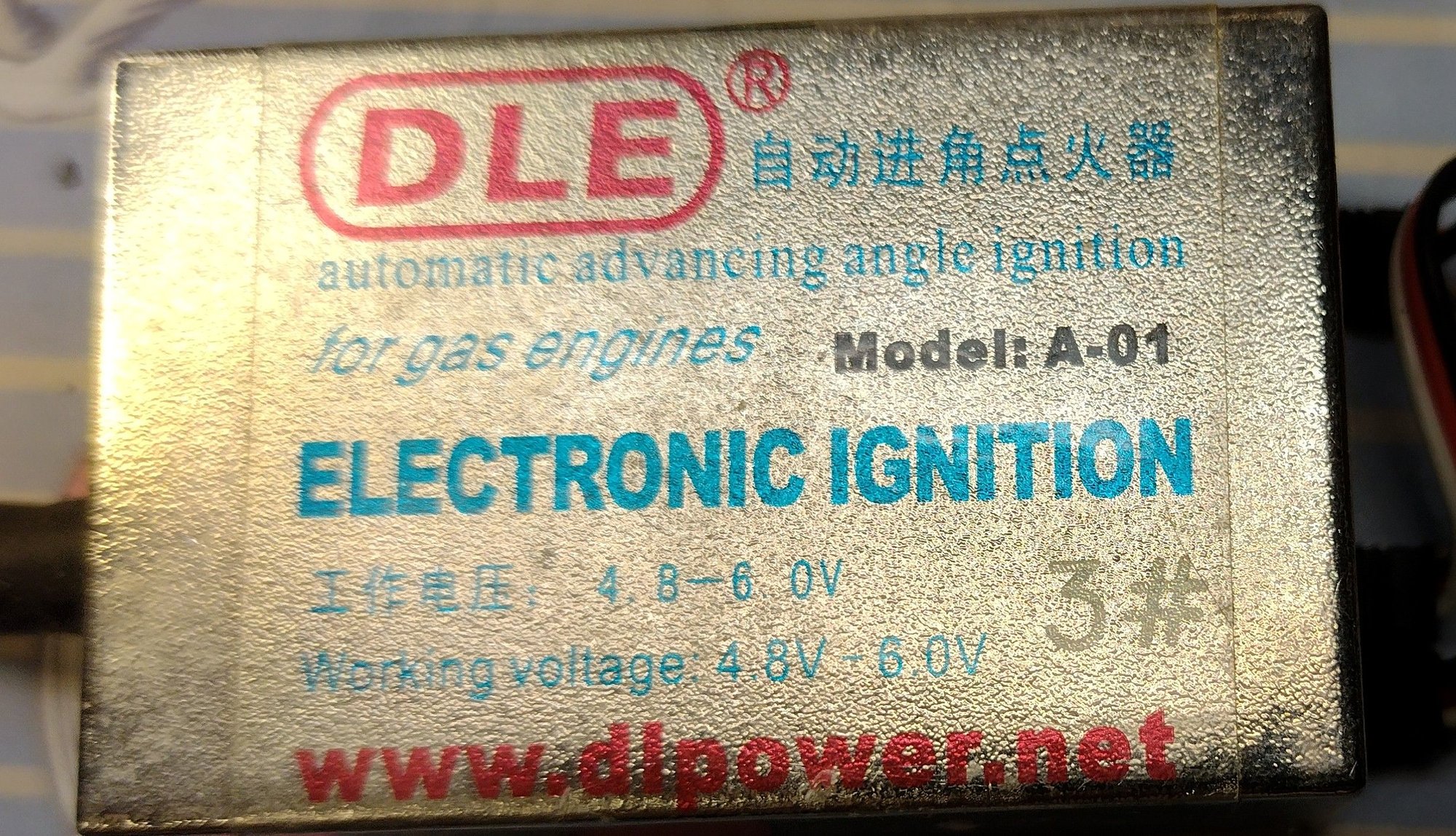
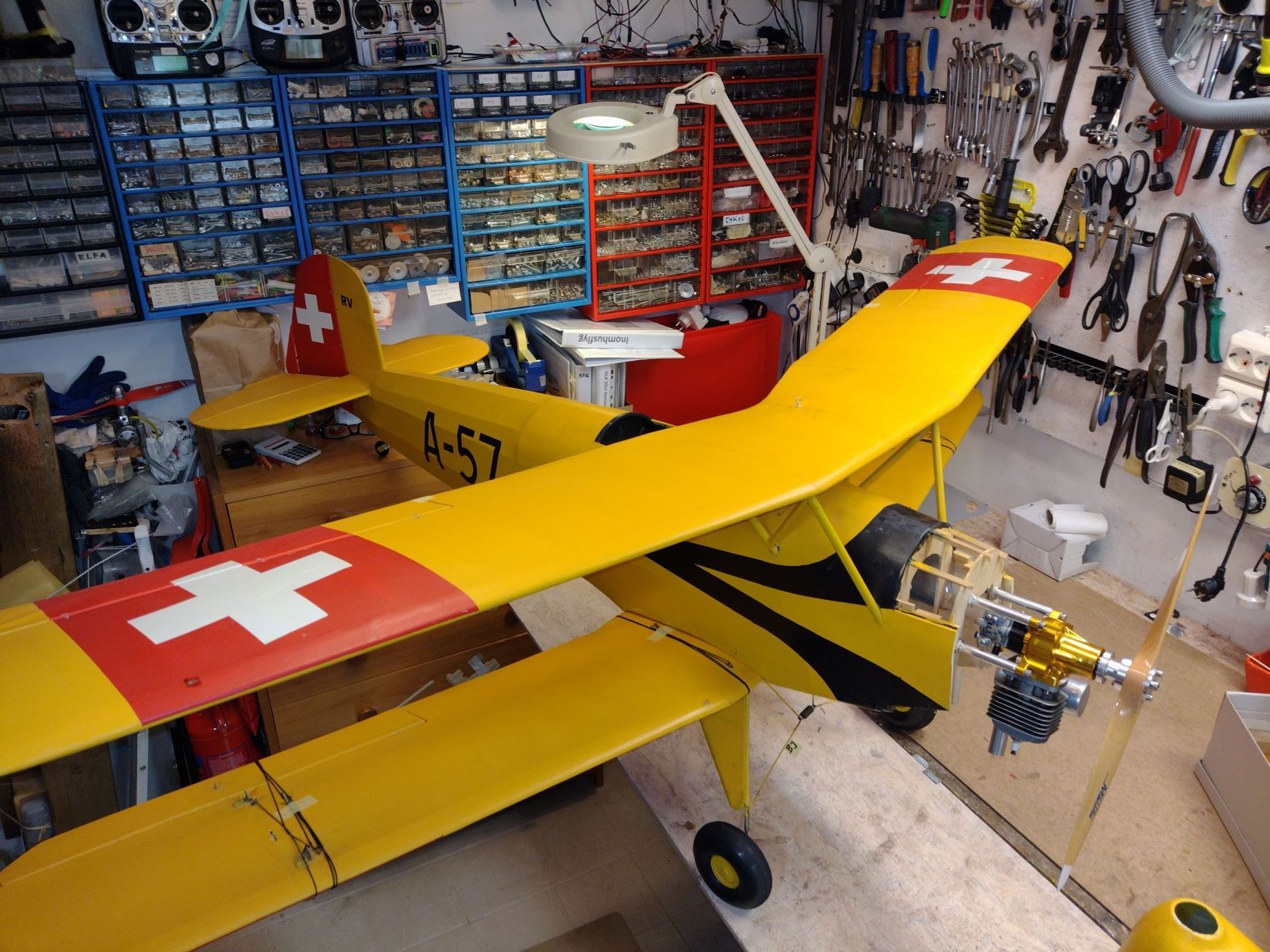
I am currently building/renovating my first "gasser", a Bucker Jungmann scratch built 1/4 scale and will use a DLA 32cc gas engine . The CDI module (from a DLE engine) states that battery voltage should be 4.8-6.0V which is not easily achieved in practice.
A 4 cell NiMH could certainly fall below 4.8V and a newly charged 5 cell NiMH will certainly start off well above 6.0V. Without load a 5 cell NiMH will initially give
over 7V... ..!!
..!!
How do you manage this guys..??!?? Please advice - thank you.!
A 4 cell NiMH could certainly fall below 4.8V and a newly charged 5 cell NiMH will certainly start off well above 6.0V. Without load a 5 cell NiMH will initially give
over 7V...
..!!How do you manage this guys..??!?? Please advice - thank you.!
 05-18-2026 | 12:31 PM
#2


My Feedback: (11)
2 cell Life or a 5 cell nicad if anyone uses nicad's any more
I'd presonally run on 2S LiPo and one of these https://www.chiefaircraft.com/radio-...reg06-srv.html
I'd presonally run on 2S LiPo and one of these https://www.chiefaircraft.com/radio-...reg06-srv.html
Last edited by BarracudaHockey; 05-18-2026 at 12:33 PM.
05-18-2026 | 01:22 PM
#3
Senior Member
Joined: Feb 2023
Posts: 326
Likes: 0
Received 61 Likes
on
55 Posts
From: Corryton, TN. Fly at Lucky Lane RC RC Club
There is an $80 solution.. buy a Rcexl ignition module rated for 6 to 14.4 volts and run it on a 2S or 3S LiPo battery pack.
https://www.valleyviewrc.com/rcexl-1...-55-85-vvrc-20
https://www.valleyviewrc.com/rcexl-1...-55-85-vvrc-20
05-19-2026 | 06:03 AM
#5
Thread Starter
An old CDI to an old airplane - is that not a fitting marriage... ..! The BJ was first built probably in the late 80-ies or early 90-ies and I aquired it lately to have it "resurrected".
I simply refuse to buy a 80$ ignition module since I have run the engine in bench with a 4 cell NiMH. That works OK so I will stick to that for the time being. A four cell 2500mAh NiMH will stay above 4.8V for quite some time.!
YES..I do miss the old faithful NiCd:s..!!
2S LiFe has crossed my mind but they also start off at over 7V....=/...!!
Anyone else out there to chip in..!?!?
..! The BJ was first built probably in the late 80-ies or early 90-ies and I aquired it lately to have it "resurrected".I simply refuse to buy a 80$ ignition module since I have run the engine in bench with a 4 cell NiMH. That works OK so I will stick to that for the time being. A four cell 2500mAh NiMH will stay above 4.8V for quite some time.!
YES..I do miss the old faithful NiCd:s..!!
2S LiFe has crossed my mind but they also start off at over 7V....=/...!!
Anyone else out there to chip in..!?!?
05-19-2026 | 07:43 AM
#6
That is ZERO problem: This CDI is indicated to work from 4,8 to 6 volt, NOMINAL.
That means that it will work on a 4 cell NiMH, OR a 4 cell 1,5V dry cell pack.
These ignitions will without issues run on a 4 cell NiMH, and until empty. I have seen these to work without issues down to below 4V actual voltage.
The early RcExl were nominated that, and 99% sure this is a rebranded RcExl.
The later versions, that had "6V till XX volt" on them (there were varying versions over the years) indeed started to malfunction below 5,5 volt actual, but these ones go much lower.
A modern 2000 mAh four cell AA pack, like Sanyo Eneloop, will easily power that ignition for about 4 hours nonstop operation.
I know because I still have a few of these old ones in use, and those are my GoTo packs...
I usually feed these ignitions straight from the receiver busbar, never had any interference (using 2,4 GHz).
That means that it will work on a 4 cell NiMH, OR a 4 cell 1,5V dry cell pack.
These ignitions will without issues run on a 4 cell NiMH, and until empty. I have seen these to work without issues down to below 4V actual voltage.
The early RcExl were nominated that, and 99% sure this is a rebranded RcExl.
The later versions, that had "6V till XX volt" on them (there were varying versions over the years) indeed started to malfunction below 5,5 volt actual, but these ones go much lower.
A modern 2000 mAh four cell AA pack, like Sanyo Eneloop, will easily power that ignition for about 4 hours nonstop operation.
I know because I still have a few of these old ones in use, and those are my GoTo packs...
I usually feed these ignitions straight from the receiver busbar, never had any interference (using 2,4 GHz).
Last edited by 1967brutus; 05-19-2026 at 08:11 AM.
05-20-2026 | 02:11 AM
#8
You do NOT want to run these older sets on 5S NiMH, by the way: does NOT work any better, just will drain the battery just as fast: these older sets do not have voltage regulation internally like the newer ones that operate from 6 to 14,4 volt.
The advise from Pé Reivers back when he was still alive (he was amongst others importer for RcExl for our country and in general a worldwide known engine expert) was to run them on the lowest voltage practically possible, which is 4S NiMH, or 4,8 volt nominal.
A voltage regulator, set at 5,1V (for example) would also work very nicely, meaning you are NOT fixed to that separate 4S battery.
As said, I usually feed my ignitions straight from the receiver, and IF that receiver happens to operate on a different voltage, then a voltage regulator is a very viable and affordable option.
The advise from Pé Reivers back when he was still alive (he was amongst others importer for RcExl for our country and in general a worldwide known engine expert) was to run them on the lowest voltage practically possible, which is 4S NiMH, or 4,8 volt nominal.
A voltage regulator, set at 5,1V (for example) would also work very nicely, meaning you are NOT fixed to that separate 4S battery.
As said, I usually feed my ignitions straight from the receiver, and IF that receiver happens to operate on a different voltage, then a voltage regulator is a very viable and affordable option.
Last edited by 1967brutus; 05-20-2026 at 02:15 AM.
05-20-2026 | 11:18 PM
#9
Thread Starter
Thanks again brutus.!!
1) I will go with one 4S 2500mAh NiMH to feed the CDI separately via the kill switch.
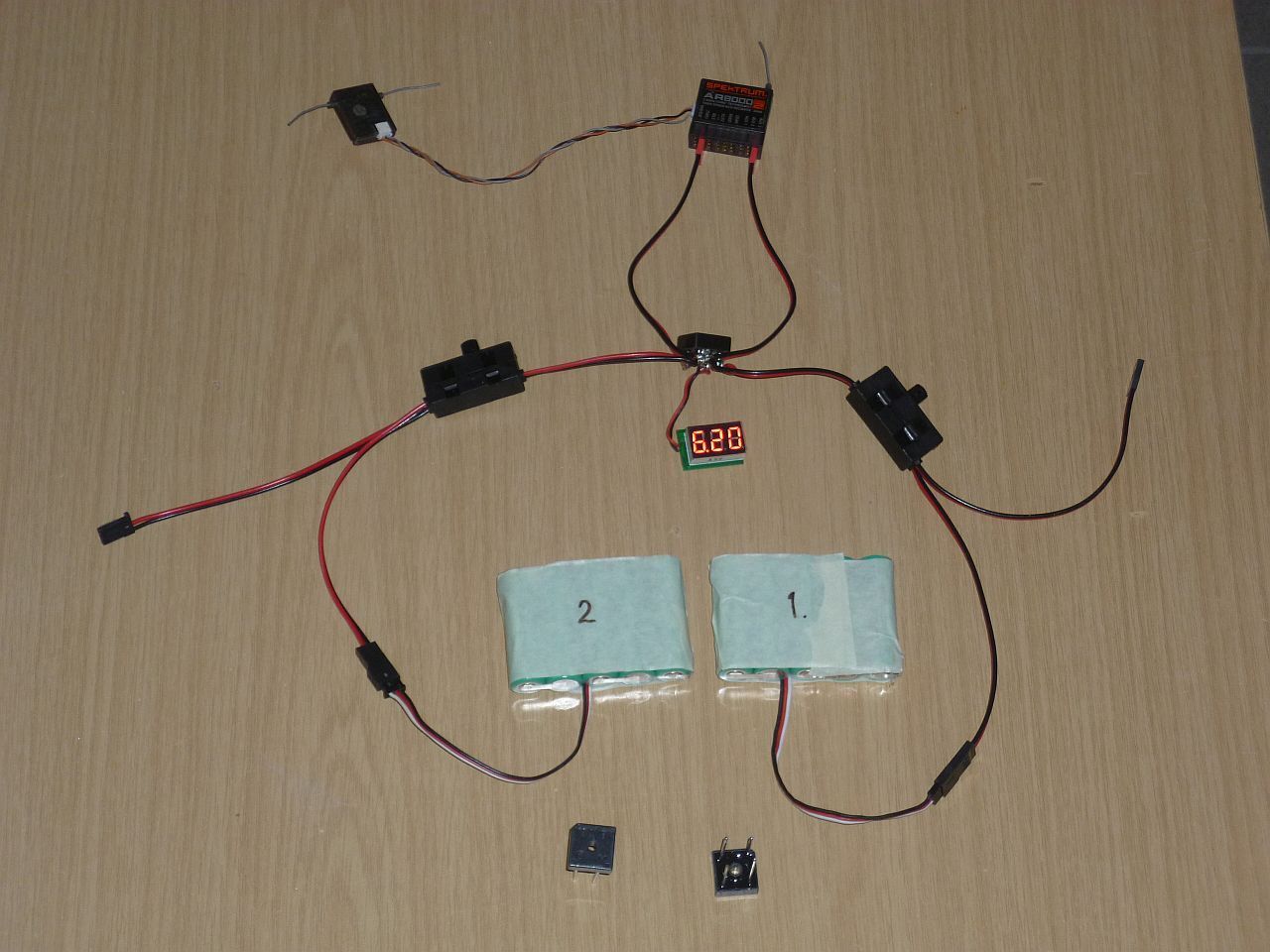
2) Rx, servos, gyro...etc will be fed by two 5S 2500mAh NiMH packs connected via a diode bridge as shown in attachments.
Further I will keep 1) and 2) above as far apart as is practically possible to minimize Rf interference.! As mounted right now the CDI module and the Rx antennas are 14 inches apart.

1) I will go with one 4S 2500mAh NiMH to feed the CDI separately via the kill switch.
2) Rx, servos, gyro...etc will be fed by two 5S 2500mAh NiMH packs connected via a diode bridge as shown in attachments.
Further I will keep 1) and 2) above as far apart as is practically possible to minimize Rf interference.! As mounted right now the CDI module and the Rx antennas are 14 inches apart.
05-21-2026 | 01:42 AM
#10
Thanks again brutus.!!
1) I will go with one 4S 2500mAh NiMH to feed the CDI separately via the kill switch.
2) Rx, servos, gyro...etc will be fed by two 5S 2500mAh NiMH packs connected via a diode bridge as shown in attachments.
Further I will keep 1) and 2) above as far apart as is practically possible to minimize Rf interference.! As mounted right now the CDI module and the Rx antennas are 14 inches apart.
1) I will go with one 4S 2500mAh NiMH to feed the CDI separately via the kill switch.
2) Rx, servos, gyro...etc will be fed by two 5S 2500mAh NiMH packs connected via a diode bridge as shown in attachments.
Further I will keep 1) and 2) above as far apart as is practically possible to minimize Rf interference.! As mounted right now the CDI module and the Rx antennas are 14 inches apart.
These ignitions are pretty good, and the nowadays 2.4 GHz receivers are downright amazing with their interference rejection.
If your plane allows, then there is nothing wrong with "distancing", but if it doesn't, then also don't worry about it too much.
Last edited by 1967brutus; 05-21-2026 at 02:09 AM.
05-22-2026 | 12:35 AM
#11
Thread Starter
Again - thanks brutus for sharing your experience. Since I am an 81 year old "newbie" to gassers in airplanes I am probably a bit overcautios here. At least that gives me some extra "peace of mind" when the "maiden" flight of the resurrected BJ takes place.
05-23-2026 | 01:36 AM
#12
out they were not necessary, WITH 2.4 GHz....


