


Mufflers for conversions
 01-21-2002 | 04:56 PM
#1
Thread Starter
Junior Member
Joined: Dec 2001
Posts: 20
Likes: 0
Received 0 Likes
on
0 Posts
From: Delmont, PA,
 Mufflers for conversions
Im building mufflers for Gas engines. I would like to produce a manifold type of muffler. But with more volume and baffels so its not so dang noisy. Its a straight down exit type of muffler. Any ideas on how to quiet these type of mufflers. Thanks
 01-22-2002 | 03:34 AM
#2

My Feedback: (1)
Joined: Jan 2002
Posts: 3,114
Likes: 0
Received 0 Likes
on
0 Posts
From: Riverton,
WY
muffler
Instead of baffles just push the exhaust tubes all the way through. Then drill some holes in the sides of the tubes. Number and size of the holes controls the noise and power.
06-16-2015 | 07:15 PM
#3
 06-18-2015 | 10:44 AM
#4

Yes what they stated. The tube looks like this one shown below. You place a plug in the middle of the tube. The plug can be glued in, or crimped in. Even some screws put in to help keep the plug in place. The on both sides of the plug, you drill a series of three sets of holes. If you add up all of the holes diameters, then the holes total size is larger than the tube inside diameter. But since the hot gasses cool and shrink in volume the second and third set of holes become progressively less.
Anyway here are some pics of how I did it for a smaller muffler. One can scale it up or down in size as needed.
Oos sorry I forgot to add the pictures.
Anyway here are some pics of how I did it for a smaller muffler. One can scale it up or down in size as needed.
Oos sorry I forgot to add the pictures.
Last edited by earlwb; 06-20-2015 at 04:55 AM. Reason: Sorry I forgot to add the pictures
06-18-2015 | 02:03 PM
#5


My Feedback: (16)
The best mufflers for power and noise reduction I've seen has the tubes with holes as mentioned but where the holes in the tubes are - the holes are made by pushing in part of the tube to act as a scoop to catch and force exhaust out of the tube and back into the muffler. They sort of recirculate the gases to an extent. There are ample tubes so there is not any back pressure.
06-24-2015 | 03:08 PM
#6
My Feedback: (6)
Ok I will add my 2 pennies worth. In doing some research on mufflers I ended up t/t a engineer ( do to h/d computer crash I can't give you his addy ) But what he told me a bit of back pressure is not bad and generally come's from the first bend the gas comes to, that said baffles with holes can help with the harmonics of the sound hole dia.s are critical and the volume of the holes MUST be larger than the exhaust port size and the holes in the tubes also have to be more than the port size like in the pic above, and placed so that the gas has to change directions to go thru, and out. the biggest help is the volume of the muffler can it self.
So with the above in mind I built a mockup and had Bison mufflers build one for me, and it works great with a calibrated sound meter I get and avg 86 db's at 9.
will try to figure out how to post pic's as rcu is not letting me
cheers Bob T
So with the above in mind I built a mockup and had Bison mufflers build one for me, and it works great with a calibrated sound meter I get and avg 86 db's at 9.
will try to figure out how to post pic's as rcu is not letting me
cheers Bob T
06-24-2015 | 03:23 PM
#7
My Feedback: (6)
I have sense got a second one with the same results avg 86 @ 9
hope this give you some ideas
Cheers Bob T
AMA13377

 06-24-2015 | 11:37 PM
#13
Member
Joined: Feb 2014
Posts: 87
Likes: 0
Received 0 Likes
on
0 Posts
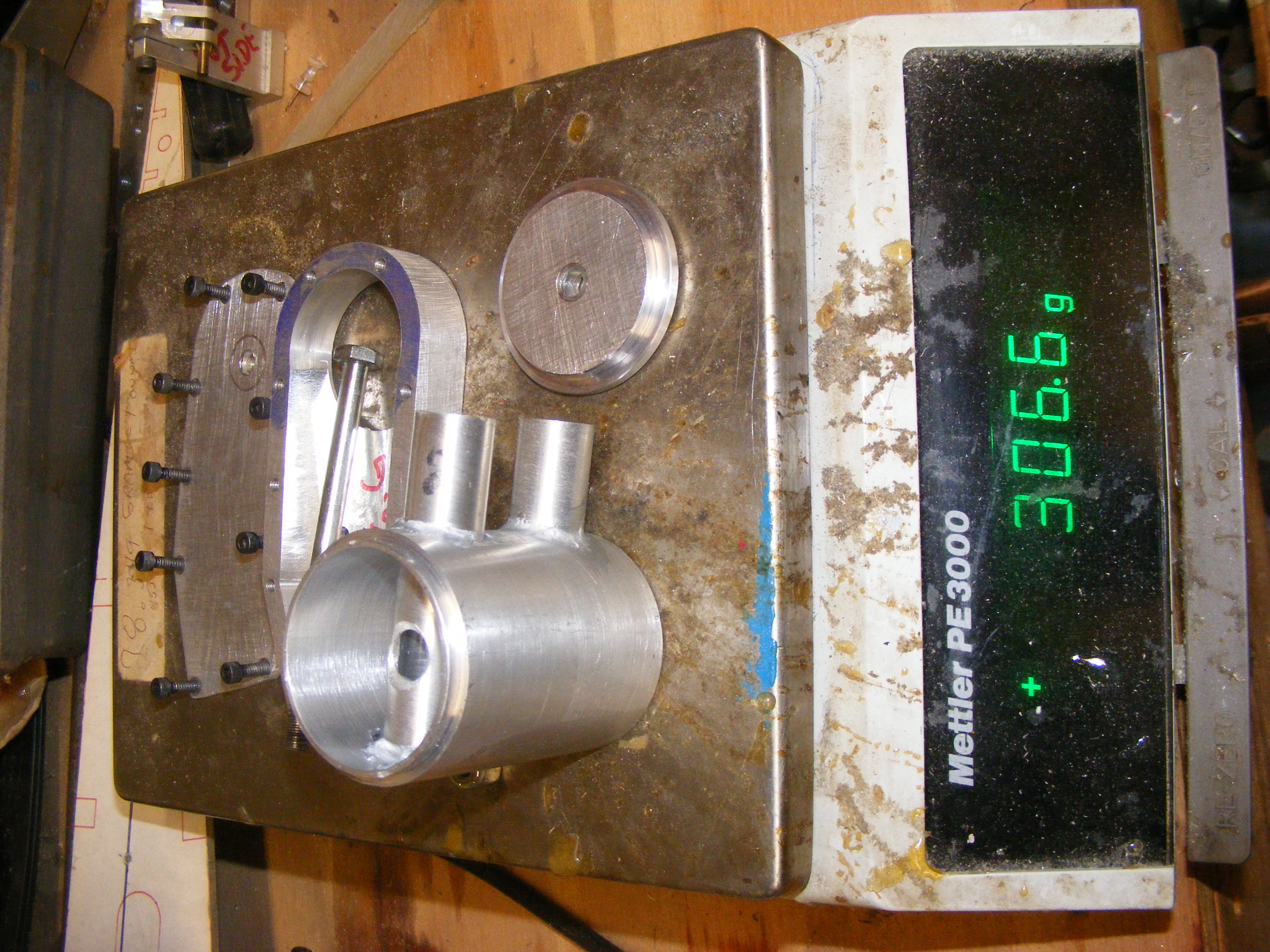
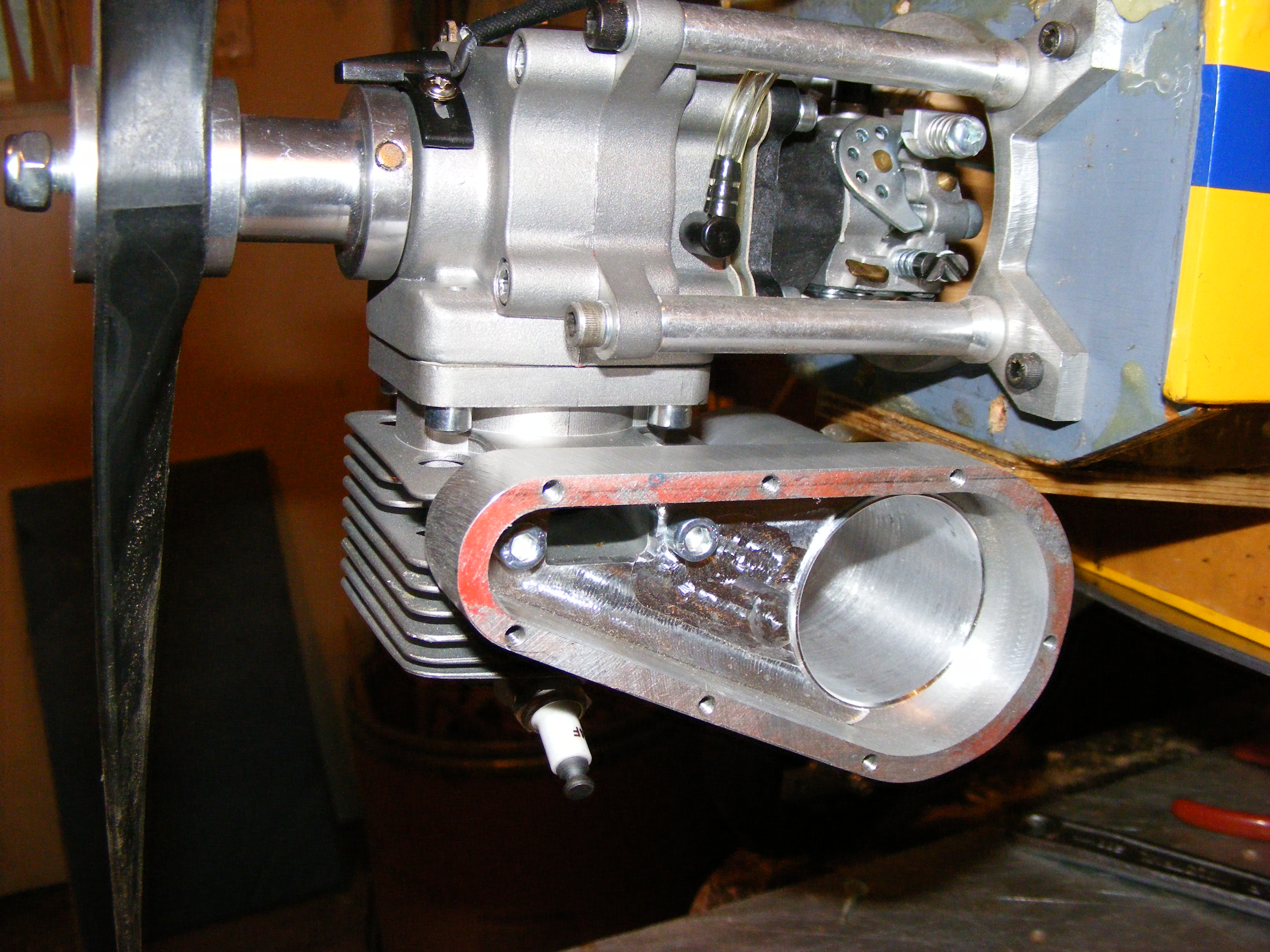
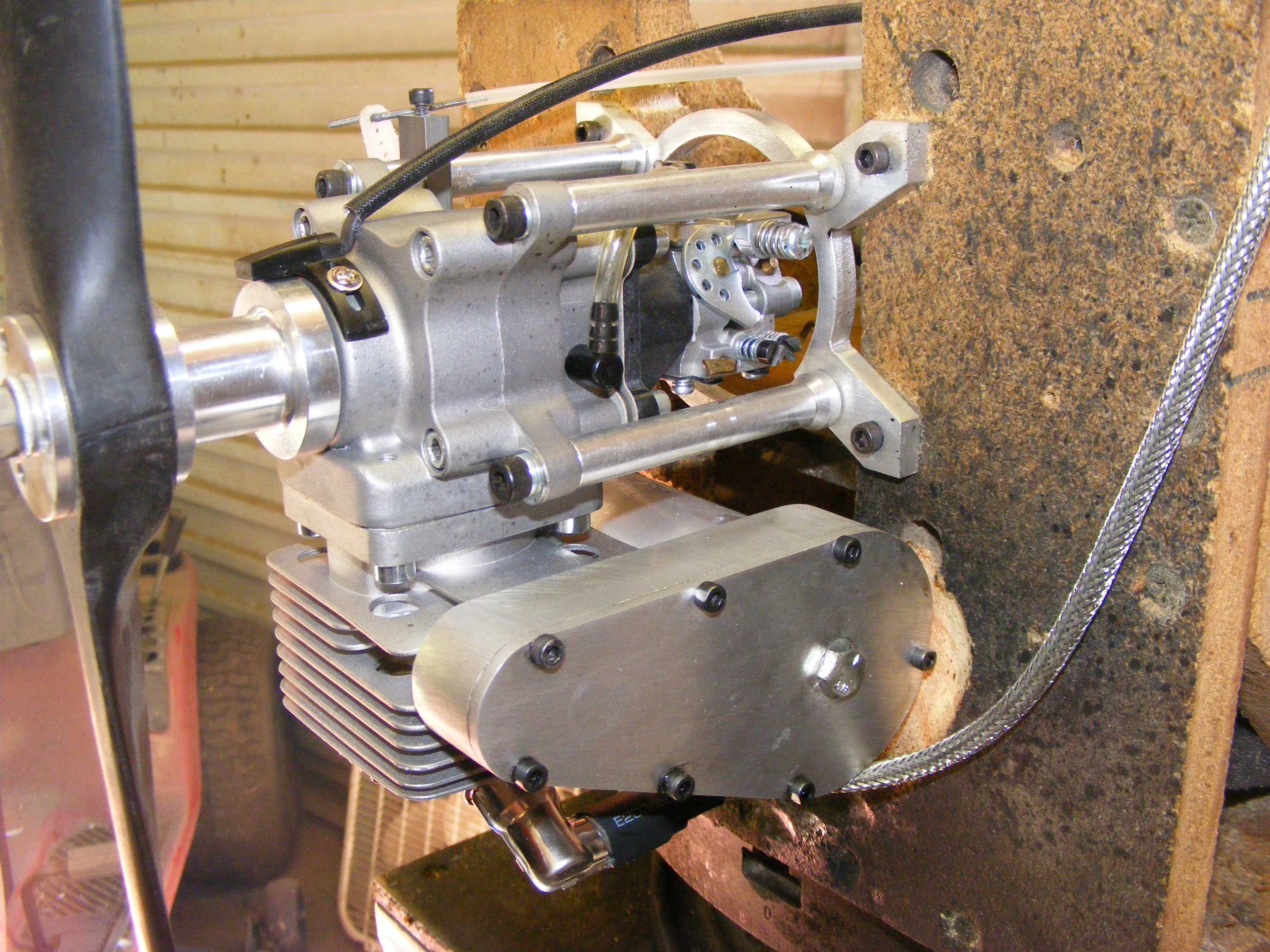
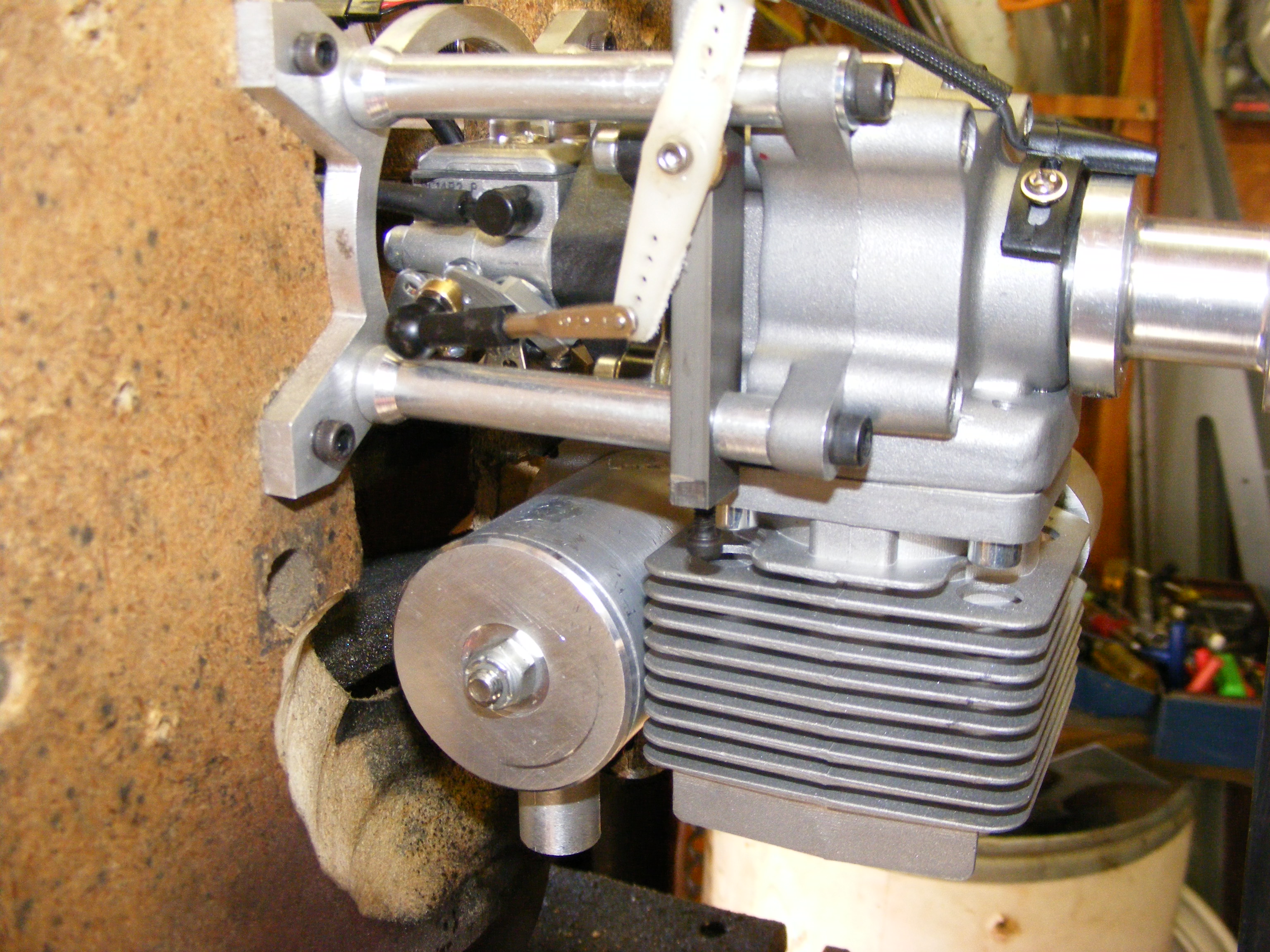
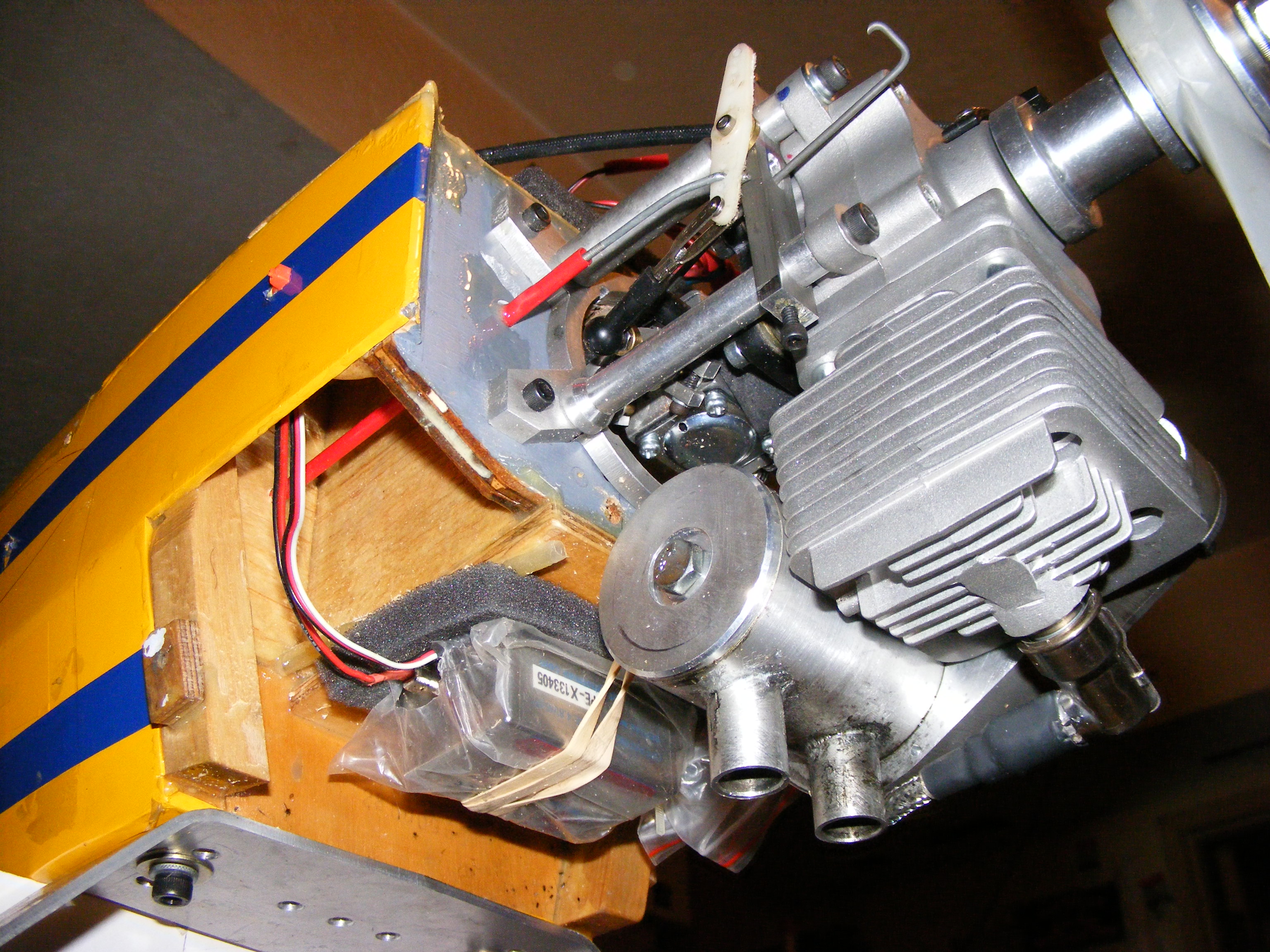
These pictures show a muffler for my RCGF 26 that has about 50 flights so far and has not came loose yet. One of the pictures shows a muffler on a scale but that picture is of a different muffler. I don't have a sound meter so I can't give any readings but I'm happy with the results. The round aluminum tubing is electrical conduit and has a 1 5/8" inside diameter. It takes about 8 hours to machine these parts. I'm using 5 MM screws about 3/4" long to attach the header to the crankcase and then 6-32 screws to bolt the 1/8" thick cover on. The 2 exhaust pipes are 5/8" diameter about 3" long and have a 1/2" diameter hole drilled threw them. They are welded to the conduit with that aluminum solder you can buy at Ace Hardware.
06-25-2015 | 07:45 AM
#15

If you have ever heard a motor with a big prop on a reduction unit.. with a quiet muffler..you will love it !
There are some great pics and info on this thread. I am going to add a link to a easy down and dirty muffler a buddy and I have made for 25 cc conversions...
We took a aluminum conduit box and cut it so the threaded side outlet was still hooked to one flat side of the box..That becomes a flat plate that we screw into the exhaust outlet of the motor...we used this as our exhaust mount, than we took a cheap round lawnmower muffler and it screws right into the manifold.. we drill some extra holes thru the baffle..or split the can to modify it inside. We also would use a brass screw to pin the muffler to the header so it wouldn't unscrew.
https://www.youtube.com/watch?v=Ec5g0HUQcP8
There are some great pics and info on this thread. I am going to add a link to a easy down and dirty muffler a buddy and I have made for 25 cc conversions...
We took a aluminum conduit box and cut it so the threaded side outlet was still hooked to one flat side of the box..That becomes a flat plate that we screw into the exhaust outlet of the motor...we used this as our exhaust mount, than we took a cheap round lawnmower muffler and it screws right into the manifold.. we drill some extra holes thru the baffle..or split the can to modify it inside. We also would use a brass screw to pin the muffler to the header so it wouldn't unscrew.
https://www.youtube.com/watch?v=Ec5g0HUQcP8
06-26-2015 | 02:39 PM
#17
My Feedback: (6)
Larry
The numbers I posted were those taken when the engine was on the test stand , so when I get out again I will get some up to date info as the engine has about 4 gal's of fuel thru is and it seams good and strong, it was in an OLD dragon lady, and now in a G/P 300 and flies it great.
Cheers Bob T
The numbers I posted were those taken when the engine was on the test stand , so when I get out again I will get some up to date info as the engine has about 4 gal's of fuel thru is and it seams good and strong, it was in an OLD dragon lady, and now in a G/P 300 and flies it great.
Cheers Bob T


