


Finish - Models, Balsa, Fuel Proof
 08-22-2018 | 04:42 PM
#1

Thread Starter

 Finish - Models, Balsa, Fuel Proof
Back in the day we covered our balsa model planes with butyrate dope. Then Monokote was invented. Great stuff. Used it for decades. What do people use today if they want a liquid or spray fuel-proof balsa filler/coating?

Last edited by Lee Taylor; 08-23-2018 at 05:09 AM.

 08-25-2018 | 06:18 AM
#4
Thread Starter
I suppose I should rephrase my question. First off I have done NO research, so I don't know what is out there. Used Monokote on almost everything. If I wanted to start painting, what should I be looking at?
08-25-2018 | 07:43 AM
#5

There are still some butyrate dopes out there. The last I used were from Brodak. They are relatively easy to use but should be described as fuel resistant rather than fuel proof. If you really want to get paint that is proof against glow fuel then a catalyzed paint is the way to go. There are some water based two part paints but most use thinners and catalysts and are best applied with an airbrush. If all you are looking for is fuel proofing a firewall or similar then there is a product called Kwik Poly that is a thin brushable resin that sets up very quickly and is easily sandable. The down side to most two part paints is that they are expensive. The color scheme on several of my airplanes was determined by what left over car paint I had on hand. If you move over to gasoline engines, your options open up quite a bit. Those planes can be painted with every thing from rattle can paint to latex sealed with Minwax polyurethane.
08-25-2018 | 03:31 PM
#6
Thread Starter
Thanks Matt. Even though I have used it over and over, I am not crazy about the tactile feel of a Monokote covered fuselage. We brush painted our Control Liners when we were teens. I may move into a spray rig. Always wanted a compresser
08-25-2018 | 06:45 PM
#7
A portable "pancake" compressor is really all you need to run a harbor freight touch up gun. It wont break the budget or take up the entire garage and it is handy for airing up the lawnmower tires.
09-01-2018 | 12:29 PM
#9

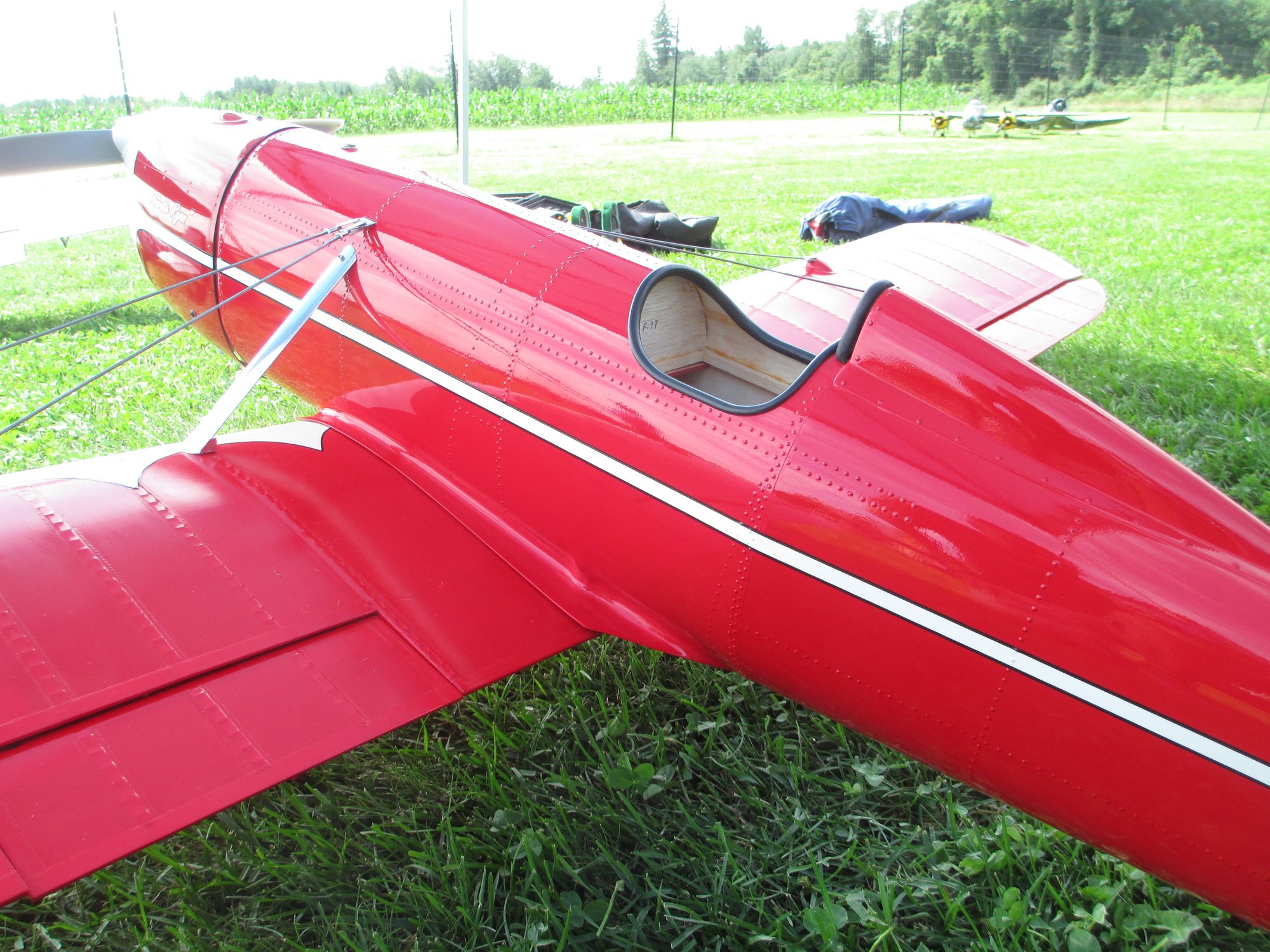
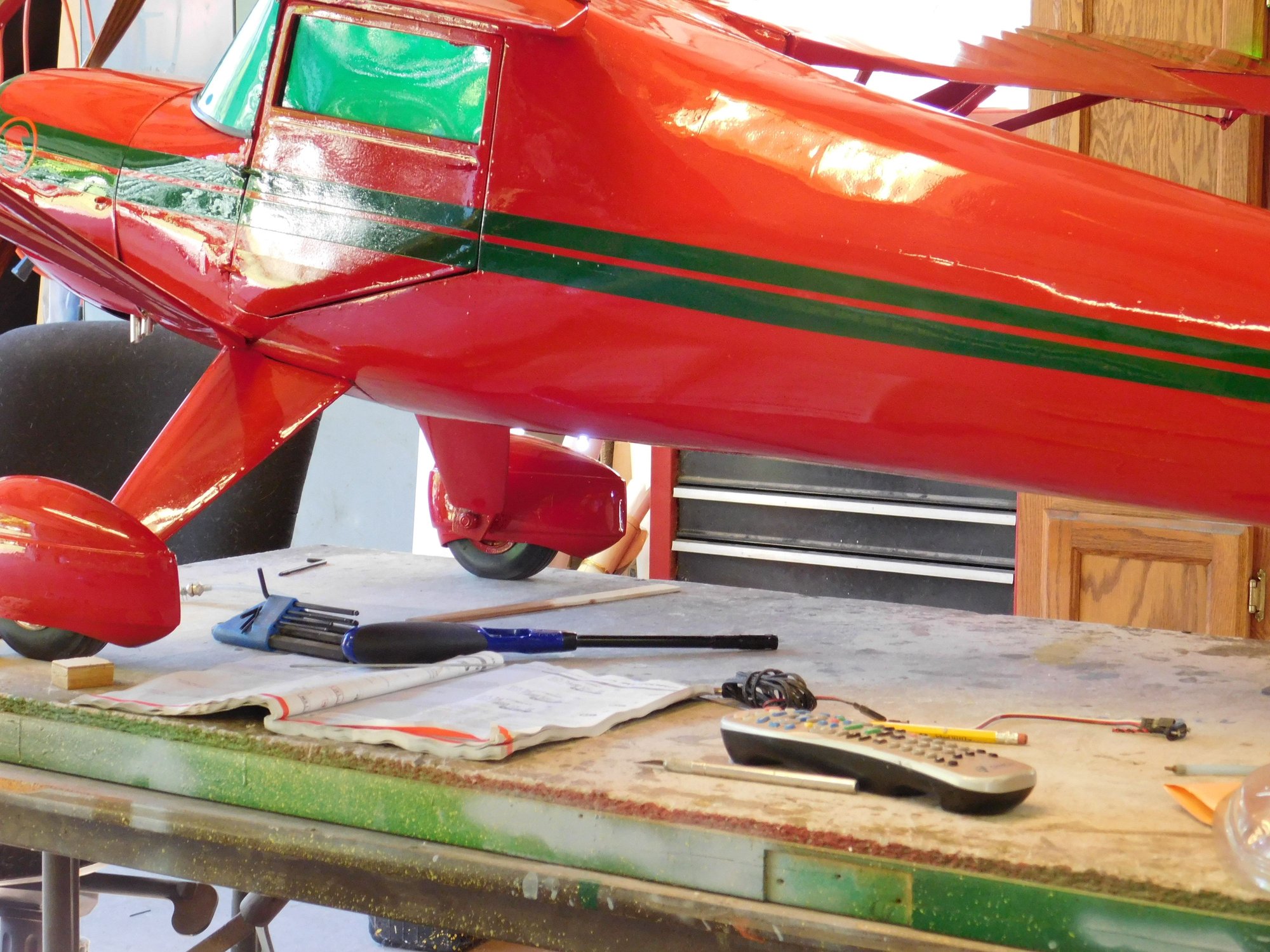
My favorite paint to spray is an epoxy paint made by Klass Kote. It is impervious to all types of fuels and has great leveling qualities. It's not cheap, but nothing really good is. Here's a shot of my Ryan-STA that I painted using Klass Kote.
 09-02-2018 | 06:42 AM
#14

In my opinion, there are far better products to use instead of dope. I may have enjoyed the "aroma" when I was a kid, but I don't intend to go back to using it.
As VJ illustrated, epoxy works well, and doesn't require a clear coat. Although I have use 2 part automotive systems, these days I prefer the simplicity of aerosol Rustoleum and a clear coat of polyurethane.

2 part automotive paint
Rustoleum and polyuretnane from aerosol cans
09-03-2018 | 06:36 AM
#16
Thread Starter
Thinking about spray painting the exterior of my home. I have not researched it yet. Would love to buy a sprayer for the home and be able to use it on the models also. Are there sprayers on the market that are conducive to both? Which ones? My only experience with spray paint is rattle can. (Yes I won 1st place in a plastic model car contest WAY back in the day)
09-07-2018 | 08:27 AM
#17
Thinking about spray painting the exterior of my home. I have not researched it yet. Would love to buy a sprayer for the home and be able to use it on the models also. Are there sprayers on the market that are conducive to both? Which ones? My only experience with spray paint is rattle can. (Yes I won 1st place in a plastic model car contest WAY back in the day)
09-07-2018 | 05:00 PM
#18

mgnostic has it right. Painting houses and painting RC airplanes; definitely different processes using different equipment. Airless sprayer for the house. I painted a 3-2 single story down in Florida, solo. Pressure washing, masking and prepping for painting was the most time consuming. Spraying the house was the easy part. Cleaning an airless sprayer is not too bad if using latex.
Painting RC airplanes I, mostly, use a siphon feed gun. Still prepping for painting is the hard part. Spraying is the easy part. Cleaning a siphon feed gun is pretty easy.
Painting RC airplanes I, mostly, use a siphon feed gun. Still prepping for painting is the hard part. Spraying is the easy part. Cleaning a siphon feed gun is pretty easy.
09-08-2018 | 06:24 AM
#19
Thread Starter
I want to learn about spray systems and I want to purchase some equipment. I am beginning to learn that I need two systems. One for modeling and one for house painting. I really like the idea of having a pressurized air tank in the shop. I own a Paasche compresser and gun. I see online that Paasche sells a small tank. Will be looking into that. I not sure of the Paasche upper limit yet. I know Paasche is designed for teeny tiny stuff and my gun produces an extremely fine spray. I am also thinking of looking into a system a little larger than a Paasche. I am not sure I am sold on airless for the home painting. Lots of negative reviews online.
09-08-2018 | 08:04 AM
#20
For painting a house you want something on this scale. They are kind of pricey hence my suggestion of renting one. If you aren't happy with it take it back and try something else. This is one task where you get what you pay for. In particular you want something with a ceramic nozzle. It seems that good quality house paint is actually somewhat abrasive and will wear our a plain metal nozzle. The hand held "Power Sprayer" guns have their uses but once you go beyond spraying interior walls you are just wasting your time.

More to the fun part of things, The smaller Paasche equipment is nifty for plastic models and works well for fine detailing and shading on RC models. I think my little compressor is an Iwata. it beats the heck out of those cans of compressed air. For painting RC planes I have used an old Cambell Hausfield siphon feed touch up gun with a small cup of around 4-6 ounces for over a decade. If you are doing stuff like painting full size cars then you want the biggest compressor you can manage but for hobby use one of the compact pancake compressors are a better choice. They are small enough to keep in the house but have enough capacity to air up car tires and run small air tools. As you mention, having a tank makes a real difference.
More to the fun part of things, The smaller Paasche equipment is nifty for plastic models and works well for fine detailing and shading on RC models. I think my little compressor is an Iwata. it beats the heck out of those cans of compressed air. For painting RC planes I have used an old Cambell Hausfield siphon feed touch up gun with a small cup of around 4-6 ounces for over a decade. If you are doing stuff like painting full size cars then you want the biggest compressor you can manage but for hobby use one of the compact pancake compressors are a better choice. They are small enough to keep in the house but have enough capacity to air up car tires and run small air tools. As you mention, having a tank makes a real difference.


