


Recommended twin engine trainer???
 07-24-2018 | 03:47 PM
#1
Thread Starter

Joined: Jun 2018
Posts: 12
Likes: 0
Received 0 Likes
on
0 Posts
 Recommended twin engine trainer???
Hey, gang. I'm gunning to fly a large scale twin engine plane (B-25 Mitchell), in fact I've already purchased it (88" Top Flight with very few flights; 15cc RCGF engines, etc. Its a beauty) but know that I'm probably not ready to fly it - I only soloed on Father's Day. I'm happy to sit on it for 6 - 8 months til I'm fairly sure I'm ready to make the leap (I'm in a club with some really experienced pilots, none with much twin engine experience however, and will trust their judgement in terms of my readiness to step up and fly the big boy). I think I'm a fairly solid advanced-beginner, but a beginner nonetheless. I'm in love with the B-25 and wanted one in my collection so that when I'm confident, I'll have it and the enjoyment of flying the war- bird I've always dreamed of flying.
Question.......is there a twin gas recommended as first twin ("trainer") as I work my way up to large scale? Nothing against electrics, but I'm interested in training in the manner that I want to ultimately fly. I've come across the gas Twinstar in my research - not sure there are many of those around any longer, though. Thoughts on it or any others as good starters in the twin space would be greatly appreciated.
Thanks guys and gals.
AB
Question.......is there a twin gas recommended as first twin ("trainer") as I work my way up to large scale? Nothing against electrics, but I'm interested in training in the manner that I want to ultimately fly. I've come across the gas Twinstar in my research - not sure there are many of those around any longer, though. Thoughts on it or any others as good starters in the twin space would be greatly appreciated.
Thanks guys and gals.
AB
 07-25-2018 | 12:34 AM
#2

My Feedback: (5)

It's getting really hard to find any decent-sized twin kits or ARFs these days. I have a similar plan to yours- I have an ESM BF-110 that I want to get going so I bought a kit-bashed twin Goldberg Tiger II. Got it from a guy here on RCU. He had mounted two nacelles on the wing and powered it with Magnum .32s. Flies really well! I think you'll just have to watch for a sport twin to come along.
07-25-2018 | 04:11 AM
#3
My Feedback: (20)
I have been flying twins for 40 years and have two at the moment. The only time they are different from a single is when one of the engines quits. All I can suggest to prepare yourself is to get very proficient using the rudder and to get experience flying heavily loaded planes. Stall/spin recovery needs to be second nature. If you were near Cincinnati, Ohio I would sell you one I'm tired of.
Chuck
Chuck
07-25-2018 | 04:25 AM
#4

Congrats on learning to fly and wanting to advance. IMHO....For the best success with twins, stay away from glow, change out the RCGF engines, because they are poor running engines as likely to fail as a over heated glow, and a MUST have is TwinSync. It recognizes an engine loss from the rpm's and brings the remaining running engine to idle so that you have more of a dead stick for the whole plane. Once you figure out which engine isn't running, then you can apply some power along with opposite rudder to maybe get the plane back to the field. Most non-full scale twin rc pilots hit VMCse and drill the plane into the ground. Not sure if it is still around.
https://www.wikesrc.com/TWINSYNC-W502.htm
Getting ready to fly the B-25, unless it is an old H9 kit, is probably a kit built plane and heavy. I would recommend flying some other 50cc-G62cc war bird with a high wing loading, such as a kit built P51, not the ARF, due to it being too light. Learn to fly a high wing loaded plane. You can also make your current plane act like it is heavy by never going over half throttle for the whole flight, including take off. Then you will get an idea of a heavy wing loaded plane.
Most likely, you will have to build another twin, and maybe build another not so detailed and just a basic B25 and learn on it.
Again, this is just my humble opinion from being in this hobby for decades.
Here is a forum on the RCGF 15cc engine. I have not read it, but I am sure you will find all of the different trials and tribulations of the engine and it's issues.
http://www.rcuniverse.com/forum/gas-...on-thread.html
https://www.wikesrc.com/TWINSYNC-W502.htm
Getting ready to fly the B-25, unless it is an old H9 kit, is probably a kit built plane and heavy. I would recommend flying some other 50cc-G62cc war bird with a high wing loading, such as a kit built P51, not the ARF, due to it being too light. Learn to fly a high wing loaded plane. You can also make your current plane act like it is heavy by never going over half throttle for the whole flight, including take off. Then you will get an idea of a heavy wing loaded plane.
Most likely, you will have to build another twin, and maybe build another not so detailed and just a basic B25 and learn on it.
Again, this is just my humble opinion from being in this hobby for decades.
Here is a forum on the RCGF 15cc engine. I have not read it, but I am sure you will find all of the different trials and tribulations of the engine and it's issues.
http://www.rcuniverse.com/forum/gas-...on-thread.html
Last edited by RCFlyerDan; 07-25-2018 at 04:35 AM. Reason: Added RCGF engine forum
07-25-2018 | 05:46 AM
#5
My Feedback: (8)
Good advice on engines above. Absolutely DO NOT TRUST engines that already have a bad reputation for unreliability!
However, having owned and flown the Hangar 9 B-25 which is slightly smaller, I am going to disagree with much of what has been said so far. I never had any other twin before the B-25 and found it neither hard to fly or hard to land. Certainly not more so than any other plane. What I call "pucker factor" is high with a B-25 but as soon as the pilot loosens up and realizes it isn't hard to fly or land that's when the enjoyment begins. I don't think a twin "trainer" will do anything to prepare you for the B-25 anymore than flying a cub prepares you for flying a P-40 for example. Just make sure your abilities are up to the task. I would recommend waiting a while longer than you have stated and be 100% sure of your landing skill.
I will say that, my B-25 being electric powered, I did not have the "engine out" concern that piston powered models have so if you stay with that type engine heed the previous advice concerning rudder use.
However, having owned and flown the Hangar 9 B-25 which is slightly smaller, I am going to disagree with much of what has been said so far. I never had any other twin before the B-25 and found it neither hard to fly or hard to land. Certainly not more so than any other plane. What I call "pucker factor" is high with a B-25 but as soon as the pilot loosens up and realizes it isn't hard to fly or land that's when the enjoyment begins. I don't think a twin "trainer" will do anything to prepare you for the B-25 anymore than flying a cub prepares you for flying a P-40 for example. Just make sure your abilities are up to the task. I would recommend waiting a while longer than you have stated and be 100% sure of your landing skill.
I will say that, my B-25 being electric powered, I did not have the "engine out" concern that piston powered models have so if you stay with that type engine heed the previous advice concerning rudder use.
07-25-2018 | 07:24 AM
#6

I have not flown a twin but I was going to build and fly an Invader a few years ago so I did a lot of research then. The one main thing I came out with was learn to fly dead stick and set your fuel system up so that if one engine dies the other one will too. You will get lots of arguments on this but that was my take away on it. Luckily I had a lot of dead stick experience so it did not seem like an issue to me.
07-25-2018 | 08:42 AM
#7
Thread Starter
Joined: Jun 2018
Posts: 12
Likes: 0
Received 0 Likes
on
0 Posts
It's getting really hard to find any decent-sized twin kits or ARFs these days. I have a similar plan to yours- I have an ESM BF-110 that I want to get going so I bought a kit-bashed twin Goldberg Tiger II. Got it from a guy here on RCU. He had mounted two nacelles on the wing and powered it with Magnum .32s. Flies really well! I think you'll just have to watch for a sport twin to come along.
07-25-2018 | 08:43 AM
#8
Thread Starter
Joined: Jun 2018
Posts: 12
Likes: 0
Received 0 Likes
on
0 Posts
I have not flown a twin but I was going to build and fly an Invader a few years ago so I did a lot of research then. The one main thing I came out with was learn to fly dead stick and set your fuel system up so that if one engine dies the other one will too. You will get lots of arguments on this but that was my take away on it. Luckily I had a lot of dead stick experience so it did not seem like an issue to me.
Thx.
07-25-2018 | 08:50 AM
#9
Thread Starter
Joined: Jun 2018
Posts: 12
Likes: 0
Received 0 Likes
on
0 Posts
Good advice on engines above. Absolutely DO NOT TRUST engines that already have a bad reputation for unreliability!
However, having owned and flown the Hangar 9 B-25 which is slightly smaller, I am going to disagree with much of what has been said so far. I never had any other twin before the B-25 and found it neither hard to fly or hard to land. Certainly not more so than any other plane. What I call "pucker factor" is high with a B-25 but as soon as the pilot loosens up and realizes it isn't hard to fly or land that's when the enjoyment begins. I don't think a twin "trainer" will do anything to prepare you for the B-25 anymore than flying a cub prepares you for flying a P-40 for example. Just make sure your abilities are up to the task. I would recommend waiting a while longer than you have stated and be 100% sure of your landing skill.
I will say that, my B-25 being electric powered, I did not have the "engine out" concern that piston powered models have so if you stay with that type engine heed the previous advice concerning rudder use.
However, having owned and flown the Hangar 9 B-25 which is slightly smaller, I am going to disagree with much of what has been said so far. I never had any other twin before the B-25 and found it neither hard to fly or hard to land. Certainly not more so than any other plane. What I call "pucker factor" is high with a B-25 but as soon as the pilot loosens up and realizes it isn't hard to fly or land that's when the enjoyment begins. I don't think a twin "trainer" will do anything to prepare you for the B-25 anymore than flying a cub prepares you for flying a P-40 for example. Just make sure your abilities are up to the task. I would recommend waiting a while longer than you have stated and be 100% sure of your landing skill.
I will say that, my B-25 being electric powered, I did not have the "engine out" concern that piston powered models have so if you stay with that type engine heed the previous advice concerning rudder use.
And, As anxious as I will be to fly the plane in six months or so, I am truly likely going to take your advice and wait 12 months.
Alex
 08-09-2018 | 08:32 AM
#11
Hi!
I would advise you to let the B-25 site for some years (yeah years) before you fly it and first get more proficient at flying fast, aerobatic airplanes like Q-500 racers and F3D type aerobatic planes, that way you get to know how planes react at different situations. Racing is also a good way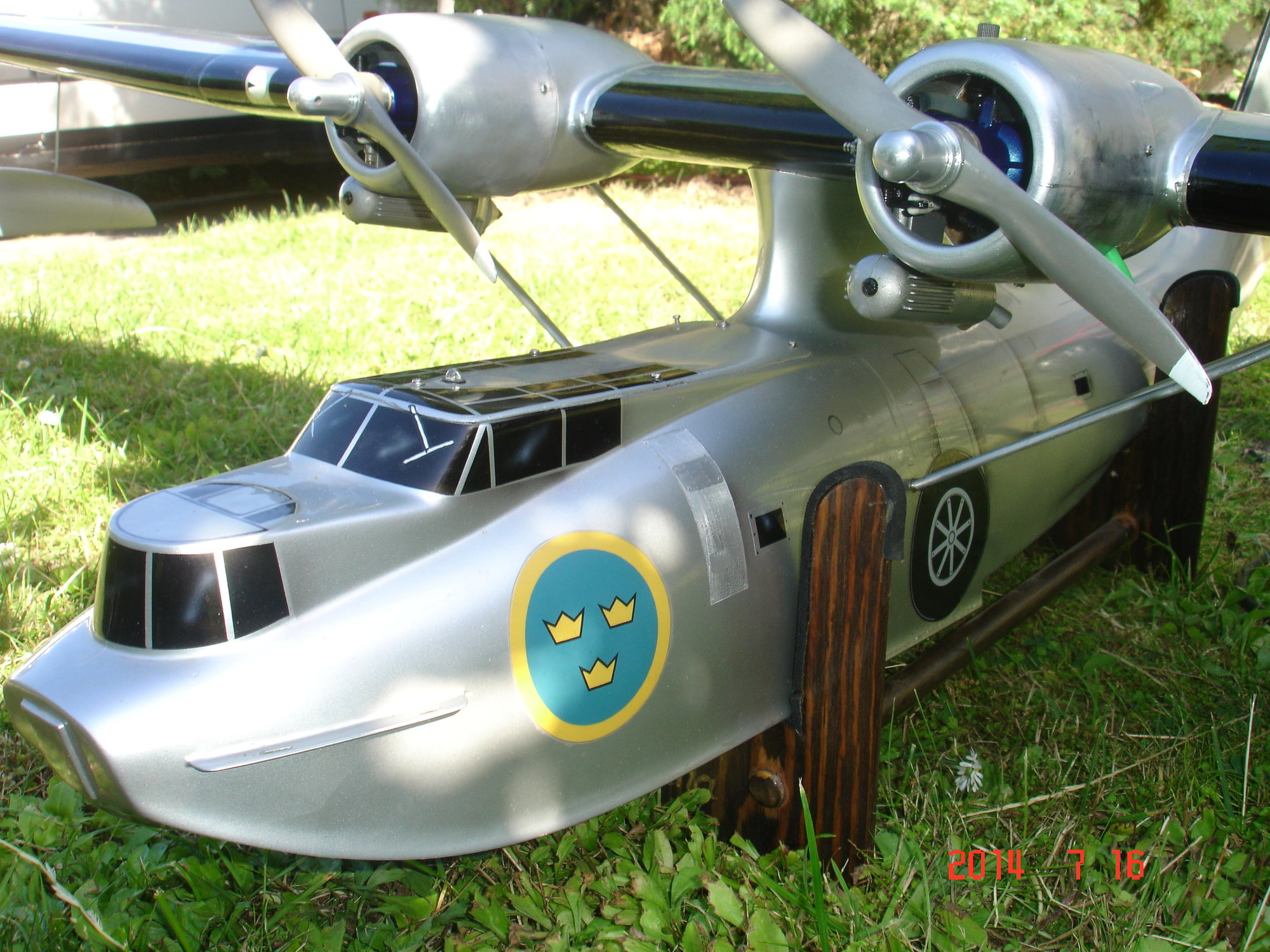
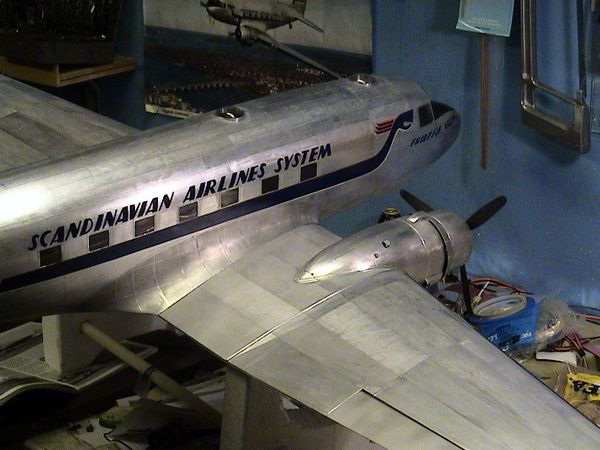
Marutaka DC-3 Powered by two OS FS.26 four strokes.
to go if you want to progress!
There are some rules that you ought to follow if you want to have your twin lasting for more than the first flight and that is to have
1. Reliable engines! Never mounted inverted!
2. Never ever try to fly on one engine!
3.Always idle down and land when you notice one engine has gone.
4. Never ever add a bigger/heavier engine and think " more power couldn't be bad".
5. Low wing loading /light weight is something that makes your twin last longer.
I would advise you to let the B-25 site for some years (yeah years) before you fly it and first get more proficient at flying fast, aerobatic airplanes like Q-500 racers and F3D type aerobatic planes, that way you get to know how planes react at different situations. Racing is also a good way
Marutaka DC-3 Powered by two OS FS.26 four strokes.
to go if you want to progress!
There are some rules that you ought to follow if you want to have your twin lasting for more than the first flight and that is to have
1. Reliable engines! Never mounted inverted!
2. Never ever try to fly on one engine!
3.Always idle down and land when you notice one engine has gone.
4. Never ever add a bigger/heavier engine and think " more power couldn't be bad".
5. Low wing loading /light weight is something that makes your twin last longer.
Last edited by jaka; 08-09-2018 at 08:35 AM.
08-11-2018 | 08:12 PM
#12
The RCGF 15 has two versions- standoff mount and beam mount. The earlier standoff mount version has a terrible reputation. The beam mount seems to be a good bit better along with more powerful too. So check which one you have.
That said, if you are concerned about engine reliability, make your second plane a .60 size sport model (Ugly Stick, 4 Star, or similar) and run each of those engines on it for 15-20 flights. If you have reliability problems you'll find them, and will do so on a plane that is easy to land dead stick.
That said, if you are concerned about engine reliability, make your second plane a .60 size sport model (Ugly Stick, 4 Star, or similar) and run each of those engines on it for 15-20 flights. If you have reliability problems you'll find them, and will do so on a plane that is easy to land dead stick.


