


Desired operation of a new sequencer.
 11-15-2015 | 02:52 AM
#1

Thread Starter

Joined: Jun 2002
Posts: 426
Likes: 0
Received 5 Likes
on
3 Posts
From: Arenys de Munt- BARCELONA, SPAIN
 Desired operation of a new sequencer.
Hello,
I'm finishing the development of a new sequencer/failsafe for air operated retracts, but have a doubt about what is the desired operation after power-up,so I would like to have some feedback of "real life" use.
The device is composed of two sections. One is an air pressure sensor used for to detect an air loss and to extend the gear before running out of air. The current pressure can be transmitted over telemetry to Jeti, Multiplex and Futaba radios. Failsafe pressure can be adjusted from 0 to 10 bar.
The other section is the sequencer. It have 5 outputs (4 if telemetry used) and one input. The outputs can drive air valves or servos, for servo use the endpoints of the 5 outputs are freely adjustable. The sequencer have 5 steps (Gear Up, GearDown and 3 intermediate steps). In each of the 5 steps, the position of the 5 outputs is configurable, as it is the time spend on each step. All programming is done by use the Xicoy data terminal (used in Wren, KT, Jetcentral, JetsMunt and other engines).
All is working fine, software is in last test phase and hardware being manufactured. We plan to launch the product in a couple of weeks, but still I'm not sure ofthe power-up sequence, meaning what the device should do after power up.
In current software,once the power is applied, the device wait 3 seconds to give time to the receiver output to stabilize. After this delay, if the command received is "Gear Up", it does nothing to prevent the gear to collapse if the gear switch on the TX has been inadvertently left in gear up position. Once the command received is "Gear Down", it arms, sets the outputs to "gear down" position and on next transition to "Gear Up" it does the retract sequence as programmed.
This should work fine if the gear is always extended at power-up, that is the usual situation, but in the case that the system is switched-on when the gear is retracted, it looks that could cause issues. If a door is programmed to be in closed position when the gear is down, then this door will keep closed when the system set the outputs to "gear down" position once armed, so this will prevent the strut to extend and possibly causing damage to the door.
To prevent this possibility of damage, I think that a solution could be that at power-up the system set the all the outputs to the doors to OPEN position, allowing the gear to extend if it was retracted, and few seconds later, the doors that should be closed when the gear is extended, will close. This avoid the possibility of door damage, but will cause the doors to cycle at each power-up. Only the doors that should be closed when the gear is down would cycle.
Would this be acceptable? I'm open to suggestions, now it's the time of the "wish list".
Thanks for your feedback,
Gaspar
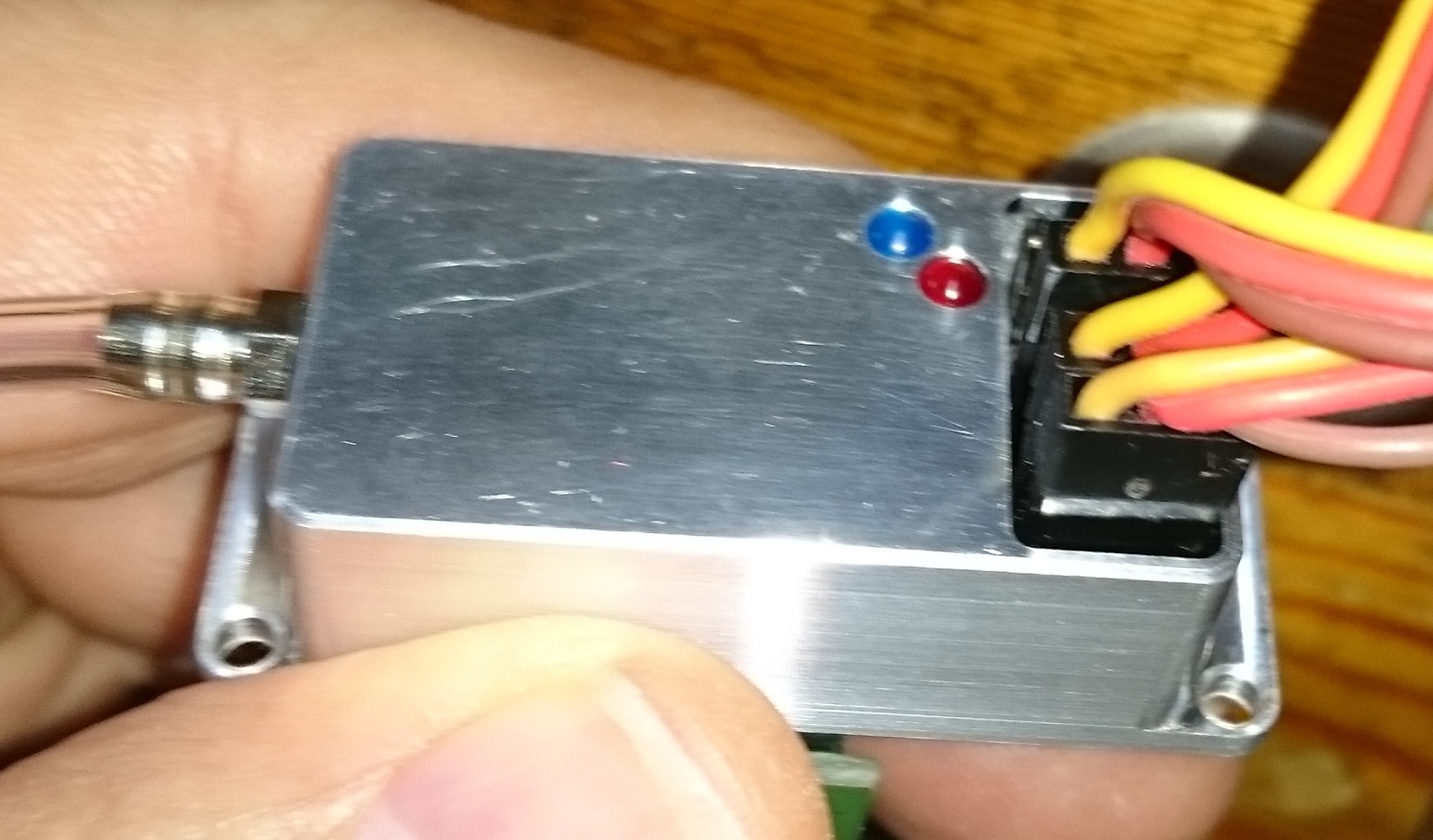
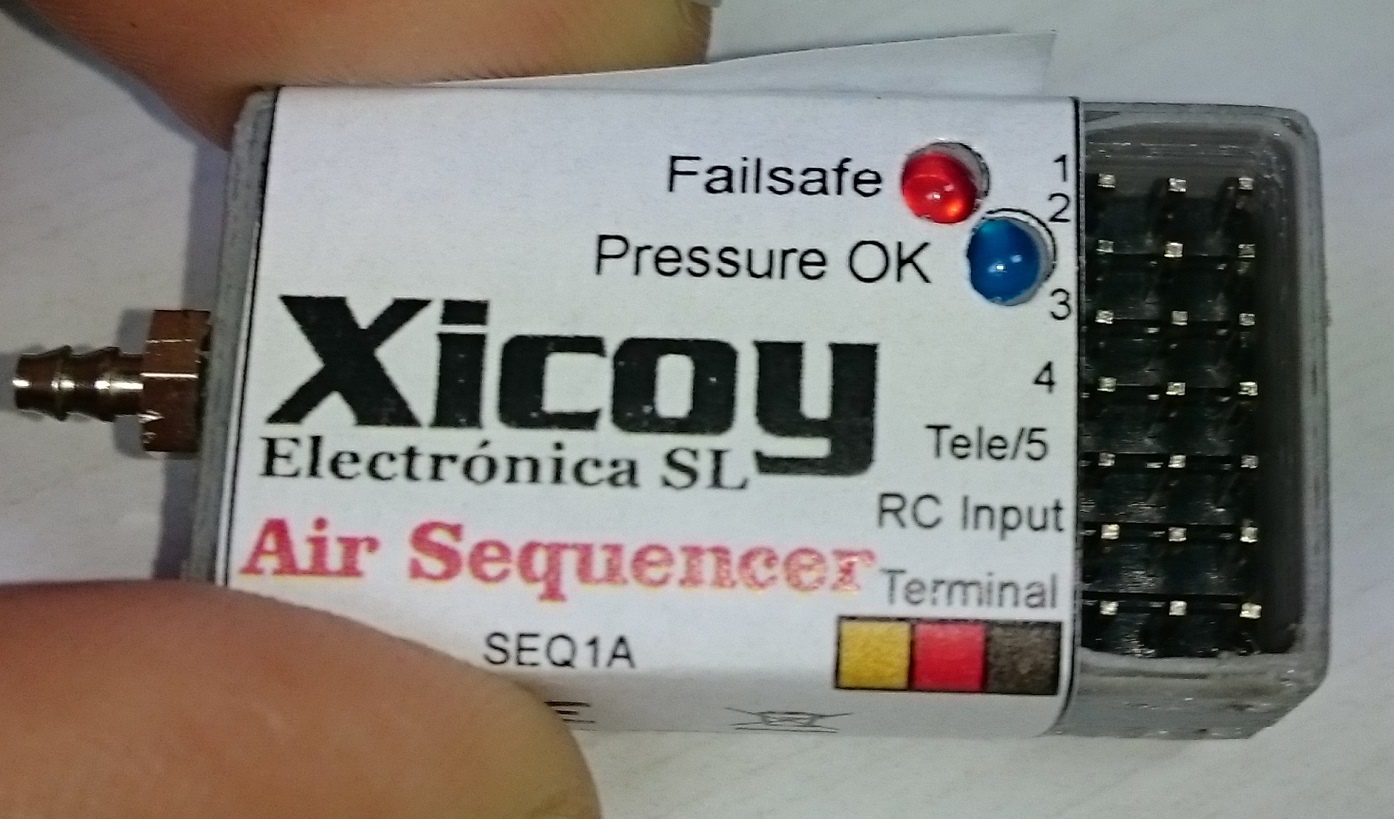
I'm finishing the development of a new sequencer/failsafe for air operated retracts, but have a doubt about what is the desired operation after power-up,so I would like to have some feedback of "real life" use.
The device is composed of two sections. One is an air pressure sensor used for to detect an air loss and to extend the gear before running out of air. The current pressure can be transmitted over telemetry to Jeti, Multiplex and Futaba radios. Failsafe pressure can be adjusted from 0 to 10 bar.
The other section is the sequencer. It have 5 outputs (4 if telemetry used) and one input. The outputs can drive air valves or servos, for servo use the endpoints of the 5 outputs are freely adjustable. The sequencer have 5 steps (Gear Up, GearDown and 3 intermediate steps). In each of the 5 steps, the position of the 5 outputs is configurable, as it is the time spend on each step. All programming is done by use the Xicoy data terminal (used in Wren, KT, Jetcentral, JetsMunt and other engines).
All is working fine, software is in last test phase and hardware being manufactured. We plan to launch the product in a couple of weeks, but still I'm not sure ofthe power-up sequence, meaning what the device should do after power up.
In current software,once the power is applied, the device wait 3 seconds to give time to the receiver output to stabilize. After this delay, if the command received is "Gear Up", it does nothing to prevent the gear to collapse if the gear switch on the TX has been inadvertently left in gear up position. Once the command received is "Gear Down", it arms, sets the outputs to "gear down" position and on next transition to "Gear Up" it does the retract sequence as programmed.
This should work fine if the gear is always extended at power-up, that is the usual situation, but in the case that the system is switched-on when the gear is retracted, it looks that could cause issues. If a door is programmed to be in closed position when the gear is down, then this door will keep closed when the system set the outputs to "gear down" position once armed, so this will prevent the strut to extend and possibly causing damage to the door.
To prevent this possibility of damage, I think that a solution could be that at power-up the system set the all the outputs to the doors to OPEN position, allowing the gear to extend if it was retracted, and few seconds later, the doors that should be closed when the gear is extended, will close. This avoid the possibility of door damage, but will cause the doors to cycle at each power-up. Only the doors that should be closed when the gear is down would cycle.
Would this be acceptable? I'm open to suggestions, now it's the time of the "wish list".
Thanks for your feedback,
Gaspar
Last edited by Gaspar; 11-15-2015 at 02:55 AM.
 11-15-2015 | 06:00 AM
#2


My Feedback: (14)
Gaspar,
I think that the solution you have proposed is the best one. I agree that there is no single answer, only compromises. The main risk (other than cycling the "closed when gear down" doors as you mention, which is not really a risk) is that if the airplane is in some sort of transportation cradle that blocks door movement, there could be an issue trying to open those doors and perhaps damaging the doors or linkage on power-up.
Over the years I have done two F-15s, which is one of the planes that has some doors that remain open, and some that re-close on gear down. But on powering up the airplane with gear up, while sitting in its transportation cradle, it's not unreasonable to expect the pilot will position the plane to allow free movement of the gear and doors.
One other thought .. a lot of jets are using an air actuated canopy, with an up and down motion cylinder, and one or more lock cylinders to be used with the canopy down. It would be great if you could use this same sequencer to do the canopy operations ... plus you get to sell two of them :-)
For canopy control, you don't want failsafe to put the canopy up (!), so I presume canopy down would be set up as "gear down" .. on a loss of air pressure in flight the last thing you would want is the canopy open! The lock cylinders would be set up as doors, I suppose they would have to be set so that locked = door closed. If I follow the logic here, the locks would then re-engage when the canopy goes up. This is probably ok, but not ideal .. you really only want the locks engaged when the canopy is down .. with a suitable delay for the canopy to come down, and to release before the canopy goes up. If your programming is flexible enough to customize for this application that would be great.
Dave McQueeney
I think that the solution you have proposed is the best one. I agree that there is no single answer, only compromises. The main risk (other than cycling the "closed when gear down" doors as you mention, which is not really a risk) is that if the airplane is in some sort of transportation cradle that blocks door movement, there could be an issue trying to open those doors and perhaps damaging the doors or linkage on power-up.
Over the years I have done two F-15s, which is one of the planes that has some doors that remain open, and some that re-close on gear down. But on powering up the airplane with gear up, while sitting in its transportation cradle, it's not unreasonable to expect the pilot will position the plane to allow free movement of the gear and doors.
One other thought .. a lot of jets are using an air actuated canopy, with an up and down motion cylinder, and one or more lock cylinders to be used with the canopy down. It would be great if you could use this same sequencer to do the canopy operations ... plus you get to sell two of them :-)
For canopy control, you don't want failsafe to put the canopy up (!), so I presume canopy down would be set up as "gear down" .. on a loss of air pressure in flight the last thing you would want is the canopy open! The lock cylinders would be set up as doors, I suppose they would have to be set so that locked = door closed. If I follow the logic here, the locks would then re-engage when the canopy goes up. This is probably ok, but not ideal .. you really only want the locks engaged when the canopy is down .. with a suitable delay for the canopy to come down, and to release before the canopy goes up. If your programming is flexible enough to customize for this application that would be great.
Dave McQueeney
Last edited by ww2birds; 11-15-2015 at 06:02 AM.


 11-15-2015 | 06:48 AM
#4

My Feedback: (2)
How about - do nothing.
Just like my E-flite retracts in my Savex L-39, I retract them for transport/ storage, and at power on, if they are 'out of sequence' with the Tx control, I just have to cycle the Tx switch to get it sync'd up and then they operate normally.
That also keeps full control with the pilot, as unexpected movements at power on are not great due to the possibility of damage.
Paul
Just like my E-flite retracts in my Savex L-39, I retract them for transport/ storage, and at power on, if they are 'out of sequence' with the Tx control, I just have to cycle the Tx switch to get it sync'd up and then they operate normally.
That also keeps full control with the pilot, as unexpected movements at power on are not great due to the possibility of damage.
Paul
11-15-2015 | 07:06 AM
#6
My Feedback: (57)
Gaspar,
Just a thought; and not sure it's feasible or beneficial or even possible, but how about making each output "configurable" in power-up mode? By doing so, they can have each output do what they want / need when switched on, and give the most flexibility as possible to the end-user.
Just a thought; and not sure it's feasible or beneficial or even possible, but how about making each output "configurable" in power-up mode? By doing so, they can have each output do what they want / need when switched on, and give the most flexibility as possible to the end-user.
11-15-2015 | 07:36 AM
#7

My Feedback: (3)
Joined: Oct 2005
Posts: 880
Likes: 0
Received 0 Likes
on
0 Posts
From: san jose,
CA
Gaspar, you could make the method you describe the default. Most are accustomed to that kind of operation with retracts and doors. Then for those that want something different give them programming capability to do so but document a note/warning in the programming guide.
11-15-2015 | 09:42 AM
#8
I would prefer that nothing happens when powering up. That allows the inadvertent switch-flip or brain-dump to be ignored and the unit then works when actually told to. Otherwise have that as an option for the user with instructions in the manual.
Greg
Greg
11-15-2015 | 10:11 AM
#9
My Feedback: (57)
Gaspar, you could make the method you describe the default. Most are accustomed to that kind of operation with retracts and doors. Then for those that want something different give them programming capability to do so but document a note/warning in the programming guide.
11-15-2015 | 10:30 AM
#10

My Feedback: (1)
I've been making a similar device for the past couple years for my own use. See picture.
My method is to to do a Receiver Valid test at power on. The pulse from the Rx has to fall in the range of Gear Down or else it waits. In the meantime, no pulses are sent to the servos. I save a Gear Status word to EEPROM which represents the last valid gear command and is written when the gear cycle is complete.
So, when a valid Gear Down signal is received, it checks the Gear Status word. If the gear is down, nothing changes and the sequencing code is not executed. If the gear is up, then it runs the full gear down sequence. It doesn't matter if the air pressure is low and the system is in Failsafe. It will still try to put the gear down.
I can turn on, start up and try to taxi out with the Gear Switch in the up position - except steering and brakes won't work - and then remember to put the Gear Switch down and continue on. I've done that more that once and it's saved me.
I also included a button which you can use during assembly and tear down to cycle the gear without the transmitter. It overrides Failsafe and will operate the gear regardless of air pressure. There is a 1 second hold down period before it operates. It also can override a Failsafe situation and let you operate the gear with the transmitter (regardless of air pressure). The Button has proven extremely useful, day to day, and for testing.
There are two kinds of receivers - those which send no servo signals until link up with the transmitter and those that always send out something (Spektrum). To use the Button this way you have to account for the different types of receivers or whether a receiver itself is in Failsafe (Tx on then off). So I have two different delay settings on the Button to provide the right action.
I also include a proportional brake channel (gear down) and, optionally, a proportional smoke channel (gear up) via transmitter mixes into the gear channel. The resolution isn't all that great but do you really need more than 200 or so steps for brakes and smoke? Gain is two Tx channels at the expense of 2 mixes.
Sequencer is programmable using a plug in dumb LCD terminal with navigation switches and button.
My method is to to do a Receiver Valid test at power on. The pulse from the Rx has to fall in the range of Gear Down or else it waits. In the meantime, no pulses are sent to the servos. I save a Gear Status word to EEPROM which represents the last valid gear command and is written when the gear cycle is complete.
So, when a valid Gear Down signal is received, it checks the Gear Status word. If the gear is down, nothing changes and the sequencing code is not executed. If the gear is up, then it runs the full gear down sequence. It doesn't matter if the air pressure is low and the system is in Failsafe. It will still try to put the gear down.
I can turn on, start up and try to taxi out with the Gear Switch in the up position - except steering and brakes won't work - and then remember to put the Gear Switch down and continue on. I've done that more that once and it's saved me.
I also included a button which you can use during assembly and tear down to cycle the gear without the transmitter. It overrides Failsafe and will operate the gear regardless of air pressure. There is a 1 second hold down period before it operates. It also can override a Failsafe situation and let you operate the gear with the transmitter (regardless of air pressure). The Button has proven extremely useful, day to day, and for testing.
There are two kinds of receivers - those which send no servo signals until link up with the transmitter and those that always send out something (Spektrum). To use the Button this way you have to account for the different types of receivers or whether a receiver itself is in Failsafe (Tx on then off). So I have two different delay settings on the Button to provide the right action.
I also include a proportional brake channel (gear down) and, optionally, a proportional smoke channel (gear up) via transmitter mixes into the gear channel. The resolution isn't all that great but do you really need more than 200 or so steps for brakes and smoke? Gain is two Tx channels at the expense of 2 mixes.
Sequencer is programmable using a plug in dumb LCD terminal with navigation switches and button.
Last edited by Thud_Driver; 11-15-2015 at 10:34 AM.
11-15-2015 | 04:03 PM
#11
Hi Gaspar
When power-up, all gear and doors should be in open position, either is the switch is in open or closed position during power up. I once crashed a door in my Hawk because of this. Now I will do the inicial cycle with low pressure.
Great, we will read pressure in the TX. I like air operated systems. Just build them properly and they will be reliable for years. For some scale jets there is no alternative either and it is very hard to find pressure fail safe these days...
Br
Nuno
When power-up, all gear and doors should be in open position, either is the switch is in open or closed position during power up. I once crashed a door in my Hawk because of this. Now I will do the inicial cycle with low pressure.
Great, we will read pressure in the TX. I like air operated systems. Just build them properly and they will be reliable for years. For some scale jets there is no alternative either and it is very hard to find pressure fail safe these days...
Br
Nuno
11-15-2015 | 07:30 PM
#12


My Feedback: (76)
Joined: Aug 2004
Posts: 2,715
Likes: 0
Received 0 Likes
on
0 Posts
From: Baton Rouge, LA
something to handle canopy and canopy lock would be good, I have also seen gear door locking to prevent gear doors from opening up during flight, I saw this on SM Big Hawk thread, they use a servo with a curved arm to lock the door in place once they take off.

 11-16-2015 | 03:07 AM
#16
Thread Starter
Joined: Jun 2002
Posts: 426
Likes: 0
Received 5 Likes
on
3 Posts
From: Arenys de Munt- BARCELONA, SPAIN
Woow... thanks for all the valuable comments.
@Dave McQueeney and @Alkaline: I think that current setup would be usable for canopy. The pressure failsafe can be disabled, no telemetry need, so you would have 5 programmable outputs, and 5 sequence steps. You can unlock, open the canopy, lock again... plus a extra 2 outputs and 2 steps to do other things like to move the arm of the pilot, etc.
@George: It would be possible to define a "power up" position, but so that this power-up position be compatible in all possibilities, the only safe position is with all doors open. You would not define a door closed at power-up when this door can interfere with the gear.
@Thud_Driver: Very nice and well thought your device. I have taken in to consideration to have the unit to remember what was the last position of the gear, but on plane that the mains are on the wings, often the position is changed manually by operator during assembly / disassembly, so it is not warranted that what is remembered is what is currently at power up, so I prefer a solution that is not dependent of what was done last flying session.
About the "do nothing" option. Could be the best one, but still are possible issues. First one is the definition of "do nothing". For servo actuated doors and Xicoy valves, OK, the sequencer does not output any signal so servos keep "soft" and valves keep both sides closed. Nothing moves. But for mechanical valves and some electronic valves that are open in either position even without valid signal, this could cause a odd power-up. Also there are planes that need air pressure to lock the gears.
After your comments, it seems to me that the best setup would be to add a programmable "power up" option:
Option 1: If command is "gear-up" do nothing. Once command is selected to gear down or if the power-up is already executed with correct "gear down" selection, then open all the doors, pressurize the gears and then close the doors that should be closed with "gear down". This mean that each time the power is switched on and "gear down" is selected, the doors that are closed will cycle open and close
Option2: Do nothing until the gear switch is cycled from "Gear Down" to "Gear-Up" and back to "Gear Down". Then perform the "option 1", pressurizing the retracts, open all doors, close the ones that should be closed.
Option3: Immediately execute the retract sequence as defined by the switch.
Option4: Open to suggestions...!
Gaspar
@Dave McQueeney and @Alkaline: I think that current setup would be usable for canopy. The pressure failsafe can be disabled, no telemetry need, so you would have 5 programmable outputs, and 5 sequence steps. You can unlock, open the canopy, lock again... plus a extra 2 outputs and 2 steps to do other things like to move the arm of the pilot, etc.
@George: It would be possible to define a "power up" position, but so that this power-up position be compatible in all possibilities, the only safe position is with all doors open. You would not define a door closed at power-up when this door can interfere with the gear.
@Thud_Driver: Very nice and well thought your device. I have taken in to consideration to have the unit to remember what was the last position of the gear, but on plane that the mains are on the wings, often the position is changed manually by operator during assembly / disassembly, so it is not warranted that what is remembered is what is currently at power up, so I prefer a solution that is not dependent of what was done last flying session.
About the "do nothing" option. Could be the best one, but still are possible issues. First one is the definition of "do nothing". For servo actuated doors and Xicoy valves, OK, the sequencer does not output any signal so servos keep "soft" and valves keep both sides closed. Nothing moves. But for mechanical valves and some electronic valves that are open in either position even without valid signal, this could cause a odd power-up. Also there are planes that need air pressure to lock the gears.
After your comments, it seems to me that the best setup would be to add a programmable "power up" option:
Option 1: If command is "gear-up" do nothing. Once command is selected to gear down or if the power-up is already executed with correct "gear down" selection, then open all the doors, pressurize the gears and then close the doors that should be closed with "gear down". This mean that each time the power is switched on and "gear down" is selected, the doors that are closed will cycle open and close
Option2: Do nothing until the gear switch is cycled from "Gear Down" to "Gear-Up" and back to "Gear Down". Then perform the "option 1", pressurizing the retracts, open all doors, close the ones that should be closed.
Option3: Immediately execute the retract sequence as defined by the switch.
Option4: Open to suggestions...!
Gaspar
Last edited by Gaspar; 11-16-2015 at 03:10 AM.
11-16-2015 | 04:18 AM
#17

My Feedback: (57)
I'll be honest with you, after my experience with the $300 CG machine, no more Xicoy for me.....except for ECU's and because it is out of my control.
But if my opinion is worth anything after my exception above, after using pretty much every electronic valve out there, is also do nothing. Sometimes I just want to go back to servo operated valves to avoid the state of "nothingness" that gear up fail safes provide.
What we really need is a radio capable of sequencing valves or servos.......perhaps already out there but I'm still in the XP9303 ages.
David
But if my opinion is worth anything after my exception above, after using pretty much every electronic valve out there, is also do nothing. Sometimes I just want to go back to servo operated valves to avoid the state of "nothingness" that gear up fail safes provide.
What we really need is a radio capable of sequencing valves or servos.......perhaps already out there but I'm still in the XP9303 ages.
David
11-16-2015 | 06:50 AM
#18
Banned
My Feedback: (74)
Joined: Apr 2002
Posts: 183
Likes: 0
Received 0 Likes
on
0 Posts
From: Orlando, FL
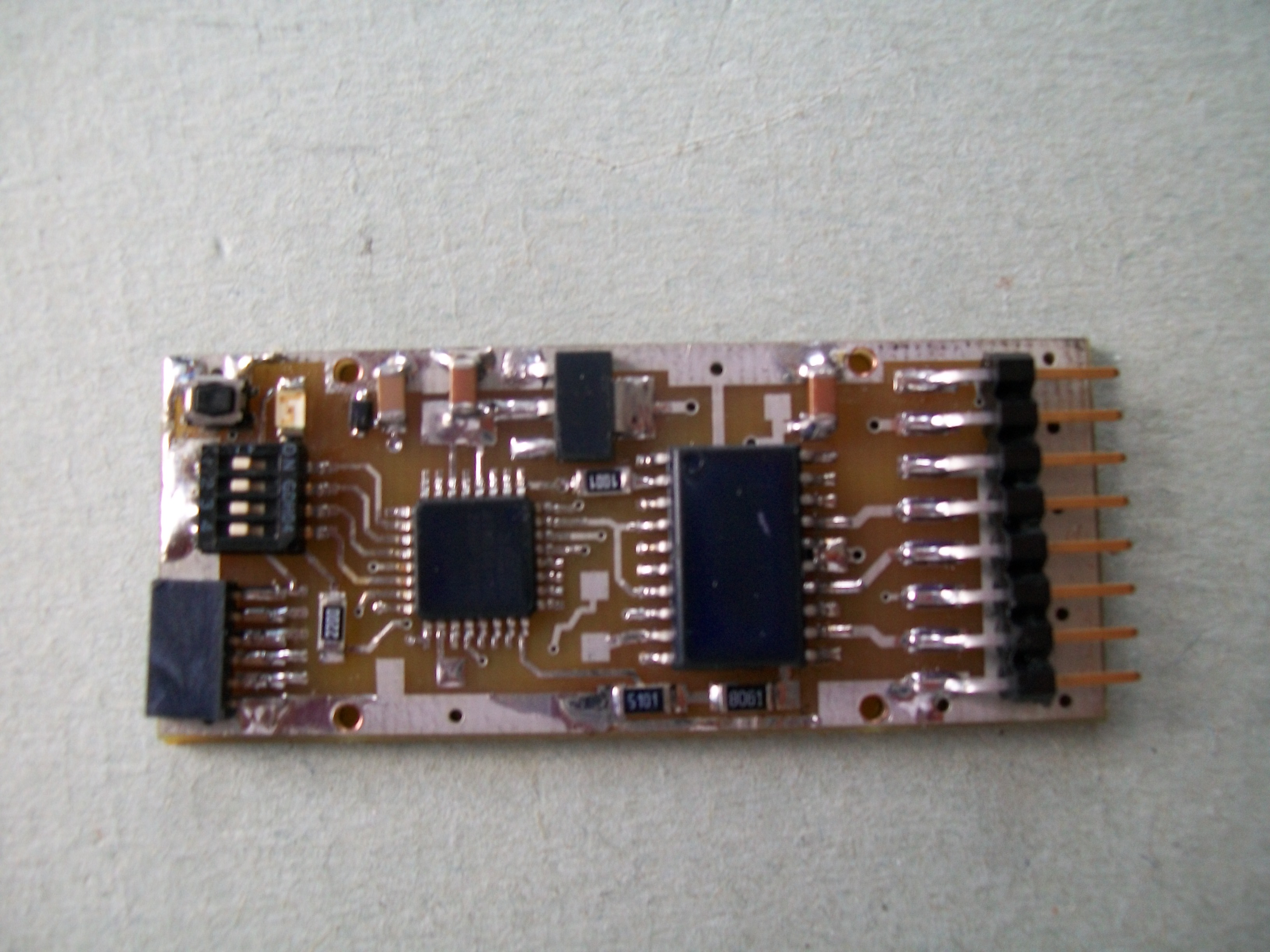
Gaspar. I quit making air retracts. But I am making electric retracts. The concept should be the same. Each gear has its own electronics on the top of the retract. Each gear also has a gear door sequencer designed into it. When you apply power to the gear, even if the receiver is off, the gear door's open and the gear drop down. The stay that way until until power is reapplied, the receiver is turned on, and the retracts are cycled 1 time before the work in the sequence for flight, and stay that way until power is turned off. The gear doors are are programmed to work in the standard or a P-51 mode by a switch setting. The direction of the servo is also done by a switch setting, The end points are setup in a program mode, which is another setting using a push button. on the board. The gear also cycle down if the battery voltage goes to low.
Larry E
SouthEast Model Products
Larry E
SouthEast Model Products

 11-16-2015 | 12:06 PM
#21
My Feedback: (14)
While the high-end Futabas can do complex gear/door sequencing with programmable mixers, there is no dedicated/simplified function for it. I know some of the other brands have that.
We do have air pressure telemetry now (e.g. Carsten has a sensor sold thru ultimate jets), so if there were some way to use telemetry to control switches or mixers, you could implement all of this, including an air fail safe, in the radio. No such linkage of telemetry to control is possible for Futaba (I've written to them to suggest it!) .. but I think the Jeti can do it.
FWIW, my experience is that even if you could 'do it all' with the radio, you would need 3 channels for an F-15 gear/door setup (1- gear, 2-doors that stay open, 3-doors that open and close) .. add to that two for the canopy (1-open/close piston, 2-locks) and you've just eaten 5 channels.
Even with 18 channels this is a lot to give up since the planes that use complex gear/doors inevitably have other complex functions and you run out of channels quickly. I've just done an install with the Jet Central gear/canopy sequencer all in one box with an air fail safe, and it only consumes two channels .. but I would have no objection to using two sequencers like the one Gaspar is proposing as I mentioned in my post above to handle gear and canopy. I, for one, think he makes very nice stuff!
Dave
We do have air pressure telemetry now (e.g. Carsten has a sensor sold thru ultimate jets), so if there were some way to use telemetry to control switches or mixers, you could implement all of this, including an air fail safe, in the radio. No such linkage of telemetry to control is possible for Futaba (I've written to them to suggest it!) .. but I think the Jeti can do it.
FWIW, my experience is that even if you could 'do it all' with the radio, you would need 3 channels for an F-15 gear/door setup (1- gear, 2-doors that stay open, 3-doors that open and close) .. add to that two for the canopy (1-open/close piston, 2-locks) and you've just eaten 5 channels.
Even with 18 channels this is a lot to give up since the planes that use complex gear/doors inevitably have other complex functions and you run out of channels quickly. I've just done an install with the Jet Central gear/canopy sequencer all in one box with an air fail safe, and it only consumes two channels .. but I would have no objection to using two sequencers like the one Gaspar is proposing as I mentioned in my post above to handle gear and canopy. I, for one, think he makes very nice stuff!
Dave
11-17-2015 | 02:36 AM
#22
Thread Starter
Joined: Jun 2002
Posts: 426
Likes: 0
Received 5 Likes
on
3 Posts
From: Arenys de Munt- BARCELONA, SPAIN
The time spent on each of intermediate states is defined in 0,1s increments.
On each of these states you define the output position of the 5 outputs. You can have, for example, one output closed in first step, opened in second step, closed in 3th step, opened in 4th step and closed in 5th step. All outputs are independent of the others and nothing is preset, it is not defined that the gear output should be open in gear down and closed on gear up, you decide. You can use diferent valves for the nose to the mains and have the nose extending at different time than mains.
The output commands for "open" and "closed" are programmable independently for each output, so you can use servos for the doors and adjust electronically the door endpoints.
Hope this explain how the sequencer works.
Gaspar
Last edited by Gaspar; 11-17-2015 at 02:39 AM. Reason: typo


