


What is PM???
 05-09-2011 | 07:44 PM
#1
Thread Starter
Senior Member
 What is PM???
PM is the mechanic's best friend.
PM keeps you going when the other guy is going "What the &%#?"
PM keeps you in the fight longer than your enemy and helps you to survive and even win.
PM keeps the cost of the hobby down.
PM makes it more fun and lowers your aggravation level.
PM or "Mantienance Halts" are crucial to any mechanized or armored offensive. Just read a book written by a tanker or talk to Bill Campbell (AKA Pattoncommander).
PM is.... Preventative Maintenance
Did you check the gas, coolant and oil in your vehicle before driving to the battlefield? Why not do so for your tank?
If you do your part at the workbench at home your tank will do its part on the battlefield for you. At the recent tank Extravaganza I frequenlty reminded the rookies of their ABCs... always be charging... (Batteries and TXs) since they were so busy and trying to keep up with the action. I saw many guys making repairs which is quite common since we may have dozens of battles each day. I helped one rookie fix a bad gearbox and took another M4 home from another tanker to rebuild the TUs for him. Neither tanker had any lubricants on the gearboxes. These are wear items and are metal on metal moving parts! One was very well coated in dirt from the field. This will speed the rate at which the TU becomes a worn-out mess. TU lubrication is never mentioned anywhere in the Tamiya tank building manuals, except for the Leo which is a sealed component that you build for yourself. Even HL lubes their gearboxes from the factory. So should you. I know one tanker who has worn our more than 15 gearboxes (no names please guys) in the past few years. [>:]
The stock Tamiya gearboxes in my Panther lasted me for 4 trouble-free years of IR tank battles. Then I lost forward one gearbox in Texas last fall. I up-greded to Impact TUs and hope they do just as well. These too are coated in oil for the shafts and grease for the gears. They are also sealed off from the outside by foam blocks around the out-put shafts and covers over the top of the TU from the tip of the lower hull. I remove them for a thorough disassembly and cleaning once a year. After each battle-weekend I clean out the excess or dirty grease with Q-tips and re-lube with light oil then grease the gear faces. I use a fine quality light machine oil (Never WD-40) like Prolong or Singer sewing machine oil on the shafts and bearings. Then a thicker grease on the gear faces. I use white lithium spray since it penetrates well. I then fabricate a cover over the TUs and seal them off from the the rest of the tank. I use both sealed bearings and bushing on my idlers and road wheels. These are also lubed with plastic friendly grease. Your tank will roll easier from the reduced friction and the results will be a faster tank and longer battery duration. My elevation & rotation only get a drop of lube but my recoil units get a good deal more and are frequently cleaned. A dab of Permatex anti-seize compound should be used on some fasteners and always on your drive sprockets. In the pix you can see the accumulation of dirt around the hull by the out-put shafts attracted by the oils. But none is found on the inside of the hull. Sorry for some of the fuzzy pix.
Here are some pix from when I up-graded to better motors. You can also see the trick I use for setting-up the gear lash. I feed a strip of quality paper between the pinion and the first gear to provide a precise amount of clearance before tightening the motor mounts.
As usual, I welcome your feedback and look forward to hearing your ideas. Bob
PM keeps you going when the other guy is going "What the &%#?"
PM keeps you in the fight longer than your enemy and helps you to survive and even win.
PM keeps the cost of the hobby down.
PM makes it more fun and lowers your aggravation level.
PM or "Mantienance Halts" are crucial to any mechanized or armored offensive. Just read a book written by a tanker or talk to Bill Campbell (AKA Pattoncommander).
PM is.... Preventative Maintenance
Did you check the gas, coolant and oil in your vehicle before driving to the battlefield? Why not do so for your tank?
If you do your part at the workbench at home your tank will do its part on the battlefield for you. At the recent tank Extravaganza I frequenlty reminded the rookies of their ABCs... always be charging... (Batteries and TXs) since they were so busy and trying to keep up with the action. I saw many guys making repairs which is quite common since we may have dozens of battles each day. I helped one rookie fix a bad gearbox and took another M4 home from another tanker to rebuild the TUs for him. Neither tanker had any lubricants on the gearboxes. These are wear items and are metal on metal moving parts! One was very well coated in dirt from the field. This will speed the rate at which the TU becomes a worn-out mess. TU lubrication is never mentioned anywhere in the Tamiya tank building manuals, except for the Leo which is a sealed component that you build for yourself. Even HL lubes their gearboxes from the factory. So should you. I know one tanker who has worn our more than 15 gearboxes (no names please guys) in the past few years. [>:]
The stock Tamiya gearboxes in my Panther lasted me for 4 trouble-free years of IR tank battles. Then I lost forward one gearbox in Texas last fall. I up-greded to Impact TUs and hope they do just as well. These too are coated in oil for the shafts and grease for the gears. They are also sealed off from the outside by foam blocks around the out-put shafts and covers over the top of the TU from the tip of the lower hull. I remove them for a thorough disassembly and cleaning once a year. After each battle-weekend I clean out the excess or dirty grease with Q-tips and re-lube with light oil then grease the gear faces. I use a fine quality light machine oil (Never WD-40) like Prolong or Singer sewing machine oil on the shafts and bearings. Then a thicker grease on the gear faces. I use white lithium spray since it penetrates well. I then fabricate a cover over the TUs and seal them off from the the rest of the tank. I use both sealed bearings and bushing on my idlers and road wheels. These are also lubed with plastic friendly grease. Your tank will roll easier from the reduced friction and the results will be a faster tank and longer battery duration. My elevation & rotation only get a drop of lube but my recoil units get a good deal more and are frequently cleaned. A dab of Permatex anti-seize compound should be used on some fasteners and always on your drive sprockets. In the pix you can see the accumulation of dirt around the hull by the out-put shafts attracted by the oils. But none is found on the inside of the hull. Sorry for some of the fuzzy pix.
Here are some pix from when I up-graded to better motors. You can also see the trick I use for setting-up the gear lash. I feed a strip of quality paper between the pinion and the first gear to provide a precise amount of clearance before tightening the motor mounts.
As usual, I welcome your feedback and look forward to hearing your ideas. Bob
 05-09-2011 | 08:36 PM
#3
Thread Starter
Senior Member
RE: What is PM???
ORIGINAL: swathdiver
You forgot the pic...
You forgot the pic...
 Thanks
05-09-2011 | 08:49 PM
Thanks
05-09-2011 | 08:49 PM
#4

Senior Member
RE: What is PM???
Nice pics!
I had over twenty 7.2v batteries in inventory of various sizes and was pretty good about cycling them until about a year or so ago. I've spent the last two weeks re-conditioning them and most have come back to life but some have not. Some of the ones that take great charges don't last as long as they used to. Regular PMs are essential! However, Most of the batteries were purchased in 2006 with a few stragglers after that. How long do your batteries last? My good ones are Venom 3600 and 4200 sticks. Surprisingly I have a couple of old Heng Long 2000mah and Mato Mart 2000mah that are still just fine too.
I had over twenty 7.2v batteries in inventory of various sizes and was pretty good about cycling them until about a year or so ago. I've spent the last two weeks re-conditioning them and most have come back to life but some have not. Some of the ones that take great charges don't last as long as they used to. Regular PMs are essential! However, Most of the batteries were purchased in 2006 with a few stragglers after that. How long do your batteries last? My good ones are Venom 3600 and 4200 sticks. Surprisingly I have a couple of old Heng Long 2000mah and Mato Mart 2000mah that are still just fine too.
05-09-2011 | 09:20 PM
#5
Thread Starter
Senior Member
RE: What is PM???
Good point Swath,
I used the Mato 2000s until I got into the Tamya tanks. They used to last me a half hour and some are five years old now. They are semi-retired and I only use them for bench testing now. I date all my batts and have them in sizes ranging from 3000 to 6800. The 6800s are a little dubious, but I have had good luck with the two I bought last year and I get almost 2 hours out of them. I run a pair of 3300s in my older JT and 4500 in the newer JT. My Panther uses 4100s and 4500s only since it is my main IR battler and usually has a camcorder strapped to the top.
What do you do for your gearboxes?
Bob
I used the Mato 2000s until I got into the Tamya tanks. They used to last me a half hour and some are five years old now. They are semi-retired and I only use them for bench testing now. I date all my batts and have them in sizes ranging from 3000 to 6800. The 6800s are a little dubious, but I have had good luck with the two I bought last year and I get almost 2 hours out of them. I run a pair of 3300s in my older JT and 4500 in the newer JT. My Panther uses 4100s and 4500s only since it is my main IR battler and usually has a camcorder strapped to the top.
What do you do for your gearboxes?
Bob
05-09-2011 | 10:45 PM
#6
Senior Member
RE: What is PM???
ORIGINAL: thecommander
What do you do for your gearboxes?
What do you do for your gearboxes?
All the Heng Long and Asiatam gearboxes are disassembled, cleaned, re-assembled with washers/shims if needed (usually are!) and broken in again during each overhaul. Then the motors are RPM tested free and under load. Then I test the rpms of each gearbox too to make sure they're as close as possible (within a few rpms of each other) and if not keep breaking in the offending gearbox until it spins the way I want it too. I use white lithium grease to lube the boxes and semi seal them with custom made covers that are RTV'd over the tops once they are screwed down inside the tank. Have never had a failure with a metal gearbox by following this PM routine.
05-09-2011 | 11:02 PM
#7
Thread Starter
Senior Member
RE: What is PM???
I can't go as far as you do because I have too many tanks. I just can't afford to spend that much time on each tank. I enjoy battling all of them so much. My Stug and JT are amongst my favorites after my Panther. Please post some pix so that we all may benefit from your experience.
Thank you, Bob
Thank you, Bob
05-10-2011 | 10:16 AM
#8
Senior Member
RE: What is PM???
How many tanks do you have? I have about 17 left and 8 are regular runners. Pics are posted on all of my build pages but not all tanks have build pages yet.
[link=http://www.rcuniverse.com/forum/searchpro.asp?phrase=Panzerkampfwagen&advancedMatc h=on&author=swathdiver&forumid=369&topicreply=comb ined&message=both&timeframe=%3E&timefilter=0&langu age=single&top=500&minRank=0&sortMethod=d&submitbu tton=+OK+]Motor Pool[/link]
[link=http://www.rcuniverse.com/forum/searchpro.asp?phrase=Panzerkampfwagen&advancedMatc h=on&author=swathdiver&forumid=369&topicreply=comb ined&message=both&timeframe=%3E&timefilter=0&langu age=single&top=500&minRank=0&sortMethod=d&submitbu tton=+OK+]Motor Pool[/link]
 05-10-2011 | 01:54 PM
#10

Joined: Dec 2009
Posts: 241
Likes: 0
Received 0 Likes
on
0 Posts
From: Flint, MI
RE: What is PM???
That's cheatin Bob - snapin pictures of Randy showing me the gearbox setup on his Panther
You all were very helpful at Danville and shared some really good tips for PM .
Mike EOT
You all were very helpful at Danville and shared some really good tips for PM .
Mike EOT
 05-10-2011 | 06:26 PM
#12
Thread Starter
Senior Member
RE: What is PM???
ORIGINAL: pattoncommander
left out PM =Post Mortem and the final stage of the most dangerous part of a woman = PMS.
left out PM =Post Mortem and the final stage of the most dangerous part of a woman = PMS.
Hey Bill,
Tell the guys about a little of the PM that you guys had to do each day or after every manouver? I know you have commented about having an oil burner or did it just leak it out?
Bob
05-10-2011 | 07:12 PM
#13
Thread Starter
Senior Member
RE: What is PM???
ORIGINAL: EOT
That's cheatin Bob - snapin pictures of Randy showing me the gearbox setup on his Panther
You all were very helpful at Danville and shared some really good tips for PM .
Mike EOT
That's cheatin Bob - snapin pictures of Randy showing me the gearbox setup on his Panther
You all were very helpful at Danville and shared some really good tips for PM .
Mike EOT
I had a great time with you as well. I look forward to playing with your crew again soon. I appreciate all of your feedback and comments. The complaints were very few and more about tactics used at Danville than anything else. It is very fast paced and we will try to make it as realistic and fair as possible.
05-11-2011 | 02:16 PM
#14
RE: What is PM???
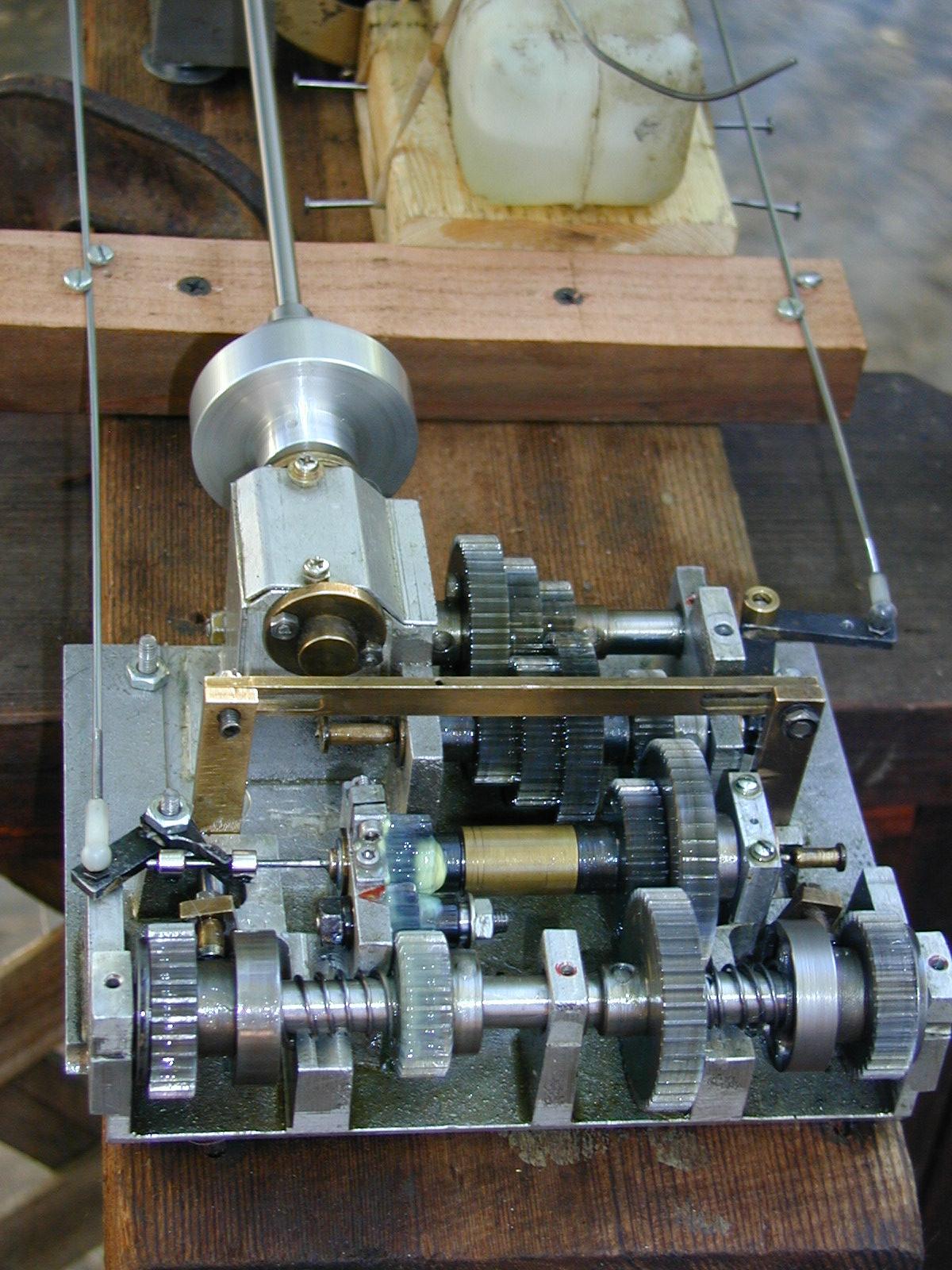
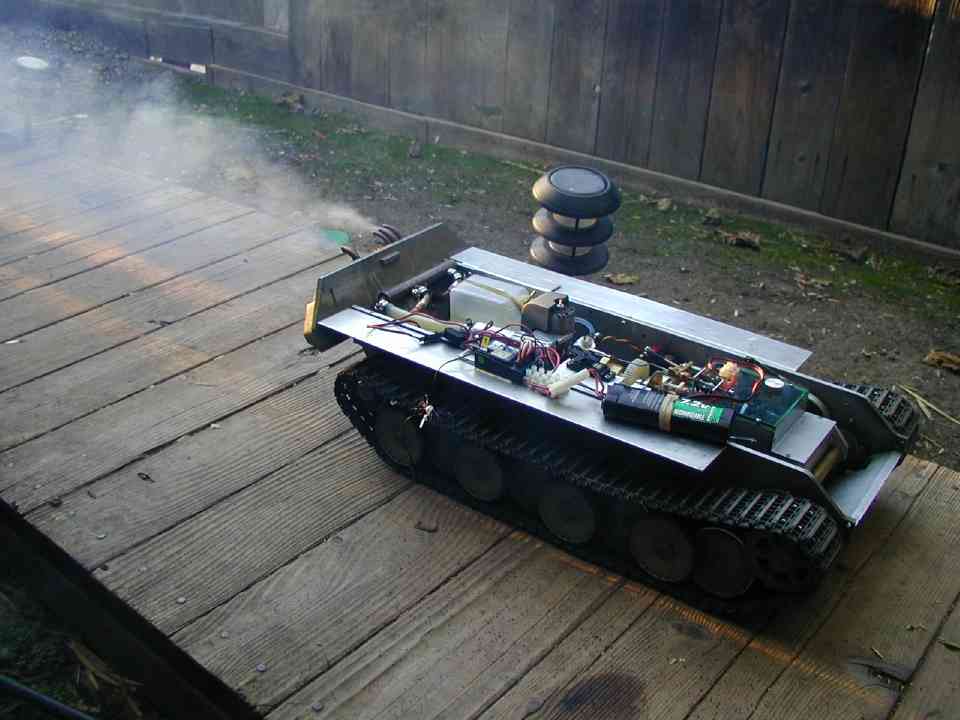
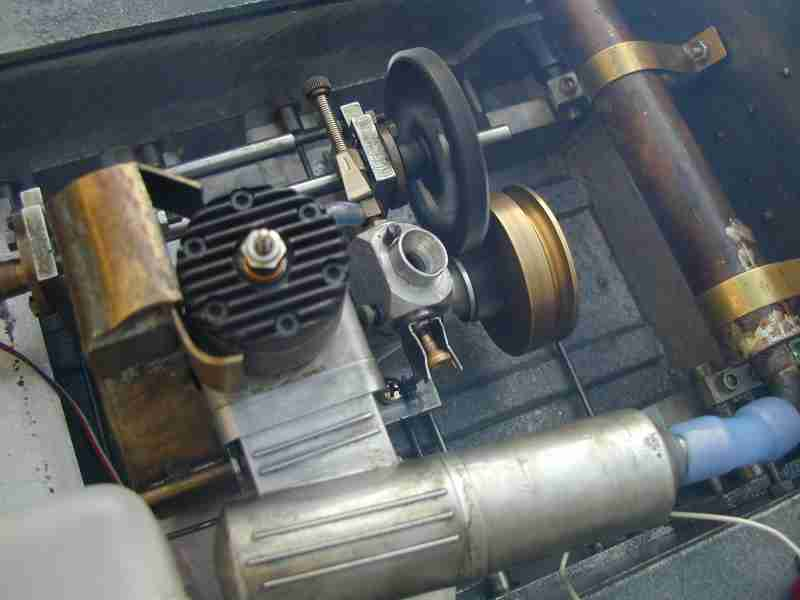
Bob, when something bleeds that much, it has been found that plugging it up in quick repeated sucession will greatly easy the discomfort from the bleeding. 
Most people do not realize the amount of maintenance required for operating a track vehicle. Four hours for every hour of operation is tha basic rule of thumb. Although double pin tracks are better for traction, weight distribution and negotiating soft terrain, a lot of time is spent on keeping end connectors tight and wedge bolts in place. The single pin tracks as on M-41s, didn't have nearly the maintenance requirements. A simple thing as changing engine oil is nasty in the field in cold weather as is occasional draining of the lower few gallons of gas when water has seeped into the fuel system.
Too much to put on a post.
Had an M-46 that used as much oil as it did gas...my M-45 reflects that tank in the assault gun platoon of M-45, with a rack of 5 gal oil cans on the back deck. Radial engines were bad on oil. SOP says hand crank 50 cycles before starting...but it was common to crank it, hope no hydroatatic lock takes place, than dump in 5 gallons of oil when the cloud cleared away. [&:]
Most people do not realize the amount of maintenance required for operating a track vehicle. Four hours for every hour of operation is tha basic rule of thumb. Although double pin tracks are better for traction, weight distribution and negotiating soft terrain, a lot of time is spent on keeping end connectors tight and wedge bolts in place. The single pin tracks as on M-41s, didn't have nearly the maintenance requirements. A simple thing as changing engine oil is nasty in the field in cold weather as is occasional draining of the lower few gallons of gas when water has seeped into the fuel system.
Too much to put on a post.
Had an M-46 that used as much oil as it did gas...my M-45 reflects that tank in the assault gun platoon of M-45, with a rack of 5 gal oil cans on the back deck. Radial engines were bad on oil. SOP says hand crank 50 cycles before starting...but it was common to crank it, hope no hydroatatic lock takes place, than dump in 5 gallons of oil when the cloud cleared away. [&:]


 05-11-2011 | 06:10 PM
#16
Thread Starter
Senior Member
RE: What is PM???
Please post a video of this gasoline powered tank in action. I'd love to hear and see it run.
As for all the work.... it kind of reminds you of your 1970 Chevelle.... where you spent all night adjusting the timing and carb when you weren't tightening the header bolts.
Memories...
As for all the work.... it kind of reminds you of your 1970 Chevelle.... where you spent all night adjusting the timing and carb when you weren't tightening the header bolts.
Memories...
05-11-2011 | 06:15 PM
#17
 RE: What is PM???
64 Mustang...
I always count the hours fixing these things in my $/Hour= Fun calculations.
I always count the hours fixing these things in my $/Hour= Fun calculations.
05-11-2011 | 06:46 PM
#18

My Feedback: (1)
RE: What is PM???
ORIGINAL: thecommander
Please post a video of this gasoline powered tank in action. I'd love to hear and see it run.
As for all the work.... it kind of reminds you of your 1970 Chevelle.... where you spent all night adjusting the timing and carb when you weren't tightening the header bolts.
Memories...
Please post a video of this gasoline powered tank in action. I'd love to hear and see it run.
As for all the work.... it kind of reminds you of your 1970 Chevelle.... where you spent all night adjusting the timing and carb when you weren't tightening the header bolts.
Memories...
They are glow engine powered but here's a different one. It's a 1:10 Hetzer; powered by a OS FS-20. The gearbox is my own design
which you may see the development for on my website. (Never mind the spelling in the video "Hezter" - didn't want to remake the
video just to correct the dumbthumbed spelling ). This video was shot a year ago in an earlier stage of the model's development.
[link=http://youtu.be/kfMH2za-SJg]Hetzer[/link]
Jerry


