To each his own.
My field can usually remains in my car between flying sessions. The internal battery is tapped to the vehicle and maintained on charge, always ready. Planes and transmitters are charged during the drive to the field. As is the glow driver battery. I arrive at the field with all batteries topped off and ready for a day of flying.
Once at the field l generally have no problem at all getting a day of flying in with a single glow driver. For the exceptions, there is a "backup" in the car that sees very little use, except when flying twin cylinder engines. An average start takes less than thirty seconds of glow power. One or two flips with powered glow plug.
Most starts are hand flipped, still have not used a cord connected starter or glow driver in years. Would never go back to full time use of them either. The electric tool battery produces far more starting power. Will crank much larger engines than a cord connected lead-acid battery.
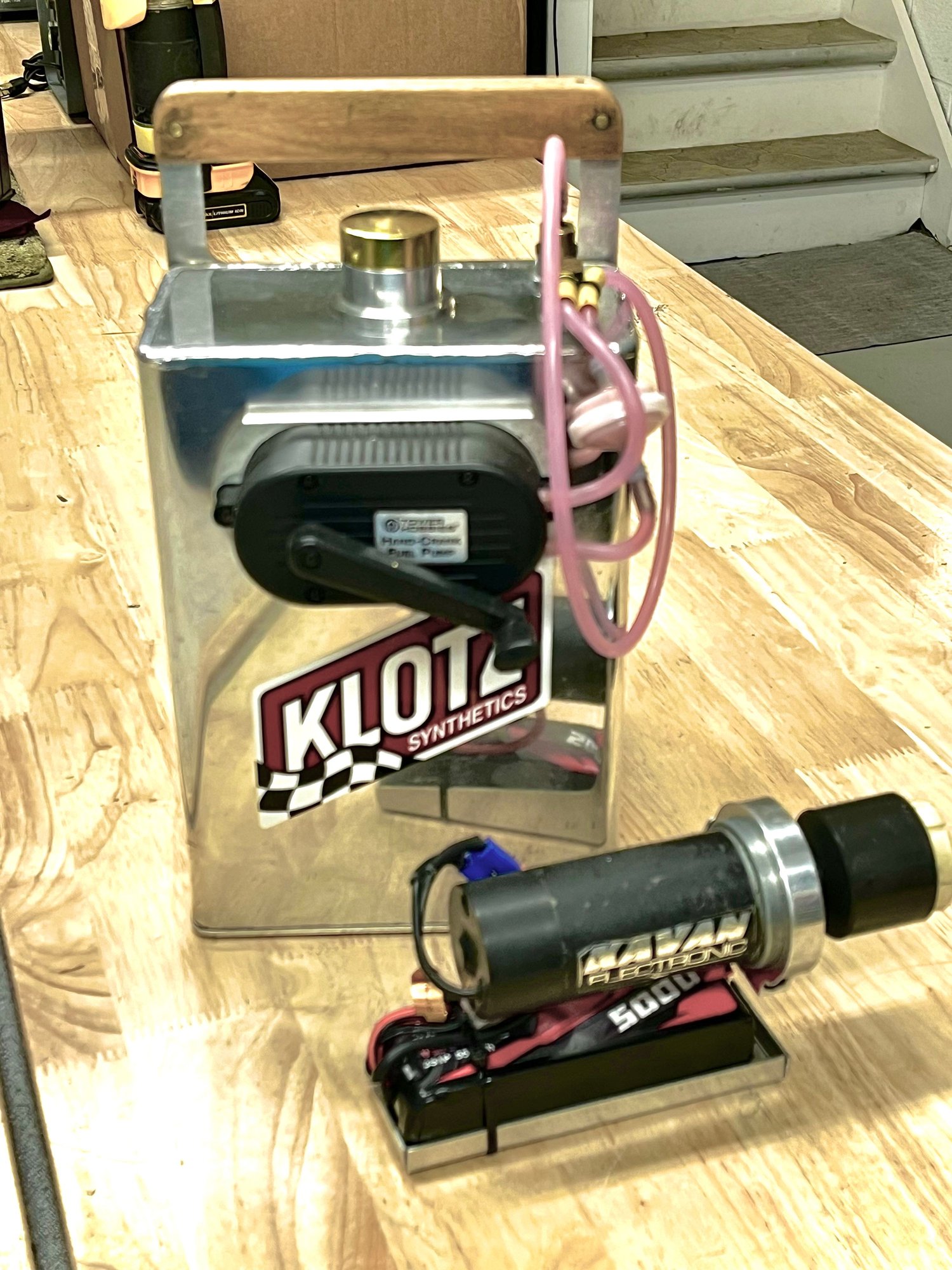 The above field can is all I usually take to the flight line. This is my field support for a very active day of flying. The starter sees very little use, usually sits in the car, with a spare glow driver, also rarely used. Also in the car, seldom visited,a few spare props, a couple spare glow plugs and the tools needed to change them.
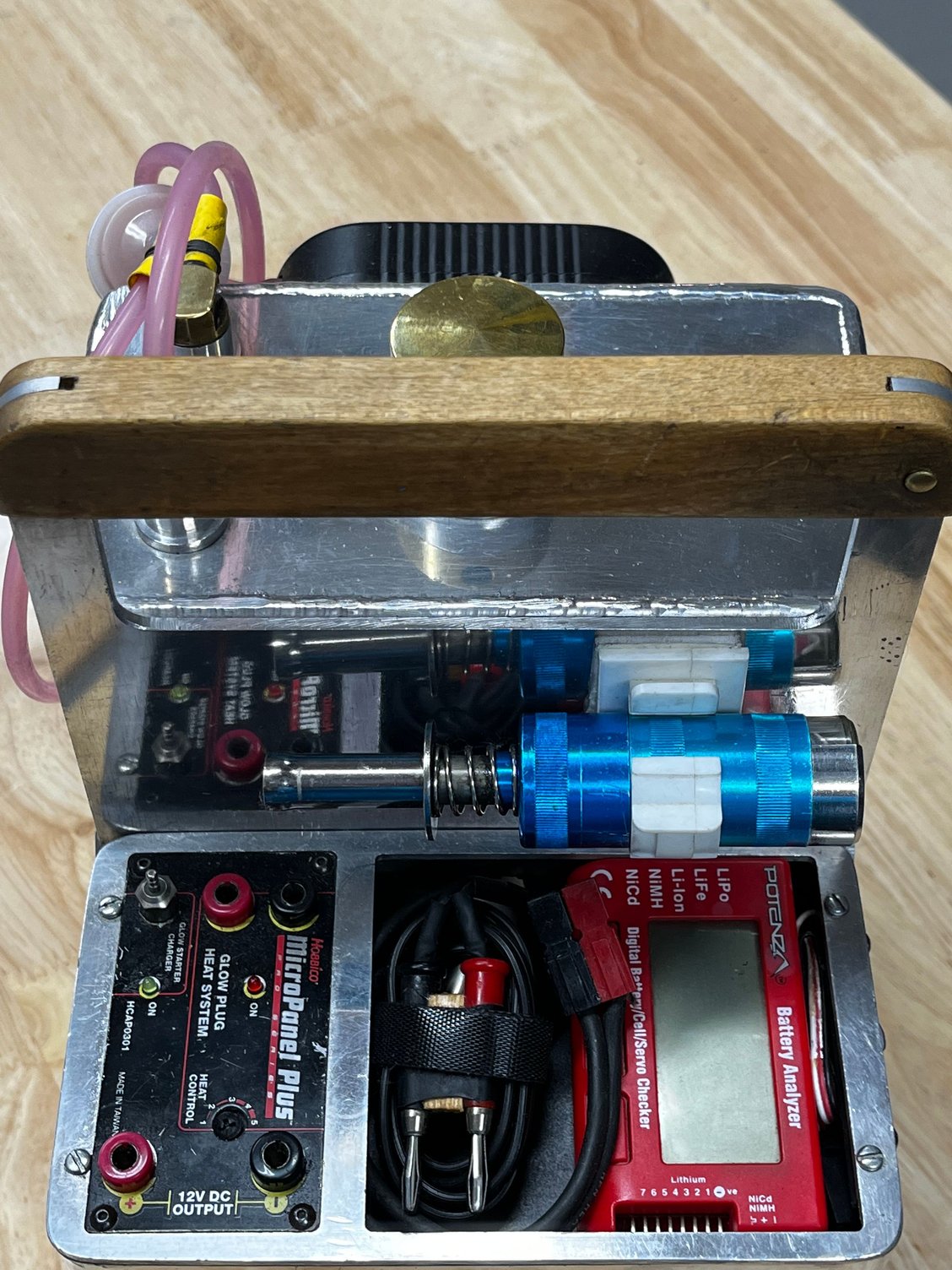 The other side of the fuel can, 12 volt Lithium Ion battery below.
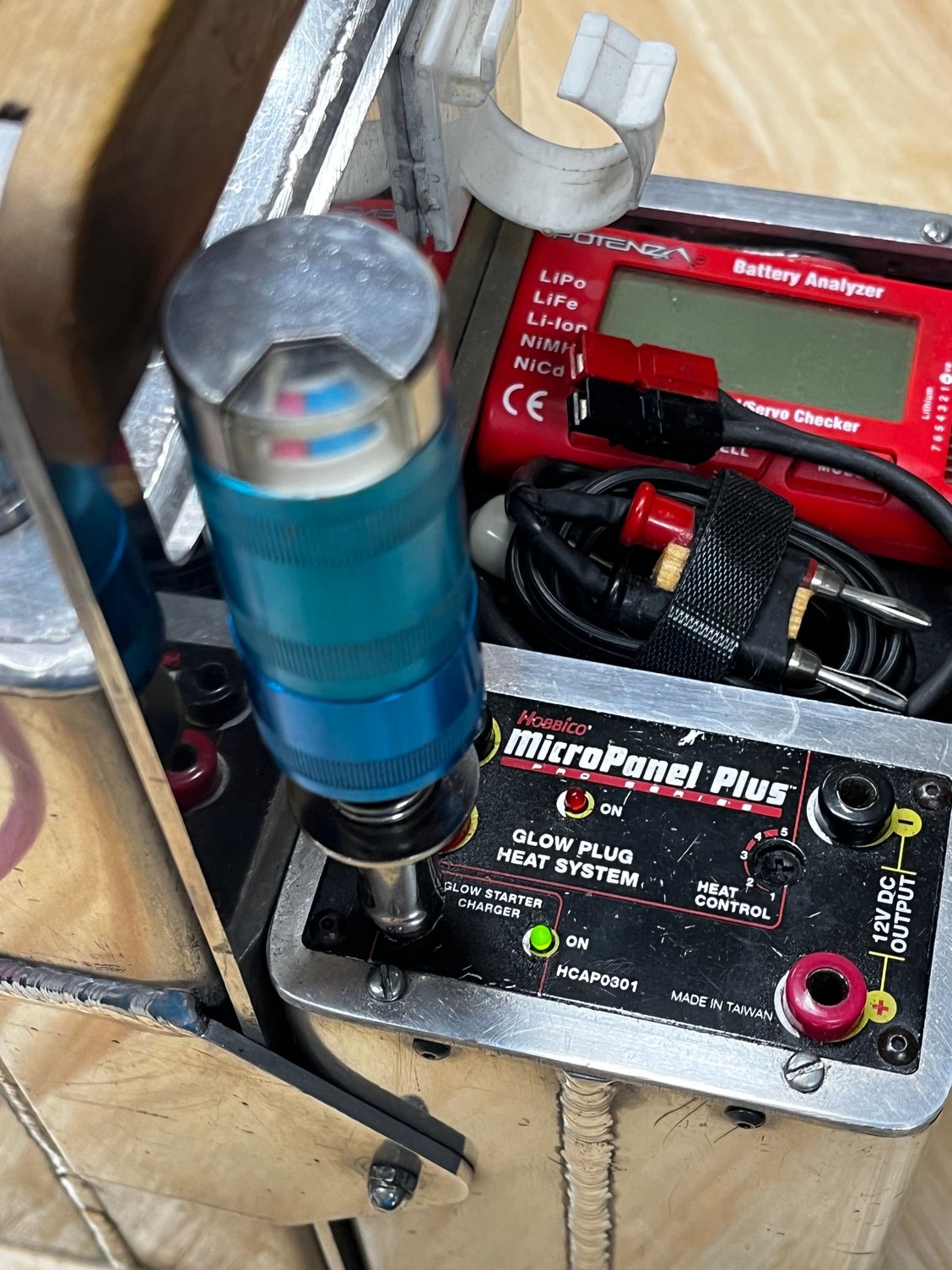 Fast charging option for field charging, seldom used but available.
Regarding plug heat:
There is also the on board glow option. An often neglected side benefit of on board glow is the ability to run a colder glow plug. This minimizes the need for a compromise plug.
Run a cold plug best suited for top end. Switch the glow power on at idle, hot plug.
Again, to each his own but I would surely not rule out the cordless option when giving advice to a beginner.