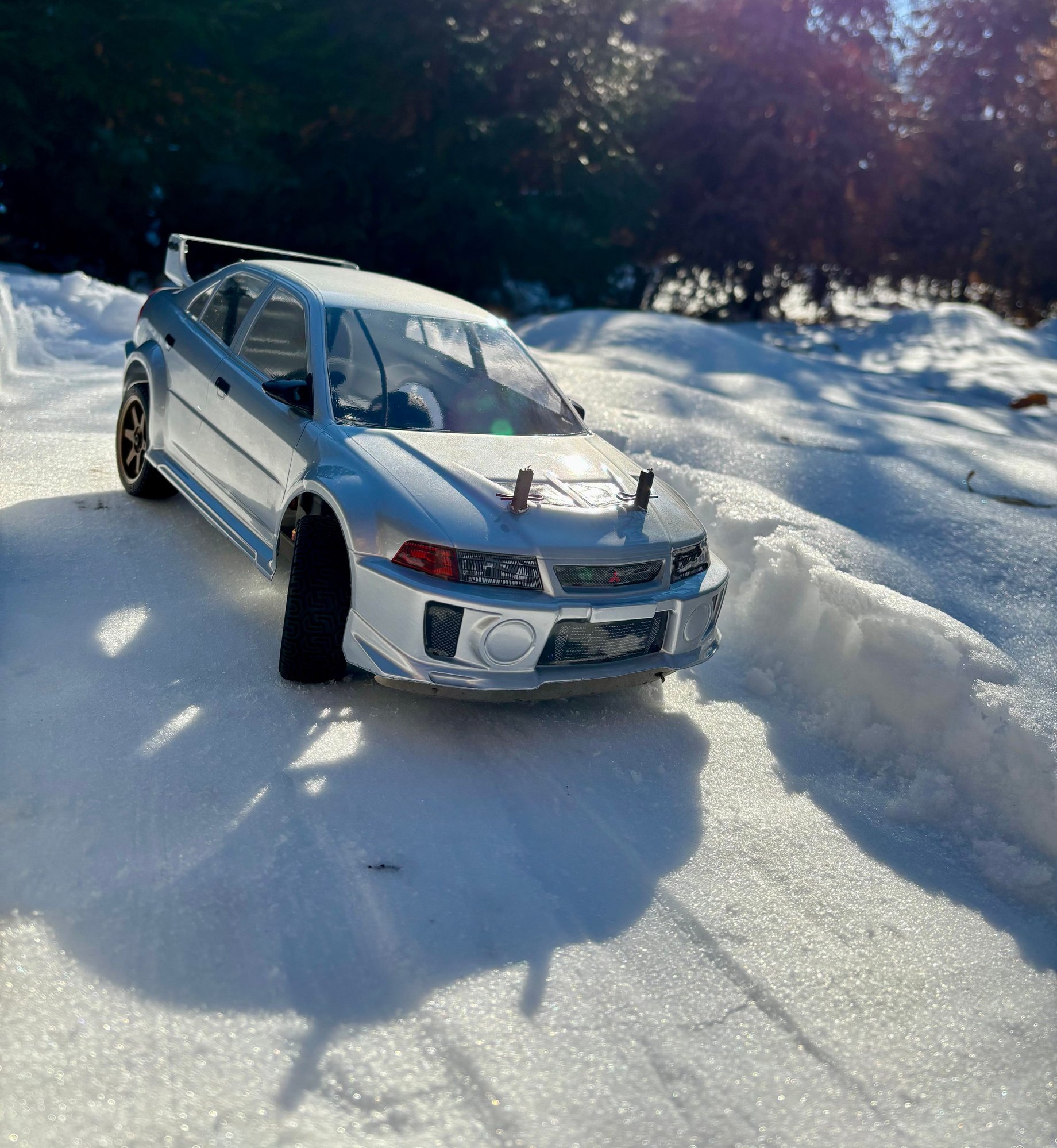
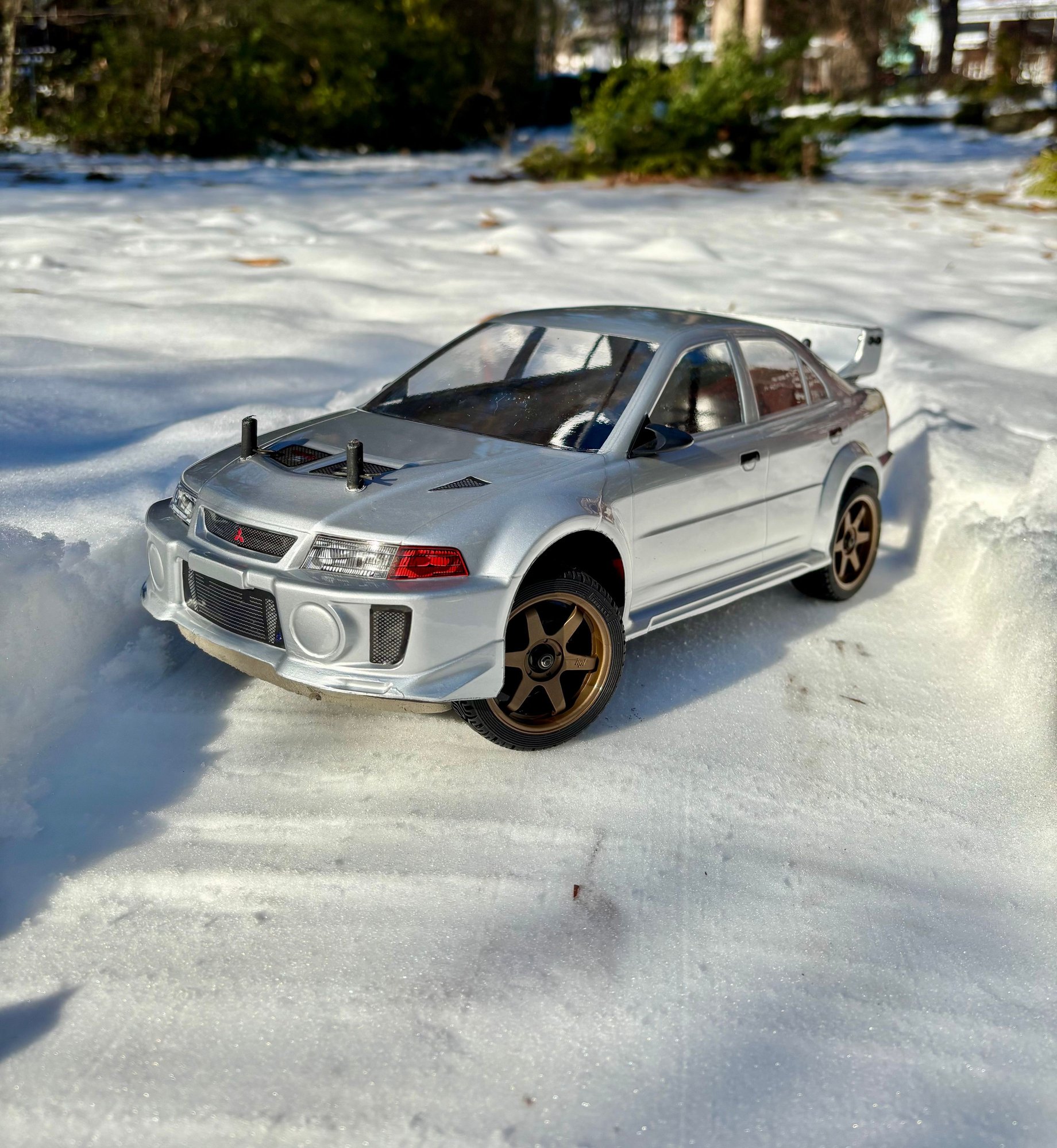
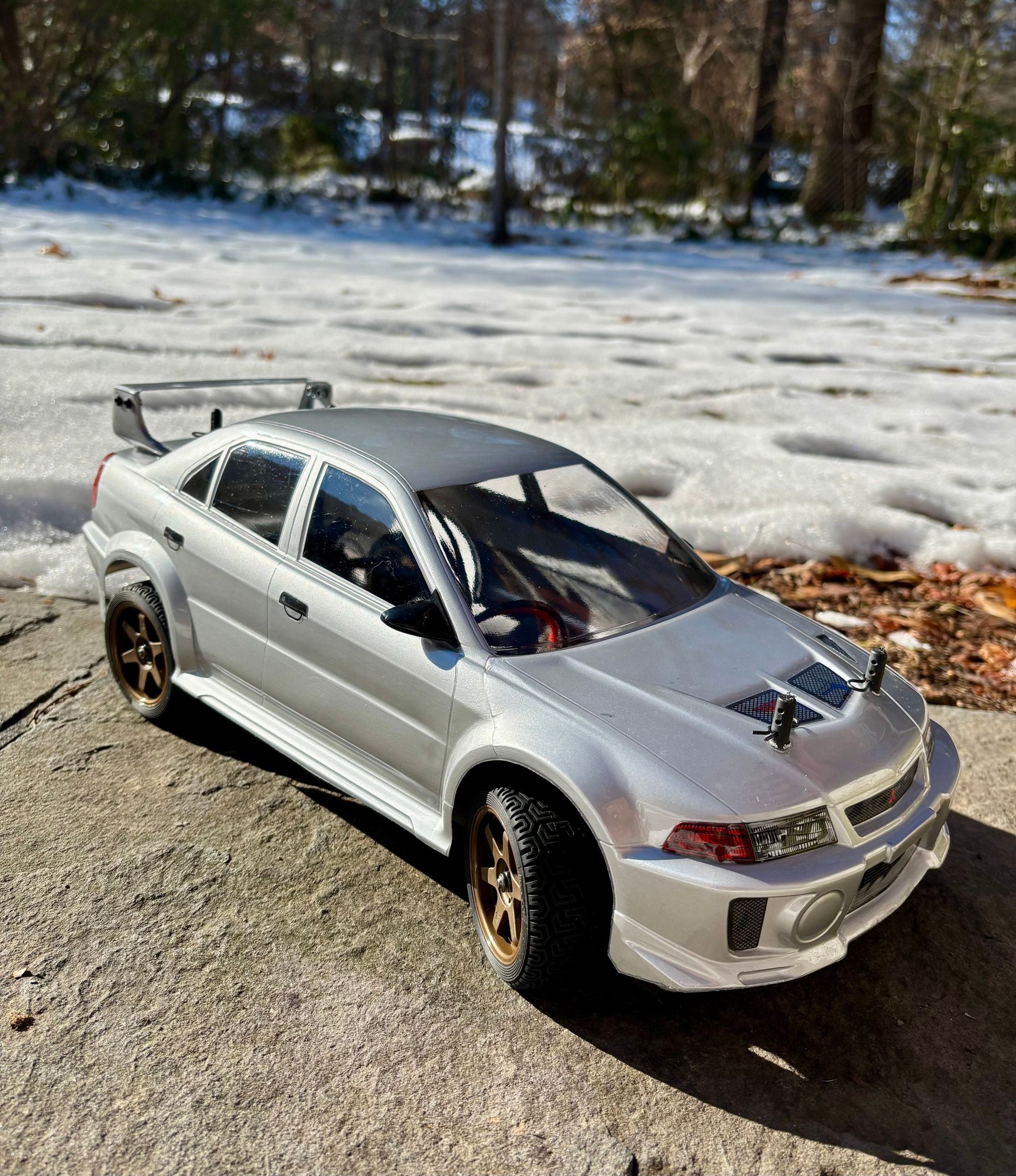
This is one of the bigger, milestone changes to my custom rally build since its inception. In its long-standing configuration I've had over the past two years, the rig was simply running too hot much of the time, and the impetus for change is that I effectively burnt out my second Castle 1410 3800kv motor. As with the original 1410--it still technically runs, but performance has degraded, and it was too hot to touch at the end of my last bash, which is a bad sign for magnet depolarization. I normally would have kept the same setup but geared-down for motor #3. My issue is that I have only ever been able to source a 66t hardened steel spur gear for this rig, which limits the amount of gearing down I can do to the pinion. I'm dropping from 31t to 28t on the pinion, which helps, but is not significant enough of a decrease to solve the heat issues entirely. HPI and several aftermarket manufacturers make a 75t spur gear, which would be much better, but I have not been able to find one in steel or even aluminum. The last time I ran the rig with one of the plastic 75t spurs, it didn't even survive a full battery pack, which is only slightly worse than what happened the preceding two times I ran a plastic spur, and is a no-go for me. The brushless setup really wants metal gears.
With gearing limitations like these, my next best choice was to look at a cooler-running, lower-top-speed-but-more-torque-motor. Enter the Castle 1412 3200kv. As you can see by the photos, it's considerably larger of a can compared to the 1410. This required me to rotate my ESC by 90 degrees, hence the chassis side-wall delete, as it doesn't fit in the sideways orientation. Since I was already doing all this work, I also took the opportunity to shorten the motor leads and re-solder them to point 'backwards' towards the ESC as shown. This is so much neater, and I regret not doing it sooner. FYI--I learned in the process that Castle uses a solder mix of 96.5% tin, 3% gold, and 0.5% copper, which needs at least 400C temps to melt. I had to buy a new soldering station in order to complete this work, as my plug-and-play irons couldn't melt the solder on the motor terminals.
With the chassis modified, new motor reconfigured, and drop to a 28t pinion, I can confidently say this has been an improvement. We're slower-running*, but with cooler temps, and I think this new setup will last longer than my previous two motors did.
*For comparison, regarding speeds:
On the old 1410 3800kv motor with a 31t pinion
2s: 37mph
3s: 55mph
Test conducted on a 100F degree day
On the new 1412 3200kv motor with a 28t pinion
2s: 25mph
3s: 39mph
Test conducted on a 24F degree day
Honestly the original 1410 setup was waaaay faster than necessary for something designed to run on mixed surfaces. With this being a narrow little 1/10th scale touring car chassis at heart, you really can't control something this small and light moving that fast off-road.
With temp issues under control, it's not lost on me that I've swapped to a power plant with more torque and may be shifting my issues to elsewhere in the rig. I will be keeping a close eye on the drivetrain to see if the increase in torque starts to wear out components that were previously doing fine. Ultimately I'd rather be faced with replacing bearings and diff gears from time to time as opposed to motors, which was much more costly.
Pictures:
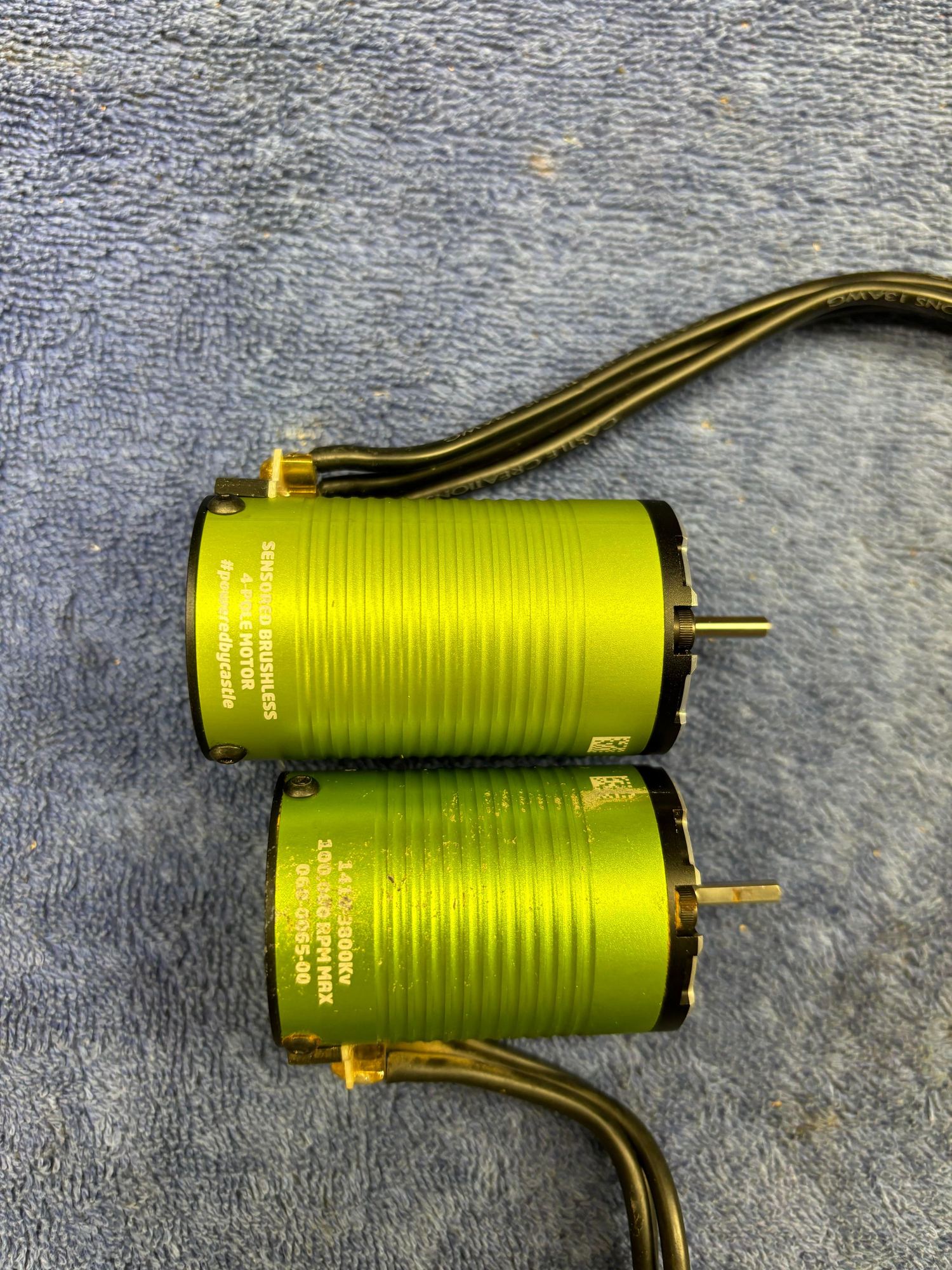 Comparison between the new motor (top), and old motor (bottom).
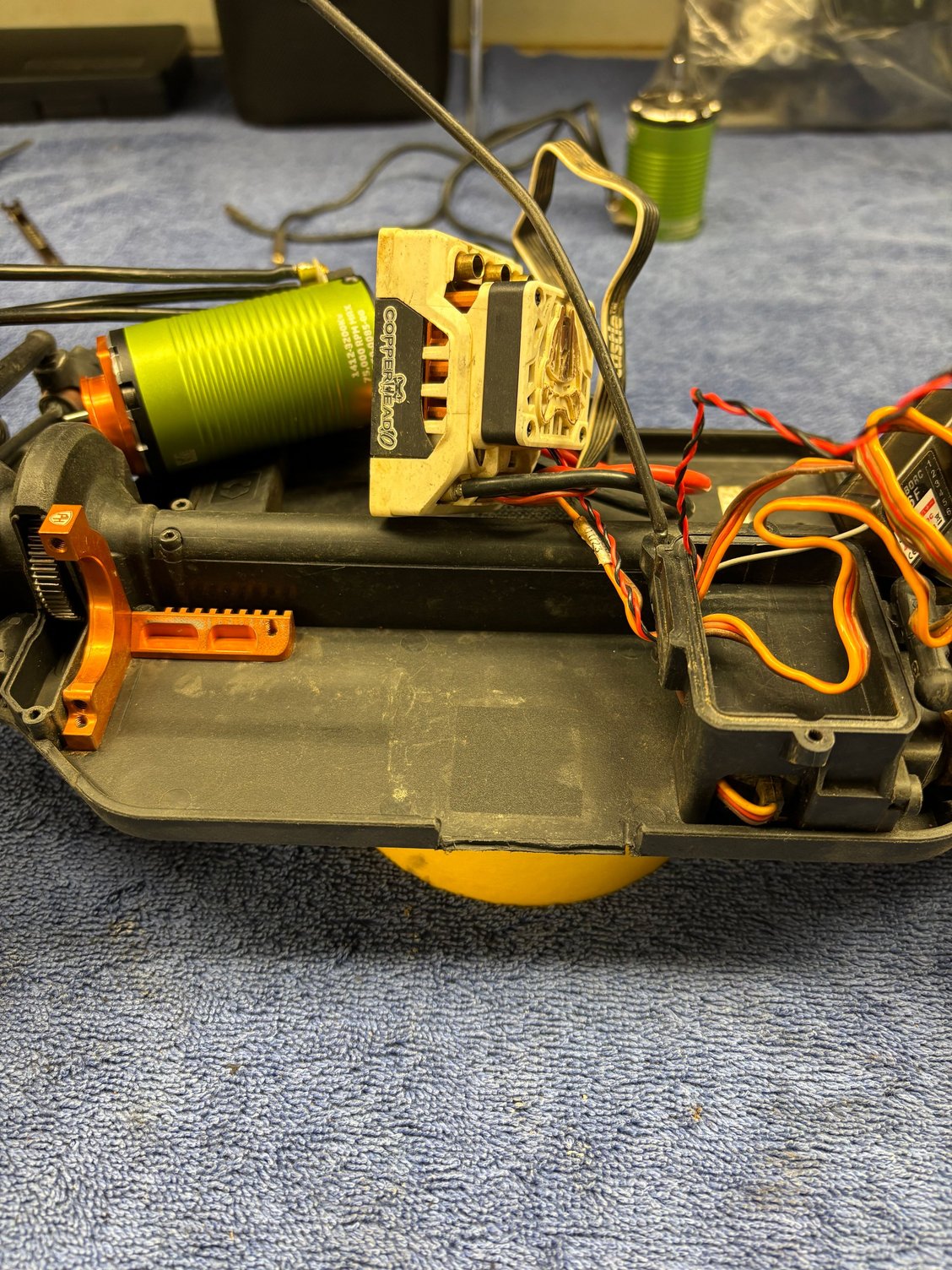 Deleting the chassis side-wall so that the ESC can be turned 90 degrees, to allow for the larger (longer) motor can.
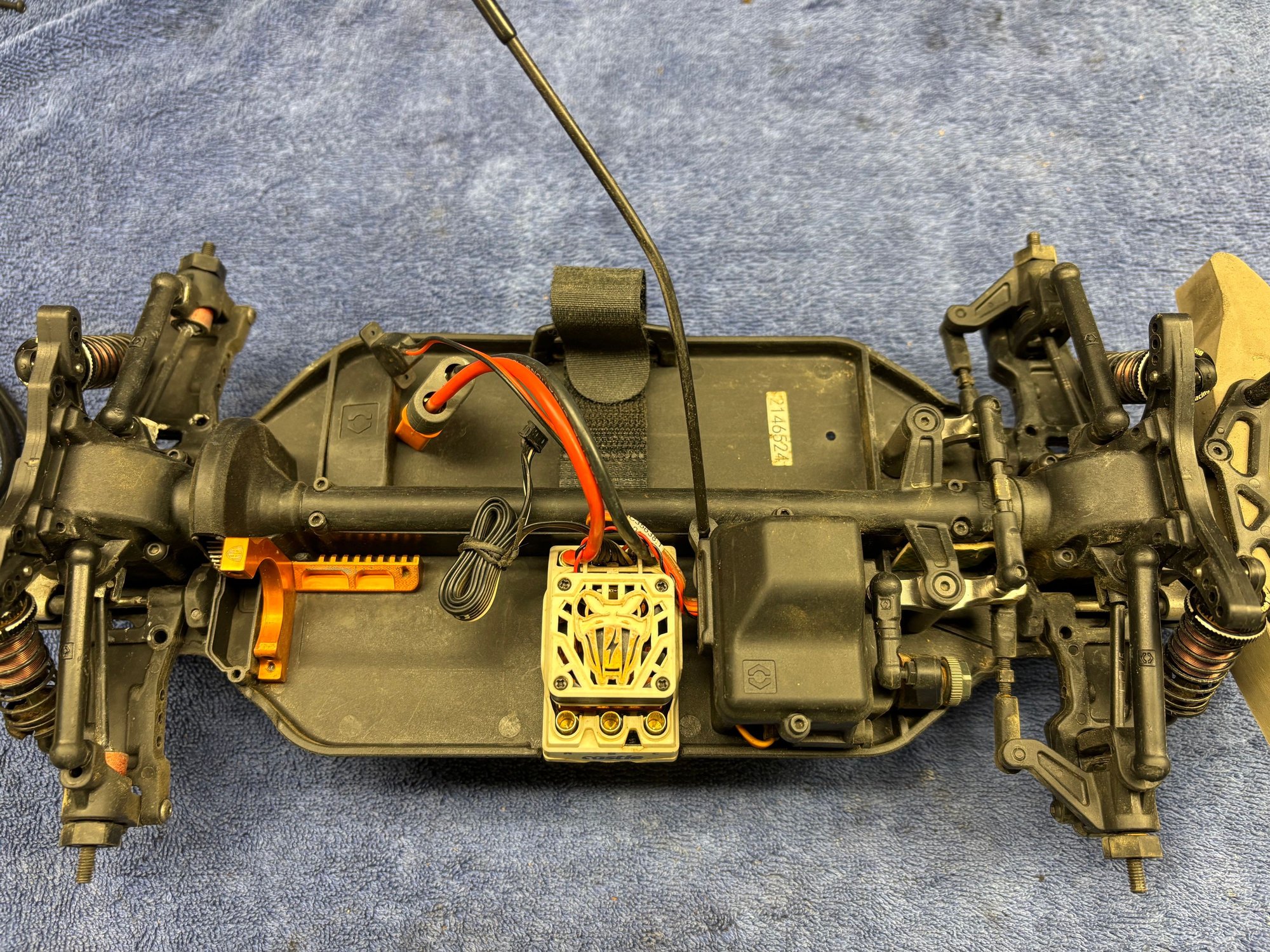 ESC now fits in sideways.
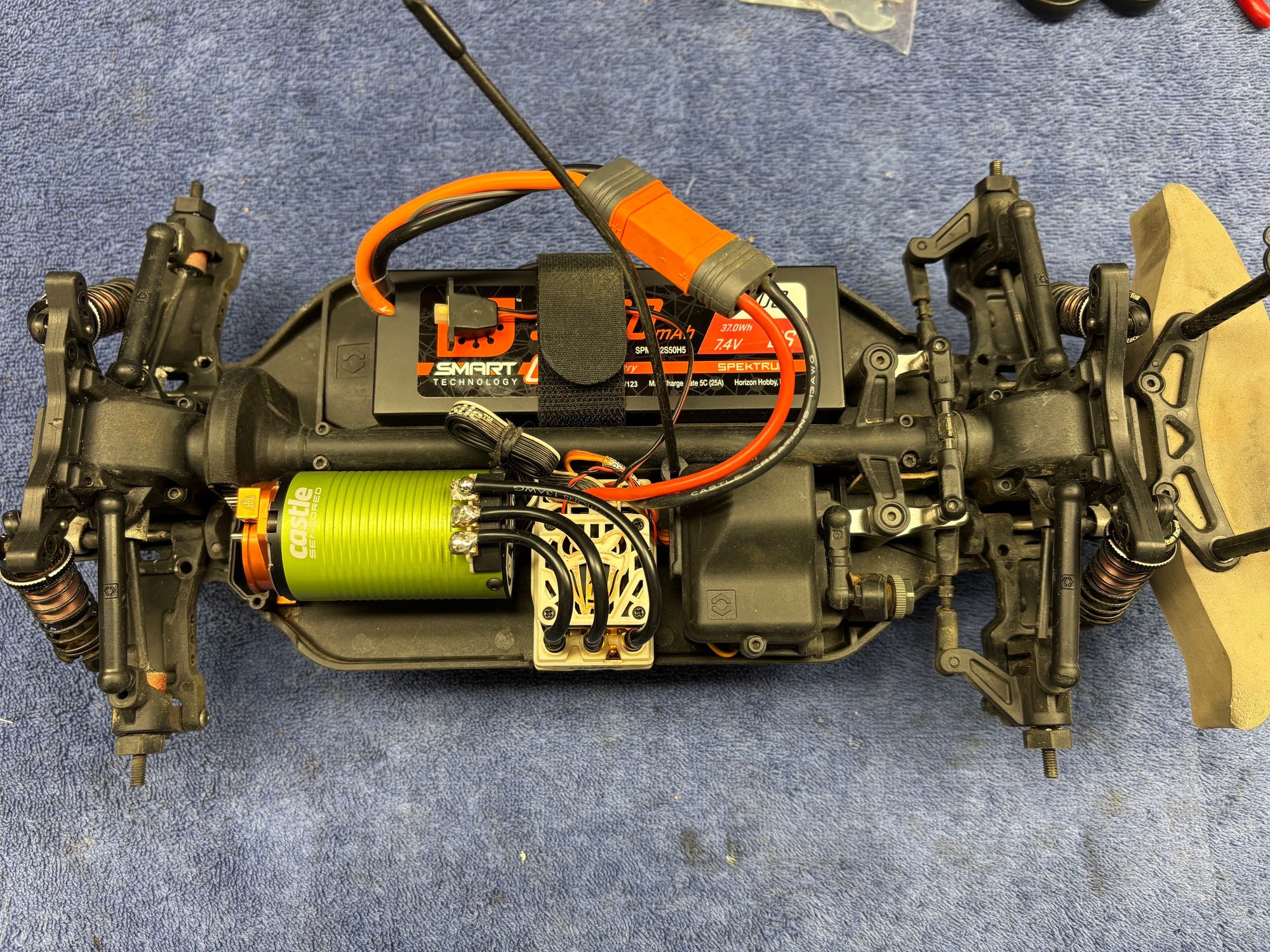 This is what it looks like with the new motor in, and ESC rotated. Just barely enough room, but it works.
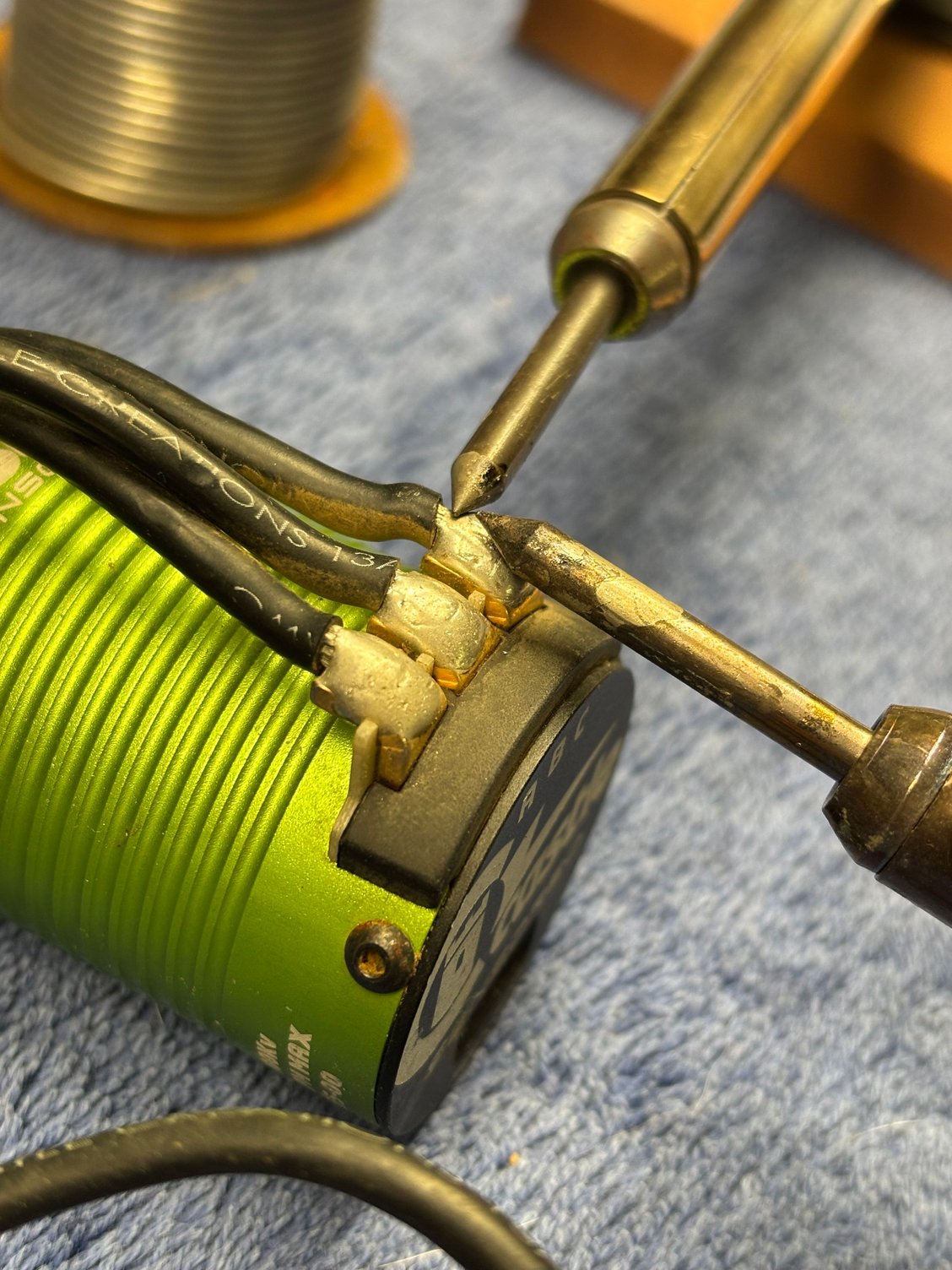 Two plug-and-play irons not hot enough to melt Castle factory solder.
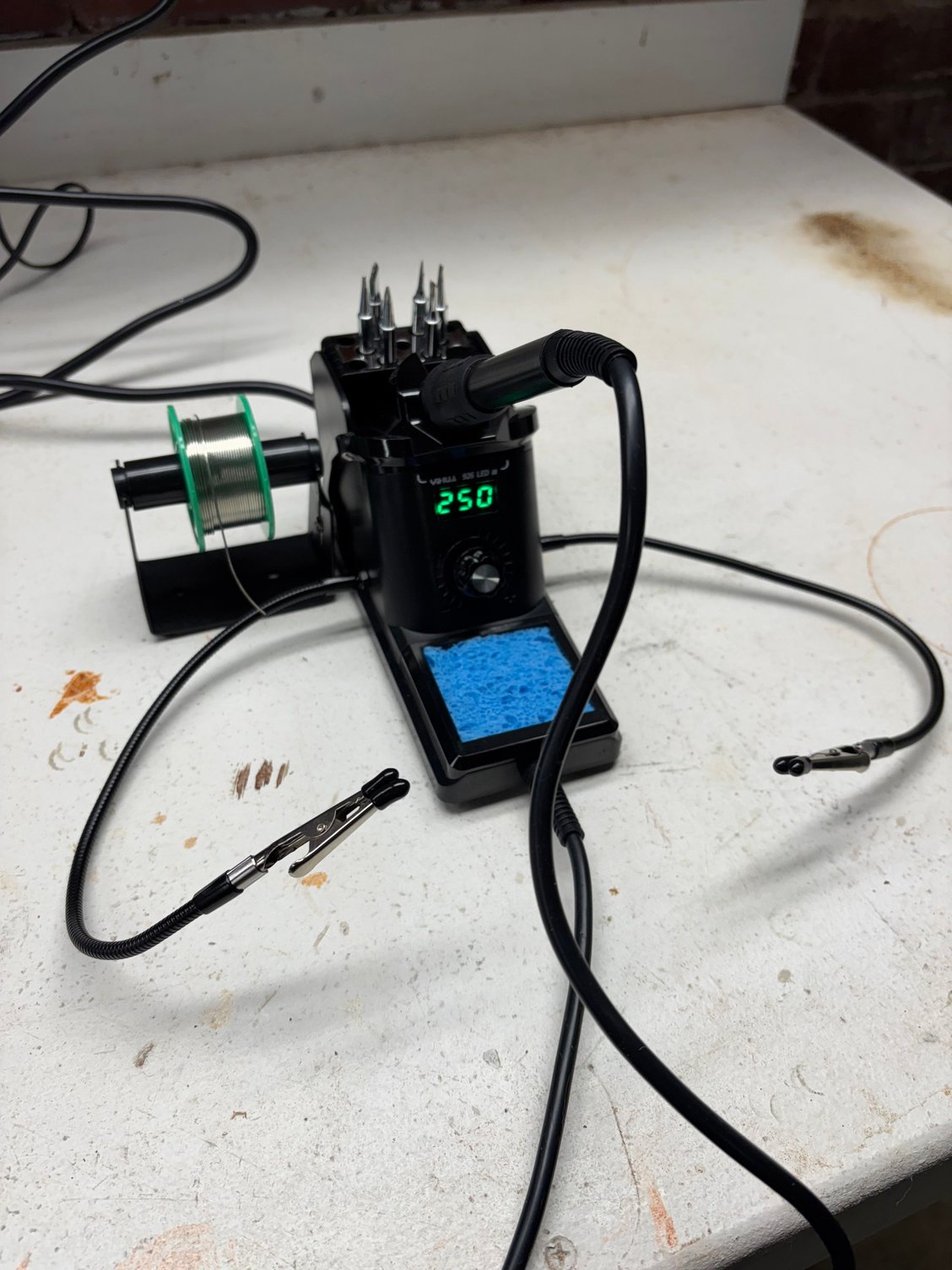 Bought this new beast which can get the solder job done.
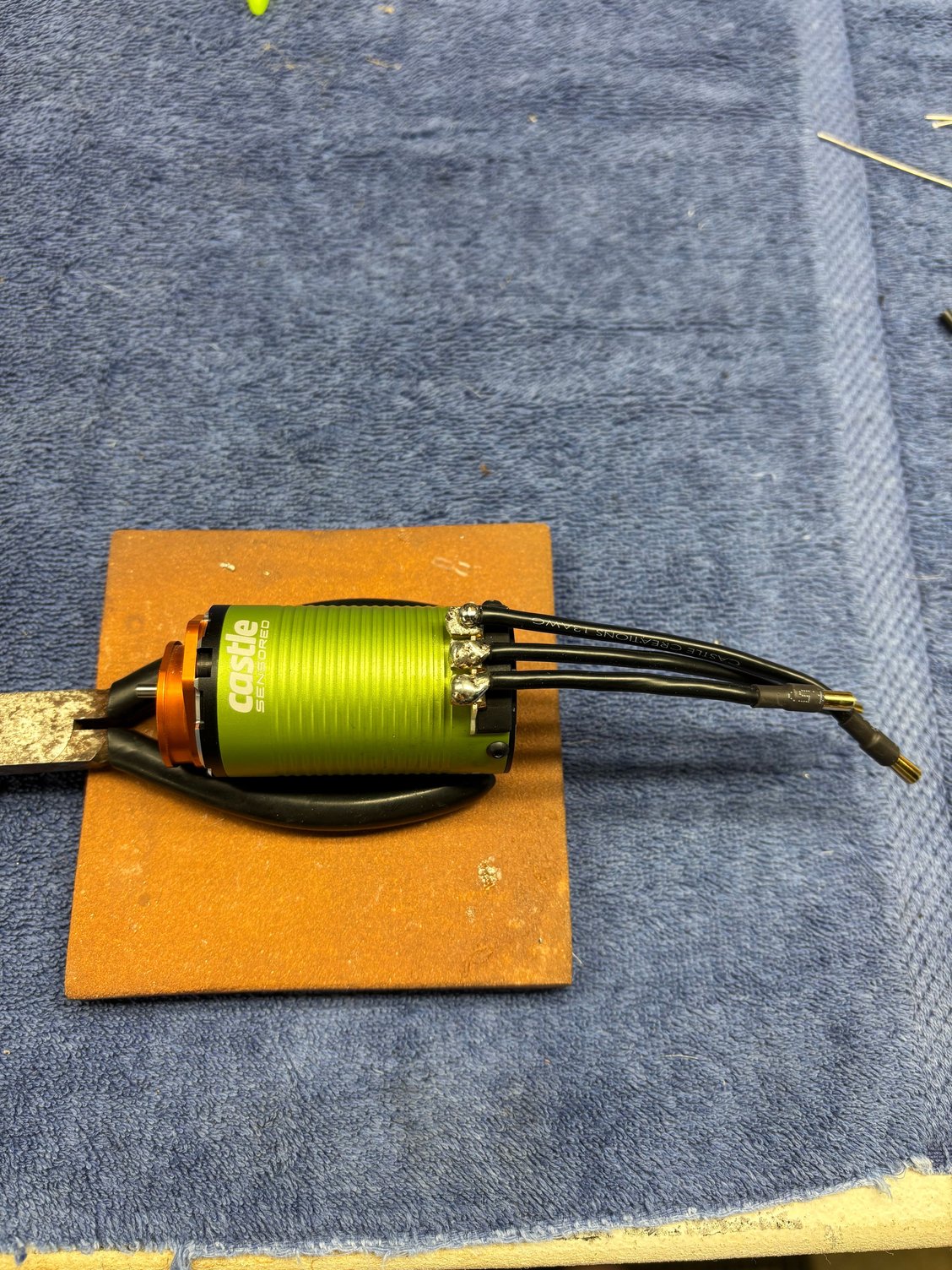 Leads on the new motor shortened, and now pointing backwards towards the ESC.
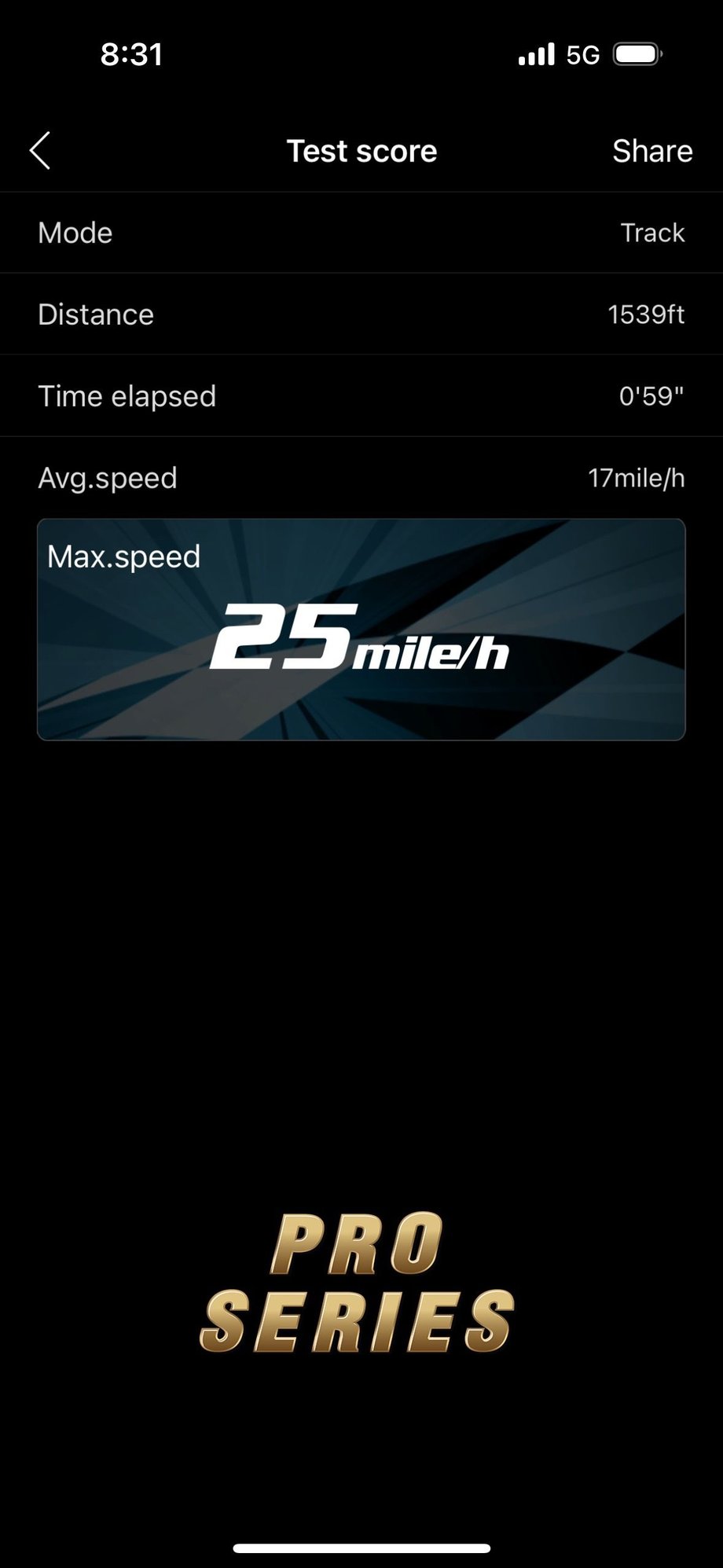 New motor speed run on 2s.
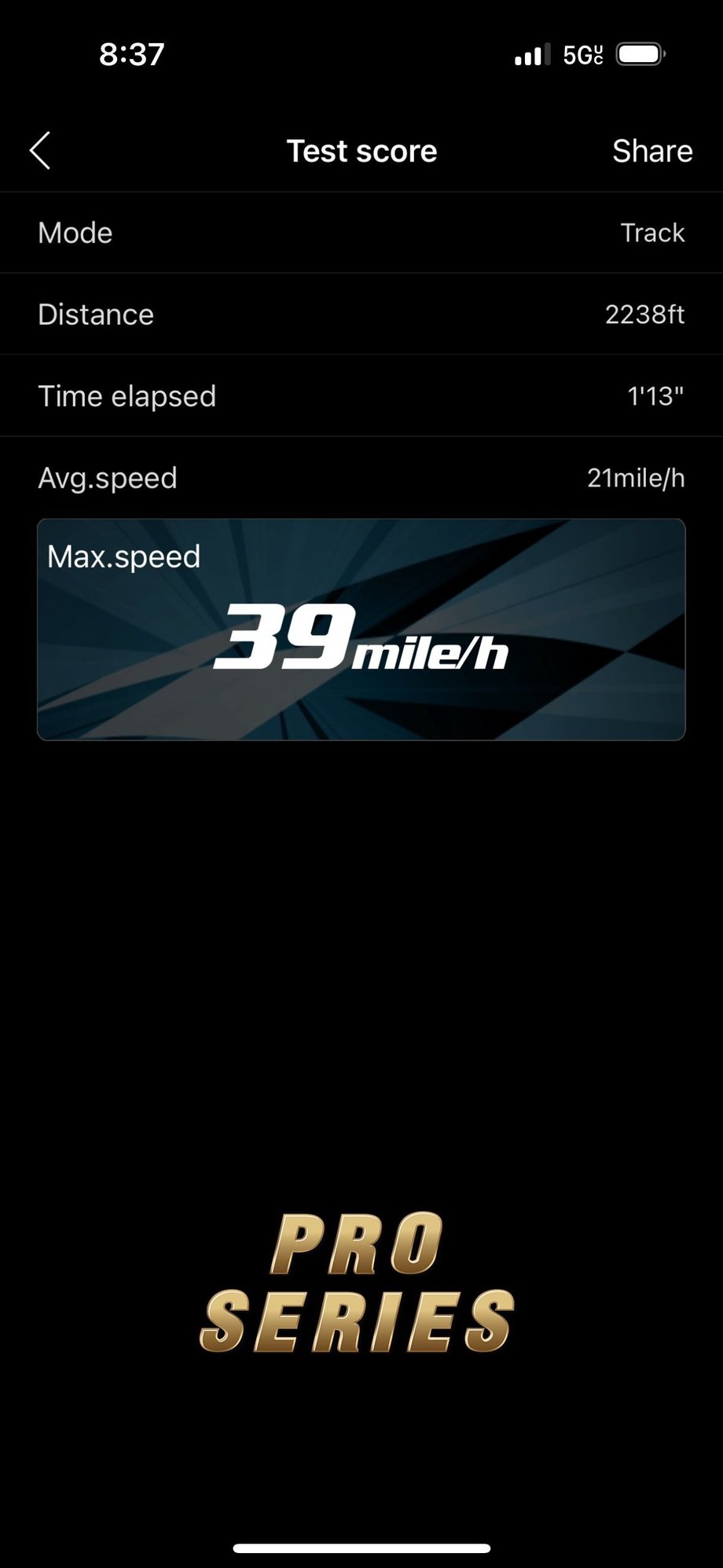 New motor speed run on 3s.