Originally Posted by
jorgan
Hi Bert,
.
1: Do you mean transmitter? The curve I was looking at, is from "raleighcopter" I think, and he's throttle curve is linear? So thats what has confused me a bit
2: It looks like mine doesn't have any marks at all, do you have an example please?
3: Do you mean here that the "solenoid" is fully open while you adjust the needle setting on the carburettor itself?
4: So once this is done, you then adjust the solenoid curve?
5: I was going to use the 9 originally recommend, but the index markers makes more sense, EdgeTx can do up to 17 points, but I'm sure that will be too fine and fiddly?
6: Sorry if I'm repeating some things and being a pain but my brain has a strange logic, and I'm sure once I actually get down to it, it will jump into place.
7: Many thanks
1: The programming is done in the transmitter, of course, and I work in OpenTX which is slightly different from EdgeTX. Whatever the case, in OpenTX you can assign every separate receiver output to any combination of imputs. So I assign for example receiver output 1 to the throttle stick, but also to the throttle curve. I hook up throttle servo to output 1.
Then I assign output 2 to that same throttle stick, but I assign the fuel curve to this output 2, and hook up the solenoid.
By changing the throttle curve, I can change the RPM characteristics of the throttle stick. I set this curve once, then never change it, EVER. This is in part experience based, and I aim for a linear relation between stick and RPM, such that stick full back is idle, stick full forward is full RPM, and midstick, the RPM is as close as possible in the middle of the availlable RPM range. It turns out, that most "barrel carbs" have approximately the same throttle curve. It is not really critical, and there is no need to change if mid-RPM is a few hundreds off.
By acting on the fuel curve, I can set fuel/air mixture correct for every indexed stick position.
2:
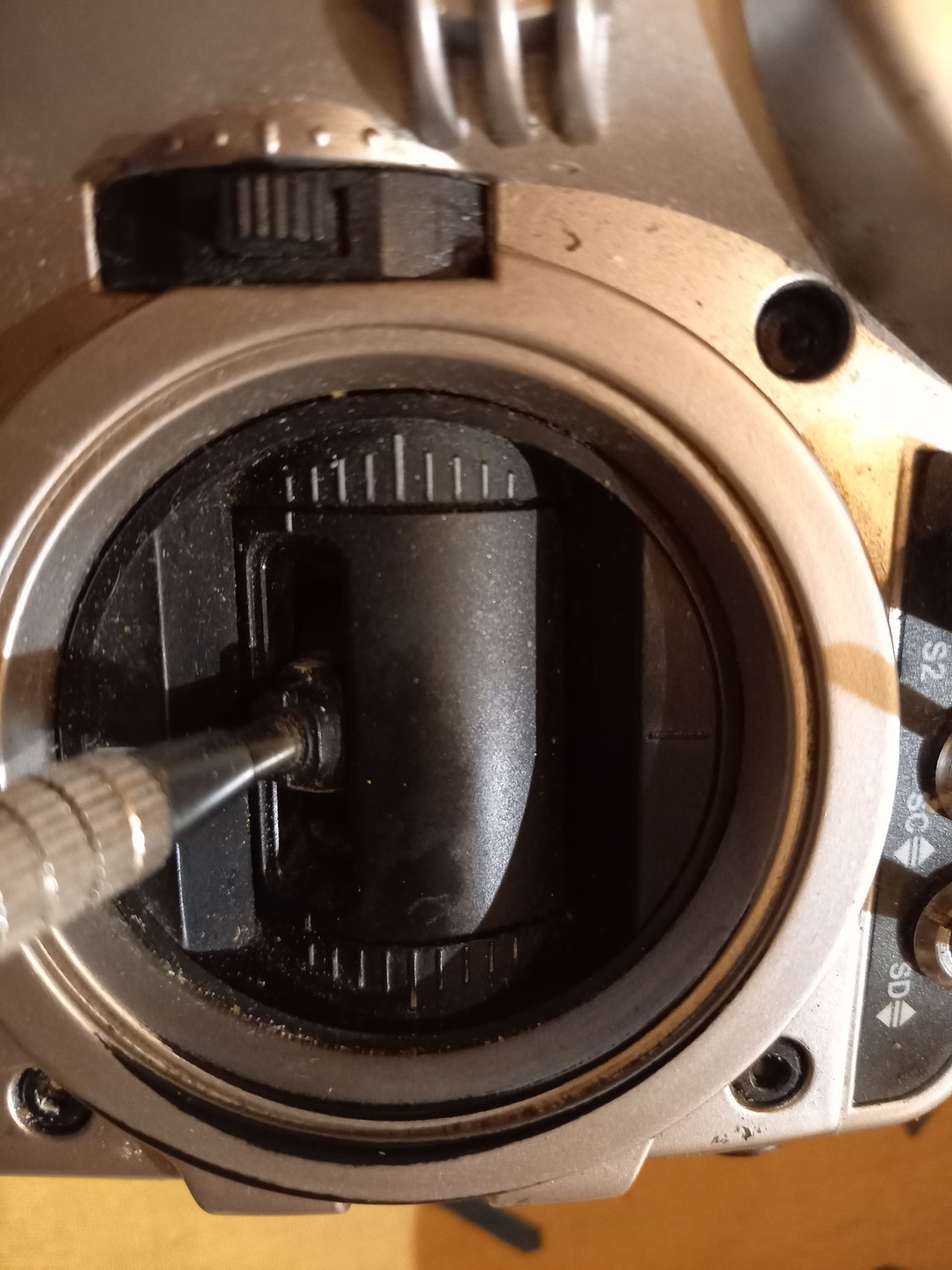
Sorry for the pic being sideways, I am not smart enough with computers to rotate it.
3: Correct. FIRST run, the solenoid is open 100% all the way, and that run is to determine what the main needle position needs to be. Once you have reached full throttle according to the procedure described earlier, tune for max RPM, then slightly open the needle to the first click where you can audibly hear RPM drop again. Some people have trouble hearing this. If you have a tacho, tune for roughly 500~1000 RPM rich from peak.
4: Yes... In rare cases, if RPM of midstick is too high or too low, I might slightly alter the throttle curve later which of course also requires a retuning of the fuel curve, but any curve resembling this one will usually be close enough, and as I allready said, it does not have to be superduper precise.
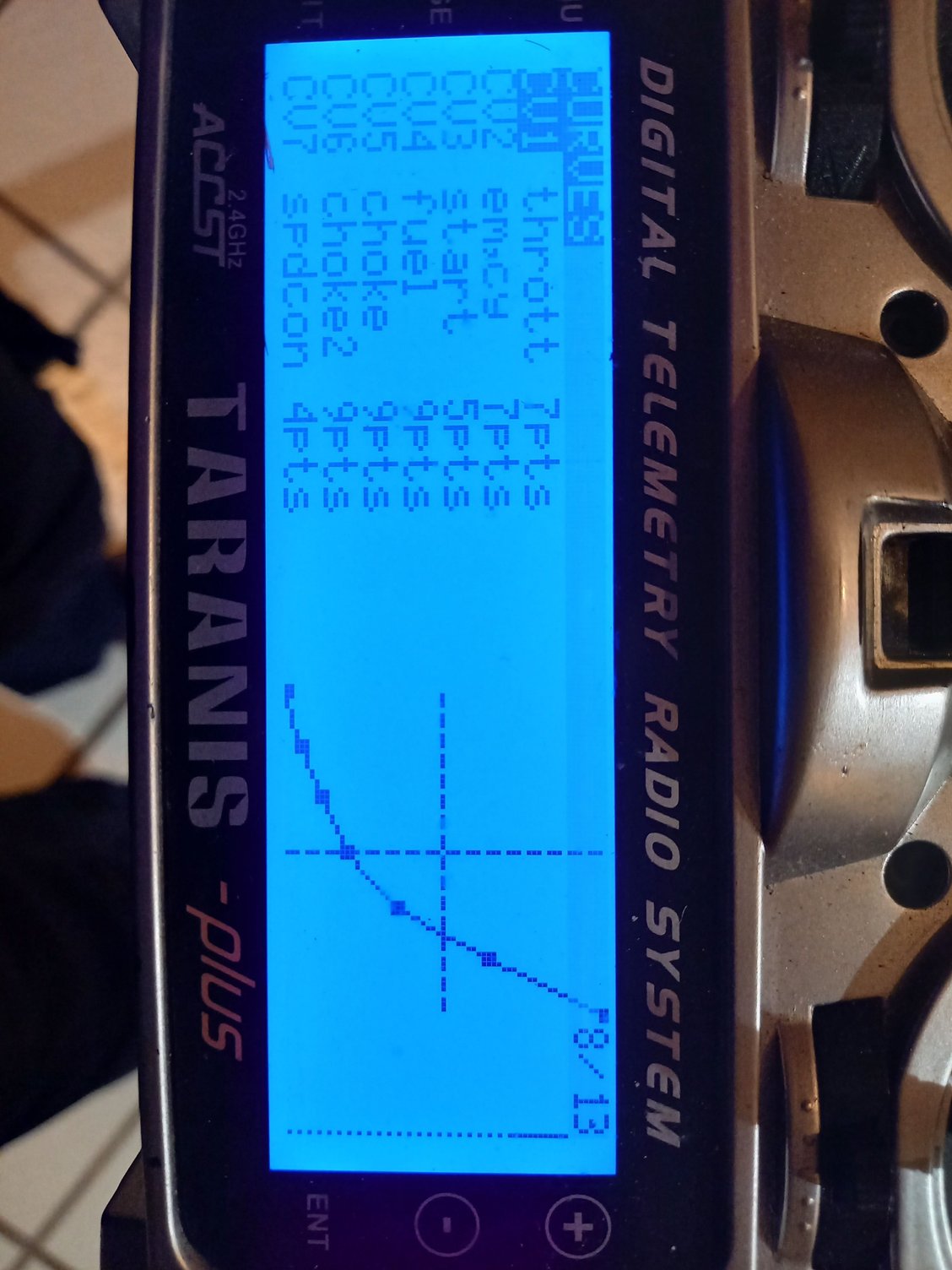
Same story, rotated, apologies.
5: I have experimented with 5, 7, 9 and even with 17 points. For purposes of accuracy, 5 points is enough but noticably "imprecise", 7 points is usable, 9 points marginally better than 7, and anything above 9 only is confusing, but does not lead to better results.
Initially I used 7 points (as can be seen from the throttle curve, which I did not change) but I found that in order to set the fuel curve you need to be able to consistently find the same throttle position again and again.
That is when I started using the index next to the stick, and since my transmitter has 9 index points, 9 curve points it is...some transmitters have 7 indexpoints, others have no index at all, and then you need to use other means availlable. Some transmitters allow to show the stick position in a display screen. I cannot tell from here, what the oiptions for your particular gear are.
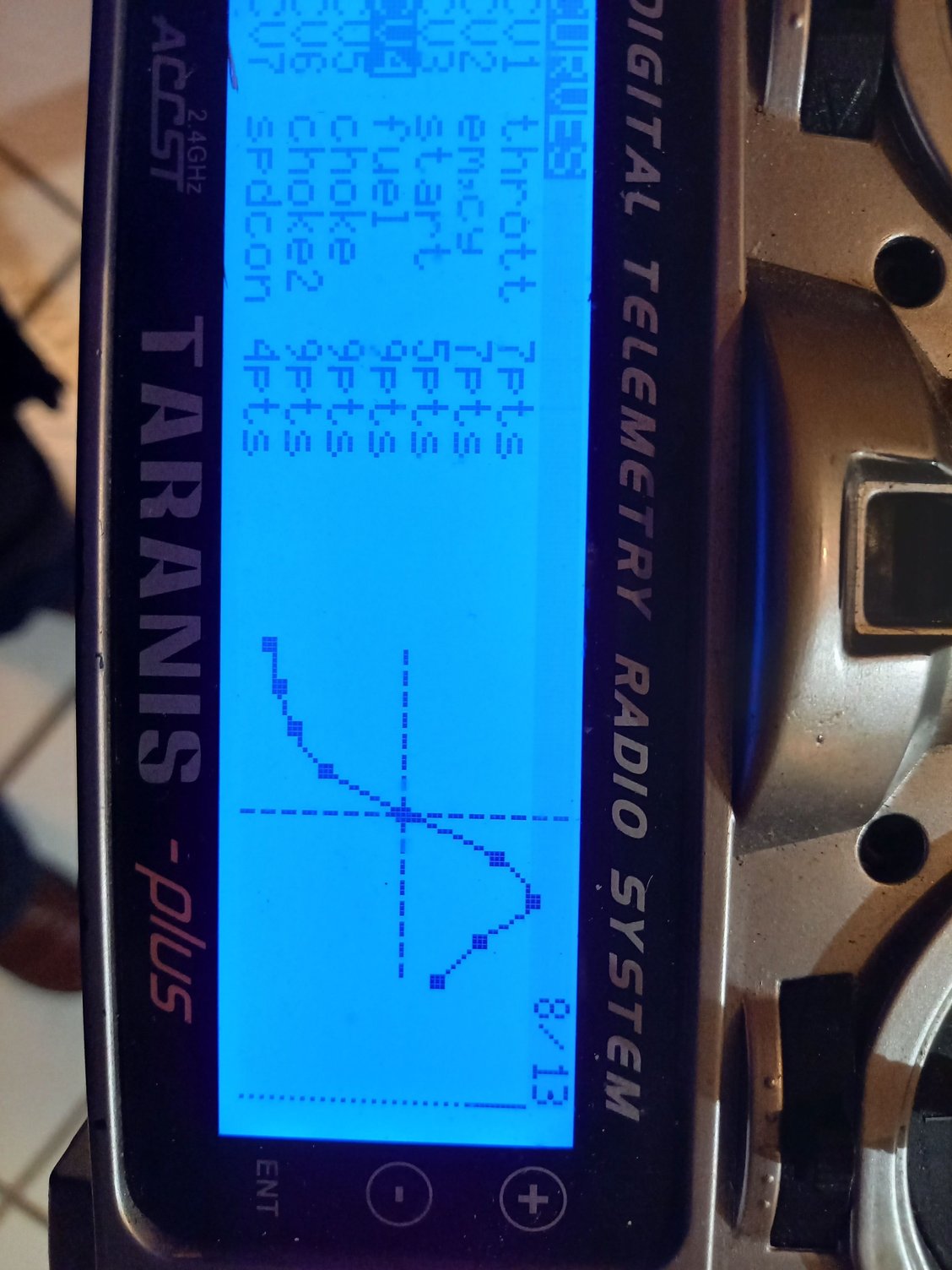
In any case, some engines have really weird fuel curves.
This is one example of a weird curve:
But more common, they look a bit like this:
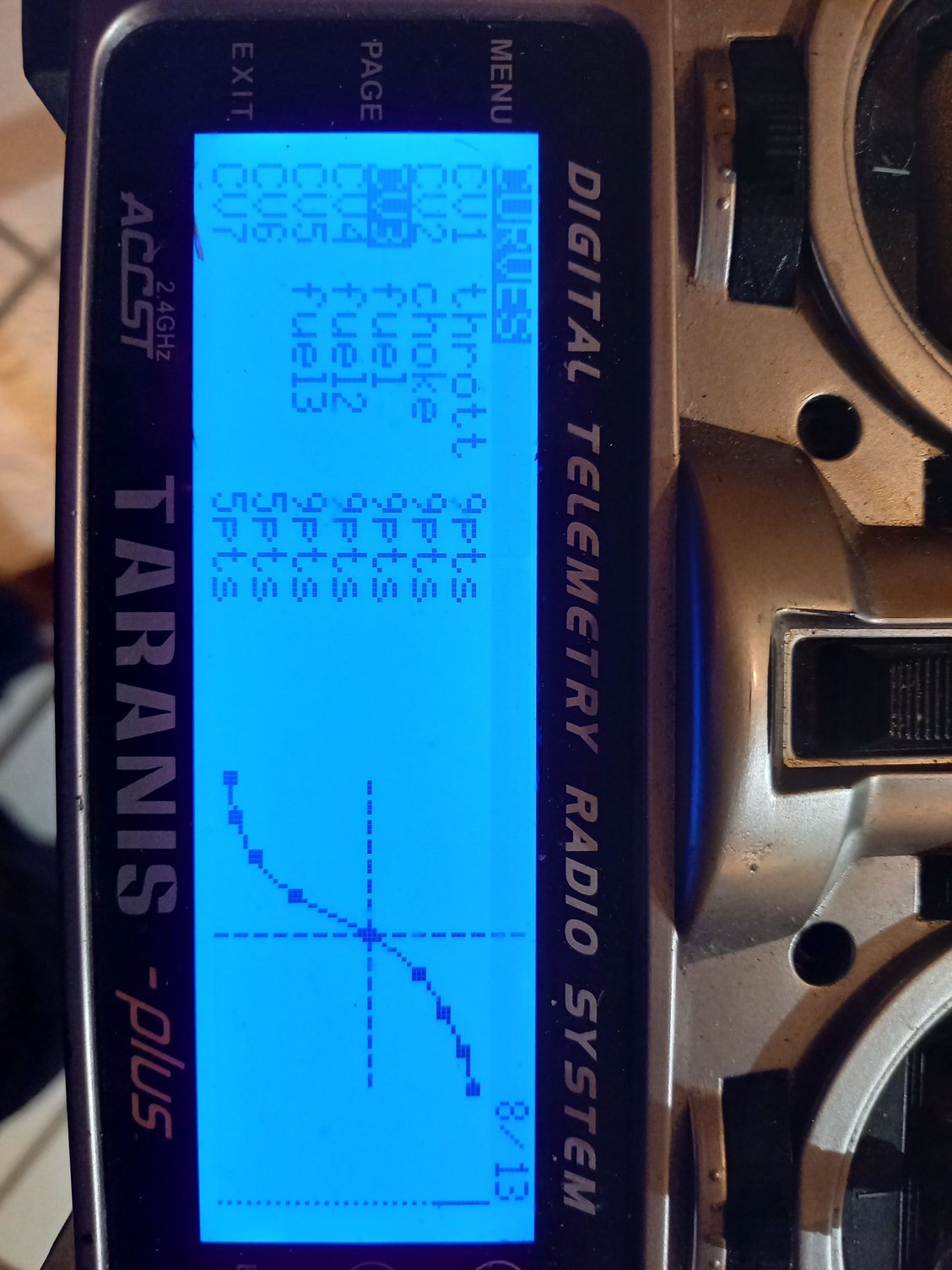
or this:
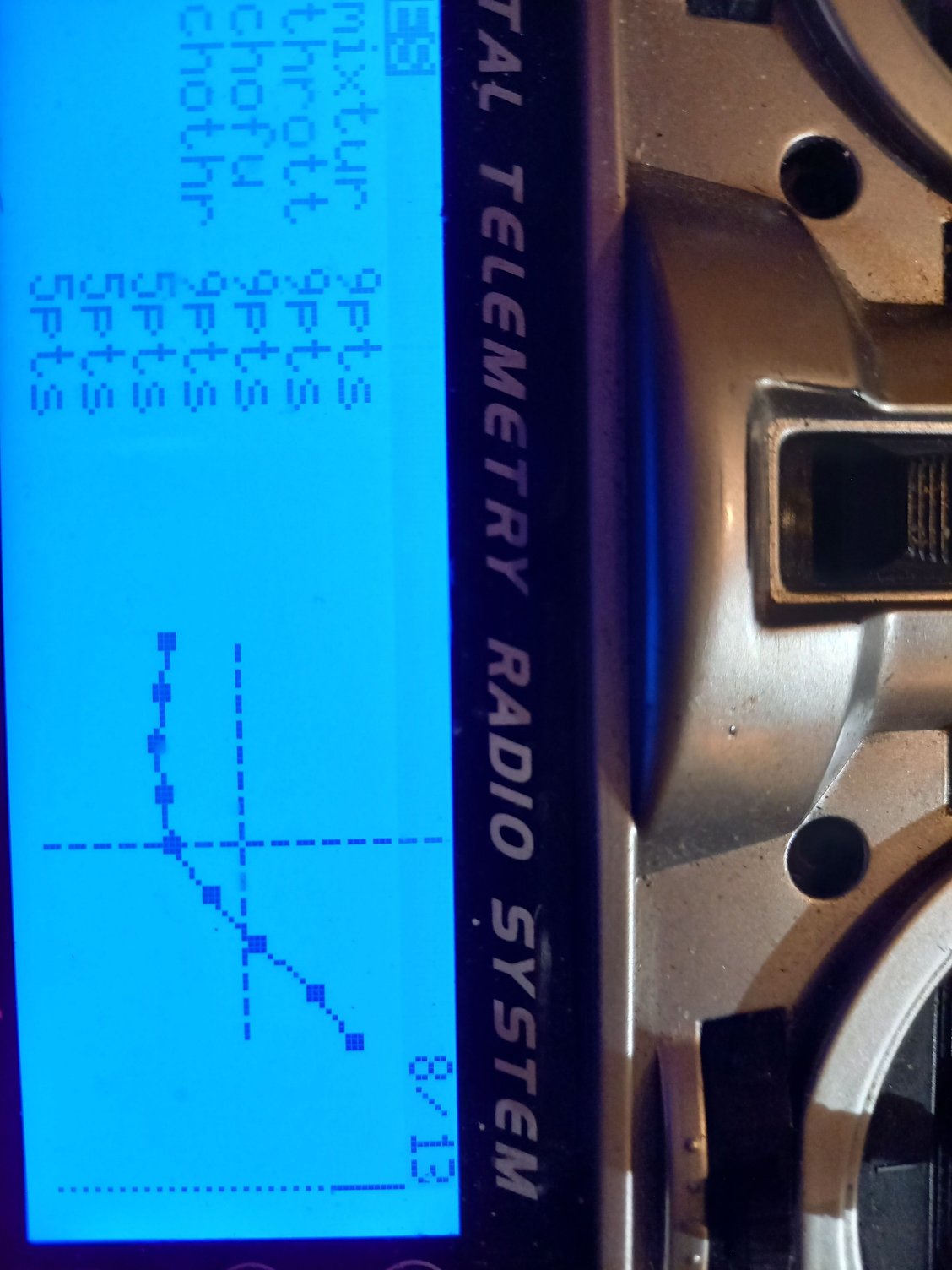
The shape of the fuel curve CAN be influenced by the position of the low speed needle. Closing it a touch, forces you to raise the low end of the curve a bit, opening it up, forces you to lower the low end a bit.
A too low curve looses resolution, it is always advisable, especially when you have trouble getting mixture correct in the low range, to force the curve up a bit by ever so slightly closing the LS needle.
6: No worries... I invented this system, and I asked myself these same questions over and over, and it took us just as much time to grasp the idea of how this thing actually works.
7: you're welcome!
PS: I happen to be home right now (not where I wanted to be, more specific HOW I wanted to be, got myself the mother of all hernias, darnit) so I will get your solenoid housings in the mail on monday.