Fuselage construction continued with the belly pan attachment.
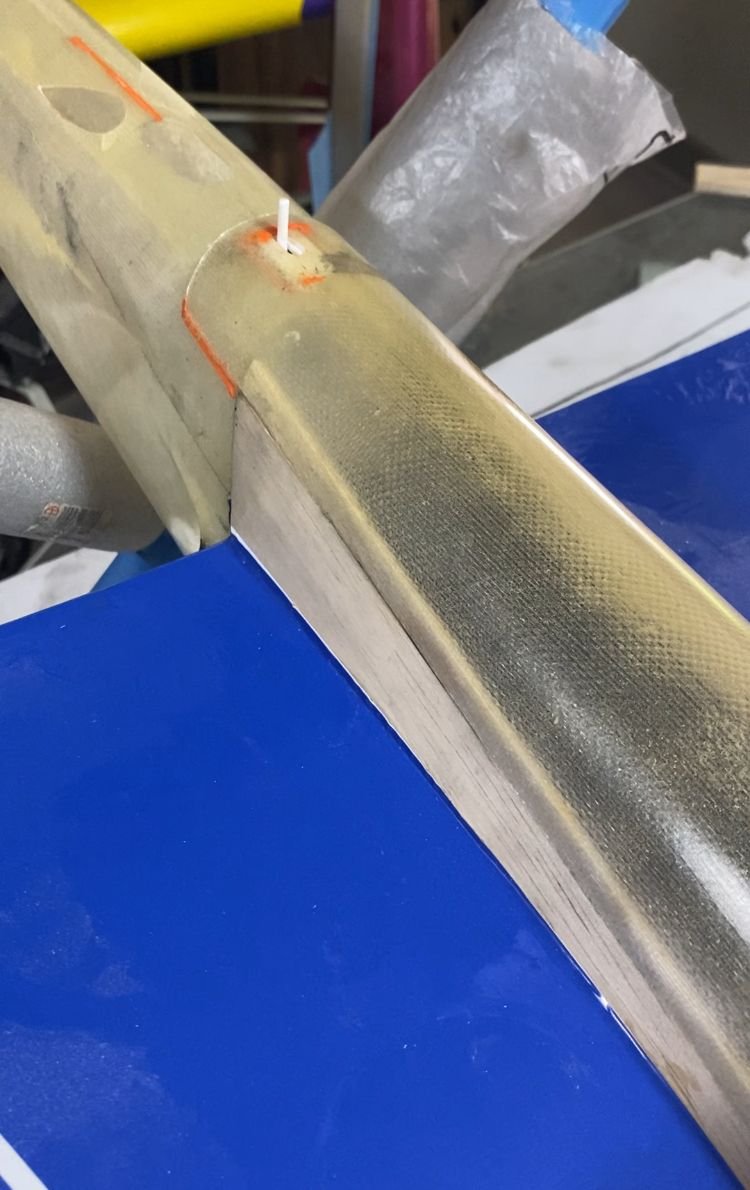
As shown in the photos, the lower front section of the fuselage has a built-in recess step of approximately 3 mm in the lower sidewall area, which secures the belly pan laterally. On the right side, I had to correct the fit by adding fiberglass putty to close a noticeable gap when fitting the belly pan, which required some additional work later at the finishing stages.
For the front attachment, I partially followed the method suggested in the plans, which uses an S-shaped metal beam bolted to the tank floor and to the belly pan. Instead, I used a 10 mm diameter carbon-fiber tube cut to the required height, with a 4 mm blind nut bonded inside.During horizontal positioning of this beam, care was taken to avoid interference with the nose retract (not yet in its final position) and the engine pipe header. As previously noted by someone, the nose retract on the Aurora—and on many designs of that era—is offset to one side (left) to clear the pipe header. However, it was still necessary to determine the correct offset to both meet this requirement and allow unobstructed operation of the steering arm assembly that was very close to the belly pan sidewall.
After trial-fitting all components, I determined that the retract mount needed to be positioned as far left as possible (viewed from the front) on the tank floor plate I had cut earlier. The carbon-fiber tube beam also needed to be slightly offset from the centerline. While this offset might have been avoided by using the metal S-beam, I still wanted to try this solution and considered the metal beam somewhat flimsy.
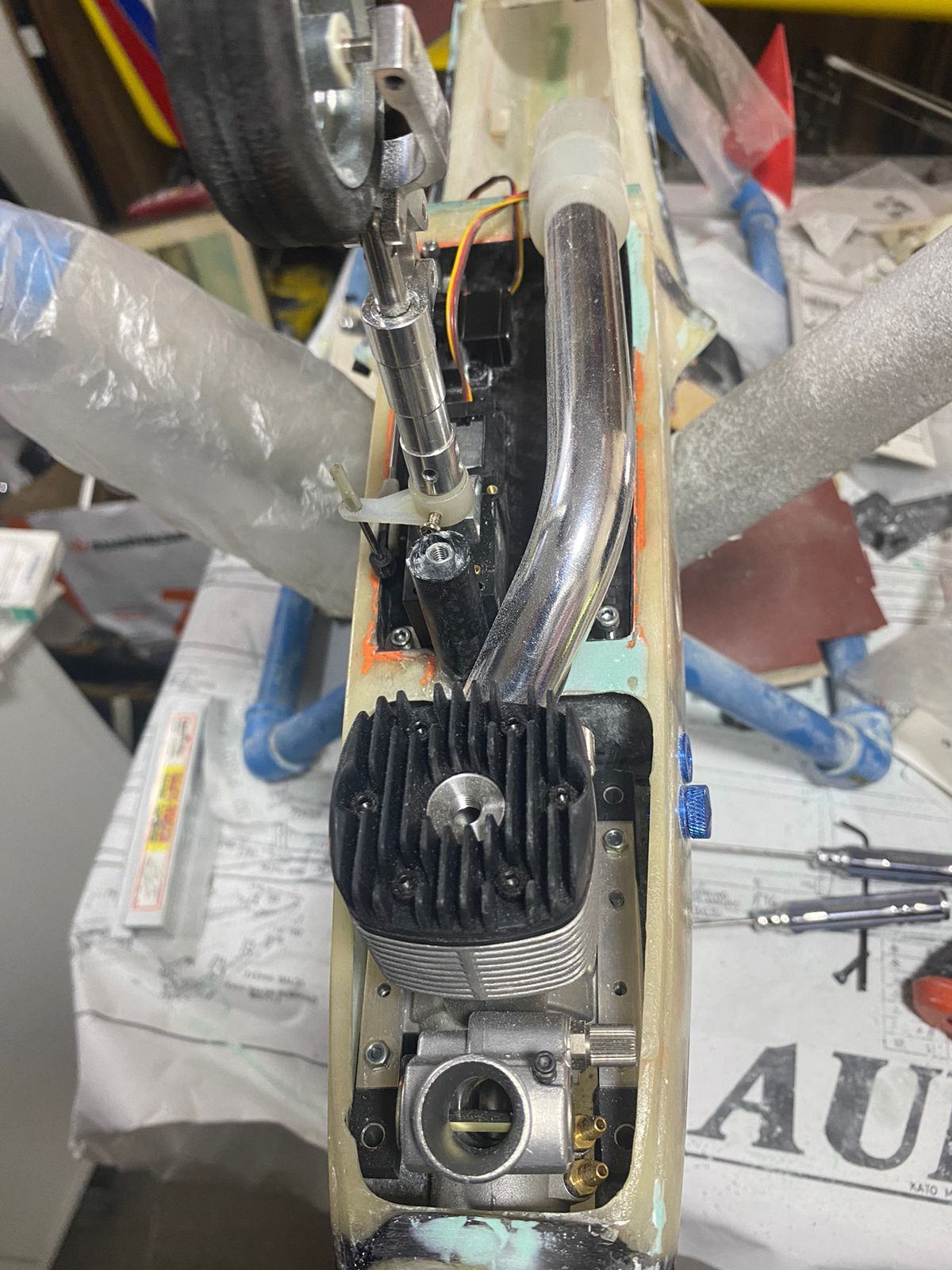
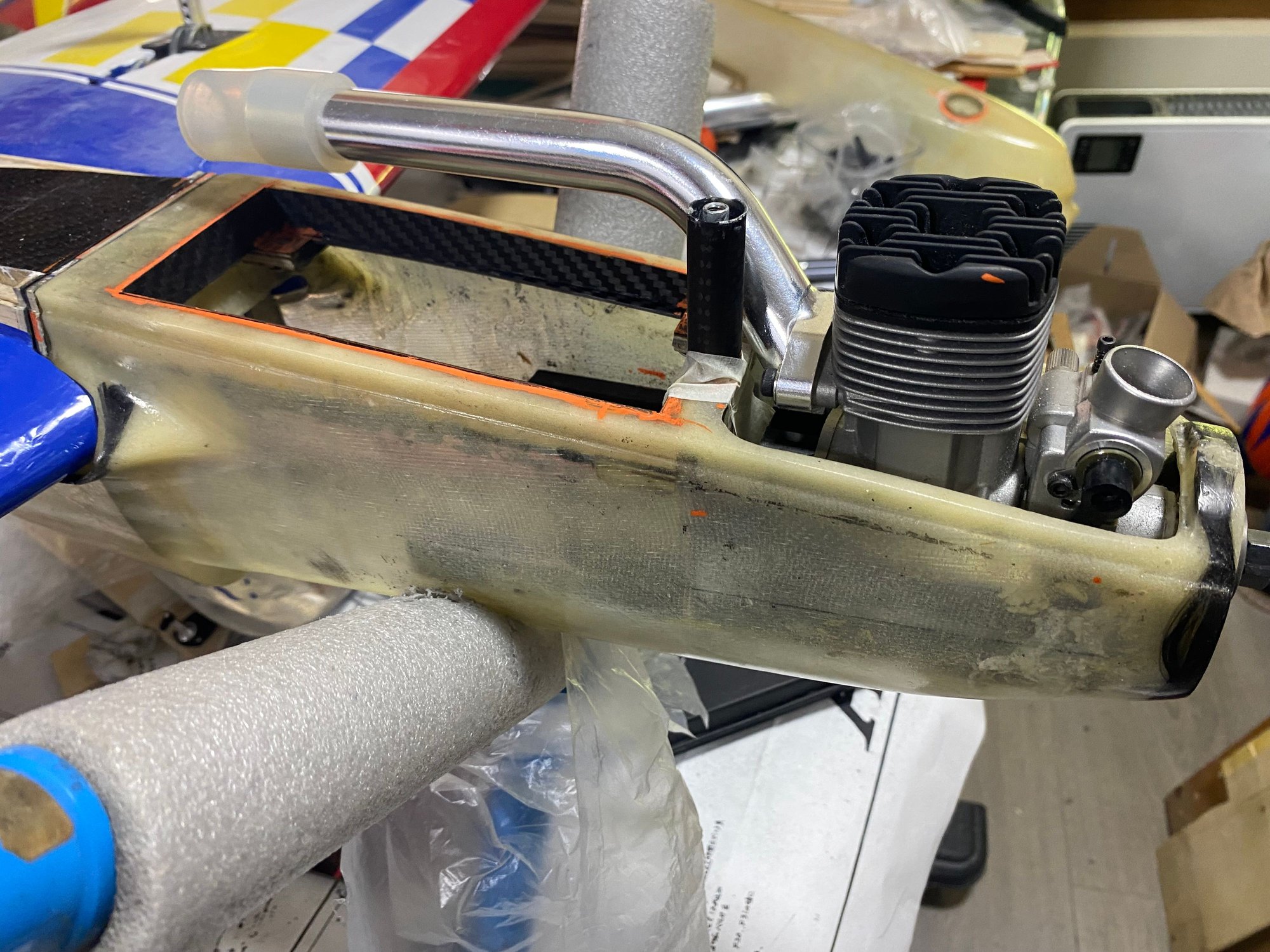

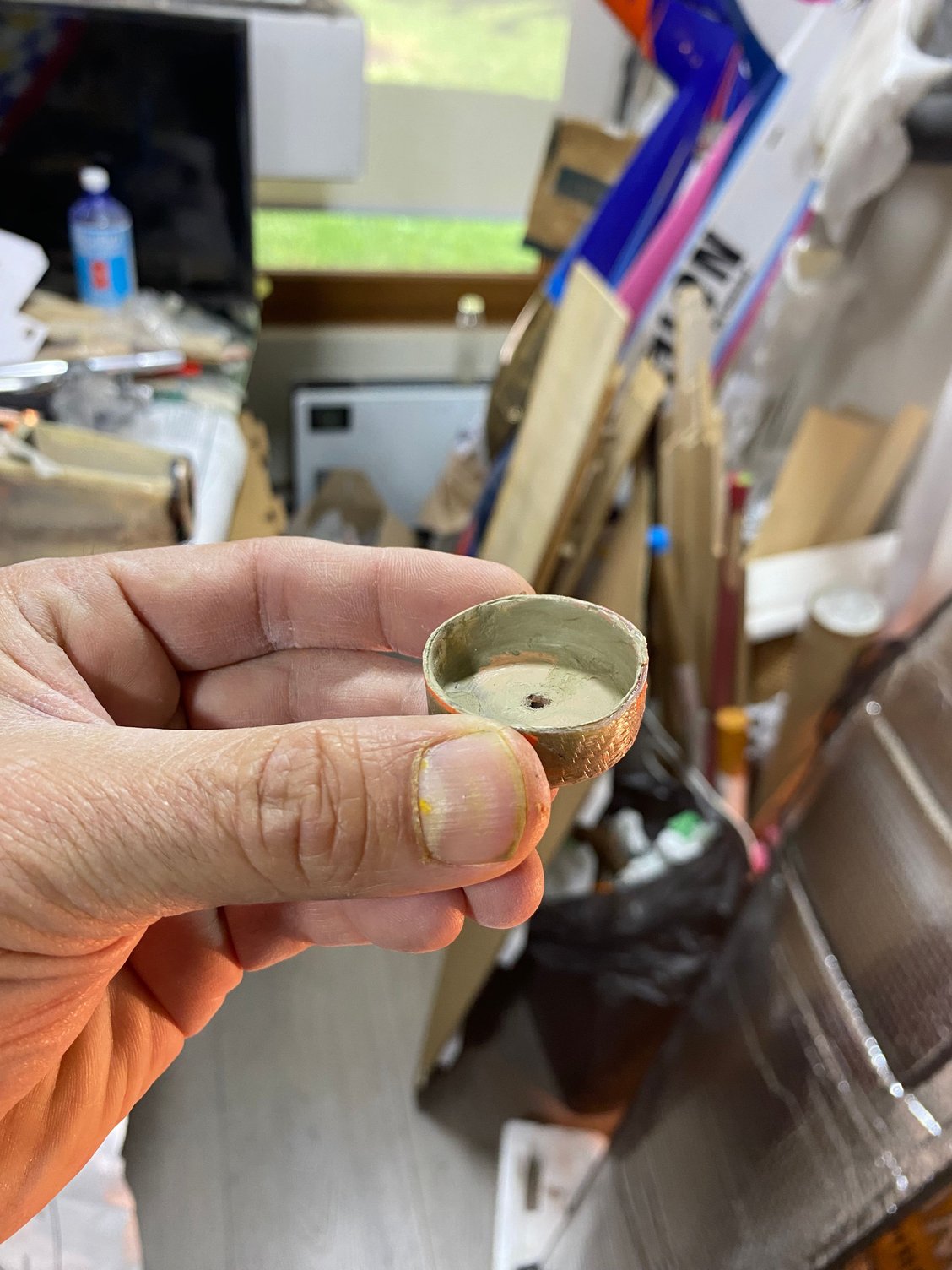
For ease of access, I opted to use a manually tightened knob instead of a bolt, selecting a nice 4 mm blue anodized threaded knob from AliExpress. To avoid having the knob protrude awkwardly from the belly pan, I added a recessed cylindrical pocket molded in fiberglass using a suitable cap as a mold. The recess was positioned and tack-glued in place with cyano. I later realized this may reduce the cooling airflow passage cross section, but is difficult to tell at this stage, so this will be evaluated and corrected if necessary during engine running; there is always room for going back...!
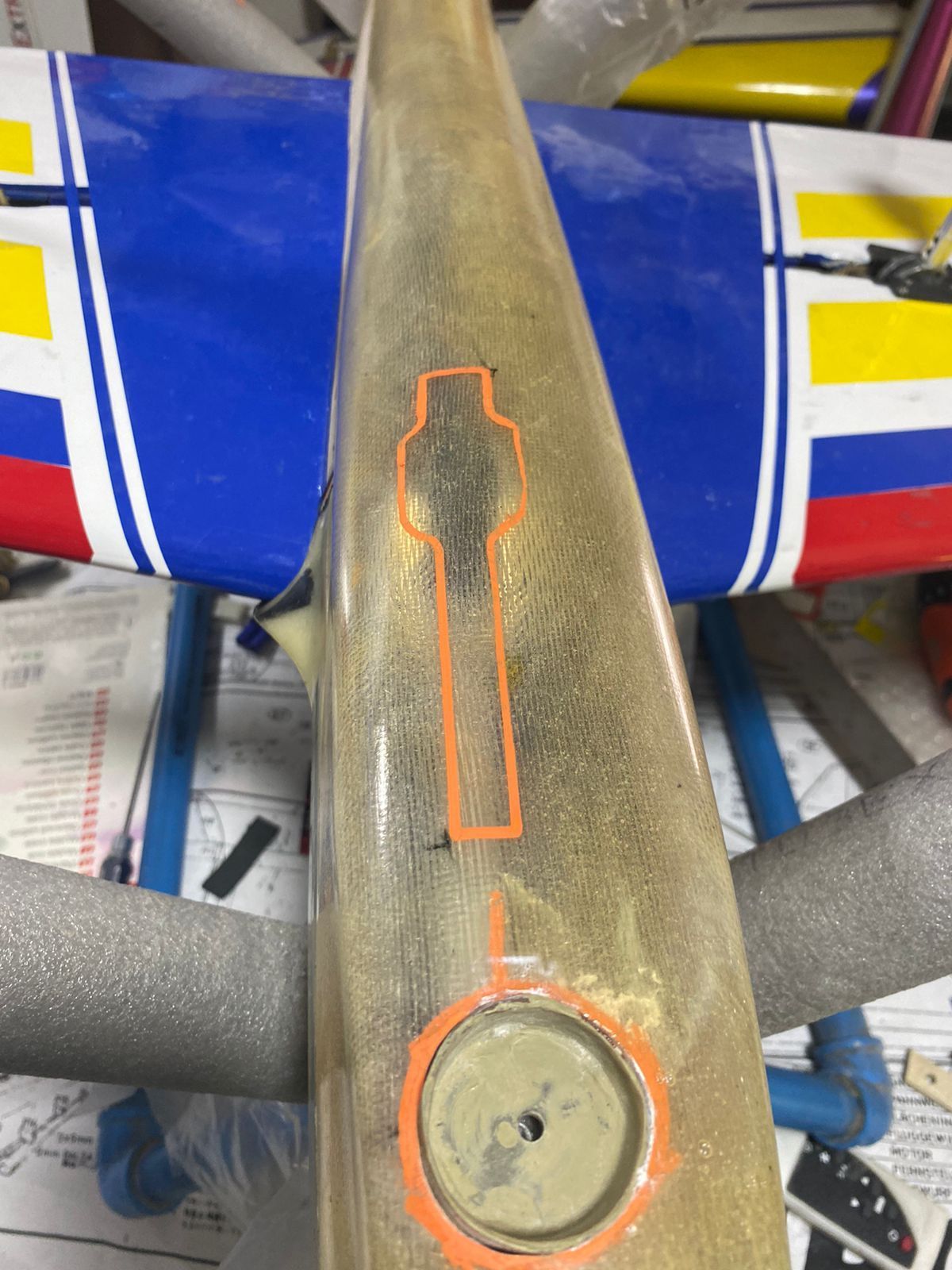
For the aft belly pan attachment, I used a plastic latch mechanism instead of the piano-wire system shown in the plans. A drilled hardwood block was bonded to the fuselage to support the latch mechanism.
This completed the belly pan attachment for the Aurora.