Originally Posted by
canardlover
Thanks a lot brutus for your quick, informative and "balanced" reply..!!!! Since the engine ran well enough even before my – “just in case” - dismantling of the carb and since I found very little dirt inside I will allow the old cup to fly a few more times. The metal screen filter had very little debris in it.
Now, please let me "pick your brain(s)" on one more item regarding this carb: Previously the engine has been running with cylinder pointing upwards but my Bucker Jungmann 1/4 scale requires me to invert the engine not to destroy its scale looks. My understanding is that the small hole in the quadratic pump cover(see attachment) should always be placed with the open hole pointing downwards in order to drain any excess fuel “outside” of the membrane so I must turn the cover accordingly..?!?!
Please correct me if I´m wrong here. My manual says nothing about this.
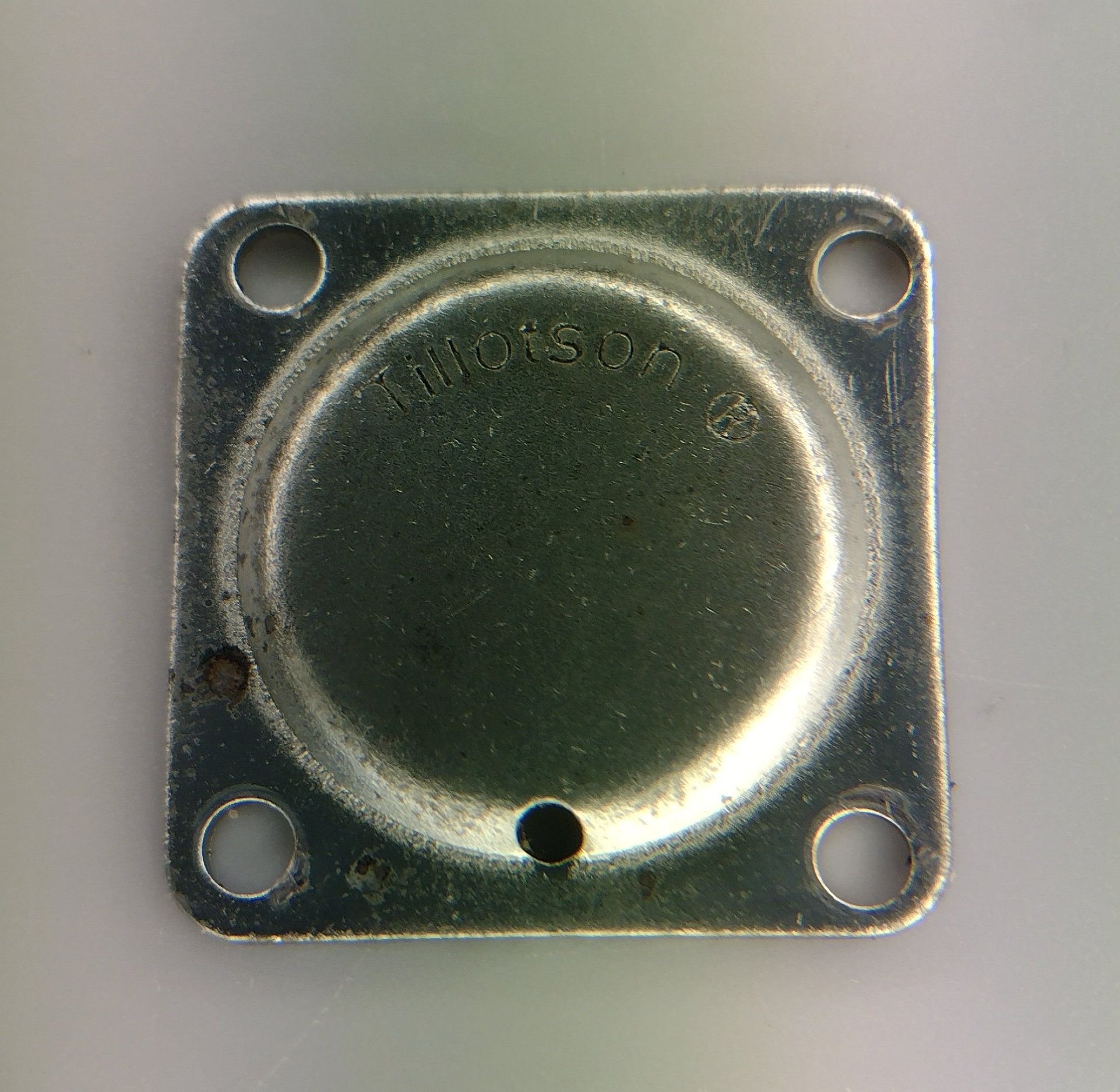
Having the hole pointing down is NOT because of "excess fuel", because if there would EVER be fuel coming out of that hole, the pressure regulator membrane is defective.
Having said that, there are other ways possible for moisture to collect behind that cover, like rain, condensation or perhaps fuel spillage. All three far fetched, but having the hole face down probably won't hurt, just in case.
However:
That hole serves as "atmospheric sensing hole" and in rare cases, flightwind affects the pressure regulator, if for example the propwash or such blows straight into that hole.
Some people therefore solder a short piece of tubing on the hole, and slip on a piece of fuel tubing that leads to a "quieter place", for example in the fuselage behind the firewall.
It is rarely necessary, but I have seen it once or twice that the engine ran perfect on the ground, but became unpredictable and erratic in the air, with no needle setting that would cure it. In those rare cases the additional fuel tubing, quieting down the wind roar in the sensing hole would solve the issue.
Since you are relocating the engine to another plane, the possibility arises that this engine, once running great in its previous situation, could act up as these things are unpredictable. Rare, but unpredictable.