


Cessna Skymaster 337
 06-17-2014 | 12:41 PM
#1
Thread Starter

My Feedback: (6)
Joined: Aug 2002
Posts: 690
Likes: 0
Received 0 Likes
on
0 Posts
From: Columbia, MD
 Cessna Skymaster 337
I am building a Cessna Skymaster 337 model made by Seagull. This plane has two in-line motors, one forward (tractor) and one rear (pusher). It has the following specs:
1. Should I double these numbers to calculate the total thrust generated by the two in-line motors OR is there some thumb rule for calculating the total thrust for in-line configured motors?
2. How do I calculate the power generated (watts) for the in-line configuration?
Thanks,
Vic
- Wing Span: 76.8 in
- Wing area: 806 sq in
- flying weight 10-11 lb
1. Should I double these numbers to calculate the total thrust generated by the two in-line motors OR is there some thumb rule for calculating the total thrust for in-line configured motors?
2. How do I calculate the power generated (watts) for the in-line configuration?
Thanks,
Vic
 06-17-2014 | 02:11 PM
#2

My Feedback: (5)
Vic, if that’s the civilian version of the Cessna used in Vietnam, it flew almost as well on one engine as with two. It turns out that the turbulence created from the forward engine disturbed the air so much going past the rear prop that the thrust was reduced quite a bit. Maybe someone knows the real answer. I built a couple of inline twin models in the past and I know they were not as fast as a conventional twin. Looks like a good project. Keep us posted. Dan.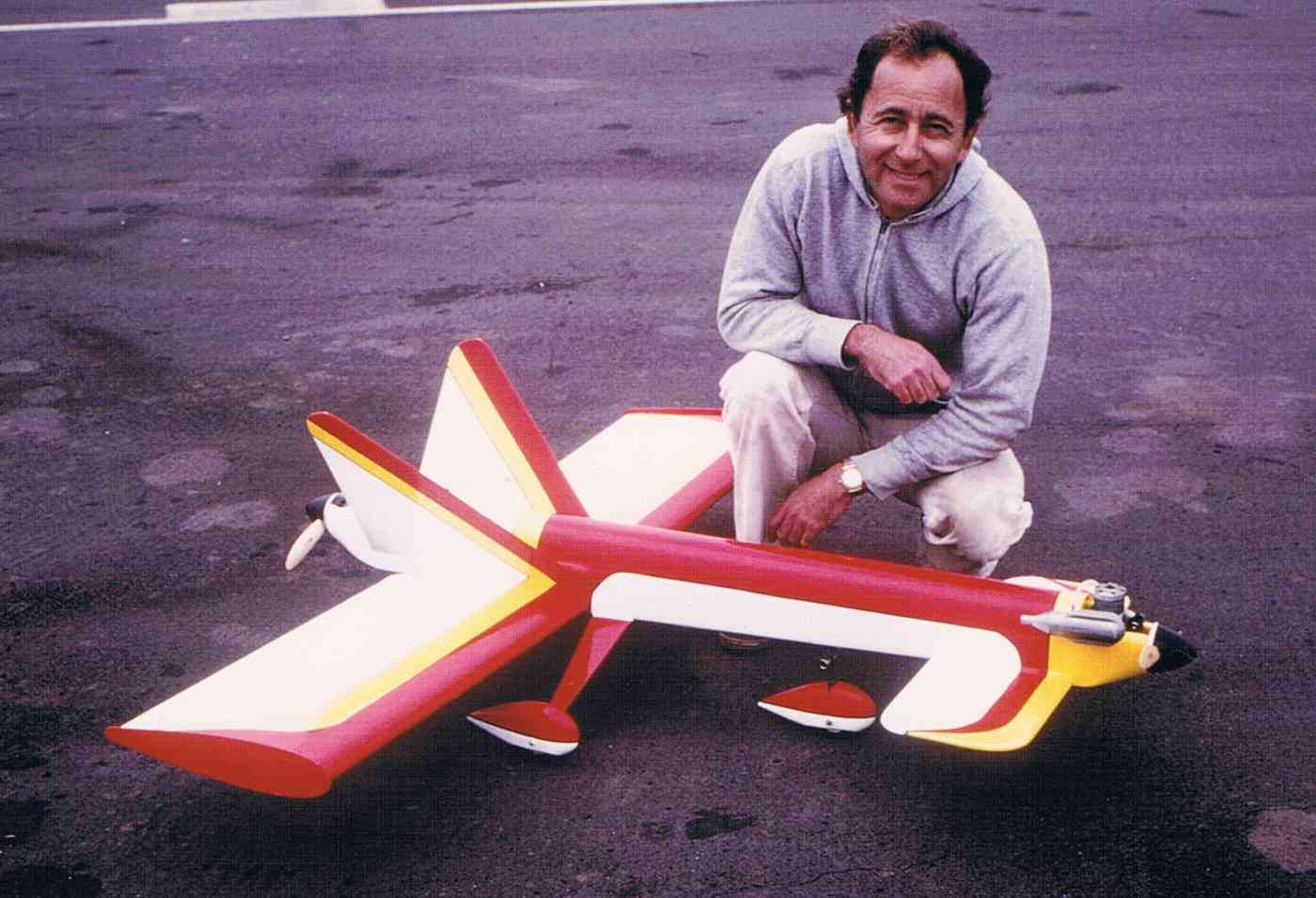
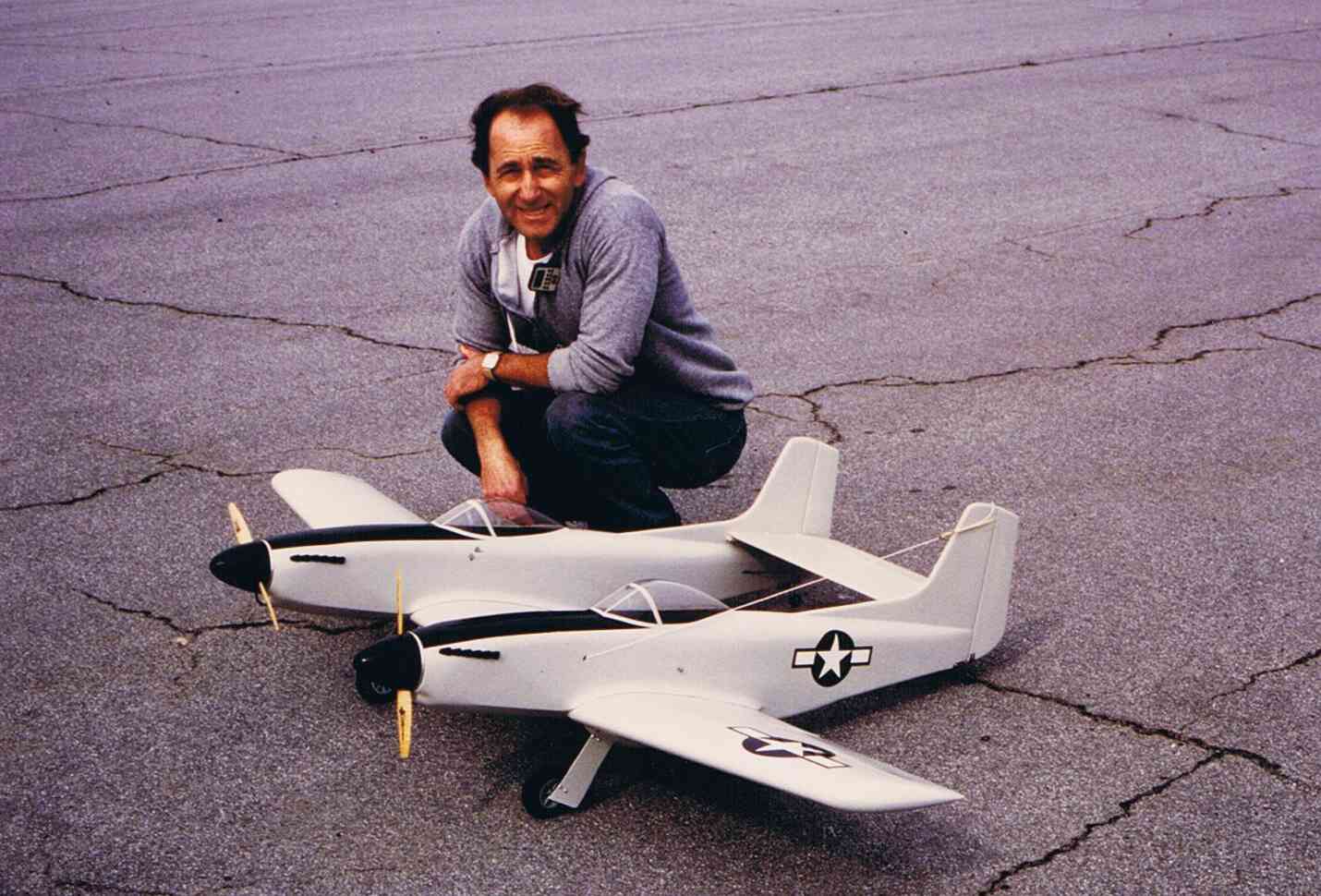
06-18-2014 | 12:42 AM
#3
Joined: Feb 2002
Posts: 1,329
Likes: 0
Received 0 Likes
on
0 Posts
From: Houston, TX
Vic,
Let me first give you my qualifications: I know nothing. I have occasional bought of brilliance, but this is likely not one of them. But I think ...
One issue associated with a rear pusher is that the air over the top of the wing is moving faster than the air from underneath. Takes some of the efficiency out right there. The other, as Dan says, is that you have turbulent, spiraling air coming in from the front prop. One thing you might do is add an inch of pitch to the rear pusher to get some thrust back. Test it out and see how it goes.
Single motor operation is all nice and in-line, but there is still something to think about. If you have that beautiful scale 337 set up with smooth, scale like pitch response, be careful of front motor only operation. Your elevator will be much less responsive without the rear prop blowing over it.
Have fun!
Bedford
Let me first give you my qualifications: I know nothing. I have occasional bought of brilliance, but this is likely not one of them. But I think ...
One issue associated with a rear pusher is that the air over the top of the wing is moving faster than the air from underneath. Takes some of the efficiency out right there. The other, as Dan says, is that you have turbulent, spiraling air coming in from the front prop. One thing you might do is add an inch of pitch to the rear pusher to get some thrust back. Test it out and see how it goes.
Single motor operation is all nice and in-line, but there is still something to think about. If you have that beautiful scale 337 set up with smooth, scale like pitch response, be careful of front motor only operation. Your elevator will be much less responsive without the rear prop blowing over it.
Have fun!
Bedford
06-19-2014 | 11:00 AM
#4


There's no doubt that the rear motor will be running at less than maximum efficiency due to a number of factors. First will be due to operating in the wake of the forward prop. And second will be picking up turbulent air off the fuselage and wing.
But there's not going to be any easy way of calculating this ahead of time. There's simply no good way of estimating the effect on the rear motor.
All you can do is finish the model and try some tests with one motor and two motors running and see what the current to each is like and what the overall static pull is like. But static thrust measurements on such a model don't really mean a whole lot if you're using a prop with a pitch that is much over 4".
So you're stuck with running some inflight testing that uses different pitch value props on front and rear until you find a combination that works. No promises but it's likely that the rear prop will end up being slightly higher in pitch when then happy moment occurs.
But there's not going to be any easy way of calculating this ahead of time. There's simply no good way of estimating the effect on the rear motor.
All you can do is finish the model and try some tests with one motor and two motors running and see what the current to each is like and what the overall static pull is like. But static thrust measurements on such a model don't really mean a whole lot if you're using a prop with a pitch that is much over 4".
So you're stuck with running some inflight testing that uses different pitch value props on front and rear until you find a combination that works. No promises but it's likely that the rear prop will end up being slightly higher in pitch when then happy moment occurs.
06-19-2014 | 12:00 PM
#5
Thread Starter
My Feedback: (6)
Joined: Aug 2002
Posts: 690
Likes: 0
Received 0 Likes
on
0 Posts
From: Columbia, MD
BMatthews, as always, I value your comments to the highest degree. What you said makes sense - no good way of estimating the effects on the rear motor - it will be model specific. Other modelers have implied and suggested to increase the pitch on the rear motor. I will not be using ESCs with data logging capabilities so it will be hard to determine the effects of changing props on the rear motor other than temperature measurements at the end of a flight. Static motor current draw measurements will provide some info but inflight data would be great. Thanks for the reply.
Vic
Vic
06-20-2014 | 05:43 AM
#6

Hi iFLY rc-Vic
About 10 years ago I built a SPAD pusher/puller plane. It was a 40 size plane and used two .28 engines. One of the most fun efforts was taking off on only one engine, either the pusher or the puller (I never saw a difference). It took forever to build up enough speed for take off. I learned to give it full elevator, in a jerking motion, early on, to get the wheels to run higher on the grass. At take off it might lift 6 inches and I would be almost out of runway. I had to turn the plane 90 to 180 degrees while only 6 to 12 inches off the ground. It was a fun challenge. Once in the air and at altitude it did OK on one engine.
About 10 years ago I built a SPAD pusher/puller plane. It was a 40 size plane and used two .28 engines. One of the most fun efforts was taking off on only one engine, either the pusher or the puller (I never saw a difference). It took forever to build up enough speed for take off. I learned to give it full elevator, in a jerking motion, early on, to get the wheels to run higher on the grass. At take off it might lift 6 inches and I would be almost out of runway. I had to turn the plane 90 to 180 degrees while only 6 to 12 inches off the ground. It was a fun challenge. Once in the air and at altitude it did OK on one engine.
06-20-2014 | 09:49 AM
#7
Thread Starter
My Feedback: (6)
Joined: Aug 2002
Posts: 690
Likes: 0
Received 0 Likes
on
0 Posts
From: Columbia, MD
Hi iFLY rc-Vic
About 10 years ago I built a SPAD pusher/puller plane. It was a 40 size plane and used two .28 engines. One of the most fun efforts was taking off on only one engine, either the pusher or the puller (I never saw a difference). It took forever to build up enough speed for take off. I learned to give it full elevator, in a jerking motion, early on, to get the wheels to run higher on the grass. At take off it might lift 6 inches and I would be almost out of runway. I had to turn the plane 90 to 180 degrees while only 6 to 12 inches off the ground. It was a fun challenge. Once in the air and at altitude it did OK on one engine.
About 10 years ago I built a SPAD pusher/puller plane. It was a 40 size plane and used two .28 engines. One of the most fun efforts was taking off on only one engine, either the pusher or the puller (I never saw a difference). It took forever to build up enough speed for take off. I learned to give it full elevator, in a jerking motion, early on, to get the wheels to run higher on the grass. At take off it might lift 6 inches and I would be almost out of runway. I had to turn the plane 90 to 180 degrees while only 6 to 12 inches off the ground. It was a fun challenge. Once in the air and at altitude it did OK on one engine.
Thanks,
Vic
06-27-2014 | 02:48 AM
#8

Joined: Jun 2008
Posts: 345
Likes: 0
Received 0 Likes
on
0 Posts
From: Christchurch, NEW ZEALAND
G'day Vic,
Despite the the theories given here the full size 337 performs better on just the rear engine than just the front!
Not by much, but it's measurable (single engine climb front 425'/minute vs 510. Single engine ceiling better on rear engine)
Pusher propellers are generally considered to be more efficient compared to tractor propellers. Bits of airplane in front of the prop create far less problems than bits behind. Propellers are reasonably tolerant of airflow interruptions ahead of them, while fuselages behind props will experience higher drag due to the faster air flow.
The turbulence of the front prop affecting the rear prop is a bit of a myth as well. Firstly props don't create much turbulence. They smoothly accelerate the air and give it a small spiral rotation (there are vortices from the tips similar to wing tip vortices).
Secondly, imagine that a given prop gives a 60 mph blast of air at full power on the ground with the airplane stopped. If you could measure the air just ahead of the prop it would be moving too, maybe 50 mph. Now imagine that that same plane flies at 50 mph, the blast behind the prop is still around 60 (let's throttle back a bit to allow for the prop unloading in this thought experiment). By the time that flow goes the length of the fuselage to the rear prop it will have slowed somewhat, maybe 55. So the rear prop sees air substantially the same as the front.
Obviously there will be more of a difference in a high power low speed climb, but my point is there isn't as much difference as most people think.
I think that if you double your thrust calculation you will be pretty close.
I would be very surprised if you found a noticeable difference having a higher pitch on the rear prop.
Like anything in this hobby the best bet is to make an intelligent guess for a start then adjust as required.
Nice model btw,
Dave H
Despite the the theories given here the full size 337 performs better on just the rear engine than just the front!
Not by much, but it's measurable (single engine climb front 425'/minute vs 510. Single engine ceiling better on rear engine)
Pusher propellers are generally considered to be more efficient compared to tractor propellers. Bits of airplane in front of the prop create far less problems than bits behind. Propellers are reasonably tolerant of airflow interruptions ahead of them, while fuselages behind props will experience higher drag due to the faster air flow.
The turbulence of the front prop affecting the rear prop is a bit of a myth as well. Firstly props don't create much turbulence. They smoothly accelerate the air and give it a small spiral rotation (there are vortices from the tips similar to wing tip vortices).
Secondly, imagine that a given prop gives a 60 mph blast of air at full power on the ground with the airplane stopped. If you could measure the air just ahead of the prop it would be moving too, maybe 50 mph. Now imagine that that same plane flies at 50 mph, the blast behind the prop is still around 60 (let's throttle back a bit to allow for the prop unloading in this thought experiment). By the time that flow goes the length of the fuselage to the rear prop it will have slowed somewhat, maybe 55. So the rear prop sees air substantially the same as the front.
Obviously there will be more of a difference in a high power low speed climb, but my point is there isn't as much difference as most people think.
I think that if you double your thrust calculation you will be pretty close.
I would be very surprised if you found a noticeable difference having a higher pitch on the rear prop.
Like anything in this hobby the best bet is to make an intelligent guess for a start then adjust as required.
Nice model btw,
Dave H
06-27-2014 | 04:35 AM
#9
Thread Starter
My Feedback: (6)
Joined: Aug 2002
Posts: 690
Likes: 0
Received 0 Likes
on
0 Posts
From: Columbia, MD
gerryndennis, very interesting info about the full scale Skymaster. Many ideas and theories have been posted about the efficiency of the front/rear motors. I generally go with "proven" configurations or intheir absence, the consensus of options and sometimes my "gut" feelings from experience. In this case, I plan to go with the same prop on the front and rear (both spinning in the same direction). After reading your comments, I may go with a pusher prop on the rear to get a counter-rotating configuration (if I can find a match for the front).
Some modelers have reported higher power (mah) consumption from the front motor when using two batteries. I have purchased a data logger and will use it to collect in-flight information. I am anxious to see the flight results.
As for single engine flight, my calculations show about 792W IN for each motor. At 11 lbs, that would result in about 72 watts/lb for a single motor flight. That will probably be enough to get the plane back to the runway, being careful and easy on the flight controls. I hope I don't need to do that. I will not have a means to shut down power to one or the other motor, so it may be a mute point depending on the failure mode for the motor (shorted, motor lockup, ESC, etc.).
Vic
Some modelers have reported higher power (mah) consumption from the front motor when using two batteries. I have purchased a data logger and will use it to collect in-flight information. I am anxious to see the flight results.
As for single engine flight, my calculations show about 792W IN for each motor. At 11 lbs, that would result in about 72 watts/lb for a single motor flight. That will probably be enough to get the plane back to the runway, being careful and easy on the flight controls. I hope I don't need to do that. I will not have a means to shut down power to one or the other motor, so it may be a mute point depending on the failure mode for the motor (shorted, motor lockup, ESC, etc.).
Vic
Last edited by iFLYrc_Vic; 06-27-2014 at 04:48 AM.


