


Os fs26
 08-17-2015 | 04:34 PM
#1
Thread Starter
Senior Member
Joined: Mar 2014
Posts: 108
Likes: 0
Received 0 Likes
on
0 Posts
 Os fs26
I have a used OS FS-26 4 stroke engine that starts easily but won't keep running after I move the throttle back to idle. I start with the mixture screw turned out 3 1/2 turns. I turn in the mixture to get the RPMs up, lean it up a little then move the throttle back to idle. When I open it up quickly, it responds slowly the stumbles then stops. I richen the mixture a bit and it starts right back up. I turned the tiny screw, air bleed I think, with no effect.
What is the basic setting for this adjustment? What am I doing wrong?
What is the basic setting for this adjustment? What am I doing wrong?
 08-17-2015 | 07:42 PM
#2


My Feedback: (1)
Your mid range is likely rich and therefore you are correct in turning the tiny airbleed screw but which way did you turn it? On a bleeder type carb the airbleed screw works in the opposite direction of the main needle valve. In other words the main needle is screwed in to lean the main mixture. But the midrange screw is screwed out to lean the midrange.
Another factor is you may have not set the midrange screw at a reasonable starting position in the first place where did you set it.
John
Another factor is you may have not set the midrange screw at a reasonable starting position in the first place where did you set it.
John
08-18-2015 | 06:32 AM
#4
My Feedback: (1)
You never said if this was a new in box engine but it really does not matter, that engine has not been produced in many years so even NIB engines have had plenty of opportunity to have had all the needle and screw positions tampered with. So you really need to start over on the start settings.
let me suggest for the midrange a simple system that has worked well for me on a wide variety of bleeder carb engine including that one. Just find a dressmakers pin (the fat ones) or a bent open large safety pin and insert the pin directly into the open hole in front of the carburetor. Now turn that adjustment screw in that is sticking out the side of the carb near the bleeder hole, until you feel it just touch the pin and that's it and is a reasonable starting position, finally just remove the pin.
John
let me suggest for the midrange a simple system that has worked well for me on a wide variety of bleeder carb engine including that one. Just find a dressmakers pin (the fat ones) or a bent open large safety pin and insert the pin directly into the open hole in front of the carburetor. Now turn that adjustment screw in that is sticking out the side of the carb near the bleeder hole, until you feel it just touch the pin and that's it and is a reasonable starting position, finally just remove the pin.
John
08-18-2015 | 12:31 PM
#5
Thread Starter
Senior Member
Joined: Mar 2014
Posts: 108
Likes: 0
Received 0 Likes
on
0 Posts
That's the info I was looking for! Thanks! I have 2 of these engines that I recently received from friends. I have one mounted on a test mount and the other is waiting attention. It dawned on me. after reading your note that the hole may be plugged. I'll check that out in the morning and let you know. I think I'll replace the glow plugs too. Thanks again! Doc
08-19-2015 | 11:33 AM
#6
Thread Starter
Senior Member
Joined: Mar 2014
Posts: 108
Likes: 0
Received 0 Likes
on
0 Posts
Os fs 26
Tue response---That's the info I was looking for! Thanks! I have 2 of these engines that I recently received from friends. I have one mounted on a test mount and the other is waiting attention. It dawned on me. after reading your note that the hole may be plugged. I'll check that out in the morning and let you know. I think I'll replace the glow plugs too. Thanks again! Doc
Wed afternoon---I set the air bleeds as instructed, installed new glow plugs in each. The one engine runs much better and is responsive to throttle position but still I can't get up to the 11,000 to 12,000. The other is running fine! Maybe a bit more tweaking with the air bleed adjustment.
Thanks again for your help! Any more suggestions will be appreciated! Doc
Wed afternoon---I set the air bleeds as instructed, installed new glow plugs in each. The one engine runs much better and is responsive to throttle position but still I can't get up to the 11,000 to 12,000. The other is running fine! Maybe a bit more tweaking with the air bleed adjustment.
Thanks again for your help! Any more suggestions will be appreciated! Doc
08-22-2015 | 04:23 AM
#9
My Feedback: (1)
Hi Doc I also believe that a 10/6 is too much of a load for the little fs26 and may lead to inflight intermittent surging and a tendency to run too hot.
If you want to run ten inchers then a four or five pitch is a better choice and if the airframe allows it to pick up a little airspeed then 9/5 is a good choice.
Here are a couple of photos of my Oxy Moron which is a Seniorita and serves as a twin and a glider. The original engines were the fs 26's, later a pair of Magnum 30's were tried and the airplane currently has OS .25FX:
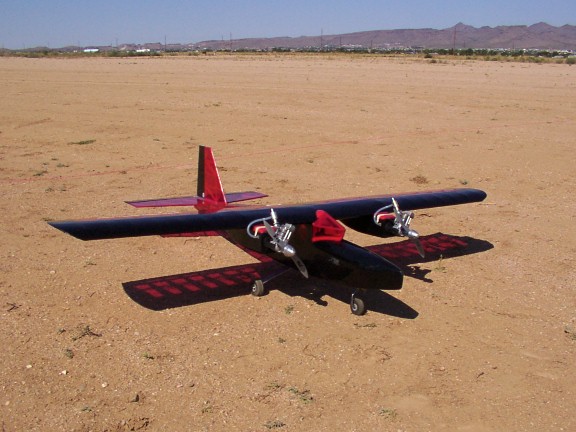
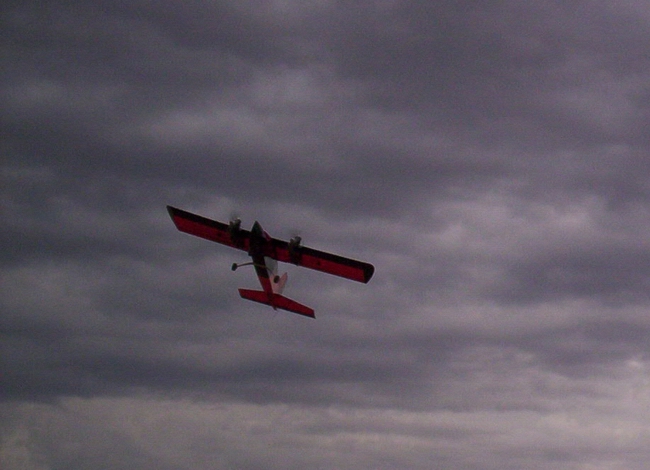
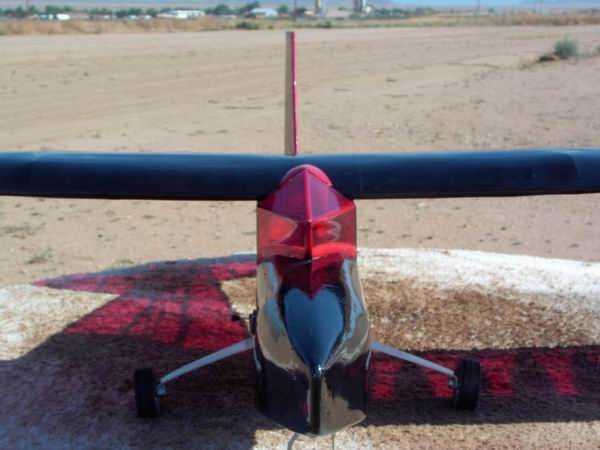
John
If you want to run ten inchers then a four or five pitch is a better choice and if the airframe allows it to pick up a little airspeed then 9/5 is a good choice.
Here are a couple of photos of my Oxy Moron which is a Seniorita and serves as a twin and a glider. The original engines were the fs 26's, later a pair of Magnum 30's were tried and the airplane currently has OS .25FX:
John
08-29-2015 | 01:00 PM
#11
Hi!
The OS fs.26 is very reilable if set up right. I fly at sea level an use fuel containing just 5% nitro and 15-20% oil (rest methanol) mix my own fuel. More nitro,up to 15% is of course making the OS even more reliable at idle and improving the top speed slightly. My OS fs.26 (have several) all rew around 9800-10000 rpm with a APC 10x5 and that is what you should aim for, not 11000 or 12000.
10x5 is the prop size of choice for OS and glow plug should be no other then the OS F plug.
The carb is bullit proof as it it so simple (Just a bleed screw that adjust the idle speed) and the bleed screw position is in fact not very sensitiv at all.The OS runs perfect att all idle screw positions with or without muffler pressure.
If your engine does not idle well (doesn't have instant throttle respons) you have to look elsvere for possible faults, most of the time it's the tank and tank position that is the culprit.
The OS FS .26 should have a tank size of 100-150cc (4-6oz) No more! And the tank should be placed as near the carb/engine as possible and placed according to the"tank mounting rule" (center of tank in line with carb orrifice when the plane sits horizontal).
Check the tank for leaks , especially if you use tanks with a rubber expander (most common tanks do which is No good). A much better tank is the Tettra tank which doesn't rely on the rubber expander, instead it uses a rubber neck that seals the tank opening.
Pictures below show my Marutaka DC-3 powered by two OS FS.26 swinging my own made carbon fiber 3-blade scale 10x4,5 props (rews 9800-10000 with that prop) and performance is better or the same as with any comercial 10x5 two blade prop.
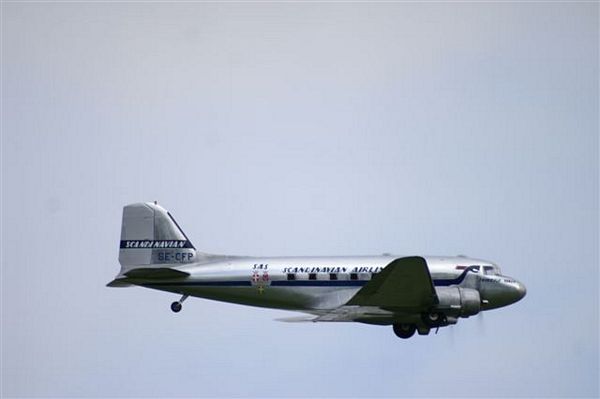
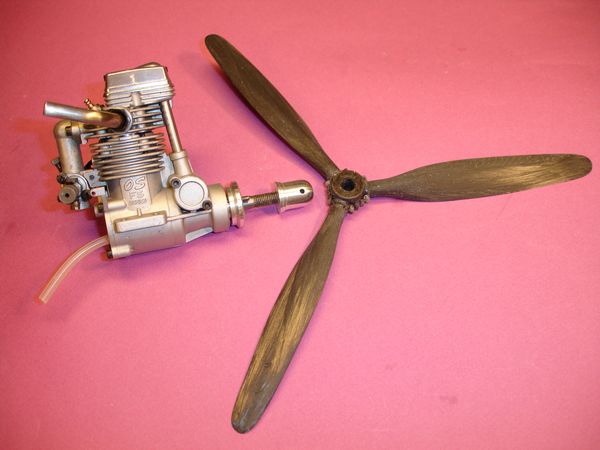
The OS fs.26 is very reilable if set up right. I fly at sea level an use fuel containing just 5% nitro and 15-20% oil (rest methanol) mix my own fuel. More nitro,up to 15% is of course making the OS even more reliable at idle and improving the top speed slightly. My OS fs.26 (have several) all rew around 9800-10000 rpm with a APC 10x5 and that is what you should aim for, not 11000 or 12000.
10x5 is the prop size of choice for OS and glow plug should be no other then the OS F plug.
The carb is bullit proof as it it so simple (Just a bleed screw that adjust the idle speed) and the bleed screw position is in fact not very sensitiv at all.The OS runs perfect att all idle screw positions with or without muffler pressure.
If your engine does not idle well (doesn't have instant throttle respons) you have to look elsvere for possible faults, most of the time it's the tank and tank position that is the culprit.
The OS FS .26 should have a tank size of 100-150cc (4-6oz) No more! And the tank should be placed as near the carb/engine as possible and placed according to the"tank mounting rule" (center of tank in line with carb orrifice when the plane sits horizontal).
Check the tank for leaks , especially if you use tanks with a rubber expander (most common tanks do which is No good). A much better tank is the Tettra tank which doesn't rely on the rubber expander, instead it uses a rubber neck that seals the tank opening.
Pictures below show my Marutaka DC-3 powered by two OS FS.26 swinging my own made carbon fiber 3-blade scale 10x4,5 props (rews 9800-10000 with that prop) and performance is better or the same as with any comercial 10x5 two blade prop.
Last edited by jaka; 08-31-2015 at 12:34 PM.
08-31-2015 | 07:49 AM
#12

My Feedback: (11)
Prop the engine to turn about 10,000 RPM on the ground when leaned to just rich of peak RPM. Then, whatever propeller will give you that RPM and fly the model as you want it to fly is the "correct" propeller. You want the engine to turn up for best performance and handling. Any idle 3,000 RPM or lower would be "good".
09-02-2015 | 03:31 AM
#13
Thread Starter
Senior Member
Joined: Mar 2014
Posts: 108
Likes: 0
Received 0 Likes
on
0 Posts
Thanks for your response! Beautiful airplane! I spent many hours in C-47's During my AF days. Prop is nice too! I was trying to see what's going on at the hub but pic fuzzes up when I enlarge it. You must have made them mostly by hand huh?
09-02-2015 | 05:43 AM
#15
Hi!
I first carved one prop blade of Wood (made of Jellutong) and made a epoxy mold from it. Then made three epoxy blades from the mold that was fastened to a turned aluminium center and made a mold from the entire prop. From that mold I then made the 3-blade cabon props that resemble a Hamilton standard prop.
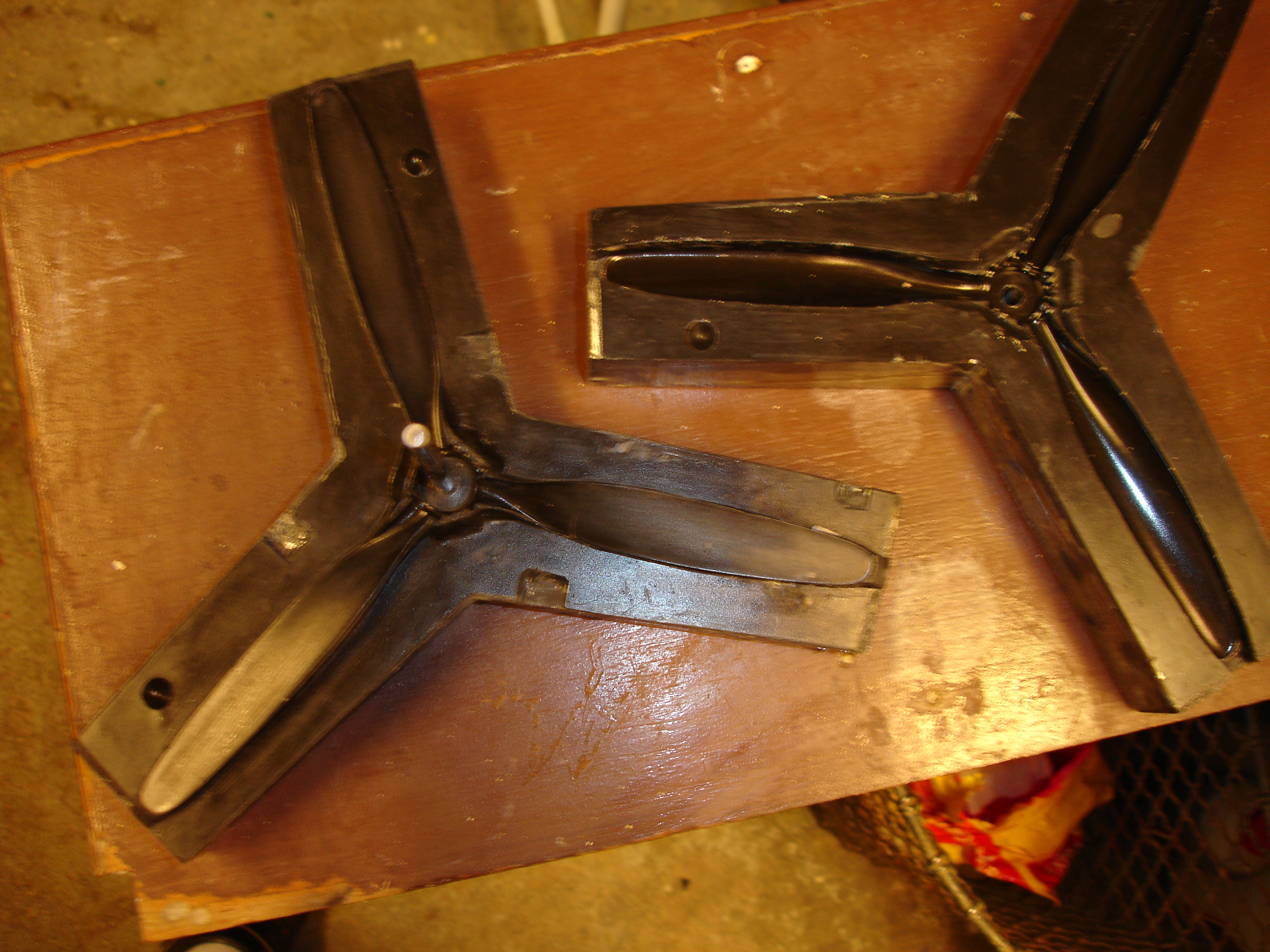
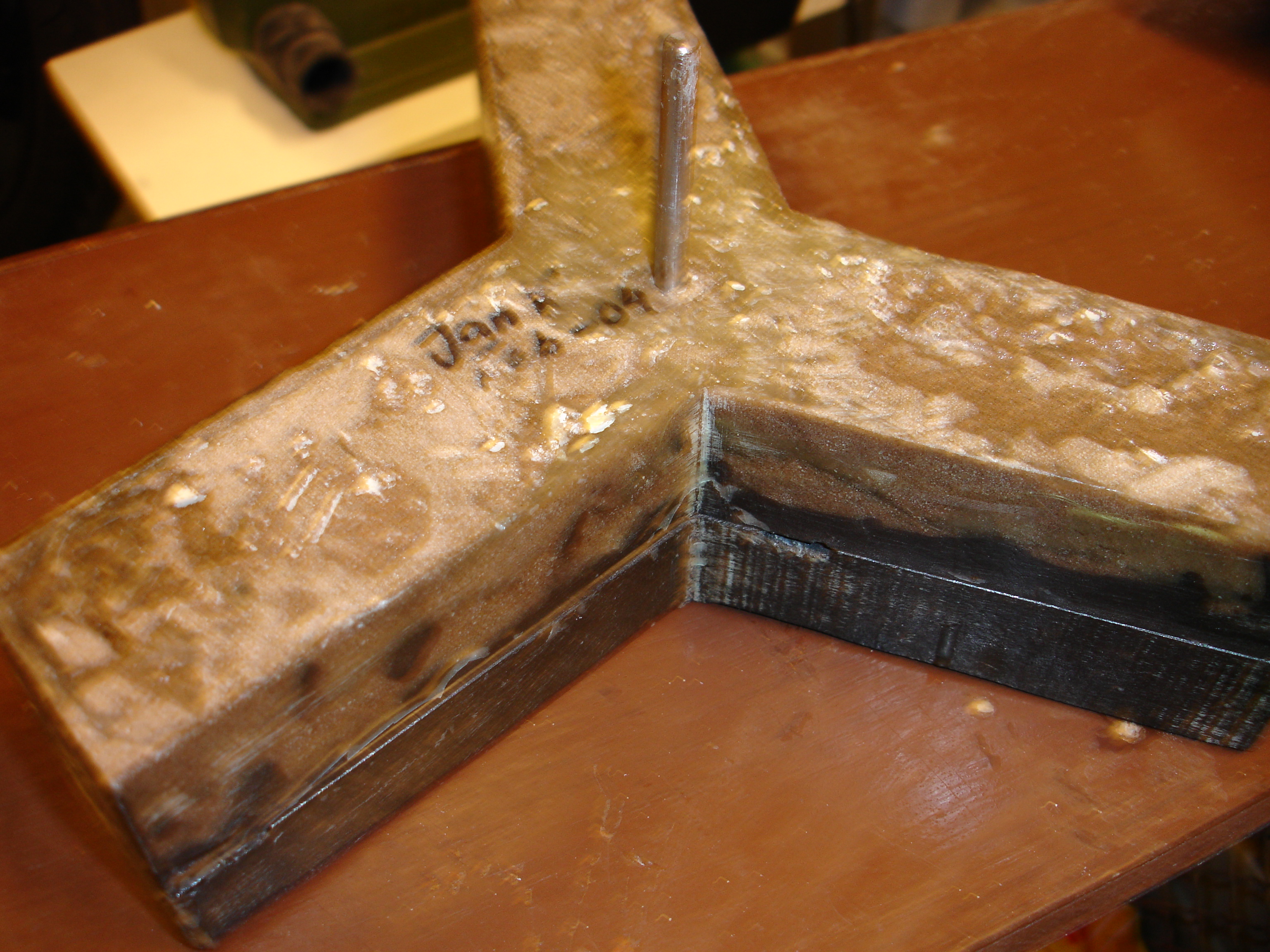
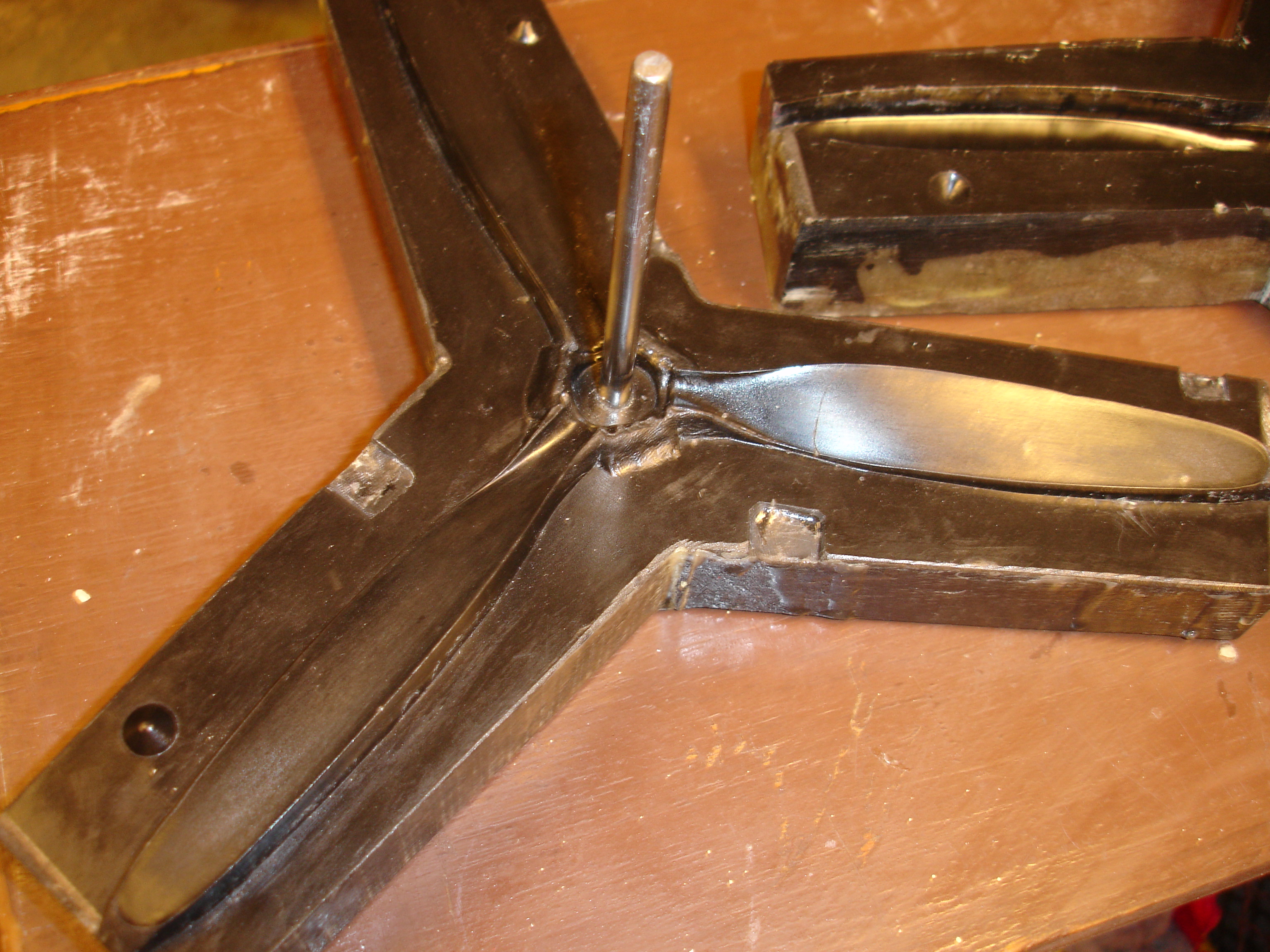
I first carved one prop blade of Wood (made of Jellutong) and made a epoxy mold from it. Then made three epoxy blades from the mold that was fastened to a turned aluminium center and made a mold from the entire prop. From that mold I then made the 3-blade cabon props that resemble a Hamilton standard prop.
Last edited by jaka; 09-02-2015 at 05:59 AM.
09-12-2015 | 09:19 AM
#17
I have an OS 26 FS that is a really nice runner. I use 10x4 and 10x5 props. I got mine used and it had a 9x4 when I bought it; RPMs were way too high. It worked, but I wouldn't expect it to last. I think a 9x5 would also allow it to rev quite high and might not be best for longevity. If I wanted more speed on a clean air frame I would go to a 9x6 (or a Bolly 9.5x5, but you can't get them anymore). Jim


