


Question about turning in banking
 04-03-2019 | 07:59 AM
#26


My Feedback: (29)

Without the OP's participation in this thread ( who can blame him for not returning ) we really don't know exactly what he is trying to accomplish. The point that I would like to make and I think it is an important one to not only seasoned pilots but beginners as well is that in most cases a poor trait can be adjusted out of the airplane. These are models so we have the ability to make them fly exactly the way we want them to. A good example of that is a Cub that I had a few years ago that I would occasionally fly at my sailplane club. It was fun for a while seeing people's expressions while watching a Cub fly rolling circles. The expression " that doesn't fly like a Cub " was used more then once. The Cub was eventually sold off to someone who flew it as a Cub, example, he didn't put any differential into it so it needed rudder for coordinated turns, he had the CG slightly forward for some positive pitch stability etc. We both flew different setups that changed the personality of the airplane. The same goes for undesired characteristics, simply adjust them out.
 04-03-2019 | 09:27 AM
#27
My Feedback: (6)
Without the OP's participation in this thread ( who can blame him for not returning ) we really don't know exactly what he is trying to accomplish. The point that I would like to make and I think it is an important one to not only seasoned pilots but beginners as well is that in most cases a poor trait can be adjusted out of the airplane. These are models so we have the ability to make them fly exactly the way we want them to. A good example of that is a Cub that I had a few years ago that I would occasionally fly at my sailplane club. It was fun for a while seeing people's expressions while watching a Cub fly rolling circles. The expression " that doesn't fly like a Cub " was used more then once. The Cub was eventually sold off to someone who flew it as a Cub, example, he didn't put any differential into it so it needed rudder for coordinated turns, he had the CG slightly forward for some positive pitch stability etc. We both flew different setups that changed the personality of the airplane. The same goes for undesired characteristics, simply adjust them out.
04-03-2019 | 09:53 AM
#28
My Feedback: (29)
The only thing that comes to mind would be a grossly nose heavy condition. That being the case, say at a 45 degree bank angle or more it takes so much elevator to keep the nose level in the turn that the airplane can snap out of the turn. I have seen this too often the " nose heavy is always safer " philosophy is just as strong as it ever has been. Some guys fall into the " more must be even better " group as well. Unfortunately trimming is becoming a lost art, lots of guys willing to pass on the skill just very few that are willing to accept.
04-03-2019 | 05:51 PM
#29

The only thing that comes to mind would be a grossly nose heavy condition. That being the case, say at a 45 degree bank angle or more it takes so much elevator to keep the nose level in the turn that the airplane can snap out of the turn. I have seen this too often the " nose heavy is always safer " philosophy is just as strong as it ever has been. Some guys fall into the " more must be even better " group as well. Unfortunately trimming is becoming a lost art, lots of guys willing to pass on the skill just very few that are willing to accept.
04-03-2019 | 06:49 PM
#30
My Feedback: (29)
There is actually quite a large CG range where an airplane will fly well. As the wing loading drops, that margin gets bigger. The information about the Sig Kadet was good solid information 40 years ago when written however, things change. With today’s lighter electronics that airplane can easily loose 1/2 pound. The increase in radio adjustments will also help produce an airplane that flies better with a more aft CG. Note that I did not say tail heavy. With a typical wing loading of under 30 oz, most airplanes will fly with a CG in the range of 25% to 35%.
04-04-2019 | 09:14 AM
#31
My Feedback: (6)
Maybe it's just me, but I've always found the CG range on Sig plans to be forward of where I want it. The example I remember most clearly is the MidStar 40 (a fun plane!). With the CG near where they recommended it flew very comfortably but wouldn't snap-roll or spin (even with enlarged ailerons and rudder). Took some weight out of the nose and it got a lot more exciting. On the Kadet Senior, a CG in the recommended range made it sort of unpleasant to land, and a Kadet Senior shouldn't be unpleasant in any way (though adding ailerons helps make the turns look better).
04-04-2019 | 09:40 AM
#32
My Feedback: (29)
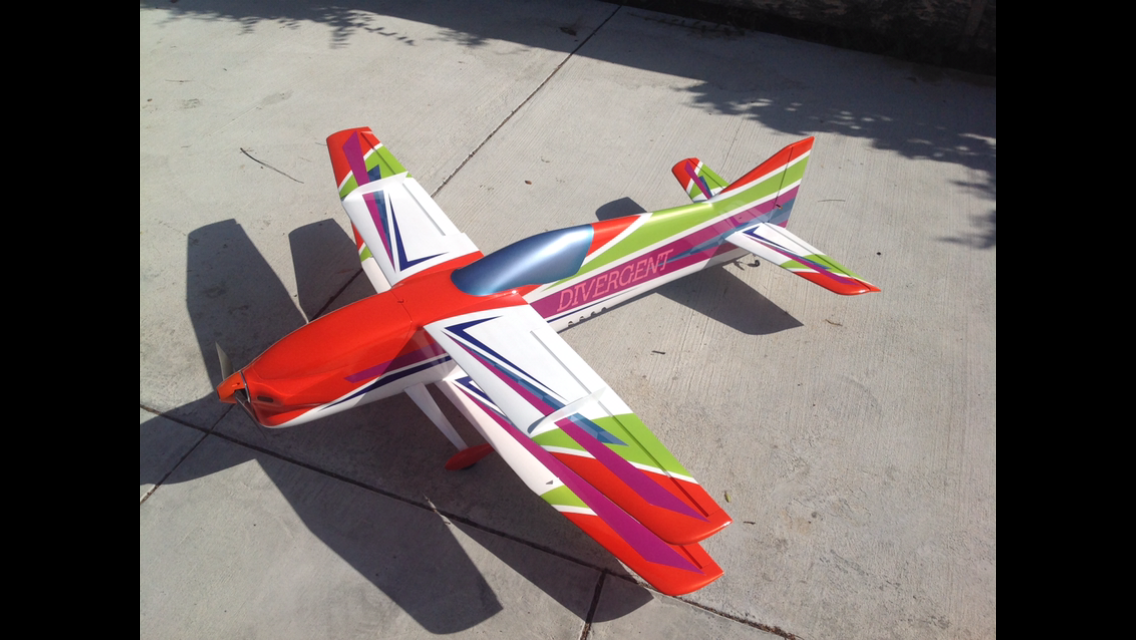
Yep, gotta keep in mind that most Sig kits were designed and all instructions were written when most of us were still in school. Things change, just think about the reaction I would have gotten showing drawings of my last design to the guys at the field 30 years ago prior to building it.


