


Confused About Engine Sizes

 12-09-2013 | 08:33 PM
#27

My Feedback: (19)

As I said before, when there is work to be done, I'll take the gassers. I guess if one were to make a comparison to something like a motor vehicle, the gassers would be the truck engines and the glo engines would be in the sports cars. The sports car engine could certainly pull a truck around but would be screaming to get the job done.
12-10-2013 | 05:25 AM
#29

Comparing a Magnum to a DLE is like comparing a Tower 46 to a OS 46AX. Everything I have read has indicated that even the gas 2-strokes are more equivalent to fule 4-strokes and fuel 2-stokes. Lower RPM. higher torque, able to turn larger props, etc. However, I am only going from what I have read and like Will rogers said, only believe have of what you see.
12-10-2013 | 08:02 AM
#30
My Feedback: (5)
Joined: Jan 2002
Posts: 5,768
Likes: 0
Received 0 Likes
on
0 Posts
From: San Tan Valley,
AZ
What I would like to see is a thrust comparison chart.
Somewhere I saw a chart that you input the prop size and rpm and the chart gives you the thrust generated. But I dont remember where. That would give you an idea of the comparison.
Somewhere I saw a chart that you input the prop size and rpm and the chart gives you the thrust generated. But I dont remember where. That would give you an idea of the comparison.
12-10-2013 | 12:37 PM
#31

Senior Member
Hey Dirty, I think the P.E one is more accurate but this one is nice and quick web based calculator
http://personal.osi.hu/fuzesisz/strc_eng/index.htm
http://personal.osi.hu/fuzesisz/strc_eng/index.htm
12-10-2013 | 01:14 PM
#32

My Feedback: (1)
Wing area should also be taken into consideration. On my warbirds, when I get up to around 80" span, I like a 50cc. From 70" a 30cc would be good. I bet the 35cc DLE would be your best bet. Low footprint to preserve the clean lines. Should be a fun project.
12-12-2013 | 09:25 PM
#35

Senior Member
Now the quoted post is pretty much in line with my thinking when comparing glo engines to gassers. They are completely different animals for the most part with very different torque curves. Nobody ever seems to discuss torque much when talking about model engines. There are many gassers on the market today that are for most purposes equal to their glo cousins, even given the same displacement. But in many cases, the gasser will way out pull the glo engine when the correct prop is used. I have re-powered several glo powered planes with gassers and in every case, performance was improved. Why? Because the gassers are able to turn a much larger diameter prop and the larger prop disc is just more efficient at pulling an airplane.
Certainly this is an oversimplification! But for my money these days, I'll stick with the lower RPM purr of the gasser over the high RPM whine of the glo engine. Being an old pylon racer, I live the sound of a high RPM racing engine but not when there is work to be done.
Certainly this is an oversimplification! But for my money these days, I'll stick with the lower RPM purr of the gasser over the high RPM whine of the glo engine. Being an old pylon racer, I live the sound of a high RPM racing engine but not when there is work to be done.
That “torque theory” is over simplified.
Take the Saito gas engines, the FG30, for example. Compare the HP output of 2.4 to the HP output of a near identical GI (glow ignition) FA180 that produces 2.8HP. That is a 15% HP loss for the same engine when “gas” is compared to GI. The only mechanical difference between the gas FG version to the GI FA version is the carburetor/manifold & smaller valves in the FG engine. Same rod, piston cam, crank geometry, etc. If the FG version made more TQ it would make more HP.
Methanol will always make more power than gasoline when the engine is properly tuned. Introduce CDI/methanol to the FA180 equation & the HP advantages jumps to 25% (3HP) over a similar gas engine.
Furthermore, methanol has a higher flash point (higher relative octane) that will allow mechanical tuning improvements (higher CR & induction improvements) that have produce 3.4 HP in the FA180 CDI/methanol engine. That is a 42% HP advantage over gasoline FG30. Throw some more nitro into the mix & that same FA180 CDI/methanol engine produces 4HP, a 66% jump in HP. More HP in an engine W/the same displacement & cam profile is made W/more TQ.
http://www.rcgroups.com/forums/showthread.php?t=1769449
The extra torque you speak of in gasoline engines is due largely to extra displacement or a longer stroke compared to the bore when displacement is similar. If you want to talk TQ advantage & more efficient propellers then compare 4 stroke GI engines to 2 stroke GI engines.
As for the “purr” of a (2 stroke) gas engine? Only 4 strokes “purr”, 2 stroke gassers, IMO sound like chain saws.
Last edited by SrTelemaster150; 12-13-2013 at 06:08 AM.
12-13-2013 | 08:31 AM
#36
My Feedback: (1)
That “torque theory” is over simplified.
Take the Saito gas engines, the FG30, for example. Compare the HP output of 2.4 to the HP output of a near identical GI (glow ignition) FA180 that produces 2.8HP. That is a 15% HP loss for the same engine when “gas” is compared to GI. The only mechanical difference between the gas FG version to the GI FA version is the carburetor/manifold & smaller valves in the FG engine. Same rod, piston cam, crank geometry, etc. If the FG version made more TQ it would make more HP.
Methanol will always make more power than gasoline when the engine is properly tuned. Introduce CDI/methanol to the FA180 equation & the HP advantages jumps to 25% (3HP) over a similar gas engine.
Furthermore, methanol has a higher flash point (higher relative octane) that will allow mechanical tuning improvements (higher CR & induction improvements) that have produce 3.4 HP in the FA180 CDI/methanol engine. That is a 42% HP advantage over gasoline FG30. Throw some more nitro into the mix & that same FA180 CDI/methanol engine produces 4HP, a 66% jump in HP. More HP in an engine W/the same displacement & cam profile is made W/more TQ.
http://www.rcgroups.com/forums/showthread.php?t=1769449
The extra torque you speak of in gasoline engines is due largely to extra displacement or a longer stroke compared to the bore when displacement is similar. If you want to talk TQ advantage & more efficient propellers then compare 4 stroke GI engines to 2 stroke GI engines.
As for the “purr” of a (2 stroke) gas engine? Only 4 strokes “purr”, 2 stroke gassers, IMO sound like chain saws.
12-13-2013 | 11:04 AM
#37


My Feedback: (6)
I think gasoline powered airplanes sound great; not like a chain saw at all. And while I will admit that I have a couple of little electric planes to fly while drinking beer as the sun sets, in general I don't like electric airplanes at all. Real airplanes make noise!! 
I'll comment before someone jumps in about the "beer comment". I fly either alone or with one other person, in remote areas; usually deserted beaches. No chance of hurting someone else or their property... Additionally, we only drink beer while flying the little park flyers, not when we've got the "real airplanes" going.
AV8TOR
I'll comment before someone jumps in about the "beer comment". I fly either alone or with one other person, in remote areas; usually deserted beaches. No chance of hurting someone else or their property... Additionally, we only drink beer while flying the little park flyers, not when we've got the "real airplanes" going.
AV8TOR
Last edited by av8tor1977; 12-13-2013 at 11:07 AM.
12-13-2013 | 11:11 AM
#38
My Feedback: (1)
I think gasoline powered airplanes sound great; not like a chain saw at all. And while I will admit that I have a couple of little electric planes to fly while drinking beer as the sun sets, in general I don't like electric airplanes at all. Real airplanes make noise!!
I'll comment before someone jumps in about the "beer comment". I fly either alone or with one other person, in remote areas; usually deserted beaches. No chance of hurting someone else or their property... Additionally, we only drink beer while flying the little park flyers, not when we've got the "real airplanes" going.
AV8TOR
I'll comment before someone jumps in about the "beer comment". I fly either alone or with one other person, in remote areas; usually deserted beaches. No chance of hurting someone else or their property... Additionally, we only drink beer while flying the little park flyers, not when we've got the "real airplanes" going.
AV8TOR
Yep, you opened yourself up with that one! lol
The prop has a profound effect on the sound an engine makes. I agree, that the sound that big electrics make to me are terrible. On a Warbird going by with a 24" prop, just making prop noise, I really do not like it.
I have a G38 in my Fokker DVII, with the stock pancake muffler. I run a 19" prop, and get compliments all the time by the sound it makes. It sounds very realistic to me. Of course, a 4-stroke would be great, but I do not have the coin for one that sized, in a gas version.
12-13-2013 | 11:28 AM
#39

This isn't about theory, it is about a practical engine for a P51 kit. The OP was confused by the kit recommendation of a glow 1.08-1.5. He is looking for a simple glow to gas equivilent. I did not get the idea he was building a pylon racer, did you?
+1 on the DLE 35R, has more then enough power plus some cowl slimness and stock rear pitts like muffler.
+1 on the DLE 35R, has more then enough power plus some cowl slimness and stock rear pitts like muffler.
12-14-2013 | 12:23 PM
#40
My Feedback: (6)
I totally agree about prop noise and electrics. The sometimes howl of the prop is part of the "deal" with gassers, but with electrics that is all you hear and it sounds weird. I once saw a video of a giant biplane, an Ultimate I believe, with four geared electric motors on it. The prop howled on that thing like a giant cat in heat!! Yuck!
AV8TOR
Back to that Mustang. The higher glow engine size recommended for it was 20cc. (1.50) A 30 to 35cc gasser would be ideal. Plenty of power, nicer, more scale sound than a screaming two stroke glow engine, and the weight should work out very well too.
AV8TOR
AV8TOR
Yep, you opened yourself up with that one! lol
The prop has a profound effect on the sound an engine makes. I agree, that the sound that big electrics make to me are terrible. On a Warbird going by with a 24" prop, just making prop noise, I really do not like it.
I have a G38 in my Fokker DVII, with the stock pancake muffler. I run a 19" prop, and get compliments all the time by the sound it makes. It sounds very realistic to me. Of course, a 4-stroke would be great, but I do not have the coin for one that sized, in a gas version.
The prop has a profound effect on the sound an engine makes. I agree, that the sound that big electrics make to me are terrible. On a Warbird going by with a 24" prop, just making prop noise, I really do not like it.
I have a G38 in my Fokker DVII, with the stock pancake muffler. I run a 19" prop, and get compliments all the time by the sound it makes. It sounds very realistic to me. Of course, a 4-stroke would be great, but I do not have the coin for one that sized, in a gas version.
AV8TOR
12-14-2013 | 12:49 PM
#41
My Feedback: (1)
Engine selection has always been a "tribal knowledge" sort of thing. You have never been able to take the HP rating from a manufacturer serious. It is just more about experience and how much power a certain engine has. Even within a certain size, different manufacturers have had great disperaties in power. So creating a chart, would be futile IMO.
That is why, to me, the size and shape of this plane begs for the DLE 35 R. I have a DLE 20 in a 65" Pica FW 190 and it is perfect. That is a much smaller plane than this mustang. Sometimes it is just best to ask those with experience with the engines. That being said, you still need to be carefull here, as you will get a lot of opinions.
That is why, to me, the size and shape of this plane begs for the DLE 35 R. I have a DLE 20 in a 65" Pica FW 190 and it is perfect. That is a much smaller plane than this mustang. Sometimes it is just best to ask those with experience with the engines. That being said, you still need to be carefull here, as you will get a lot of opinions.
12-14-2013 | 01:09 PM
#42
Senior Member
4-stroke gas/methanol preferably methanol W/CDI. Gas 4-strokes tend to be a bit low on power & glow ignition wastes about 25% of the fuel .
2 stroke "gas" (if they are suffeciently "muffled" to reduce the "chainsaw" effect)
2 stroke "glow" (not much btter than electric IMO)
When they start powering full scale aircraft W/electricity on a production basis then electric would be a consideration in a scale version of said aircraft.
While few full scale aircraft are powered W/2-stroke ICEs, the bending of the true type of ICE is somewhat acceptable to me, but since MOST are powered W/4-stroke ICEs that is what I prefer.
Last edited by SrTelemaster150; 12-14-2013 at 01:13 PM.
12-14-2013 | 02:51 PM
#43
My Feedback: (19)
Its a very rare model engine of any kind that even comes close to sounding like its full scale brother. With that in mind, I prefer an engine that is reliable and produces the kind of power I need using a prop size that works well with a particular airframe. These days, 2 stroke gassers come closest to filling that requirement.
4 stroke gassers may one day fill my requirements but I have not yet seen one that is truly reliable yet still affordable. I don't miss the larger, fuel thirsty, 4 stroke glo engines I have sold.
Regarding the OP's requirements, I agree with those who suggested the DLE35.
4 stroke gassers may one day fill my requirements but I have not yet seen one that is truly reliable yet still affordable. I don't miss the larger, fuel thirsty, 4 stroke glo engines I have sold.
Regarding the OP's requirements, I agree with those who suggested the DLE35.
Last edited by Truckracer; 12-14-2013 at 03:21 PM.
12-14-2013 | 03:52 PM
#44
My Feedback: (1)
I find it funny though to see some guys in here going on and on about what is and isn't scale looking, while assembling an ARF, then throwing an electric motor in it! The irony is profound. Starting with the ARF itself. Then they will turn around and bash the sound of a 2s gas engine because of sound. Which is really just sour grapes with some of them. I know one guy personally, who posts in these threads, that has admitted to me he only runs electrics because he is scared of starting the engines. He would never admit that in the forums though.
12-14-2013 | 07:12 PM
#45
My Feedback: (6)
Electric?? What is that? Nobody would seriously make a Mustang electric powered would they? BLASHPHEMY!! Electrons are for the spark plug and radio only, with the possible exception of the very rich using them for retractable landing gear as well....

All kidding aside, my brother tends towards "electrics" also, mostly because of "traumatic experiences as a child" with Cox glow engines..... Of course I don't claim him as my brother when he talks about electric powered airplanes!!
AV8TOR
All kidding aside, my brother tends towards "electrics" also, mostly because of "traumatic experiences as a child" with Cox glow engines..... Of course I don't claim him as my brother when he talks about electric powered airplanes!!
AV8TOR
Last edited by av8tor1977; 12-14-2013 at 07:15 PM.
12-14-2013 | 07:36 PM
#46
My Feedback: (1)
Electric?? What is that? Nobody would seriously make a Mustang electric powered would they? BLASHPHEMY!! Electrons are for the spark plug and radio only, with the possible exception of the very rich using them for retractable landing gear as well....
All kidding aside, my brother tends towards "electrics" also, mostly because of "traumatic experiences as a child" with Cox glow engines..... Of course I don't claim him as my brother when he talks about electric powered airplanes!!
AV8TOR
All kidding aside, my brother tends towards "electrics" also, mostly because of "traumatic experiences as a child" with Cox glow engines..... Of course I don't claim him as my brother when he talks about electric powered airplanes!!
AV8TOR
12-14-2013 | 09:21 PM
#47
Senior Member
Its a very rare model engine of any kind that even comes close to sounding like its full scale brother. With that in mind, I prefer an engine that is reliable and produces the kind of power I need using a prop size that works well with a particular airframe. These days, 2 stroke gassers come closest to filling that requirement.
4 stroke gassers may one day fill my requirements but I have not yet seen one that is truly reliable yet still affordable. I don't miss the larger, fuel thirsty, 4 stroke glo engines I have sold.
4 stroke gassers may one day fill my requirements but I have not yet seen one that is truly reliable yet still affordable. I don't miss the larger, fuel thirsty, 4 stroke glo engines I have sold.
This one sounds pretty realistic although it would be a better match for an 83" Brian Taylor Spitfire that was Merlin powered in the full scale version.
http://www.youtube.com/watch?v=wBickqgN_fM.
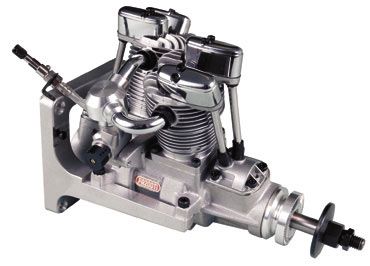 I converted mine to CDI & it cut fuel consumpsion to less than 1oz per minute W/15% Cool Power & still turns an 18 X 8 @ 8000 RPM..
I'm putting a 5.12 version of the Saito450R3 running the same CDI/methanol combo in my TF FW190A5 ARF.
http://www.youtube.com/watch?v=smY2G1_dDFI
I'm hoping to get the same fuel economy improvements & relative power & it sure will sound realistic in the Focke Wolf.
Non of my Saitos are "glow" engines they all run on methanol ignited by CH Ignitions CDI. I get 20-25% more HP than an equivelent "gas" engine & better fuel economy than GI versions.
Last edited by SrTelemaster150; 12-14-2013 at 09:24 PM.
12-14-2013 | 09:28 PM
#48
Senior Member
I find it funny though to see some guys in here going on and on about what is and isn't scale looking, while assembling an ARF, then throwing an electric motor in it! The irony is profound. Starting with the ARF itself. Then they will turn around and bash the sound of a 2s gas engine because of sound. Which is really just sour grapes with some of them. I know one guy personally, who posts in these threads, that has admitted to me he only runs electrics because he is scared of starting the engines. He would never admit that in the forums though.

I'm talking about rivets, weatering, the whole nine yards.
12-14-2013 | 09:44 PM
#49
My Feedback: (1)
That still does not justify it! I am a member there. And will probably do a build thread for an HE 100D after I finish my Stuka. I wonder how well electrics do in scale competition? The impression would be terrible, and that is what that is all about. The ones I have spoken with going E on those builds, do so mainly to minimize vibration to preserve the detail. Especially on the WW1 builds. Which is an honest justification. Otherwise, well you know how I feel.
12-15-2013 | 04:46 AM
#50
Senior Member
That still does not justify it! I am a member there. And will probably do a build thread for an HE 100D after I finish my Stuka. I wonder how well electrics do in scale competition? The impression would be terrible, and that is what that is all about. The ones I have spoken with going E on those builds, do so mainly to minimize vibration to preserve the detail. Especially on the WW1 builds. Which is an honest justification. Otherwise, well you know how I feel.
That brings about another characteristic of the big single cylinder gassers. Compared to a 4-stoke twin or radial, there's a lot more vibration. I haven't done the build on the FA512R3 yet, but both of my twins, the FA200Ti & FA300TTDP are very smooth, the 300 boxer more so than the 200 30°"V" twin.

