


MT 35cc fuel problem?
 01-11-2015 | 09:45 AM
#1
Thread Starter

Joined: Dec 2008
Posts: 780
Likes: 0
Received 0 Likes
on
0 Posts
From: Bremen, Germany
 MT 35cc fuel problem?
hey guys, im new to gas... been use to nitro planes...
this is my first gas engine, so not quite sure whats up... then engine is built into a Goldwing MX2 - 30cc size aircraft...
this afternoon I did two flights... first time I went invert and when I came out of it the engine cut... this sounds like a fuel
problem, but what can I do to fix this?
2nd run it also cut after some sideways movements... but also it was like the engine was missing... sound like "pappappppaap"
you know what I mean?
any thoughts or ideas?
thanks
this is my first gas engine, so not quite sure whats up... then engine is built into a Goldwing MX2 - 30cc size aircraft...
this afternoon I did two flights... first time I went invert and when I came out of it the engine cut... this sounds like a fuel
problem, but what can I do to fix this?
2nd run it also cut after some sideways movements... but also it was like the engine was missing... sound like "pappappppaap"
you know what I mean?
any thoughts or ideas?
thanks
 01-12-2015 | 07:03 AM
#2

I have a MT35 and it runs good. What I did to mine was I replaced the ignition with a rexcel and set the timing to 28 degrees btc that fixed a lot of problems also changed the spark plug and gaped to 20 you can also check your pluming for the fuel tank. make sure that the vent line has a loop around the fuel tank to prevent the fuel from siphon out. And adjust your carb (not like A glow engine) open the throttle all the open and adjust the high end needle to max rpm then bring it down to idle and adjust the low end to the highest rpm. Then move the throttle up if it bogs down and then picks up rpm its to rich on the low end lean it out, if it dies out its to lean open the low end needle ( adjustments on the needles should be about the 1/8 turn at a time wait a few seconds between each adjustments and try it again) Also there is a sticky in the gas engine forum ( gas engines for dummies) read that and read it again one more thing is to check the screen in the carb under the cover that has the one screw make sure its clean and use a felt fuel filter in the fuel tank and one in the fuel jug. also when you are done flying for the day do not run the engine dry like a glow engine just close the choke and let it die that keeps the rubber membrane in the carb from drying out and your fuel lines flexible that's what I do hope it helps you michael
01-12-2015 | 09:16 AM
#3
Thread Starter
Joined: Dec 2008
Posts: 780
Likes: 0
Received 0 Likes
on
0 Posts
From: Bremen, Germany
this is very helpful indeed michael, thanks...
one thing ( you gaped to 20 ) what do you mean by this? but yes thanks, I have been tuning the engine wrong also...
Ive been reading up on it, but what you described sounds good... It sounds like my engine is 4stroking, so I need
to set the LSN much leaner by sounds... also I need to take a look at the clunk in the tank if it flexes to all corners,
because of dead stick whilst invert...
one thing ( you gaped to 20 ) what do you mean by this? but yes thanks, I have been tuning the engine wrong also...
Ive been reading up on it, but what you described sounds good... It sounds like my engine is 4stroking, so I need
to set the LSN much leaner by sounds... also I need to take a look at the clunk in the tank if it flexes to all corners,
because of dead stick whilst invert...
01-12-2015 | 09:25 AM
#4
Thread Starter
Joined: Dec 2008
Posts: 780
Likes: 0
Received 0 Likes
on
0 Posts
From: Bremen, Germany
also please advise on my choke situation... look at pic, you see the groove there? its been grinding a groove
when I am not using choke because probably vibrating... now I have to have cowling off and push up from bottom
to get the golden plate up and over the groove to fully close air flow...
it was very difficult for me to mount a horn to choke it being a rear mounted and not side mount carb... the horn
also jumps off then I have to take my cowling off etc to put it back on...
do you have some pics or ideas as to how you mounted and get to choke yours? should that groove be there?
thanks
Last edited by Switch_639; 01-12-2015 at 09:29 AM.
 01-13-2015 | 03:04 PM
#6
I don't know what would be causing that grove. Is the screw tight on the choke plate? when you open the choke can you move the choke plate If you can then your screw is loose I would take the screw out making sure the plate stays the same and use lock tight on the screw, As far as my choke I have A servo mounted and I use A ball and socket on the choke arm I use it to choke the engine to start and kill the engine if something goes wrong. I use channel 5 on my radio and adjust the end point to set the throw I will try and get A picture of my set up In fact let me take A picture of the one I am working on now Its A dle 30 but should get the idea its a rear carb
01-13-2015 | 03:14 PM
#7
I don't know what would be causing that grove. Is the screw tight on the choke plate? when you open the choke can you move the choke plate If you can then your screw is loose I would take the screw out making sure the plate stays the same and use lock tight on the screw, As far as my choke I have A servo mounted and I use A ball and socket on the choke arm I use it to choke the engine to start and kill the engine if something goes wrong. I use channel 5 on my radio and adjust the end point to set the throw I will try and get A picture of my set up In fact let me take A picture of the one I am working on now Its A dle 30 but should get the idea its a rear carb
01-21-2015 | 02:34 PM
#10
Walbro Carb Tune up!
[TABLE]
[TR]
[TD="bgcolor: #ffffff"]
[/TR]
[/TABLE]
[TABLE]
[TR]
[TD="width: 710"]Walbro carbs aren't too difficult to tune up if you know what you're doing. First of all, you need to know how the carb works and how the settings interact with each other. About 95% of all the gas airplanes I've seen at the field are somewhat out of tune. How can I tell this? Simple, at some point the engines "four cycle" in flight. Two Cycle engines are not supposed to "four cycle" PERIOD. This is caused by a rich mixture that is forcing the sparkplug to intermittantly miss making it sound like a four stroke. This is not good. HOWEVER the good news is; gasoline two stroke engines are very very tollerant of rich settings (most of the time) and will run fine. You'll just consume a little more gasoline than necessary, and create a little more oil mess on your plane. You may eventually foul your spark plug as well. So why do so many people leave their engines tuned like this? Simple answer, the engine will start much easier when it's cold AND there's little or no warm up time needed prior to flying. Those are pretty good reasons! But the fact is... the engine is not running like it's supposed to. LET'S BEGIN:
All Walbro carbs have their own fuel pump, a needle & seat controlled by a float diaphragm, a highend and lowend needle set, and some have chokes, some don't. There are so many variations of Walbro carbs, it's ridiculous. I will restrict this editorial to the more common carbs found on airplane gasoline engines. This will include the WA, WB, WG, WT, WL, WS, WTL and a few others. While there's a substancial difference in these carbs, they share a common tune-up procedure.
FIRST and foremost, you need to know how the carb works and how the settings affect the running. Then you also need to know how to make the adjustments. You also need to know what is a correct tune, and what isn't. After that, it's free sailing!
Before you make any adjustments, you need to consider what's really going on and what part of the carb is being used at that time. There are a lot of functions going on within the carb and one or more functions can make the carb act strange. What could sound like a rich lowend needle setting could actually, and easily be a float setting on the needle & seat! A stiff diaphragm will make it run rich too. It could also make it run lean. The highend and lowend needles interact throughout the entire throttle range. So if you adjust one needle, you will likely need to adjust the other.
Let's begin with looking at the components of the carb:


 Then the fuel is regulated by the float diaphragm that controls the needle & seat.
 This carb is typically found on 50cc to 65cc engines.


[/TR]
[/TABLE]
[TR]
[TD="bgcolor: #ffffff"]
Walbro Carb TUNE UP & Illustrated Guide
[/TD][/TR]
[/TABLE]
[TABLE]
[TR]
[TD="width: 710"]Walbro carbs aren't too difficult to tune up if you know what you're doing. First of all, you need to know how the carb works and how the settings interact with each other. About 95% of all the gas airplanes I've seen at the field are somewhat out of tune. How can I tell this? Simple, at some point the engines "four cycle" in flight. Two Cycle engines are not supposed to "four cycle" PERIOD. This is caused by a rich mixture that is forcing the sparkplug to intermittantly miss making it sound like a four stroke. This is not good. HOWEVER the good news is; gasoline two stroke engines are very very tollerant of rich settings (most of the time) and will run fine. You'll just consume a little more gasoline than necessary, and create a little more oil mess on your plane. You may eventually foul your spark plug as well. So why do so many people leave their engines tuned like this? Simple answer, the engine will start much easier when it's cold AND there's little or no warm up time needed prior to flying. Those are pretty good reasons! But the fact is... the engine is not running like it's supposed to. LET'S BEGIN:
All Walbro carbs have their own fuel pump, a needle & seat controlled by a float diaphragm, a highend and lowend needle set, and some have chokes, some don't. There are so many variations of Walbro carbs, it's ridiculous. I will restrict this editorial to the more common carbs found on airplane gasoline engines. This will include the WA, WB, WG, WT, WL, WS, WTL and a few others. While there's a substancial difference in these carbs, they share a common tune-up procedure.
FIRST and foremost, you need to know how the carb works and how the settings affect the running. Then you also need to know how to make the adjustments. You also need to know what is a correct tune, and what isn't. After that, it's free sailing!
Before you make any adjustments, you need to consider what's really going on and what part of the carb is being used at that time. There are a lot of functions going on within the carb and one or more functions can make the carb act strange. What could sound like a rich lowend needle setting could actually, and easily be a float setting on the needle & seat! A stiff diaphragm will make it run rich too. It could also make it run lean. The highend and lowend needles interact throughout the entire throttle range. So if you adjust one needle, you will likely need to adjust the other.
Let's begin with looking at the components of the carb:
Starting from the gas tank, the fuel is pumped to the carb through the inlet. The fuel works its way through the fuel pump through a little diaphragm pump which is controlled by 2 one way valves (little flaps). The fuel then passes through a needle & seat that is controlled by the "float" diaphragm. The "float" diaphragm manages how much fuel is available for the idle, low-speed, and high-speed throttle positions, by opening & closing a passage utilizing a small lever attached to the needle. The fuel is then "standing by" in the float cavity area waiting for a vacuum signal at the various jets. The lever setting is very critical since it controls the available fuel to the jets. If the lever is too low, the engine will run lean, if the lever is too high, the engine will run very rich and will likely flood out at idle. The fuel starts its journey through the pump assembly first...
Then the fuel is regulated by the float diaphragm that controls the needle & seat.All of these parts reside in the float cavity area as well as the fuel ready to be fed through the jets as needed. The amout of fuel available in the cavity is regulated by the lever and its relationship to the float diaphragm. So it's critical that the lever be set properly.Within the cavity, there are distribution holes that are managed by the lowend and highend needles. Plus the idle circuit, which is a fixed size. SPECIAL NOTES 1) The lowend needle is ALWAYS the one closest to the engine, the highend needle is the closest one to the intake/choke.(2) Both lowend AND highend needles feed the topend fuel supply.Let's tune up a Walbro!Set the lowend & highend needles to about 1 3/4 to 2 turns each. Choke the carb or prime it, until the carb is wet. Fire up the engine and let it warm up. Let's set the topend first since it's the easier of the two. Go to full throttle. Adjust the topend needle for peak RPM. Leave it wide open for about a minute to see if it changes any. Should the engine go lean, open the lowend needle slightly, if this dosen't work... you will have to adjust the needle valve inside the carb.( I will explain this later) If the topend runs OK, then slowly pull the throttle down until the engine begins to "four cycle" hold the throttle there. Adjust the lowend needle until the "four cycling" barely stops. Now lower the throttle more until it "four cycles" again, and adjust the lowend again. Keep doing this until you reach full idle. Now, from full idle begin to throttle up until the engine starts to bog or hesitate. Open up the lowend needle just enough to eliminate the bog or hesitation. When this is done right, you will be able to set the throttle in any position and it won't four cycle, plus you will be able to transition from idle to full power without any hesitation at all. Now, for easy starting it's best to have the lowend a little rich and it will four-stroke a little.TYPICAL PROBLEMS encountered in Walbro carbs:The float diaphragm will go bad occasionally and reap havoc on tuning, especially the lowend and idle.The internal needle valve WILL leak when they get old or worn out. If you notice gas dripping from your carb, or if the idle gets unreliable, replace the needle valve and adjust the lever even with (or slightly below) the carb housing if you don't have a gauge.The fuel pump membrane gets stretched and/or sometimes hardens from the gas. It needs to be replaced occasionally. If your pump doesn't pump properly, (1) it will be hard to start (2) it will tend to run lean, and opening the needles won't help much if any.Erratic idle, or no idle is often traced to a bad internal needle valve, bad float diaphragm, bad pump, and most common... crap in the carb. You may also have an air leak! Things to know...There are three types of fuel pump membranes available. The black one is the rubberized fiber, the Beige one is fiberglass based, and the blue one is Acetate. They all work well, but the black one moves more gas than the others but it wears out the fastest. The Beige one works best if you use methanol fuel and is reasonably durable. The Blue Acetate is the most durable but pumps the least fuel. All Walbro carbs will run in any position, but they tune "best" as a sidedraft carb. The down draft position tends to run a little rich at idle, and the updraft tends to run a little lean at idle. No big deal though, it's easily tuned none the less.This photo depicts one of Walbro's premier carbs, having a large bore and equipped with a highspeed check valve and external fuel pump pulse inlet.
1) The lowend needle is ALWAYS the one closest to the engine, the highend needle is the closest one to the intake/choke.(2) Both lowend AND highend needles feed the topend fuel supply.Let's tune up a Walbro!Set the lowend & highend needles to about 1 3/4 to 2 turns each. Choke the carb or prime it, until the carb is wet. Fire up the engine and let it warm up. Let's set the topend first since it's the easier of the two. Go to full throttle. Adjust the topend needle for peak RPM. Leave it wide open for about a minute to see if it changes any. Should the engine go lean, open the lowend needle slightly, if this dosen't work... you will have to adjust the needle valve inside the carb.( I will explain this later) If the topend runs OK, then slowly pull the throttle down until the engine begins to "four cycle" hold the throttle there. Adjust the lowend needle until the "four cycling" barely stops. Now lower the throttle more until it "four cycles" again, and adjust the lowend again. Keep doing this until you reach full idle. Now, from full idle begin to throttle up until the engine starts to bog or hesitate. Open up the lowend needle just enough to eliminate the bog or hesitation. When this is done right, you will be able to set the throttle in any position and it won't four cycle, plus you will be able to transition from idle to full power without any hesitation at all. Now, for easy starting it's best to have the lowend a little rich and it will four-stroke a little.TYPICAL PROBLEMS encountered in Walbro carbs:The float diaphragm will go bad occasionally and reap havoc on tuning, especially the lowend and idle.The internal needle valve WILL leak when they get old or worn out. If you notice gas dripping from your carb, or if the idle gets unreliable, replace the needle valve and adjust the lever even with (or slightly below) the carb housing if you don't have a gauge.The fuel pump membrane gets stretched and/or sometimes hardens from the gas. It needs to be replaced occasionally. If your pump doesn't pump properly, (1) it will be hard to start (2) it will tend to run lean, and opening the needles won't help much if any.Erratic idle, or no idle is often traced to a bad internal needle valve, bad float diaphragm, bad pump, and most common... crap in the carb. You may also have an air leak! Things to know...There are three types of fuel pump membranes available. The black one is the rubberized fiber, the Beige one is fiberglass based, and the blue one is Acetate. They all work well, but the black one moves more gas than the others but it wears out the fastest. The Beige one works best if you use methanol fuel and is reasonably durable. The Blue Acetate is the most durable but pumps the least fuel. All Walbro carbs will run in any position, but they tune "best" as a sidedraft carb. The down draft position tends to run a little rich at idle, and the updraft tends to run a little lean at idle. No big deal though, it's easily tuned none the less.This photo depicts one of Walbro's premier carbs, having a large bore and equipped with a highspeed check valve and external fuel pump pulse inlet. This carb is typically found on 50cc to 65cc engines. Now let's talk about the pulse signal for the fuel pump...
Your ENGINE will determine which pulse inlet type you need! If the engine "carb base" has a hole drilled into the crankcase you will use the STANDARD pulse port and the optional (if you have it) port must be closed off. If there's no hole drilled, you will find a fitting located somewhere on your crankcase. Use a piece of fuel line to connect the crankcase fitting to the fitting on the optional pulse inlet. There's no need to block off the standard port, as it's already blocked off by the engine mounting.The carb must get a pulse signal from the engine! This signal "pushes and pulls" on the pump diaphragm which feeds the carb fuel.Now let's check out the "float needle & seat" setting.
This is the single most critical setting on a Walbro carb! Walbro offers a "setting gauge" to properly set the height of the lever for your particular carb. If you don't have one, the setting will be a trial & error adjustment and a real pain in the butt since you have to open up the carb to make the adjustment. For general purposes, the lever will be almost perfectly parallel to the carb base. This will get you close. If the lever is too high, your engine will tend to run a little erratic at idle. If the lever is too low, your idle will be OK but it will tend to run lean on midrange and highend. It may also run the float cavity "dry" at full throttle and die, regardless of your highspeed /lowspeed needle settings.The needle valve seat is pressed into the carb base, and you should not remove this without having the correct tools and setting gauges. Do not remove it! Typical PROBLEMS POSSIBLE solutions
[TABLE]
[TR]
[TD="width: 259"]The engine stalls when accellerated[/TD]
[TD="width: 480"]Highend needle way too lean, or lowend needle slightly lean[/TD]
[/TR]
[TR]
[TD="width: 259"]Four strokes as fast idle, mid RPM[/TD]
[TD="width: 480"]Lowend needle too rich, float diaphragm needle lever slightly too high[/TD]
[/TR]
[TR]
[TD="width: 259"]Engine goes lean in flight[/TD]
[TD="width: 480"]Highend needle slightly lean AND lowend needle is rich, float needle lever may be set too low[/TD]
[/TR]
[TR]
[TD="width: 259"]Engine goes rich in flight[/TD]
[TD="width: 480"]this is a special problem with cowled in engines. the float diaphragm cover vent will need work (SEE NOTE 1)[/TD]
[/TR]
[TR]
[TD="width: 259"]Engine runs good, but no idle at all[/TD]
[TD="width: 480"]There's crap in the idle jets, the carb will have to be removed and cleaned. You may also have an air leak at the base of the carb. The throttle butterfly could be damaged or worn out. [/TD]
[/TR]
[TR]
[TD="width: 259"]carb leaks fuel when not running[/TD]
[TD="width: 480"]float needle is bad or has crap stuck in it, or the float lever setting may be too high, or the float diaphragm is bad.[/TD]
[/TR]
[TR]
[TD="width: 259"]My engine four cycles momentarily when I back off the throttle, then runs normal [/TD]
[TD="width: 480"]This is perfectly normal for carbs NOT equipped with a "check valve" highspeed jet. If you do have the check valve, then your float needle setting is slightly too high, or your float needle is leaking a little.(SEE NOTE 2) [/TD]
[/TR]
[TR]
[TD="width: 259"]the fuel leaks back into the gas tank when it isn't running[/TD]
[TD="width: 480"]Bad fuel pump membrane, or an air leak in the fuel line at the carb[/TD]
[/TR]
[/TABLE]

[TR]
[TD="width: 259"]The engine stalls when accellerated[/TD]
[TD="width: 480"]Highend needle way too lean, or lowend needle slightly lean[/TD]
[/TR]
[TR]
[TD="width: 259"]Four strokes as fast idle, mid RPM[/TD]
[TD="width: 480"]Lowend needle too rich, float diaphragm needle lever slightly too high[/TD]
[/TR]
[TR]
[TD="width: 259"]Engine goes lean in flight[/TD]
[TD="width: 480"]Highend needle slightly lean AND lowend needle is rich, float needle lever may be set too low[/TD]
[/TR]
[TR]
[TD="width: 259"]Engine goes rich in flight[/TD]
[TD="width: 480"]this is a special problem with cowled in engines. the float diaphragm cover vent will need work (SEE NOTE 1)[/TD]
[/TR]
[TR]
[TD="width: 259"]Engine runs good, but no idle at all[/TD]
[TD="width: 480"]There's crap in the idle jets, the carb will have to be removed and cleaned. You may also have an air leak at the base of the carb. The throttle butterfly could be damaged or worn out. [/TD]
[/TR]
[TR]
[TD="width: 259"]carb leaks fuel when not running[/TD]
[TD="width: 480"]float needle is bad or has crap stuck in it, or the float lever setting may be too high, or the float diaphragm is bad.[/TD]
[/TR]
[TR]
[TD="width: 259"]My engine four cycles momentarily when I back off the throttle, then runs normal [/TD]
[TD="width: 480"]This is perfectly normal for carbs NOT equipped with a "check valve" highspeed jet. If you do have the check valve, then your float needle setting is slightly too high, or your float needle is leaking a little.(SEE NOTE 2) [/TD]
[/TR]
[TR]
[TD="width: 259"]the fuel leaks back into the gas tank when it isn't running[/TD]
[TD="width: 480"]Bad fuel pump membrane, or an air leak in the fuel line at the carb[/TD]
[/TR]
[/TABLE]
NOTE 1:
A very common problem with cowled in engines is, the air pressure in flight changes the "natural" pressure on the float diaphragm. This causes the engine to run rich in flight. There are several possible fixes available. Most of the time you can simply tune your engine for flight by trial & error. However, the easiest fix is to open up the cowling around the carb area to lower the air pressure. You may also rotate the cover to different positions to see if that works. The "BEST" fix is to solder a piece of brass tubing where the vent is, and route the vent line to a better location. I normally route it into the fuse going through the firewall. It works perfectly every time! Plus, your ground tune doesn't change in flight!
A very common problem with cowled in engines is, the air pressure in flight changes the "natural" pressure on the float diaphragm. This causes the engine to run rich in flight. There are several possible fixes available. Most of the time you can simply tune your engine for flight by trial & error. However, the easiest fix is to open up the cowling around the carb area to lower the air pressure. You may also rotate the cover to different positions to see if that works. The "BEST" fix is to solder a piece of brass tubing where the vent is, and route the vent line to a better location. I normally route it into the fuse going through the firewall. It works perfectly every time! Plus, your ground tune doesn't change in flight!
NOTE 2
Carbs equipped with the highspeed check valve are greatly superior for flying aerobatics, or flying whereby the throttle will be used extensively. The check valve prevents jet dripping when you back off the throttle. That's all it does...
Straight through (non-check valved) jets always drip a little fuel while the throttle is being backed off, and causes a momentary four stroking of the engine until the jet stabilizes to the new air flow rate. This is completly normal.
Carbs equipped with the highspeed check valve are greatly superior for flying aerobatics, or flying whereby the throttle will be used extensively. The check valve prevents jet dripping when you back off the throttle. That's all it does...
Straight through (non-check valved) jets always drip a little fuel while the throttle is being backed off, and causes a momentary four stroking of the engine until the jet stabilizes to the new air flow rate. This is completly normal.
Converting a Walbro carb from gasoline to methanol:
Most Walbro carbs will tollerate methanol without modification as long as you keep the nitro content low, less than 10%. If it doesn't tune properly, some modifications will be necessary. The fuel flow rate within the carb will have to be increased The float needle & seat needs work first. Bore out the seat 25% larger than its existing size and raise the float lever up about .040 inch. Try the carb out. If it still doesn't take a steady tune, then bore out the lowend & highend needle orifaces 25% larger than its original size. This should do the job. The flow-rate of methanol is much higher than gasoline.
* * * SPECIAL NOTES * * *
(1) I would like to note at this time, that a properly tuned bottom-end will not "kill" the engine when the carb is pulled to 100% closed. This is typical for Walbro's as most (but not all) Walbro's have an air-bleed notch or vent hole in the butterfly. You can solder the vent closed if you want carb kill capability. (2) The diaphragm (needle & seat) setting is critical. If you are not familiar with this setting, leave it alone!(3) I would also like to cover two other possibilities that would make your carb "APPEAR" to be out of tune. One is carb size. If the carb is too big for the prop/engine combination, it will not tune up properly and be erratic and un-reliable. The other is engine timing! IF your timing is too low it will make the carb appear out of tune! This is often over-looked and will cause you to tinker with the carb and you'll never get it running right. I've found that 30 to 32 degrees works best for bigger carbs and or bigger props.
Copyright © 2007 M. B. Fuess
[/TD][/TR]
[/TABLE]
01-27-2015 | 01:59 AM
#11
Thread Starter
Joined: Dec 2008
Posts: 780
Likes: 0
Received 0 Likes
on
0 Posts
From: Bremen, Germany
next problem...
I haven't been able to get it to idle... I have even replaced the diaphragm with a walbro WT carb kit...
it will start run for a short while and then die... it doesn't even give me a chance to tune... then after
it dies its not possible to start again unless I choke it...
if fuel isn't being pumped unless I choke what can I check?
needle settings are on 1.5 turns out on both H and L needles...
I don't know what to do anymore but purchase a new carburator...
any help suggestions?
I haven't been able to get it to idle... I have even replaced the diaphragm with a walbro WT carb kit...
it will start run for a short while and then die... it doesn't even give me a chance to tune... then after
it dies its not possible to start again unless I choke it...
if fuel isn't being pumped unless I choke what can I check?
needle settings are on 1.5 turns out on both H and L needles...
I don't know what to do anymore but purchase a new carburator...
any help suggestions?
Last edited by Switch_639; 01-27-2015 at 02:01 AM.
01-27-2015 | 06:45 AM
#12
My Feedback: (13)
Joined: Jul 2004
Posts: 1,462
Likes: 0
Received 0 Likes
on
0 Posts
From: berlin hts,
OH
I had a MT57 for a very short time,but one thing I had to do was to replace the carb.and this was after rebuilding the original,it ran and started much better,but still vibrated like a dog shi!!ing bones.
01-27-2015 | 08:20 AM
#13
Thread Starter
Joined: Dec 2008
Posts: 780
Likes: 0
Received 0 Likes
on
0 Posts
From: Bremen, Germany
oh man, I really don't want to spend money to swop one out... I think there must be something that I am missing... I didn't really touch anything in the carb, just cleaned the jet which was blocking fuel into engine...
01-27-2015 | 08:30 AM
#14

Senior Member
My Feedback: (4)
Joined: Jan 2004
Posts: 2,251
Likes: 0
Received 0 Likes
on
0 Posts
From: Blackfoot ,
ID
Switch try opening up the low end needle 1/2-1 turn and see if that won't help get the engine to idle . Then adjust the High Speed needle from there, then go back after the HSN is set and redo the low end. Also the vent plate mod is a very good one in my book, all of my engine's get it weather they need it or not just in case. Oh do make sure the screen is clean, if that gets partially plugged up it can cause idle problems plus other issue's.
01-27-2015 | 09:01 AM
#15
Thread Starter
Joined: Dec 2008
Posts: 780
Likes: 0
Received 0 Likes
on
0 Posts
From: Bremen, Germany
screen is clean, made sure of that... i've been as far out as 2 turns on the LSN also... my main concern is why does the engine die if I open the choke? as long as I am choking the engine will run, but its like fuel stops to flow if I let go of the choke
01-27-2015 | 04:55 PM
#16
sounds like you have an air leak. Check the carb gasket and the heat dam gasket any tear in those places will cause the carb not to draw fuel. A good way to check is to close the choke and rock the prop back and forth on the compression side and see if it draws fuel from the tank if it does stop rocking the prop and see what the fuel in the line is doing is it staying there or is it going back to the tank I just went thru this this weekend turned out to be the carb base gasket had a small tear around the mounting hole and make sure that your little holes in the gasket line up with the hole in the heat dame and the carb that is your pulse port which creates vacuum to operate the the carb fuel pump look at the diagram I sent IT does not show the heat dam Its the plastic piece the carb bolts to should have A gasket under it and one for the carb Michael
01-28-2015 | 02:02 AM
#17
Thread Starter
Joined: Dec 2008
Posts: 780
Likes: 0
Received 0 Likes
on
0 Posts
From: Bremen, Germany
i've sealed now everything with gasket glue, I even took off the backplate and cleaned the reed valves... sealed the back plate up again, got a new gasket for the carb where its mounted on the engine... if after this it doesn't pump fuel its helping me start a fire on friday night!
01-28-2015 | 03:01 AM
#19
Thread Starter
Joined: Dec 2008
Posts: 780
Likes: 0
Received 0 Likes
on
0 Posts
From: Bremen, Germany
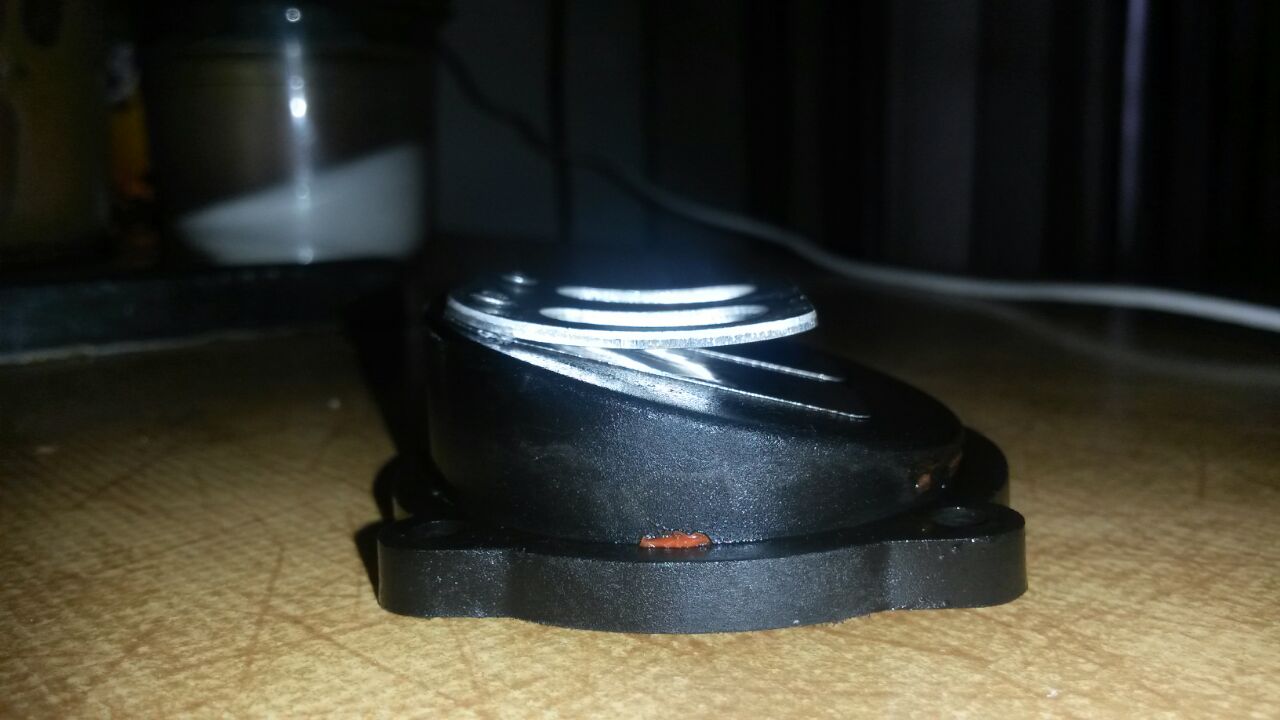
no they aint, is that a problem? they are angled ... but I saw the problem now! it was so clear... after I fitted the carb with a new gasket and tightened it, I saw the carb was skew on the backplate... the one bolt I could turn it so tight it pulled it away from engine so not flush anymore as I could see also light pass through... I added some gasket glue to it, seems there's no light I can see pass through... else I would need to purchase a new backplate...
Last edited by Switch_639; 01-28-2015 at 07:07 AM.
01-28-2015 | 02:32 PM
#20
that would cause an air leak. is the gasket glue you are using fuel proof if not you might need a new back plate. and you don't need to screw the carb bolt down to tight just snug remember its plastic you are screwing into you can seal the back plate up with high temp (red) gasket sealer
01-28-2015 | 07:25 PM
#21
Thread Starter
Joined: Dec 2008
Posts: 780
Likes: 0
Received 0 Likes
on
0 Posts
From: Bremen, Germany
the backplate has never been off, must have come like this with the engine... do you know where I can find spare parts for this engine online? I will phone the hobbyshop I got it from but I am not optimistic. I would like to get a new back plate in any case because the carburetor will never be flush now if I don't use gasket glue...
01-29-2015 | 02:01 AM
#23
is it not fun it figure things out. This hobby makes a person think and in this day and age with all the computers and electronics we tend to forget the basics glad you got it running michael
 02-03-2015 | 10:15 AM
#25
Thread Starter
Joined: Dec 2008
Posts: 780
Likes: 0
Received 0 Likes
on
0 Posts
From: Bremen, Germany
small video of my victory  haven't flown it yet again but will get a chance tomorrow
https://www.youtube.com/watch?v=p4OmNho3Pic&feature=youtu.be
haven't flown it yet again but will get a chance tomorrowhttps://www.youtube.com/watch?v=p4OmNho3Pic&feature=youtu.be

