


View Poll Results: A poll


OS 95


0
0%


OS95 FS(V)


0
0%
Voters: 60. You may not vote on this poll
Select engine(s) if had to replace bearins in less than a year

 10-28-2011 | 07:35 PM
#102

 RE: OS 46/55 bearings bad again!
I wasn't able to locate the original thread this message was posted in, but I had saved it on my PC, I had almost given up finding it as I lost it on my PC. It is a interesting thought about why bearings wouls fail and brought up some things I hadn't thought about before.

As posted by Konrad:
There are predominately two types of bearing failures. First type of failure is over loading as a result of poor size and type. This kind of failure would need to be discussed in context with individual model types.
Please note that as the contact area is increased (ether by design or overload) the skidding across the ball increases causing heat build up with the eventual spalling of the ball. This is because of the different surface speeds on the balls surface as a function of the radius distance away from the axis of rotation.
The real concern in our toy engines is corrosion, and galvanic corrosion to be specific. In our engines we have a ferrous steel (bearings and crankshafts) in an aluminum case. These dissimilar materials combined with moisture effectively make a battery. This battery action accelerates corrosion both in the aluminum and ferrous material. Now just about all our toy engines are made from aluminum and ferrous materials. So why does the OS engine fail bearing at a higher rate than some other quality engine? Well it has to do with the aluminum alloy OS uses. OS has chosen an alloy that is both easy to injection mold and machine. Better engine companies such as Rossi use an alloy that is a little more difficult (not much) but has a lot higher tool wear rate. This alloy makes for a much stiffer stronger case with the down side of added machining cost as a result of needing to change out the cutting bit more often. Rossi and many of the other higher quality engine manufactures have chosen an alloy that is better suited for us the end user than the demands of the manufacture.
So what does this have to do with the rusted bearings? Well the aluminum alloy OS use is very prone to galvanic corrosion. This galvanic corrosion is what corrodes the OS bearings. So the root cause for OS’s high corrosion rate of her bearings isn’t so much the bearing material as it is the aluminum used in the crankcase.
Now some of you will say, but after I change my failed OS bearings with brand X the new brand X bearings last a lot longer. This often is very true. The reason for the second set of bearing to last longer is because as aluminum ages (corrodes) it develops an aluminum oxide on the surface. This aluminum oxide inhibits galvanic corrosion to some extent. So older used crankcase don’t corrode the bearing as fast as newly machined OS cases. A simple and effective fix would be if OS would Alodine the cases after machining. (Alodine is a controlled oxide process) This won’t happen as Alodine has chromic acid in it’s make up. Now the uncontrolled oxidation from the galvanic corrosion process is all fine and dandy until it gets so thick as to start to come off the surface. This liberated aluminum oxide will fail bearings, as aluminum oxide is one of the harder abrasives. So while a microscopically thin layer of aluminum oxide is good too much of a good thing is bad! So I contend that OS is blaming the end user for failed bearing when the root cause is the aluminum alloy of her casting.
Also a contributor to early bearing failure is that OS allows synthetic oils. If OS is going to allow the use of fuel that use synthetic lube the engine should be designed for it. In the old days we used almost castor oil exclusively. Engines run on castor oil showed very little corrosion issues. These older engines used bearing often made from SAE 52100 steel. This makes a great inexpensive low temperature (350°F) bearing. But is very susceptible to corrosion. The use of 440c stainless steel is often called out for bearing in a corrosive environment. The problem with 440C SS is that only has about 80% the dynamic load capacity of SAE 52100 steel. So if the original design has marginal dynamic load margins the use of stainless steel bearing is not recommended unless the bearing pocket is made larger to accommodate the proper dynamically spec stainless steel bearing. In the two examples I gave earlier I machined the bearing pockets, in my engines that hadn’t been destroyed, to allow for a bigger bearing.
Just a side note I picked on Rossi in this post because “Broken Wing” made a false claim in the earlier thread that they were out of business. Please don’t take my comments about Rossi as an endorsement of Rossi over many of the other high quality engine suppliers for truly high performance engines.
Also the use of the term synthetic oil is very broad. I will have to admit I’ve seen very little corrosion in "properly designed" (I'll leave that term undefined) model engine when run on Power Master fuels.
There are predominately two types of bearing failures. First type of failure is over loading as a result of poor size and type. This kind of failure would need to be discussed in context with individual model types.
Please note that as the contact area is increased (ether by design or overload) the skidding across the ball increases causing heat build up with the eventual spalling of the ball. This is because of the different surface speeds on the balls surface as a function of the radius distance away from the axis of rotation.
The real concern in our toy engines is corrosion, and galvanic corrosion to be specific. In our engines we have a ferrous steel (bearings and crankshafts) in an aluminum case. These dissimilar materials combined with moisture effectively make a battery. This battery action accelerates corrosion both in the aluminum and ferrous material. Now just about all our toy engines are made from aluminum and ferrous materials. So why does the OS engine fail bearing at a higher rate than some other quality engine? Well it has to do with the aluminum alloy OS uses. OS has chosen an alloy that is both easy to injection mold and machine. Better engine companies such as Rossi use an alloy that is a little more difficult (not much) but has a lot higher tool wear rate. This alloy makes for a much stiffer stronger case with the down side of added machining cost as a result of needing to change out the cutting bit more often. Rossi and many of the other higher quality engine manufactures have chosen an alloy that is better suited for us the end user than the demands of the manufacture.
So what does this have to do with the rusted bearings? Well the aluminum alloy OS use is very prone to galvanic corrosion. This galvanic corrosion is what corrodes the OS bearings. So the root cause for OS’s high corrosion rate of her bearings isn’t so much the bearing material as it is the aluminum used in the crankcase.
Now some of you will say, but after I change my failed OS bearings with brand X the new brand X bearings last a lot longer. This often is very true. The reason for the second set of bearing to last longer is because as aluminum ages (corrodes) it develops an aluminum oxide on the surface. This aluminum oxide inhibits galvanic corrosion to some extent. So older used crankcase don’t corrode the bearing as fast as newly machined OS cases. A simple and effective fix would be if OS would Alodine the cases after machining. (Alodine is a controlled oxide process) This won’t happen as Alodine has chromic acid in it’s make up. Now the uncontrolled oxidation from the galvanic corrosion process is all fine and dandy until it gets so thick as to start to come off the surface. This liberated aluminum oxide will fail bearings, as aluminum oxide is one of the harder abrasives. So while a microscopically thin layer of aluminum oxide is good too much of a good thing is bad! So I contend that OS is blaming the end user for failed bearing when the root cause is the aluminum alloy of her casting.
Also a contributor to early bearing failure is that OS allows synthetic oils. If OS is going to allow the use of fuel that use synthetic lube the engine should be designed for it. In the old days we used almost castor oil exclusively. Engines run on castor oil showed very little corrosion issues. These older engines used bearing often made from SAE 52100 steel. This makes a great inexpensive low temperature (350°F) bearing. But is very susceptible to corrosion. The use of 440c stainless steel is often called out for bearing in a corrosive environment. The problem with 440C SS is that only has about 80% the dynamic load capacity of SAE 52100 steel. So if the original design has marginal dynamic load margins the use of stainless steel bearing is not recommended unless the bearing pocket is made larger to accommodate the proper dynamically spec stainless steel bearing. In the two examples I gave earlier I machined the bearing pockets, in my engines that hadn’t been destroyed, to allow for a bigger bearing.
Just a side note I picked on Rossi in this post because “Broken Wing” made a false claim in the earlier thread that they were out of business. Please don’t take my comments about Rossi as an endorsement of Rossi over many of the other high quality engine suppliers for truly high performance engines.
Also the use of the term synthetic oil is very broad. I will have to admit I’ve seen very little corrosion in "properly designed" (I'll leave that term undefined) model engine when run on Power Master fuels.
10-29-2011 | 04:57 AM
#103

 RE: OS 46/55 bearings bad again!
The writer of the article seems to think galvanic corrosion is hurting the bearings. We used to chromate all of our aluminum parts at work for military and commercial applications. That is likely similar to the alodine process. I don't think corrosion would do too much to the bearings myself because the fuel is getting flushed out so quickly and the aluminum is not touching the balls or race. I was always under the impression that the blue anodising of the motors wouldn't let the heat escape as good as the bare alum. but maybe there was another reason for this. The inside is not done though.
10-29-2011 | 07:28 AM
#104


My Feedback: (3)
RE: OS 46/55 bearings bad again!
Everyone should use caution and skepticism as the quote is from Konrad, who was banned mostly for his manufacturer bashing tirades. His claims of experience was questionable, and some of his statements were simply wrong.
I edited some of his typical OS bashes out of the quote.
I edited some of his typical OS bashes out of the quote.
10-29-2011 | 12:58 PM
#105
RE: OS 46/55 bearings bad again!
Here is a neat article about bearing wear and corrosion.
http://www.vibanalysis.co.uk/technic...0as%20follows:
SKF bearings had this to say about corrosion:
http://www.skf.com/portal/skf/home/p...aincatalogue=1
I am still looking for references for this statement made here, where they state that a aluminum mast must be insulated from the stainless steel fittings, etc. But I think they meant the dissimilar metals leading to galvanic corrosion.
http://www.etrailer.com/question-13896.html
I also ran across this interesting article that can be used to help identify the cause of a bearing failure. Granted it is after the fact, but maybe it will help.
http://www.applied.com/site.cfm/Bear...y_Hold_Key.cfm
http://www.vibanalysis.co.uk/technic...0as%20follows:
SKF bearings had this to say about corrosion:
http://www.skf.com/portal/skf/home/p...aincatalogue=1
I am still looking for references for this statement made here, where they state that a aluminum mast must be insulated from the stainless steel fittings, etc. But I think they meant the dissimilar metals leading to galvanic corrosion.
http://www.etrailer.com/question-13896.html
I also ran across this interesting article that can be used to help identify the cause of a bearing failure. Granted it is after the fact, but maybe it will help.
http://www.applied.com/site.cfm/Bear...y_Hold_Key.cfm
10-30-2011 | 08:48 AM
#106
 RE: OS 46/55 bearings bad again!
There are a couple of things about galvanic corrosion that blows kionrads theory out of the water.
1. Galvanic corrosion occurs where disimilar metals are touching. So the corrosion would not occur at the surface of the race, but where the steel is contacting the aluminum case.
2. Galvanic corrosion always causes the less noble metat to corrode while protecting the more noble metal. In pipelines sacfrifical anodes are connected to the pipe at regular intervals. They are usually zinc and the zinc corrodes requiring them to be dug up and replaced at regular intervals. In the case of steel bearings of any grade steel and a aluminum case the aluminum is the less noble metal and the one that will corrode.
1. Galvanic corrosion occurs where disimilar metals are touching. So the corrosion would not occur at the surface of the race, but where the steel is contacting the aluminum case.
2. Galvanic corrosion always causes the less noble metat to corrode while protecting the more noble metal. In pipelines sacfrifical anodes are connected to the pipe at regular intervals. They are usually zinc and the zinc corrodes requiring them to be dug up and replaced at regular intervals. In the case of steel bearings of any grade steel and a aluminum case the aluminum is the less noble metal and the one that will corrode.
 10-30-2011 | 11:01 AM
#108
RE: OS 46/55 bearings bad again!
I ran across a nice article about the different ball bearing metal and plastic alloys they use and where they use them.
http://www.precisionballs.com/ball_m..._selection.htm
Now then in this article they state that steel corrosion will increase in contact with a more anodic metal such as copper. So the effect may still happen with the ball bearings.Also the ball bearings are made from a different steel alloy than the races are and then there is the bearing cage alloys to consider as well. So we wind up with several different metals in contact with each other. Throw in some combustion byproducts, raw fuel residue and some moisture and we have a recipe for corrosion to occur. ref http://www.dieselduck.ca/machine/04%.../corrosion.htm
The example they mentioned was having a steel bolt fastening a copper plate to the hull of a boat. The steel bolt would corrode very rapidly in that environment. You would normally think that the copper plate would corrode faster but instead it was the steel bolt that rusted away.
But then it may all hinge on that the company spec'd the wrong bearings to be used in their engines, or they wound up getting a bad batch of bearings that they should not have used in the first place.
Now one other thought is where they use a iron anode to protect copper. Hummm. So if the aluminum alloy has copper as one of alloying metals then that could be the problem.
ref http://en.wikipedia.org/wiki/Galvanic_anode
I would not normally think of this as being a problem unless the steel used in the bearings is a pretty low quality steel. But maybe it is the bearing cages that are lower quality or something since usually people report the bearing cage has come apart on them. </p></font><font face="Trebuchet MS">
</p></font>
http://www.precisionballs.com/ball_m..._selection.htm
Now then in this article they state that steel corrosion will increase in contact with a more anodic metal such as copper. So the effect may still happen with the ball bearings.Also the ball bearings are made from a different steel alloy than the races are and then there is the bearing cage alloys to consider as well. So we wind up with several different metals in contact with each other. Throw in some combustion byproducts, raw fuel residue and some moisture and we have a recipe for corrosion to occur. ref http://www.dieselduck.ca/machine/04%.../corrosion.htm
The example they mentioned was having a steel bolt fastening a copper plate to the hull of a boat. The steel bolt would corrode very rapidly in that environment. You would normally think that the copper plate would corrode faster but instead it was the steel bolt that rusted away.
But then it may all hinge on that the company spec'd the wrong bearings to be used in their engines, or they wound up getting a bad batch of bearings that they should not have used in the first place.
<font face="Trebuchet MS">
Designers who want to prevent corrosion usually like to make structures and devices out of corrosion resistant materials. However, they may not consider the interaction between the different materials that they choose. For example, some aluminum alloys do not corrode very fast in seawater, and are used for boat hulls. Some bronze alloys also do not corrode very fast in seawater, and are used for propellers. As long as the propeller does not come in electrical contact with the hull, everything works well. But if the two come in contact through a bearing, gearing, or the boat engine itself, the galvanic series tells us what will happen. The aluminum is very negative compared to the bronze, so the electrical contact will cause the aluminum hull to be an anode and its corrosion rate to increase, causing heavy pitting and eventual failure of the aluminum hull.</p>
The galvanic series tells us that the more negative metal will corrode more quickly when electrically coupled in seawater, but not how fast. Two metals far apart in the series will not necessarily experience more corrosion than two metals close together. Finding the rate of corrosion in a galvanic couple requires knowledge of polarization, the ability of a metal to change voltage while accepting or giving up a certain amount of electrons. A metal that polarizes easily, that changes voltage quickly with a small amount of current, will not cause much corrosion of metals coupled to it. It also will not have much increase in corrosion when it is the anode in a couple. An example of a metal that polarizes easily in seawater is titanium. Metals that are harder to polarize, such that it is hard to change their voltage when current is applied, will cause or experience a lot of galvanic corrosion, depending on the other metal in the couple. Examples of metals that are hard to polarize include copper alloys and some aluminum alloys. So, a piece of aluminum will corrode faster if it is coupled to hard-to-polarize copper than it will if coupled to easy-to-polarize titanium in seawater, even though the voltage of the titanium is farther away from aluminum than the voltage for copper.</p>
The larger the wetted surface area of the cathode, the worse will be the corrosion on the anode. For example, steel corrosion will be increased by contact with copper, according to the galvanic series. A steel fastener used to hold a copper plate will corrode quickly, because there is a large area of copper and a small area of steel. However, a copper fastener will not cause much increase in corrosion of a steel plate because its area is so small compared to the steel. This effect was first discovered by Sir Humphry Davy when he was exploring attaching copper plates to ship bottoms to prevent barnacle growth. This leads to an interesting rule of thumb: always paint the cathode. To slow down galvanic corrosion on the anode, you can paint the cathode (which is not corroding) to decrease its wetted surface area. Painting the anode will only increase its corrosion rate at defects in the paint.</p>
Recognizing galvanic corrosion is not always easy. If a metal normally corrodes by pitting, it will just pit faster when it’s the anode in a galvanic couple. If it normally corrodes uniformly, it will do so more quickly when coupled. So galvanic corrosion can’t be recognized by the form the corrosion attack takes. Sometimes galvanic corrosion can be recognized because it is usually worse close to the cathode that is causing it. In the copper fastener case above, the steel will corrode more quickly close to the fastener than far from it. Galvanic corrosion will usually be worse near joints between dissimilar metals. But the best way to recognize galvanic corrosion is to know the order of metals in the galvanic series and look for the more positive metals in the vicinity of the corrosion failure. If they are there, they likely contributed to the problem.</p>
Designers who want to prevent corrosion usually like to make structures and devices out of corrosion resistant materials. However, they may not consider the interaction between the different materials that they choose. For example, some aluminum alloys do not corrode very fast in seawater, and are used for boat hulls. Some bronze alloys also do not corrode very fast in seawater, and are used for propellers. As long as the propeller does not come in electrical contact with the hull, everything works well. But if the two come in contact through a bearing, gearing, or the boat engine itself, the galvanic series tells us what will happen. The aluminum is very negative compared to the bronze, so the electrical contact will cause the aluminum hull to be an anode and its corrosion rate to increase, causing heavy pitting and eventual failure of the aluminum hull.</p>
The galvanic series tells us that the more negative metal will corrode more quickly when electrically coupled in seawater, but not how fast. Two metals far apart in the series will not necessarily experience more corrosion than two metals close together. Finding the rate of corrosion in a galvanic couple requires knowledge of polarization, the ability of a metal to change voltage while accepting or giving up a certain amount of electrons. A metal that polarizes easily, that changes voltage quickly with a small amount of current, will not cause much corrosion of metals coupled to it. It also will not have much increase in corrosion when it is the anode in a couple. An example of a metal that polarizes easily in seawater is titanium. Metals that are harder to polarize, such that it is hard to change their voltage when current is applied, will cause or experience a lot of galvanic corrosion, depending on the other metal in the couple. Examples of metals that are hard to polarize include copper alloys and some aluminum alloys. So, a piece of aluminum will corrode faster if it is coupled to hard-to-polarize copper than it will if coupled to easy-to-polarize titanium in seawater, even though the voltage of the titanium is farther away from aluminum than the voltage for copper.</p>
The larger the wetted surface area of the cathode, the worse will be the corrosion on the anode. For example, steel corrosion will be increased by contact with copper, according to the galvanic series. A steel fastener used to hold a copper plate will corrode quickly, because there is a large area of copper and a small area of steel. However, a copper fastener will not cause much increase in corrosion of a steel plate because its area is so small compared to the steel. This effect was first discovered by Sir Humphry Davy when he was exploring attaching copper plates to ship bottoms to prevent barnacle growth. This leads to an interesting rule of thumb: always paint the cathode. To slow down galvanic corrosion on the anode, you can paint the cathode (which is not corroding) to decrease its wetted surface area. Painting the anode will only increase its corrosion rate at defects in the paint.</p>
Recognizing galvanic corrosion is not always easy. If a metal normally corrodes by pitting, it will just pit faster when it’s the anode in a galvanic couple. If it normally corrodes uniformly, it will do so more quickly when coupled. So galvanic corrosion can’t be recognized by the form the corrosion attack takes. Sometimes galvanic corrosion can be recognized because it is usually worse close to the cathode that is causing it. In the copper fastener case above, the steel will corrode more quickly close to the fastener than far from it. Galvanic corrosion will usually be worse near joints between dissimilar metals. But the best way to recognize galvanic corrosion is to know the order of metals in the galvanic series and look for the more positive metals in the vicinity of the corrosion failure. If they are there, they likely contributed to the problem.</p>
ref http://en.wikipedia.org/wiki/Galvanic_anode
Since the operation of a galvanic anode relies on the difference in electropotential between the anode and the cathode, practically any metal can be used to protect any other, providing there is a sufficient difference in potential. For example, iron anodes can be used to protect copper.<sup id="cite_ref-10" class="reference"><span>[</span>11<span>]</span></sup>
</p></font>
10-31-2011 | 05:01 AM
#109
RE: OS 46/55 bearings bad again!
<font face="Trebuchet MS">
High copper content aluminum castings are heavier and more expensive than normal castings. No one uses them for model engines. Besides it would rust where it is touching the casting, not on the race. To use a steel anode one uses a non anode wire and placed some distance from the copper. This only works under water or under ground where the ground is wet or moist.</font>
<font face="Trebuchet MS">So if the aluminum alloy has copper as one of alloying metals then that could be the problem.</font>
10-31-2011 | 08:19 AM
#110
Senior Member
Joined: Jul 2003
Posts: 2,613
Likes: 0
Received 0 Likes
on
0 Posts
From: no city,
AL
RE: Select engine(s) if had to replace bearins in less than a year
I have had no problems with bearings in these engines. (I could add many other brands to the "NN Problem" list as well.
I always use a bit of castor in the fuel, don't run too lean, and use ATF after running.
jess
I always use a bit of castor in the fuel, don't run too lean, and use ATF after running.
jess
10-31-2011 | 10:38 AM
#111
Thread Starter

My Feedback: (66)
RE: Select engine(s) if had to replace bearins in less than a year
sport pilot a direct qoute from the internet ????? lol
Jessie how often do you fly with your engine?
The New OS AX engines are the lightest of thier size range but i dont think the aluminum case causing the OS bearing problems. I think its just plain old cheap bearings from he supplier.
Either way what ever the reason is do you think if you follow the directions and the bearing goes out that Hobbico should repair the engine under warranity?
I am in the Air force and a mechanic and know all to well all the forms of corrosion specially on Aluminum, magnesium and titanium. I have only seen 1-2 engine cases ever have a large amount of corrosionon them. I have seen some that when using Titanium bolts and not use an anti-seize the Ti bolts siezed in the Aluminum case.
It is strange that only the OS engines have this proble at our field. Maybe we will figure it out.
Jessie how often do you fly with your engine?
The New OS AX engines are the lightest of thier size range but i dont think the aluminum case causing the OS bearing problems. I think its just plain old cheap bearings from he supplier.
Either way what ever the reason is do you think if you follow the directions and the bearing goes out that Hobbico should repair the engine under warranity?
I am in the Air force and a mechanic and know all to well all the forms of corrosion specially on Aluminum, magnesium and titanium. I have only seen 1-2 engine cases ever have a large amount of corrosionon them. I have seen some that when using Titanium bolts and not use an anti-seize the Ti bolts siezed in the Aluminum case.
It is strange that only the OS engines have this proble at our field. Maybe we will figure it out.
10-31-2011 | 12:00 PM
#112
Joined: Apr 2009
Posts: 267
Likes: 0
Received 0 Likes
on
0 Posts
From: Oberschoena, GERMANY
RE: OS 46/55 bearings bad again!
..maybe it has something todo with the nickel plated Liner?
Other Manufacturers don't use ABN that much like OS is. (and I'm not a Fan of ABN,
never saw peeled liners on other engines)
Regards,
Holm
Other Manufacturers don't use ABN that much like OS is. (and I'm not a Fan of ABN,
never saw peeled liners on other engines)
Regards,
Holm
10-31-2011 | 12:21 PM
#113
RE: OS 46/55 bearings bad again!
sport pilot a direct qoute from the internet ????? lol
10-31-2011 | 12:48 PM
#114
Junior Member
Joined: Nov 2009
Posts: 13
Likes: 0
Received 0 Likes
on
0 Posts
From: Felton,,
PA
RE: OS 46/55 bearings bad again!
I agree with the ABN theory. After my first Os 46AX peeled it's liner I repalced it with a new liner, piston and bearings even though the old bearings looked good. Was only a few gallons later the liner was gone again and I still had my needle settings rich. I am so disgusted that I parked that plane and bought my first electric. Problem solved!
10-31-2011 | 03:08 PM
#115
 RE: OS 46/55 bearings bad again!
ORIGINAL: Cornduster
I agree with the ABN theory. After my first Os 46AX peeled it's liner I repalced it with a new liner, piston and bearings even though the old bearings looked good. Was only a few gallons later the liner was gone again and I still had my needle settings rich. I am so disgusted that I parked that plane and bought my first electric. Problem solved!
I agree with the ABN theory. After my first Os 46AX peeled it's liner I repalced it with a new liner, piston and bearings even though the old bearings looked good. Was only a few gallons later the liner was gone again and I still had my needle settings rich. I am so disgusted that I parked that plane and bought my first electric. Problem solved!
11-01-2011 | 01:20 PM
#116
Senior Member
Joined: Jul 2003
Posts: 2,613
Likes: 0
Received 0 Likes
on
0 Posts
From: no city,
AL
RE: Select engine(s) if had to replace bearins in less than a year
ORIGINAL: airraptor
sport pilot a direct qoute from the internet ????? lol
Jessie how often do you fly with your engine?
.
sport pilot a direct qoute from the internet ????? lol
Jessie how often do you fly with your engine?
.
While I say I have little to no trouble with bearings I don't mean I have never replaced any. I enjoy engines as much as or more than the airplanes and buy quite a few used engines just for the sake of having something different. I often encounter bad bearings. Mostly the bad ones are due to rust. Sometimes I have found a bearing damaged by some sort of foreign material. If an engine has been abused by lean running it is apparent in other parts as well as the bearings.
I find it interesting that the "peeled liner" question has come up again. It seems to make the rounds periodically. I have never had that problem but I have seen a number of pictures of the phenenomem.
jess
11-01-2011 | 06:14 PM
#117
RE: OS 46/55 bearings bad again!
I wonder if the nickle plating on some of the engines has any problems still. If some plating peels off of something, it might foul the bearings causing premature failing. I sorta like the idea of plating all the ferrous metal parts, but you don't want it coming off later though. I would think that they would mask the gear teeth and the cam lobes so they are not plated. I assume that since OS sells jjillions of engines, so the odds are pretty good that they will have some failures. Unfortunately we don't know what the statistics are for it. usually on the forums we hear about all the horror stories but very few good stories.
OS Surpass II camshaft, nickel plated. Does OS still nickel plate the new engines? Does OS nickel plate the crankshafts on the 2 stroke engines? Do they still do this on the new engines?
ref http://www.rcuniverse.com/forum/m_62...tm.htm#6272061
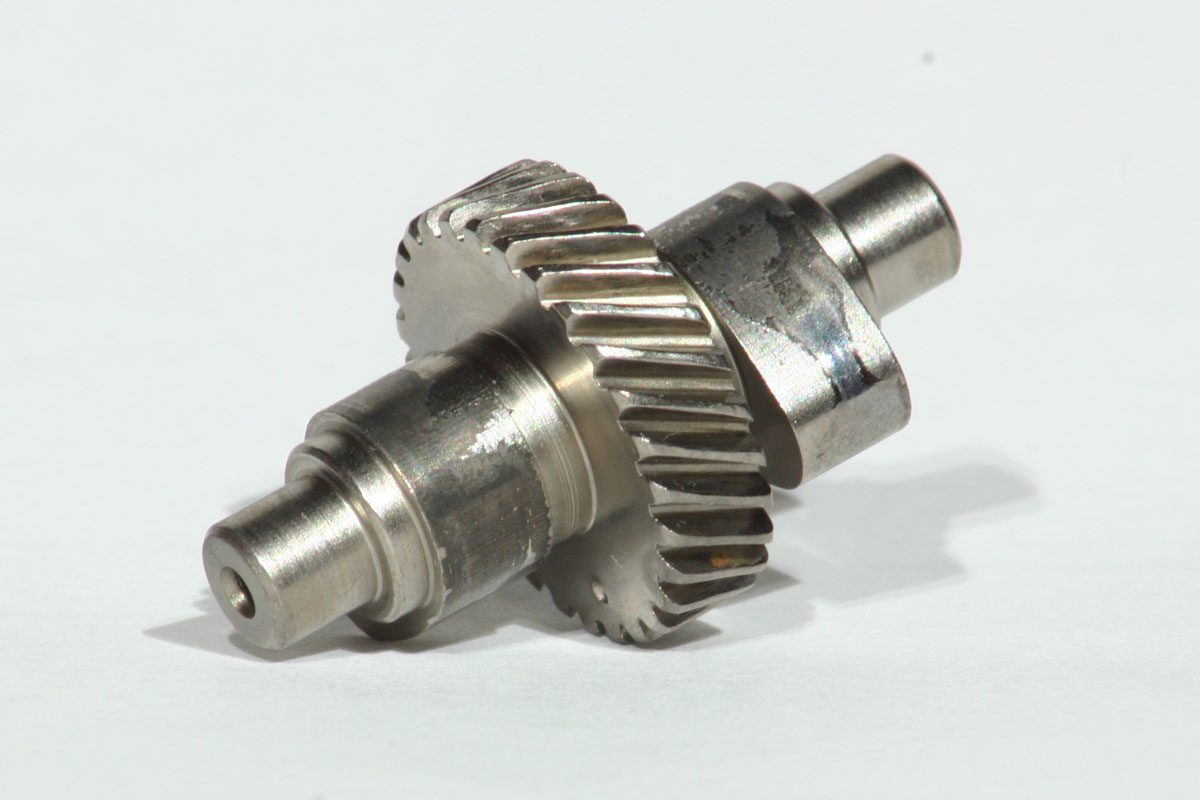
OS Surpass II camshaft, nickel plated. Does OS still nickel plate the new engines? Does OS nickel plate the crankshafts on the 2 stroke engines? Do they still do this on the new engines?
ref http://www.rcuniverse.com/forum/m_62...tm.htm#6272061


