


Ringed glow engine issue
 10-18-2025 | 01:52 PM
#1
 Ringed glow engine issue
Hello fellow modelers,
I need some help with pointing out what the issue is or what I did wrong. I recently purchased an SK-80 ringed 2-cycle engine new. The instruction booklet that was included said for break-in to open the HSN to 1 3/4 turns from the fully closed position and start, then to slowly advance to full throttle and richen till you hear a "babble" and lean in just a tad till the "babble" clears and to run a full tank at that rich setting. I followed those steps to my knowledge but I only ran half a tank of 10% omega fuel. I used a 12oz fuel tank per the manual and a 13x6 APC prop.
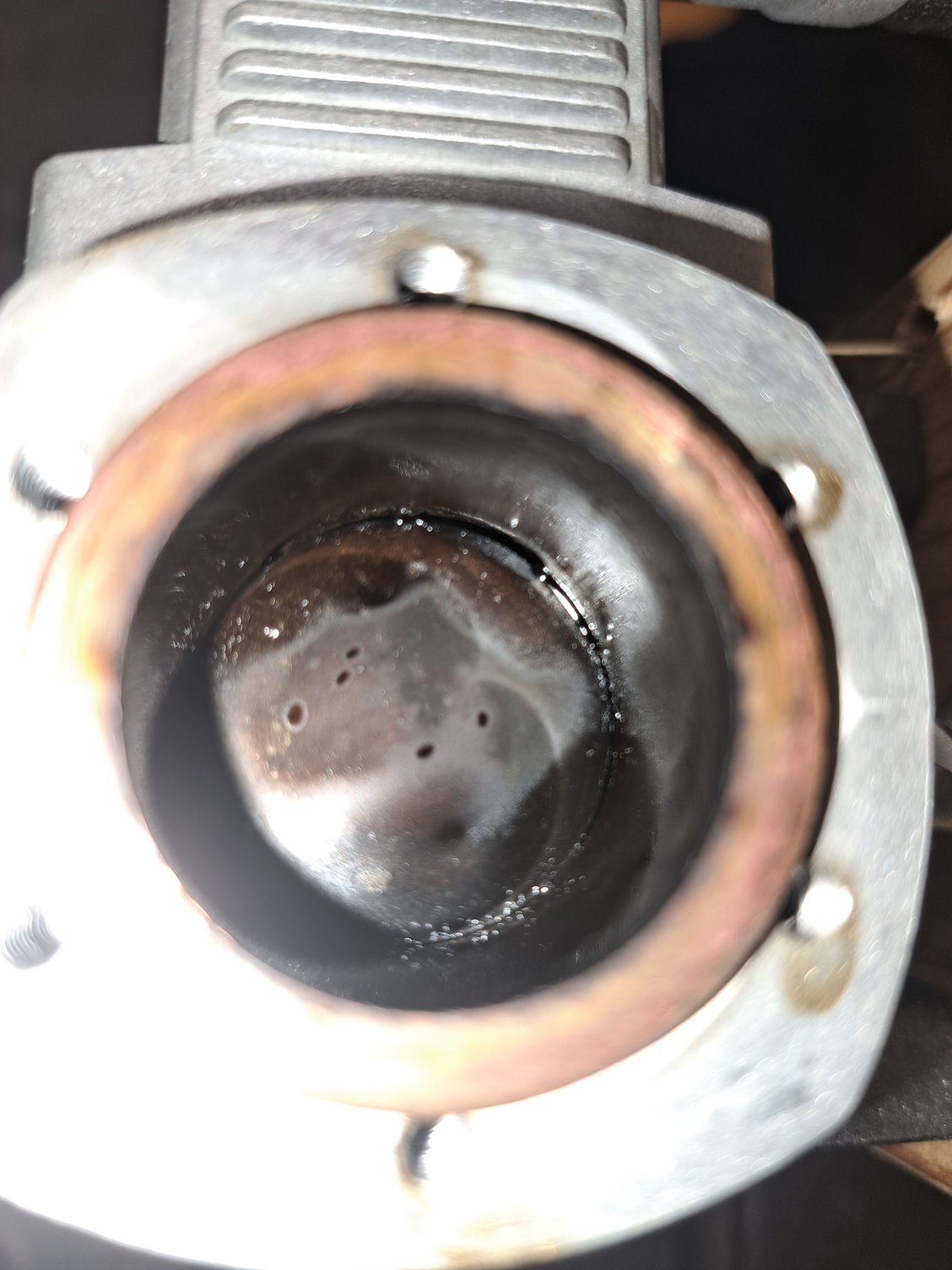
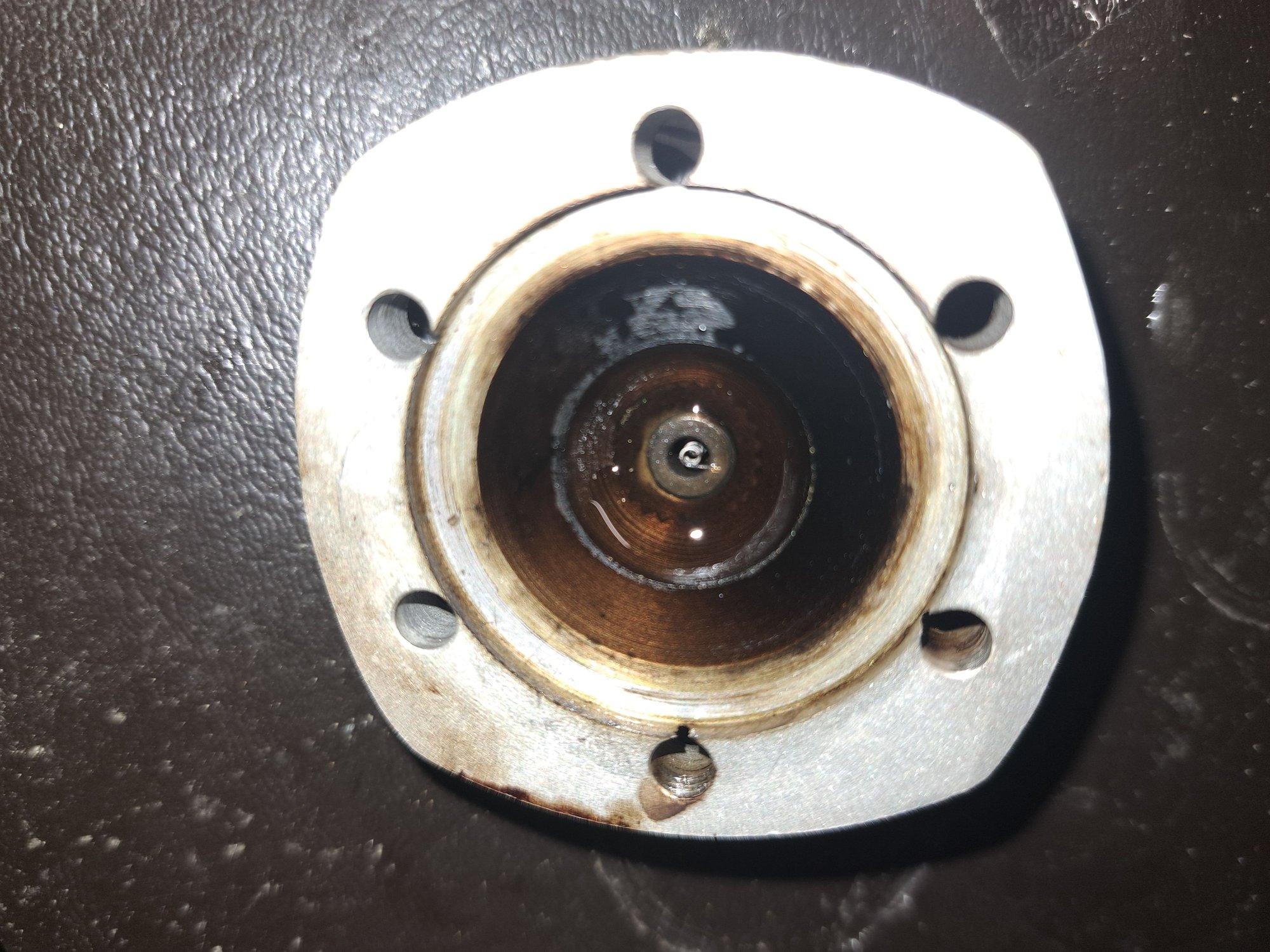
A few minutes into the break-in procedure, the engine started to hunt and surge. I did not stop it when it happened though and let it run till the tank was half empty. I had the HSN opened to approx 2 1/2 to 3 turns out and was seeing blue smoke and oil spewing out of the exhaust. But when I measured the temp at the fins on the engine head, to my shock the temp gun was reading 337F!! I have verified that the temp gun is working correctly. Also, the oil spewed out was almost black and the top of the piston is covered with brown color. The fins also have brown spots on them.
Any suggestions as to what made the engine get so hot when I thought it was running rich and why the surge and hunting?
I need some help with pointing out what the issue is or what I did wrong. I recently purchased an SK-80 ringed 2-cycle engine new. The instruction booklet that was included said for break-in to open the HSN to 1 3/4 turns from the fully closed position and start, then to slowly advance to full throttle and richen till you hear a "babble" and lean in just a tad till the "babble" clears and to run a full tank at that rich setting. I followed those steps to my knowledge but I only ran half a tank of 10% omega fuel. I used a 12oz fuel tank per the manual and a 13x6 APC prop.
A few minutes into the break-in procedure, the engine started to hunt and surge. I did not stop it when it happened though and let it run till the tank was half empty. I had the HSN opened to approx 2 1/2 to 3 turns out and was seeing blue smoke and oil spewing out of the exhaust. But when I measured the temp at the fins on the engine head, to my shock the temp gun was reading 337F!! I have verified that the temp gun is working correctly. Also, the oil spewed out was almost black and the top of the piston is covered with brown color. The fins also have brown spots on them.
Any suggestions as to what made the engine get so hot when I thought it was running rich and why the surge and hunting?

 10-18-2025 | 06:01 PM
#3


Looks like it went lean. Could have a fuel blockage or an air leak. Check that head, back plate, and carb are tight. Check the fuel system for blockage
Last edited by A. J. Clark; 10-18-2025 at 06:07 PM.
 10-18-2025 | 06:17 PM
#4
Thanks for the reply. The head was tight, it had a shim also.
Can you describe how to check for air leaks? If you mean making sure the carb is seated tight on it's O-ring, then it is tight. Regarding the fuel system, I have an inline Du-Bro fuel filter between the tank and carb. It hasn't had much run time on it but I will open it and check. But when priming with choking the carb, i did see fuel flow freely into the carb.
Also, am confused as to why I saw lots of blue smoke out of the exhaust but it was still lean? trying to understand how that could have happened.
Can you describe how to check for air leaks? If you mean making sure the carb is seated tight on it's O-ring, then it is tight. Regarding the fuel system, I have an inline Du-Bro fuel filter between the tank and carb. It hasn't had much run time on it but I will open it and check. But when priming with choking the carb, i did see fuel flow freely into the carb.
Also, am confused as to why I saw lots of blue smoke out of the exhaust but it was still lean? trying to understand how that could have happened.
10-18-2025 | 06:46 PM
#5
hpw does the cylinder liner look, is it scratched??
if the liner is not scratched bad start over. check for fuel blockage, clean the engine, if It was my engine I would close the needle and open it 2 turns and start it.
I do not understand why the manual says to open the needle so much. I am wondering if your manual is for an ABC engine, not a ringed engine ??
I hope you don't over tighten the needle when closing it.
if the liner is not scratched bad start over. check for fuel blockage, clean the engine, if It was my engine I would close the needle and open it 2 turns and start it.
I do not understand why the manual says to open the needle so much. I am wondering if your manual is for an ABC engine, not a ringed engine ??
I hope you don't over tighten the needle when closing it.
Last edited by the Wasp; 10-18-2025 at 06:51 PM.
10-19-2025 | 09:28 AM
#6
The cylinder line looks smooth to my eyes and it feels smooth.
To confirm, you would set the HSN to 2 turns and start, then fully open throttle and alternate between rich and lean. Is that correct?
Below is the screenshot of the manual for the first step of breaking in.
BREAK-IN PROCEDURE
STEP 1 With the engine mounted, fuel tank filled, and the glow plug removed, Screw the high-speed needle valve in till it bottoms {Do not tighten}. Open the valve 1 ¾ turns. Open the throttle, place a finger over the carburetor opening and flip the prop through several times by hand. You will see fuel pass through the line to the carburetor. Close the throttle and install the glow plug {do not hook up the glow driver} and 2 flip the prop a few more times. Look in the carburetor, open the throttle until about a 1/16-inch gap is visible between the barrel hole and the carburetor body.
STEP 2 Attach the glow plug driver. Spin the engine or flip the prop until it starts. Once the engine is running open the throttle slowly to its maximum. Now open the needle valve until the engine begins to “babble” this is also known as “4 stroking”. Now close the needle slowly until the “babble” just clears, run till the tank is empty in this very rich condition. DO NOT LEAN THE ENGINE FOR MAXIMUM RPM. Allow the engine to cool.
To confirm, you would set the HSN to 2 turns and start, then fully open throttle and alternate between rich and lean. Is that correct?
Below is the screenshot of the manual for the first step of breaking in.
BREAK-IN PROCEDURE
STEP 1 With the engine mounted, fuel tank filled, and the glow plug removed, Screw the high-speed needle valve in till it bottoms {Do not tighten}. Open the valve 1 ¾ turns. Open the throttle, place a finger over the carburetor opening and flip the prop through several times by hand. You will see fuel pass through the line to the carburetor. Close the throttle and install the glow plug {do not hook up the glow driver} and 2 flip the prop a few more times. Look in the carburetor, open the throttle until about a 1/16-inch gap is visible between the barrel hole and the carburetor body.
STEP 2 Attach the glow plug driver. Spin the engine or flip the prop until it starts. Once the engine is running open the throttle slowly to its maximum. Now open the needle valve until the engine begins to “babble” this is also known as “4 stroking”. Now close the needle slowly until the “babble” just clears, run till the tank is empty in this very rich condition. DO NOT LEAN THE ENGINE FOR MAXIMUM RPM. Allow the engine to cool.
10-19-2025 | 07:41 PM
#7
first a question.
can you see the Ring when you look into the Exhaust port?
“babble”
today I am wondering if you simply didn't lean it enough after it started babbling so it was just way too rich, I say that because of all the oil I see in your Pics above.
to add.
your liner looks vary black, that's not good. that just may be the reason why it over heated. if it is an ABC Ringless engine most likely that is the reason why it over heated. make sure you clean that liner. if you have nothing to clean it with. you can use hot Auto Antifreeze and soke it hot for 3-5 hours.
remove the back plate and head, soke the head too. remove the carb set it aside.
IF your engine is a Ringless engine you may (may) have to replace the piston and liner. because these types of engines need a whole different type of brake-in method.
can you see the Ring when you look into the Exhaust port?
you would set the HSN to 2 turns and start, then fully open throttle and alternate between rich and lean. Is that correct?
“babble”
today I am wondering if you simply didn't lean it enough after it started babbling so it was just way too rich, I say that because of all the oil I see in your Pics above.
to add.
your liner looks vary black, that's not good. that just may be the reason why it over heated. if it is an ABC Ringless engine most likely that is the reason why it over heated. make sure you clean that liner. if you have nothing to clean it with. you can use hot Auto Antifreeze and soke it hot for 3-5 hours.
remove the back plate and head, soke the head too. remove the carb set it aside.
IF your engine is a Ringless engine you may (may) have to replace the piston and liner. because these types of engines need a whole different type of brake-in method.
Last edited by the Wasp; 10-19-2025 at 07:52 PM.
10-20-2025 | 03:31 PM
#8

It was run too lean and possibly on fuel with inadequate oil content. I always break my engines in on oily fuel - 22-25% oil for any airplane engine. I run all castor oil, but a castor blend works fine provided you don’t get too lean. Read your glow plug; if the element is still silver and shiny, it’s not overly lean. If the element looks frosty or hazed over and not shiny, you’re at the edge of over-lean. Breaking engines in IMVHO should always be done on the bench for at least half an hour. Others disagree, but with the right fuel, prop, and break-in rpm, you shouldn’t have any problems. Break-in should leave the head and piston crown light brown at the MOST. Dark brown or black = lean and mean.
10-20-2025 | 05:35 PM
#9
To answer Wasp's questions, I see the rings on the piston. Didn't get a chance to take pics today but will post tomorrow maybe. It is an ABC ringed engine. You may be right that I ran it too rich at the babble and didn't lean enough.
But looking at Qwksport's reply, it sounds like it was run too lean. I had the high speed needle turned out atleast 2.5 to 3 turns and I saw blue smoke from the exhaust as I ran it at almost full throttle. Then a few minutes later it started surging and hunting. Could it be that the fuel didn't have adequate oil in it? I have run my other non-ringed engines on that same fuel and they were fine.
That is why I was confused as to what made it overheat. I checked the head screws and the carb o-ring and there were no leaks I could see.
But looking at Qwksport's reply, it sounds like it was run too lean. I had the high speed needle turned out atleast 2.5 to 3 turns and I saw blue smoke from the exhaust as I ran it at almost full throttle. Then a few minutes later it started surging and hunting. Could it be that the fuel didn't have adequate oil in it? I have run my other non-ringed engines on that same fuel and they were fine.
That is why I was confused as to what made it overheat. I checked the head screws and the carb o-ring and there were no leaks I could see.
10-20-2025 | 05:51 PM
#10
Hunting and surging is a tell-tale sign of lean fuel mixture. The dark brown head and Piston also tells the tale. I don’t care what the manual says for carburetor base settings. They’re wrong most of the time even in the best English translation.
Every fuel along with every oil composition/blend smokes differently. Color, amount, etc. ignore it altogether. Temperature is just a reference.
Your prop is probably too big too. Run a 1” shorter diameter prop than the intended flight prop, run oilier fuel, and get it up to rpm. Richen until it 4-strokes; let run like that for 30 second. Lean it until it just*** cleans up with the occasional miss for 1 minute. Alternate between rich and clean for a tank of fuel, all at WOT. Run another few tanks at WOT at the rich 2-stroke running with occasional miss. Give it 30-40min and then fly it rich on the shorter prop until it will hold a lean needle setting without sagging or surging.
This regimen has never failed me.
Every fuel along with every oil composition/blend smokes differently. Color, amount, etc. ignore it altogether. Temperature is just a reference.
Your prop is probably too big too. Run a 1” shorter diameter prop than the intended flight prop, run oilier fuel, and get it up to rpm. Richen until it 4-strokes; let run like that for 30 second. Lean it until it just*** cleans up with the occasional miss for 1 minute. Alternate between rich and clean for a tank of fuel, all at WOT. Run another few tanks at WOT at the rich 2-stroke running with occasional miss. Give it 30-40min and then fly it rich on the shorter prop until it will hold a lean needle setting without sagging or surging.
This regimen has never failed me.
The following 2 users liked this post by 1QwkSport2.5r:
HobbyFlying (10-23-2025),
mgnostic (10-21-2025)
10-20-2025 | 07:13 PM
#12
Take a clean piece of fuel line connected to the vent line blow on the line to see if there is good flow through the line to the carb. I would also remove the filter. Then connect the clean line to the carb. Open needle 2.5 turns and carb barrel fully open blow on the line air should flow through the carb.
10-20-2025 | 08:58 PM
#13
how does the engine turn over with all that burnt oil on the Liner? don't force it to turn!
ABC liners are Chrome. Randy Linsalato of MECOA will tell you running a Chrome liner too rich too long is almost as bad as running it too lean. so be careful. he also said, you can have 5 engines of the same brand, same type and size. and every one of them can break-in different and run different (I knew that lol).
everyone breaks-in their engines differently. ask 10 people, you will get 10 different ways. people say "the cheaper engines need a longer break-in".
but you have to clean that liner before you start it again.
It is an ABC ringed engine.
everyone breaks-in their engines differently. ask 10 people, you will get 10 different ways. people say "the cheaper engines need a longer break-in".
but you have to clean that liner before you start it again.
10-23-2025 | 08:21 AM
#15
Thanks again for all the responses. I ran the engine yesterday on a quarter tank of fuel just to see if it would start. I cleaned the liner with a paper towel and the in line fuel filter with rubbing alcohol and put it back and added pure castor oil (around 18ml to about 50oz of fuel) and started it. It took longer to start but eventually did. I noticed that the high-speed needle didn't have much effect on the rpms when turning from 2 to almost 4 turns out. It did run rich with lots of oil from the exhaust and blue smoke. What also helped was it was cooler outside in the 50s, to avoid overheat issues. I plan to break it in per QwkSport2.5r suggestions.
Also, can you please explain why the break-in process is different for a ringed vs ringless engine?
Also how can running an ABC ringed engine too rich be bad for the engine? Just trying to understand the science behind it,
Also, can you please explain why the break-in process is different for a ringed vs ringless engine?
Also how can running an ABC ringed engine too rich be bad for the engine? Just trying to understand the science behind it,
10-23-2025 | 07:28 PM
#16
Also how can running an ABC ringed engine too rich be bad for the engine? Just trying to understand the science behind it,
click the link below for the site.
How to break in an abc engine 1-10-2020First of all you really don't want to "BREAK-IN" an ABC or AAC engine in the classic sense. An “ABC” type engine (Aluminum, Brass, Chrome) does not require prolonged break-in periods. However, we do recommend that you run the engine at a slightly rich needle valve setting for the first two runs. These runs should be made with the engine installed and running for not less than five (5) minutes periods. Typically an engine will be ready for continuous full throttle and a leaner needle valve setting after ten (15) to fifteen (20) minutes of running.
ABC engines are designed to run at operating temperatures, NOT COOLER temperatures.
RUNNING THE ENGINE TOO RICH WILL RUIN THE FIT.
If the operating temperature is not reached, the piston is prematurely worn from lack of clearance. You do not want to "break-in" an ABC engine at a very rich setting. Just a slightly rich setting for the first 30 to 45 minutes of running is adequate.
A model engine makes sounds that will tell you how it's performing. You'll have to listen very carefully for them, recognize their message, and make adjustments to the fuel control needle valves accordingly. The mixture of fuel and air is controlled by the amount of fuel metered by the needle valve.
SLOPPY RICH MIXTURE running is characterized by a very slow, irregular, sputtering exhaust sound. The exhaust gas will be very smoky and contain many droplets of oil. NEVER RUN AN ABC ENGINE AT THIS SETTING. The cylinder is not able to heat properly and the fit will be ruined in a short time.
RICH MIXTURE running is characterized by a slower, sometimes irregular, sputtering exhaust sound. The exhaust gas will be smoky and probably contain small droplets of oil. NEVER RUN AN ABC ENGINE AT THIS SETTING. The cylinder is not able to heat properly and the fit will be ruined in a short time.
FOUR CYCLING or SLIGHTLY RICH running is a rich type setting, but it is fast enough to pull the airplane. This is the setting you normally look for before launching the airplane because the engine will run leaner when airborne.
PEAKED OR TWO CYCLE. As the main needle is closed (clockwise), it reduces the amount of fuel mixed with the air drawn into the engine. At a specific point, which varies with each engine, air temperature, altitude and relative humidity, the exhaust note will change quickly into a smooth, powerful note. If the needle is closed further, the note will stay smooth, but will weaken. The peak occurs just at the break point from a rich setting and further leaning will ruin the engine. A lean setting raises the engine heat above the safe point, reduces lubrication, and destroys glow plugs due to high combustion temperature. This is very harmful to the engine and your investment. Learn to tune the engine before flying. Remember, a little rich is always preferred for long motor life.
AIRBORNE BREAK-IN
1> BREAK-IN running should be done with the recommended propeller at a slightly rich setting. You want the engine to be at running operating temperatures. The needle valve should be set at a point just into this range from a four cycle setting. Fly the plane at maximum throttle for 2 minutes, then throttle back to half throttle for approximately 30 seconds. Repeat this sequence until approximately 20 minutes of accumulated running time has been obtained. Additionally, certain maneuvers, such as "CUBAN EIGHT'S", that allow the engine to load and unload are recommended. AVOID PROLONGED CLIMBING MANEUVERS AT MAXIMUM THROTTLE.
2> After the first 20 minutes change to normal size prop and fly an additional 15 minutes. Continue to run the engine at a slightly rich setting and fly your normal pattern.
3> After the above break-in period, run the engine at a normal peak needle valve setting. This should be a little on the rich side because engines run leaner in the air. 5% - 15% nitro may be used.
BENCH BREAK-IN
NOTE THAT THE ENGINE MUST BE FIRMLY MOUNTED ON A SOLID TEST STAND. DO NOT CLAMP ENGINE IN A VISE. Muffler may be used during bench break-in.
The initial bench break-in period is also approximately 15 minutes (15 minutes bench and 15 minutes airborne). During this time, use the recommended break-in propeller and run the engine at a slightly rich setting. It is best to run the engine for a full 10 minutes, then allow it to cool. Heating and cooling is not beneficial to an ABC engine as you what it to run at operating temperatures, not cooler temps.
1> Start the engine and run it at a slightly rich full throttle for about 2 minutes, then let it fast idle (about 3500 rpm's) for 30 seconds. Repeat this sequence for about 10 minutes of running time.
2> Increase the full open throttle time to about 3 minutes followed by a 30 second idling period. Do this for an additional for 20 minutes.
3> Install the engine in your aircraft using an normal size prop.
The above information is provided as a guide. Since MECOA/K&B has no way of determining the ability of the individual using and understanding this information, we assume absolutely NO RESPONSIBILITY for any damage to person or property from the use of this information.
Model Engine Company Of America - America's largest producer of Model Engines for airplanes boats and cars
Last edited by the Wasp; 10-23-2025 at 07:31 PM.
10-24-2025 | 12:44 PM
#17
I run my ringless tapered bore engines as Dub Jett outlines on his website. Fast, warm, and rich. Smaller prop, oily fuel, clean 2-stroke running. 30-45min is about right. The idea is to run the engine in the rpm band it will see in the air; the lighter prop allows the rpm & heat, and the extra oil helps with keeping engine parts happy.
Last edited by 1QwkSport2.5r; 10-24-2025 at 03:09 PM.
04-10-2026 | 04:05 PM
#18
Need some help again on this engine. Now that the weather is getting better, I removed the sleeve and piston to clean it once again, soaked them in alcohol and after drying for a day, put it back together.
Before disassembly, it would prime without issues by just choking the carb with throttle barrel open. However after i reassembled it, initially it would not prime. However after using my electric starter, I got it to prime. But here's the main problem. After applying electric starter for 10 or so seconds, it would kick back and throw the prop nut every single time. My question is, is there an orientation for when the piston goes into the sleeve? What else could I have done wrong during re-assembly?
On this engine, there was no locating pin on the sleeve to cylinder, but I aligned the exhaust ports in the sleeve to the exhaust on the crankcase. But I wasn't sure which way the piston and connecting rod would go in. So i just put it in and it wouldn't run at all and throw the prop nut everytime.
Yesterday I took it apart again thinking I would rotate the piston 180deg in the sleeve, but now I can't get the piston to go in the sleeve from the bottom. When I tried to place the piston in the sleeve from the top, it wouldn't go all teh way in and would stop where the ring is. the ring gap is more than I think it should be and it is loose.
Before disassembly, it would prime without issues by just choking the carb with throttle barrel open. However after i reassembled it, initially it would not prime. However after using my electric starter, I got it to prime. But here's the main problem. After applying electric starter for 10 or so seconds, it would kick back and throw the prop nut every single time. My question is, is there an orientation for when the piston goes into the sleeve? What else could I have done wrong during re-assembly?
On this engine, there was no locating pin on the sleeve to cylinder, but I aligned the exhaust ports in the sleeve to the exhaust on the crankcase. But I wasn't sure which way the piston and connecting rod would go in. So i just put it in and it wouldn't run at all and throw the prop nut everytime.
Yesterday I took it apart again thinking I would rotate the piston 180deg in the sleeve, but now I can't get the piston to go in the sleeve from the bottom. When I tried to place the piston in the sleeve from the top, it wouldn't go all teh way in and would stop where the ring is. the ring gap is more than I think it should be and it is loose.
04-13-2026 | 12:49 PM
#19

First of all! Do not! I repeat! Do not prime the engine by using an electric starter!!! That is a NO No! Just mount the propeller and turn the engine over by hand, flicking the prop with your finger (index or long finger). Do this with the throttle fully open!!
Flip the prop several turns until you see fuel coming into the carb! Bu be careful! If too much fuel enters the engine , and it did in your case, the piston will not be able to move in the cylinder because of hydraulic lock
( fuel cannot be compressed) . That´s why the prop was thrown away when you tried to start the engine with the electric starter. And by the way! I always start my engines by hand!
Then as has been said previously ...you ran the engine too lean!!
All engines are set be ear!! You cannot set an engine by going after how many turns the high speed needle is turn in or out! Using a tach works too, But I set all my engines by listening to how they sound.
But 2-3turn out on the high speed needle is probably a good starting point.
When the engine starts you give full throttle and then set the high speed needle a little rich! Not slobbering rich but slightly under max rpm. Remember! You always set the engine at full throttle
As your engine is a ringed engine you should run it slightly richer than an ABC , ABN or AAC engine. Those engines have tapered cylinder, yours have not! So set the at around 8000-10000rpm and run it so for a tank or two then set the low speed needle! Modern engines does not take long to function just fine and could be flown right out of the box if you know how to set them...
Fuel is important to! Here i Sweden I mostly use 5% nitro and 20% oil in my fuel ( A mix of castor oil and synthetic or just castor or only synthetic...it depends on what engine I use).
The piston is always mounted in the crank case first, then the cylinder is placed on top and pushed down over the piston!
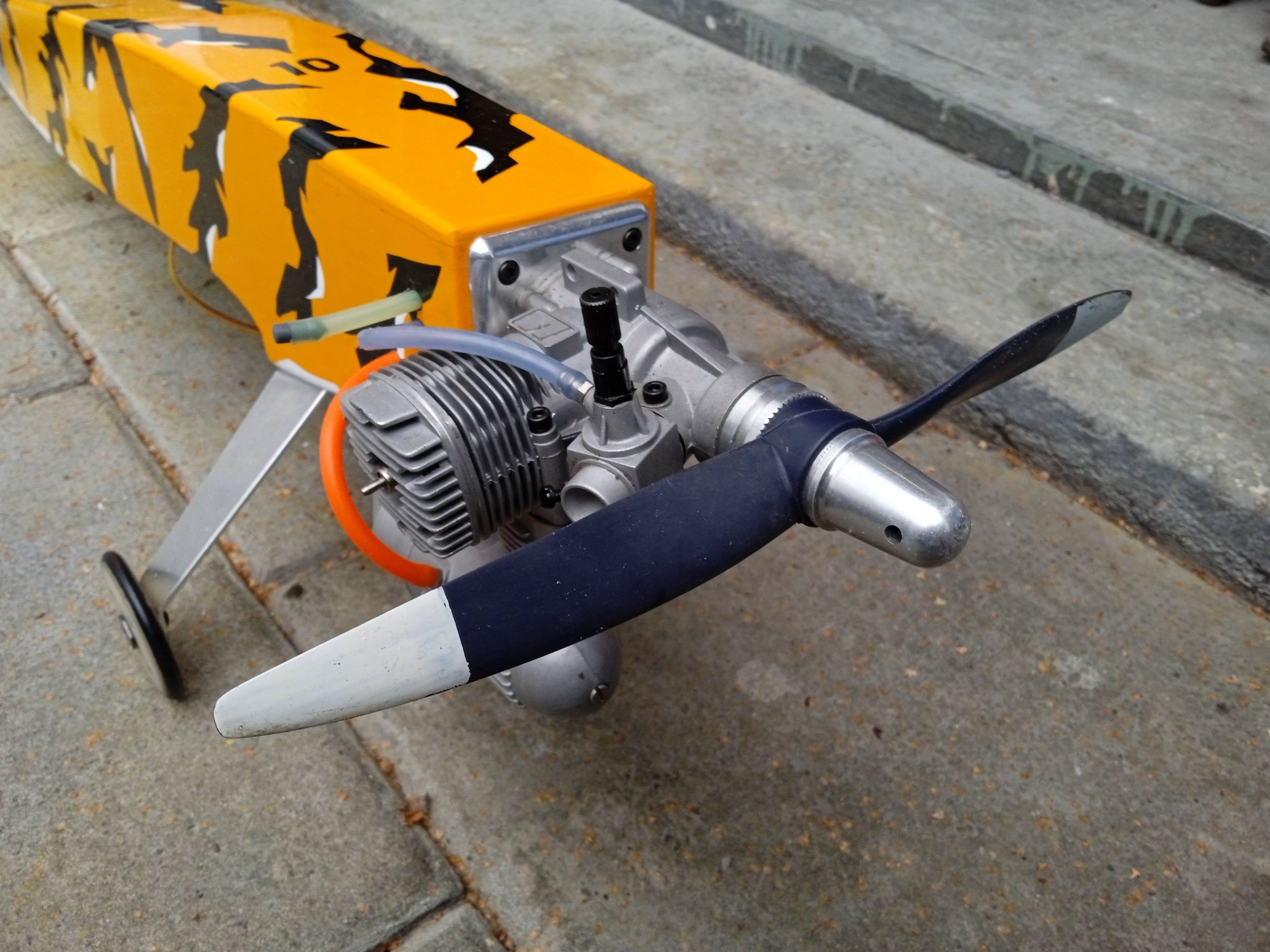
It is also important that you use the correct prop size for the plane you intend to fly. In your case with the engine size you have a , 13cc engine (We use metric in all countries out side the US) and a 12x7, 13x5, 13x6 or 14x4 (for slow flying high winged trainer) would work fine. Best props brands are APC , RAM or my preference, Graupner G-Sonic would be the propellers of choice. Avoid withe tipped Mast A props as those are loud and does not good flight performance.
Tank size a placement is also important! For a 13cc (.80 ) engine a 300-320cc tank should be fine, and mount it as close to the engine as possible, using pressure from the silencer.
Flip the prop several turns until you see fuel coming into the carb! Bu be careful! If too much fuel enters the engine , and it did in your case, the piston will not be able to move in the cylinder because of hydraulic lock
( fuel cannot be compressed) . That´s why the prop was thrown away when you tried to start the engine with the electric starter. And by the way! I always start my engines by hand!
Then as has been said previously ...you ran the engine too lean!!
All engines are set be ear!! You cannot set an engine by going after how many turns the high speed needle is turn in or out! Using a tach works too, But I set all my engines by listening to how they sound.
But 2-3turn out on the high speed needle is probably a good starting point.
When the engine starts you give full throttle and then set the high speed needle a little rich! Not slobbering rich but slightly under max rpm. Remember! You always set the engine at full throttle
As your engine is a ringed engine you should run it slightly richer than an ABC , ABN or AAC engine. Those engines have tapered cylinder, yours have not! So set the at around 8000-10000rpm and run it so for a tank or two then set the low speed needle! Modern engines does not take long to function just fine and could be flown right out of the box if you know how to set them...
Fuel is important to! Here i Sweden I mostly use 5% nitro and 20% oil in my fuel ( A mix of castor oil and synthetic or just castor or only synthetic...it depends on what engine I use).
The piston is always mounted in the crank case first, then the cylinder is placed on top and pushed down over the piston!
It is also important that you use the correct prop size for the plane you intend to fly. In your case with the engine size you have a , 13cc engine (We use metric in all countries out side the US) and a 12x7, 13x5, 13x6 or 14x4 (for slow flying high winged trainer) would work fine. Best props brands are APC , RAM or my preference, Graupner G-Sonic would be the propellers of choice. Avoid withe tipped Mast A props as those are loud and does not good flight performance.
Tank size a placement is also important! For a 13cc (.80 ) engine a 300-320cc tank should be fine, and mount it as close to the engine as possible, using pressure from the silencer.


