


Right thrust and 3D
 09-07-2008 | 03:10 PM
#26

Senior Member
 RE: Right thrust and 3D
I am trying to figure out what the difference is between hovering upright; and hovering inverted...[sm=bananahead.gif]
Since there is none, any plane that has a conventional vertical stabilizer, will fall to the left, needing right-rudder to correct.
If prop rotation is the other way, this plane will fall to the right... Since nearly all engines rotate in the same bearing, there is no need for us to worry. We always need right-rudder and not to need it, we need to build in right-thrust.
Mike (Salmon) put it the right way.
Bruce, you may have good 3D flying instinct, but I believe you did not correctly explain this (post #4).
Since there is none, any plane that has a conventional vertical stabilizer, will fall to the left, needing right-rudder to correct.
If prop rotation is the other way, this plane will fall to the right... Since nearly all engines rotate in the same bearing, there is no need for us to worry. We always need right-rudder and not to need it, we need to build in right-thrust.
Mike (Salmon) put it the right way.
Bruce, you may have good 3D flying instinct, but I believe you did not correctly explain this (post #4).
 09-07-2008 | 04:53 PM
#27
Banned
Joined: Mar 2003
Posts: 3,848
Likes: 0
Received 0 Likes
on
0 Posts
From: Tokoroa, , NEW ZEALAND
RE: Right thrust and 3D
ORIGINAL: DarZeelon
Bruce, you may have good 3D flying instinct, but I believe you did not correctly explain this (post #4).
Bruce, you may have good 3D flying instinct, but I believe you did not correctly explain this (post #4).
1. most of the effect is due to torque and P-factor.
2. very little of the effect is due to the amount of fin area above/below the centerline.
I base these observations on the fact that my Primus-clone profile (which has almost an identical (and symetrical) amount of fin above/below the centerline) has just as much tendency to turn left under power as something like a Mojo or Katana (both of which have tall fins).
I also note that the amount of right-thrust required to get a profile flying "straight" with a 4-stroke turning a big prop with lots of torque is more than a 2-stroke turning a smaller/finer-pitched prop requires.
What's more, so long as I laterally balance my models, they seem to hover just fine without right-thrust or right-rudder - showing no tendency to fall off to the left (but plenty of tendency to roll due to torque).
Also, when you hover a plane truly vertical, the effect of the torque is *very* pronounced - ie: a torque roll that can be quite fierce.
Now any right-thrust will oppose the torque and P-effect when the aircraft is upright but it will become left-thrust and therefore contribute to the tendency to turn left when the craft is inverted (same goes for rudder-offset).
09-07-2008 | 11:59 PM
#28
Senior Member
RE: Right thrust and 3D
Bruce,
It still stands that a vertical hover is neither upright, nor inverted and that the torque effect is (or at least should be) countered using the ailerons; not the rudder...
If your models yaws as a result of aileron input, you should probably change the ATV of the aileron servos, to tailor-out that effect.
The P-Factor is evident during take-off; hardly in hovering...
It still stands that a vertical hover is neither upright, nor inverted and that the torque effect is (or at least should be) countered using the ailerons; not the rudder...
If your models yaws as a result of aileron input, you should probably change the ATV of the aileron servos, to tailor-out that effect.
The P-Factor is evident during take-off; hardly in hovering...
09-08-2008 | 01:00 AM
#29
Banned
Joined: Mar 2003
Posts: 3,848
Likes: 0
Received 0 Likes
on
0 Posts
From: Tokoroa, , NEW ZEALAND
RE: Right thrust and 3D
ORIGINAL: DarZeelon
It still stands that a vertical hover is neither upright, nor inverted and that the torque effect is (or at least should be) countered using the ailerons; not the rudder...
It still stands that a vertical hover is neither upright, nor inverted and that the torque effect is (or at least should be) countered using the ailerons; not the rudder...
If your models yaws as a result of aileron input, you should probably change the ATV of the aileron servos, to tailor-out that effect.
The P-Factor is evident during take-off; hardly in hovering...
09-08-2008 | 01:43 AM
#30
Senior Member
RE: Right thrust and 3D
All true, Bruce.
I was remarking to your input in post #4...
Right thrust *does* work the wrong way when you're inverted and with most profiles you're faced with either just learning to apply the appropriate amount of (usually) left rudder when inverted or ditch the right-thrust and learn to apply left/right as appropriate.
Since a really good 3D flight will see the model flying inverted for about half the flight I'm starting to switch to zero side-thrust and just using the rudder all the time. It becomes second-nature after a while.
And yes, you are very right, regarding the P-Factor in a 'harrier'...
By the way, there was a lengthy discussion, over one year ago in these pages, discussing the 'torque effect', which I strongly discredited...
I am not aware of a special name for the 'prop-wash hitting the right/left side of the rudder' effect, but I emphasized this as the real reason for needing rudder correction during take-off... And the reasons for the effect possibly reversing during the run...
I was remarking to your input in post #4...
Right thrust *does* work the wrong way when you're inverted and with most profiles you're faced with either just learning to apply the appropriate amount of (usually) left rudder when inverted or ditch the right-thrust and learn to apply left/right as appropriate.
Since a really good 3D flight will see the model flying inverted for about half the flight I'm starting to switch to zero side-thrust and just using the rudder all the time. It becomes second-nature after a while.
And yes, you are very right, regarding the P-Factor in a 'harrier'...
By the way, there was a lengthy discussion, over one year ago in these pages, discussing the 'torque effect', which I strongly discredited...
I am not aware of a special name for the 'prop-wash hitting the right/left side of the rudder' effect, but I emphasized this as the real reason for needing rudder correction during take-off... And the reasons for the effect possibly reversing during the run...
09-08-2008 | 02:50 AM
#31

Thread Starter

Joined: Jul 2002
Posts: 5,037
Likes: 0
Received 0 Likes
on
0 Posts
From: Tacoma,
WA
RE: Right thrust and 3D
>>> nothing changes when the plane is upside down !.. >>>
There might be something very unusual about my Fusion then. After installing right thrust when it is upright and then flipping it over inverted, it sure looks like left thrust. Maybe just my eyes or the way I am looking at it?
Thanks,
Ernie
There might be something very unusual about my Fusion then. After installing right thrust when it is upright and then flipping it over inverted, it sure looks like left thrust. Maybe just my eyes or the way I am looking at it?
Thanks,
Ernie
09-08-2008 | 04:00 AM
#32
Senior Member
RE: Right thrust and 3D
Ernie,
Proximity to the ground also has an effect; a very profound one, in fact.
The prop-wash is in the form of a spiral, which with the plane 'out of ground effect', goes directly backward along the plane's thrust-line.
As a result, with the prop spinning in the normal direction; clock-wise, when viewed from the cockpit, the 'over' prop-wash will hit the vertical stabilizer and the rudder from the left; in turn causing the plane to veer to the left. The 'under' prop-wash hits nothing, thus causing no change in the plane's heading.
But, what happens if the plane is a tail-dragger and is in the normal three-point attitude, on the runway, in the beginning of the take-off run? The prop-wash obviously cannot go into the runway... so, it deflected, becoming runway-hugging and parallel...
But where does the 'under' prop-wash go now???
It hits the vertical stabilizer and the rudder from the right, causing the plane to veer to the right; the exact opposite to what it does with the plane in level attitude (the 'over' prop-wash will hit nothing, now going over the vertical stabilizer and the rudder...
This effect reversal, as the plane's tail rises, used to cause beginners in WWII fighters to do the notorious 'ground-loop'... It was usually blamed on 'Torque'...
The would-be pilot would have a bit of trouble explaining what he encountered, from the world he now resides in...
When you are hovering near the ground, deflected prop-wash has mysterious ways of causing your plane to react...
EDIT: Correction of 'directional error' following Red B.'s remark.
Proximity to the ground also has an effect; a very profound one, in fact.
The prop-wash is in the form of a spiral, which with the plane 'out of ground effect', goes directly backward along the plane's thrust-line.
As a result, with the prop spinning in the normal direction; clock-wise, when viewed from the cockpit, the 'over' prop-wash will hit the vertical stabilizer and the rudder from the left; in turn causing the plane to veer to the left. The 'under' prop-wash hits nothing, thus causing no change in the plane's heading.
But, what happens if the plane is a tail-dragger and is in the normal three-point attitude, on the runway, in the beginning of the take-off run? The prop-wash obviously cannot go into the runway... so, it deflected, becoming runway-hugging and parallel...
But where does the 'under' prop-wash go now???
It hits the vertical stabilizer and the rudder from the right, causing the plane to veer to the right; the exact opposite to what it does with the plane in level attitude (the 'over' prop-wash will hit nothing, now going over the vertical stabilizer and the rudder...
This effect reversal, as the plane's tail rises, used to cause beginners in WWII fighters to do the notorious 'ground-loop'... It was usually blamed on 'Torque'...
The would-be pilot would have a bit of trouble explaining what he encountered, from the world he now resides in...
When you are hovering near the ground, deflected prop-wash has mysterious ways of causing your plane to react...
EDIT: Correction of 'directional error' following Red B.'s remark.
09-08-2008 | 07:25 AM
#33


My Feedback: (3)
Joined: May 2002
Posts: 4,319
Likes: 0
Received 0 Likes
on
0 Posts
From: Beavercreek, OH,
RE: Right thrust and 3D
ORIGINAL: Ernie Misner
>>> nothing changes when the plane is upside down !.. >>>
There might be something very unusual about my Fusion then. After installing right thrust when it is upright and then flipping it over inverted, it sure looks like left thrust. Maybe just my eyes or the way I am looking at it?
Thanks,
Ernie
>>> nothing changes when the plane is upside down !.. >>>
There might be something very unusual about my Fusion then. After installing right thrust when it is upright and then flipping it over inverted, it sure looks like left thrust. Maybe just my eyes or the way I am looking at it?
Thanks,
Ernie
Ernie, put yourself in the cockpit view when examining your forces and you should understand better. Contrary to the above what I explained and what was explained in the reference I posted are not theories but fact. Torque, P-factor, and spiraling slipsteam have all been thoroughly studied and are documented in most aerodynamic books. Those who designed our early warbirds where the champions of these studies.
Anyway, when your plane is inverted then yes you now have left thust as viewed from above, but the plane still has right thrust as viewed from the cockpit. The vertical is also now hanging down versus sticking up. Remember from the picture I posted that the pressures are higher on the left side of the vertical but likewise, would be higher on the left side of a ventral fin (underneath the fuse). So now when you are inverted and if you must view the forces from standing over the plane, your higher pressure would be on the bottom right side of the fin and thus you need left thrust. But again, I say view everything from sitting in the cockpit and it is easier to understand.
Now let's look at what causes the spiraling slipstream. It is simply the drag caused by the propeller moving through the air. Think of sticking your hand out the window in a moving car. You can feel the drag. Some of the air is being pulled along with your arm as you are traveling. This is actually an inefficiency in the scheme of what you want. In a propeller you want to move air back or bite into new air. However the prop pulls air along with it and thus the spiralling airflow going backwards. The more slipstream you have, the more right rudder or thrust you will need to compensate. The less slipstream, the less corrections. How do you get less slipstream? More efficient props, less pitch perhaps, thinner blades. Guess what, all of the above are what we are seeking in 3D planes. Regardless though there will always be some degree of slipstream with a rotating prop.
Hope this helps!
09-08-2008 | 09:40 AM
#34
Senior Member
Joined: Aug 2002
Posts: 1,301
Likes: 0
Received 0 Likes
on
0 Posts
From: Jonkoping, SWEDEN
RE: Right thrust and 3D
ORIGINAL: DarZeelon
Ernie,
Proximity to the ground also has an effect; a very profound one, in fact.
The prop-wash is in the form of a spiral, which with the plane 'out of ground effect', goes directly backward along the plane's thrust-line.
As a result, with the prop spinning in the normal direction; clock-wise, when viewed from the cockpit, the 'over' prop-wash will hit the vertical stabilizer and the rudder from the left; in turn causing the plane to veer to the right. The 'under' prop-wash hits nothing, thus causing no change in the plane's heading.
Ernie,
Proximity to the ground also has an effect; a very profound one, in fact.
The prop-wash is in the form of a spiral, which with the plane 'out of ground effect', goes directly backward along the plane's thrust-line.
As a result, with the prop spinning in the normal direction; clock-wise, when viewed from the cockpit, the 'over' prop-wash will hit the vertical stabilizer and the rudder from the left; in turn causing the plane to veer to the right. The 'under' prop-wash hits nothing, thus causing no change in the plane's heading.
But, what happens if the plane is a tail-dragger and is in the normal three-point attitude, on the runway, in the beginning of the take-off run? The prop-wash obviously cannot go into the runway... so, it deflected, becoming runway-hugging and parallel...
But where does the 'under' prop-wash go now???
It hits the vertical stabilizer and the rudder from the right, causing the plane to veer to the left; the exact opposite to what it does with the plane in level attitude (the 'over' prop-wash will hit nothing, now going over the vertical stabilizer and the rudder...
This effect reversal used to cause beginners in WWII fighters to do the notorious 'ground-loop'... It was usually blamed on 'Torque'...
The would-be pilot would have a bit of trouble explaining what he encountered, from the world he now resides in...
But where does the 'under' prop-wash go now???
It hits the vertical stabilizer and the rudder from the right, causing the plane to veer to the left; the exact opposite to what it does with the plane in level attitude (the 'over' prop-wash will hit nothing, now going over the vertical stabilizer and the rudder...
This effect reversal used to cause beginners in WWII fighters to do the notorious 'ground-loop'... It was usually blamed on 'Torque'...
The would-be pilot would have a bit of trouble explaining what he encountered, from the world he now resides in...
09-08-2008 | 10:30 AM
#35
Senior Member
RE: Right thrust and 3D
ORIGINAL: Red B.
But, what happens if the plane is a tail-dragger and is in the normal three-point attitude, on the runway, in the beginning of the take-off run? The prop-wash obviously cannot go into the runway... so, it deflected, becoming runway-hugging and parallel...
But where does the 'under' prop-wash go now???
It hits the vertical stabilizer and the rudder from the right, causing the plane to veer to the right; the exact opposite to what it does with the plane in level attitude (the 'over' prop-wash will hit nothing, now going over the vertical stabilizer and the rudder...
This 'effect reversal' used to cause beginners in WWII fighters to do the notorious 'ground-loop'... It was usually blamed on 'Torque'...
The would-be pilot would have a bit of trouble explaining what he encountered, from the world he now resides in...
In practice there is no "effect reversal" for full sized warbirds such as the Mustang and the Merlin engined Spitfires. They both need right rudder trim during the take-off sequence (some Spitfire pilots preferred not to use the rudder trim, relying on rudder input only). As the aircraft starts to roll there is a swing towards the left that must be anticipated and corrected for using careful application of right rudder. The tendency to swing towards the left remains during rotation and take off, decreasing quickly as speed increases.
But, what happens if the plane is a tail-dragger and is in the normal three-point attitude, on the runway, in the beginning of the take-off run? The prop-wash obviously cannot go into the runway... so, it deflected, becoming runway-hugging and parallel...
But where does the 'under' prop-wash go now???
It hits the vertical stabilizer and the rudder from the right, causing the plane to veer to the right; the exact opposite to what it does with the plane in level attitude (the 'over' prop-wash will hit nothing, now going over the vertical stabilizer and the rudder...
This 'effect reversal' used to cause beginners in WWII fighters to do the notorious 'ground-loop'... It was usually blamed on 'Torque'...
The would-be pilot would have a bit of trouble explaining what he encountered, from the world he now resides in...
If trim is initially needed in one direction, which then changes to an input need in the other direction, this is an 'effect reversal' (due to attitude change of the plane).
This is what I was referring to.
09-08-2008 | 11:32 AM
#36
Senior Member
Joined: Aug 2002
Posts: 1,301
Likes: 0
Received 0 Likes
on
0 Posts
From: Jonkoping, SWEDEN
RE: Right thrust and 3D
ORIGINAL: DarZeelon
Red,
If trim is initially needed in one direction, which then changes to an input need in the other direction, this is an 'effect reversal' (due to attitude change of the plane).
This is what I was referring to.
Red,
If trim is initially needed in one direction, which then changes to an input need in the other direction, this is an 'effect reversal' (due to attitude change of the plane).
This is what I was referring to.
09-08-2008 | 01:28 PM
#37
Senior Member
Joined: Aug 2002
Posts: 1,301
Likes: 0
Received 0 Likes
on
0 Posts
From: Jonkoping, SWEDEN
RE: Right thrust and 3D
ORIGINAL: DarZeelon
...
But, what happens if the plane is a tail-dragger and is in the normal three-point attitude, on the runway, in the beginning of the take-off run? The prop-wash obviously cannot go into the runway... so, it deflected, becoming runway-hugging and parallel...
But where does the 'under' prop-wash go now???
It hits the vertical stabilizer and the rudder from the right, causing the plane to veer to the right; the exact opposite to what it does with the plane in level attitude (the 'over' prop-wash will hit nothing, now going over the vertical stabilizer and the rudder...
...
But, what happens if the plane is a tail-dragger and is in the normal three-point attitude, on the runway, in the beginning of the take-off run? The prop-wash obviously cannot go into the runway... so, it deflected, becoming runway-hugging and parallel...
But where does the 'under' prop-wash go now???
It hits the vertical stabilizer and the rudder from the right, causing the plane to veer to the right; the exact opposite to what it does with the plane in level attitude (the 'over' prop-wash will hit nothing, now going over the vertical stabilizer and the rudder...
Dar, your comment quoted above is IMHO not correct. For the warbirds mentioned, to the best of my knowledge there is no tendency for them to reverse their veering tendencies during take-off. As I previously stated, right rudder trim and often right rudder input as well is required during all parts of the take-off (tail-wheel on the ground, rotation, lift-off and climb), presuming of course that there are no significant crosswind components. Even though the amount of trim and/or rudder input may vary during the different phases of take-off there is no "reversal" that require left rudder or rudder trim.
Here is an excerpt from an article in an old issue of AOPA Australia magazine by an author who was a Merlin Seafire pilot:
"The propeller of the Merlin powered Spitfires and Seafires rotated clockwise, viewed from the cockpit. The rotating slipstream pushed against the left side of the fin and rudder, also the torque of the propeller was trying to rotate the aircraft anticlockwise around the propeller shaft and increasing the load on the left undercarriage wheel, consequently the aircraft wanted to swing left during take-off. Also the gyroscopic precession effect of the heavy spinning propeller, when the tail was raised on take-off, also wanted to make the aircraft swing left. [Any applied force which changes the axis position of a gyroscope causes the axis to move 90° to the applied force and in the direction of rotation]. The pre-take-off drill was to wind on full right rudder trim and start moving with right rudder applied. However the Griffon engines in the later models rotated in the opposite direction, for some unknown reason, and imparted an even more pronounced tendency to swing because of the larger propeller and greater torque, but to the right. Reputedly there were some rather amazing departures by bold pilots, flying a Griffon engined model for the first time, who didn't absorb the fine print in Pilots Notes, and who applied full right rudder trim and booted in plenty of right rudder! The Sea Hornet's Merlin engines were 'handed', one rotated clockwise the other anticlockwise."
And here is an excerpt from the Mustang III Pilot's Notes:
"39. Check list for take-off ...
T - Trimming tabs: ... Rudder 5 degrees right ..."
"40. Take-off ...
(v) There is a tendency to swing to the left which can be easily held on the rudder."
There is no mention of any veering to the right or reversal effects during any part of the take-off. Because the Pilot's Notes was intended for pilots preparing for their first flight in the Mustang, I find it highly unlikely that any reversal effects as described by you would be omitted in the description of the take-off and flying procedures.
Edit: Added excerpt from Pilot's Notes
 09-08-2008 | 04:28 PM
#39
Senior Member
RE: Right thrust and 3D
Red B.,
Perhaps in the Mustang III (that would be the Piper Turbo Mustang), the tail is held high enough in the air for the rudder never to be in the lower section of the spiral prop-wash.
But having flown in a Piper PA-18 Super Cub (hardly a warbird), there is initial yaw in the opposite direction, before the tail rises during the take-off run. And then the yaw becomes 'normal'...
Perhaps in the Mustang III (that would be the Piper Turbo Mustang), the tail is held high enough in the air for the rudder never to be in the lower section of the spiral prop-wash.
But having flown in a Piper PA-18 Super Cub (hardly a warbird), there is initial yaw in the opposite direction, before the tail rises during the take-off run. And then the yaw becomes 'normal'...
09-08-2008 | 04:39 PM
#40
Senior Member
Joined: Aug 2002
Posts: 1,301
Likes: 0
Received 0 Likes
on
0 Posts
From: Jonkoping, SWEDEN
RE: Right thrust and 3D
ORIGINAL: DarZeelon
Red B.,
Perhaps in the Mustang III (that would be the Piper Turbo Mustang), the tail is held high enough in the air for the rudder never to be in the lower section of the spiral prop-wash.
But having flown in a Piper PA-18 Super Cub (hardly a warbird), there is initial yaw in the opposite direction, before the tail rises during the take-off run. And then the yaw becomes 'normal'...
Red B.,
Perhaps in the Mustang III (that would be the Piper Turbo Mustang), the tail is held high enough in the air for the rudder never to be in the lower section of the spiral prop-wash.
But having flown in a Piper PA-18 Super Cub (hardly a warbird), there is initial yaw in the opposite direction, before the tail rises during the take-off run. And then the yaw becomes 'normal'...

 09-08-2008 | 09:10 PM
#42
Senior Member
Joined: May 2007
Posts: 226
Likes: 0
Received 0 Likes
on
0 Posts
From: League City, TX
RE: Right thrust and 3D
The effect that you guys are talking about with the warbirds (or any single engine aircraft) is from P-factor not slipstream effects on the rudder.
The p-factor is caused by the difference in angle of attack between the ascending and descending blades of a rotating propeller blade. Specifically, in a "nose-up" situation where the propeller disk is inclined to the flight path, the descending blade has a higher angle of attack relative to the ascending blade. The propeller blade with the higher angle of attack will provide more force.
P-Factor does not really come into play during 3-D flight since the forward motions are small and there is really not a difference in the angle-of-attack of the propeller during flight.
I could be wrong though, as I am sure someone will point out.
The p-factor is caused by the difference in angle of attack between the ascending and descending blades of a rotating propeller blade. Specifically, in a "nose-up" situation where the propeller disk is inclined to the flight path, the descending blade has a higher angle of attack relative to the ascending blade. The propeller blade with the higher angle of attack will provide more force.
P-Factor does not really come into play during 3-D flight since the forward motions are small and there is really not a difference in the angle-of-attack of the propeller during flight.
I could be wrong though, as I am sure someone will point out.
09-08-2008 | 11:51 PM
#43
Senior Member
RE: Right thrust and 3D
ORIGINAL: Red B.
FYI, the Mustang III was the British designation for the Merlin powered North American P-51B and P-51C.
FYI, the Mustang III was the British designation for the Merlin powered North American P-51B and P-51C.
I have been wrong before and when so, I am quick to stand corrected...
As for the reversal; it does happen. It is probably more prominent in some planes, while in others 'it ain't worth mentioning'...
...I am referring to the initial effect, with the tail still down, of course.
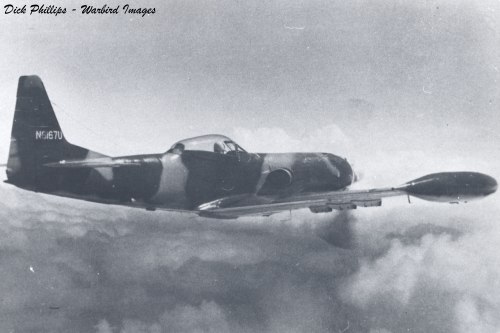
The cockpit canopy seems to closely resemble that of the Supermarine Spitfire... It is not the 'flat-top' canopy of the American P-51A/B/C...
09-09-2008 | 08:00 AM
#44
Senior Member
Joined: Aug 2002
Posts: 1,301
Likes: 0
Received 0 Likes
on
0 Posts
From: Jonkoping, SWEDEN
RE: Right thrust and 3D
ORIGINAL: 3D_Junkie
The effect that you guys are talking about with the warbirds (or any single engine aircraft) is from P-factor not slipstream effects on the rudder.
The effect that you guys are talking about with the warbirds (or any single engine aircraft) is from P-factor not slipstream effects on the rudder.
P-Factor does not really come into play during 3-D flight since the forward motions are small and there is really not a difference in the angle-of-attack of the propeller during flight.
I could be wrong though, as I am sure someone will point out.
I could be wrong though, as I am sure someone will point out.
09-09-2008 | 09:29 AM
#45
Senior Member
Joined: May 2007
Posts: 226
Likes: 0
Received 0 Likes
on
0 Posts
From: League City, TX
RE: Right thrust and 3D
ORIGINAL: Red B.
As a mattor of fact, both P-factor and slipstream effects contribute to the yawing tendency during take-off.
Some 3D maneuvers involves flying at high alpha, i.e., high angle of attack, at low speed. In those cases I would think that the P-factor does contribute significantly.
ORIGINAL: 3D_Junkie
The effect that you guys are talking about with the warbirds (or any single engine aircraft) is from P-factor not slipstream effects on the rudder.
The effect that you guys are talking about with the warbirds (or any single engine aircraft) is from P-factor not slipstream effects on the rudder.
P-Factor does not really come into play during 3-D flight since the forward motions are small and there is really not a difference in the angle-of-attack of the propeller during flight.
I could be wrong though, as I am sure someone will point out.
I could be wrong though, as I am sure someone will point out.
09-22-2008 | 01:30 AM
#46
Thread Starter
Joined: Jul 2002
Posts: 5,037
Likes: 0
Received 0 Likes
on
0 Posts
From: Tacoma,
WA
RE: Right thrust and 3D
Hi Dar, Mike, and others.
Okay, I'm putting myself "in the cockpit", thinking that all forces are the same inverted as upright, rolling over inverted, and that right thrust I built in..... still looks like left thrust to me now that I'm inverted. Someone hit me over the head, please.....;-)
Thanks for all your great input,
Ernie
Okay, I'm putting myself "in the cockpit", thinking that all forces are the same inverted as upright, rolling over inverted, and that right thrust I built in..... still looks like left thrust to me now that I'm inverted. Someone hit me over the head, please.....;-)
Thanks for all your great input,
Ernie
09-22-2008 | 03:48 AM
#48
Thread Starter
Joined: Jul 2002
Posts: 5,037
Likes: 0
Received 0 Likes
on
0 Posts
From: Tacoma,
WA
RE: Right thrust and 3D
Ouch!!!! It hurt but I guess I needed it badly.
Okay, I'm going to trip you guys up here...... Let's say I am going to build myself a new airplane, but just for the heck of it I am going to make the vertical fin stick down rather than up. (I know, I need very tall wheel assemblies so the fin won't drag on the ground)
With my newly designed airplane (vert. fin down, not up) I go ahead and install a bit of right thrust, okay?
NOW, what is the difference between this plane and other normal planes when they are inverted?
Answer: Normal planes have the engine thrust line angled slightly to the left when they are inverted, BUT my newly designed plane with the vert. fin pointing down has the engine thrust line to the right when it is right side up.
Gotcha..... both planes are identical looking (both vertical fins are sticking down) (standard plane is inverted) (and my newly designed plane is right side up) except for the fact that the inverted plane's gear is pointing up, not down, AND the inverted planes right thrust (usually when upright) is now angled to the left.
Thanks,
Ernie
Okay, I'm going to trip you guys up here...... Let's say I am going to build myself a new airplane, but just for the heck of it I am going to make the vertical fin stick down rather than up. (I know, I need very tall wheel assemblies so the fin won't drag on the ground)
With my newly designed airplane (vert. fin down, not up) I go ahead and install a bit of right thrust, okay?
NOW, what is the difference between this plane and other normal planes when they are inverted?
Answer: Normal planes have the engine thrust line angled slightly to the left when they are inverted, BUT my newly designed plane with the vert. fin pointing down has the engine thrust line to the right when it is right side up.
Gotcha..... both planes are identical looking (both vertical fins are sticking down) (standard plane is inverted) (and my newly designed plane is right side up) except for the fact that the inverted plane's gear is pointing up, not down, AND the inverted planes right thrust (usually when upright) is now angled to the left.
Thanks,
Ernie
09-22-2008 | 04:10 AM
#49
Senior Member
RE: Right thrust and 3D
Ernie,
If you build a plane as you described, you would need to incorporate some left-thrust into it.
With the prop spinning in the same direction, the prop's spiral slip-stream will now hit the 'under-rudder' on its right side, causing the nose to veer to the right and needing some left-rudder to correct.
But take note, this is the plane's right side, not the absolute right.
If the plane is flying away from you and inverted, that 'right' would be on your left-hand side.
If you build a plane as you described, you would need to incorporate some left-thrust into it.
With the prop spinning in the same direction, the prop's spiral slip-stream will now hit the 'under-rudder' on its right side, causing the nose to veer to the right and needing some left-rudder to correct.
But take note, this is the plane's right side, not the absolute right.
If the plane is flying away from you and inverted, that 'right' would be on your left-hand side.
10-06-2008 | 12:37 PM
#50
My Feedback: (9)
Joined: Sep 2004
Posts: 426
Likes: 0
Received 0 Likes
on
0 Posts
From: Sinking Spring,
PA
RE: Right thrust and 3D
I used to use right thrust on my profiles, but my latest one (mojo 60/saito 100), I just mounted with zero offset. It flies just as good as my profiles with right thrust. The only negative I saw was it took a touch of right rudder to keep full throttle climbs true, but that's very little of a 3D flight for me. Haven't tried any throttle to rudder mixes yet, but that does sound interesting.
Mike
Mike

