


Starting Point
 04-18-2017 | 04:26 AM
#1
Thread Starter

Joined: Feb 2017
Posts: 89
Likes: 0
Received 0 Likes
on
0 Posts
From: State College, PA
 Starting Point
Morning all:
As you know I am trying to learn as I go and it is time to start in earnest in learning.
I have a Tiger 1 early that is in desperate need of repairs and a recently purchased PzIV Ausf F2 which will hopefully end up being a DAK IR battle tank for Danville.
My goal is to get the Tiger to a reliable condition and then start on the PzIV.
The Tiger needs a new traverse gearbox which I will order this week from Imex and also something done with the gun elevation and the firing of it.
One of the first issues I will have is installing the new wires for the traverse gearbox: I don't know how to solder. There I said it the truth is out; I am ashamed!
All of the automotive work, tractor repairs and electrical work that I do for my job use butt connectors for splices and crimp on terminals. I have not picked up a soldering iron in 30+ years.
The guys at Danville showed me how to take the wire terminal ends out of the plastic plugs (I can't remember how they did it now to be honest) and then solder the wire and reinsert it. They warned that it is easy to melt these little wires and connectors.
How do I learn; where do I start? Do I just get one of the cheap plug in irons, a fancy trigger gun (I think I have one of those somewhere but can't seem to find it).
What size are the common wires that are in the tanks? It looks like the motor ones and the battery ones are a little heavier than the rest of the ones that go to the board.
Are there crimp connectors for these wires or am I better off trying to solder them and see how it goes?
Thanks,
Skip
As you know I am trying to learn as I go and it is time to start in earnest in learning.
I have a Tiger 1 early that is in desperate need of repairs and a recently purchased PzIV Ausf F2 which will hopefully end up being a DAK IR battle tank for Danville.
My goal is to get the Tiger to a reliable condition and then start on the PzIV.
The Tiger needs a new traverse gearbox which I will order this week from Imex and also something done with the gun elevation and the firing of it.
One of the first issues I will have is installing the new wires for the traverse gearbox: I don't know how to solder. There I said it the truth is out; I am ashamed!
All of the automotive work, tractor repairs and electrical work that I do for my job use butt connectors for splices and crimp on terminals. I have not picked up a soldering iron in 30+ years.
The guys at Danville showed me how to take the wire terminal ends out of the plastic plugs (I can't remember how they did it now to be honest) and then solder the wire and reinsert it. They warned that it is easy to melt these little wires and connectors.
How do I learn; where do I start? Do I just get one of the cheap plug in irons, a fancy trigger gun (I think I have one of those somewhere but can't seem to find it).
What size are the common wires that are in the tanks? It looks like the motor ones and the battery ones are a little heavier than the rest of the ones that go to the board.
Are there crimp connectors for these wires or am I better off trying to solder them and see how it goes?
Thanks,
Skip
 04-18-2017 | 04:42 AM
#2


Joined: Jan 2009
Posts: 1,567
Likes: 0
Received 0 Likes
on
0 Posts
From: King,
NC
There are crimp connectors available, but the tool to install them is quite expensive. An adjustable heat soldering iron will work just fine for everything on a tank as will regular ones with some practice and experience. Get some wire of the same size and practice for a bit. It will not take you long to be proficient at it. I also like to use a paste soldering flux when soldering to make it a better joint.
Herman
Herman
04-18-2017 | 08:49 AM
#5
The higher the wattage on a soldering iron, the better it can retain heat when making contact with something else.
A 25W soldering pen is cheap, but will be hard pressed to do any heavy duty regular solder connections. A 120W+ soldering gun is large and cumbersome, but very fast for heating.
One of the best units for most (IMHO) is a Weller WES51 which has a variable output (up to 60W) and replaceable tips. Of course you can get cheaper versions and some pretty powerful soldering pens w/o the large transformer station.
Some links.
http://www.instructables.com/id/How-to-solder/
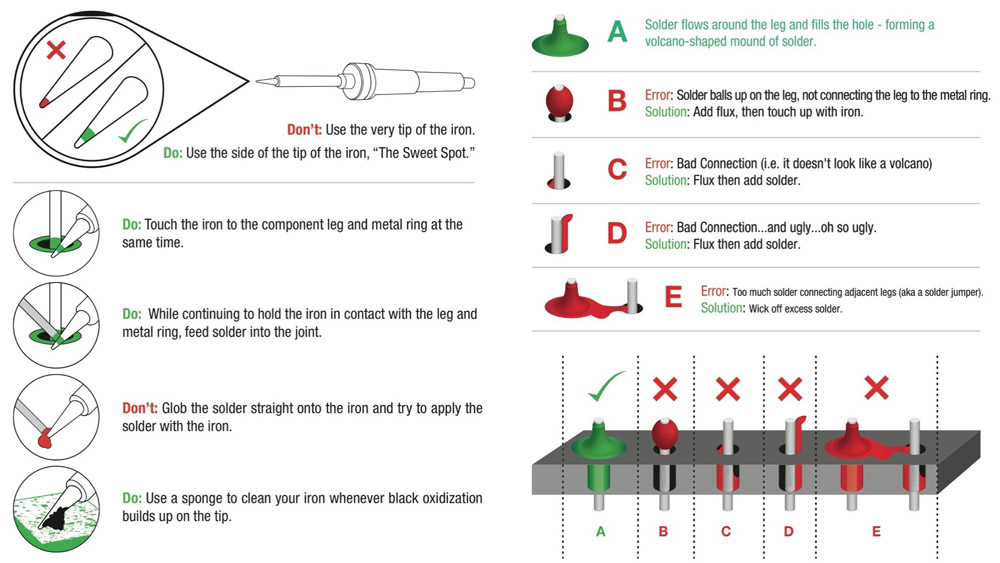
Your best bet?
Buy a small spool of 20-28ga wire, a cheap wire stripper, a fair soldering pen and a spool of solder (likely under $40 total or less from ebay). And practice, practice, practice.
It took me 15 minutes to remember how to properly weld steel tubing after not doing it for over a decade... My first joint was messy as all hell, but by the third one I was back "in the groove". Same thing with soldering...
A 25W soldering pen is cheap, but will be hard pressed to do any heavy duty regular solder connections. A 120W+ soldering gun is large and cumbersome, but very fast for heating.
One of the best units for most (IMHO) is a Weller WES51 which has a variable output (up to 60W) and replaceable tips. Of course you can get cheaper versions and some pretty powerful soldering pens w/o the large transformer station.
Some links.
http://www.instructables.com/id/How-to-solder/
Your best bet?
Buy a small spool of 20-28ga wire, a cheap wire stripper, a fair soldering pen and a spool of solder (likely under $40 total or less from ebay). And practice, practice, practice.
It took me 15 minutes to remember how to properly weld steel tubing after not doing it for over a decade... My first joint was messy as all hell, but by the third one I was back "in the groove". Same thing with soldering...
Last edited by Jarlath; 04-18-2017 at 09:18 AM. Reason: Spelling
04-18-2017 | 09:27 AM
#7

Do a search on you tube. There you can learn EVERYTHING! I did... water heater went out a few months ago (I didn't know much at all about them) and I repaired it myself for $9.00!
I once repaired domestic and foreign cars for a living at many new car dealerships... BMW, Toyota and Nissan to name a few so I have done it all except for heavy line work.
PM me and I can walk you through soldering. It's so easy as long as you have the correct supplies and tools.
I once repaired domestic and foreign cars for a living at many new car dealerships... BMW, Toyota and Nissan to name a few so I have done it all except for heavy line work.
PM me and I can walk you through soldering. It's so easy as long as you have the correct supplies and tools.


