


why not c a
 09-26-2007 | 09:00 PM
#1
Thread Starter
Senior Member
Joined: Aug 2007
Posts: 486
Likes: 0
Received 0 Likes
on
0 Posts
From: , KY
 why not c a
putting together a mini pulse and time to put the canopy on it says to use canopy glue only why is this and if you dont live close to a hobby shop what else do you guys use

 09-27-2007 | 08:19 AM
#7

Senior Member
My Feedback: (2)
Joined: May 2004
Posts: 3,354
Likes: 0
Received 0 Likes
on
0 Posts
From: Emmaus,
PA
RE: why not c a
I use leftover servo screws for the canopy, and use clear packing tape to seal the front. I usually mount a Voltwatch battery monitor inside the canopy, so it's nice to be able to get to it after assembly, especially if I decvide to switch from a 4-cell to a 5-cell pack later on (switch selectable on the Voltwatch).
09-27-2007 | 09:13 AM
#8
Senior Member
Joined: Jul 2006
Posts: 723
Likes: 0
Received 0 Likes
on
0 Posts
From: Charlottesville,
VA
RE: why not c a
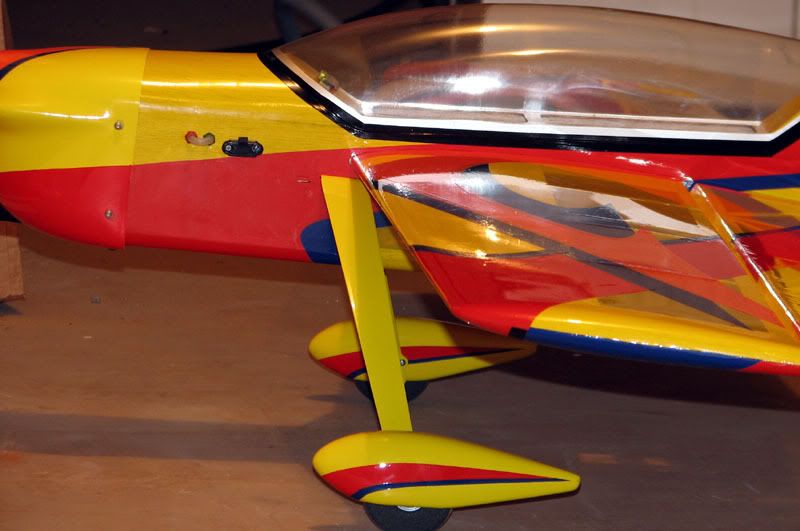
I use vinyl trim tape in a color that (hopefully!) complements the color scheme. Here is my Reactor.
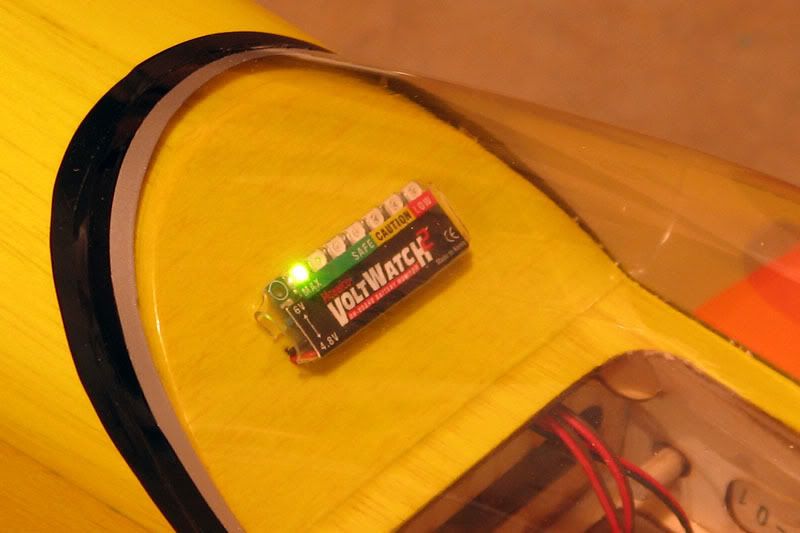
And here is a zoomed shot showing that it looks pretty clean, even up close.
If you don't have vinyl trim tape or don't want it to show, you could also use something like Blenderm tape. I use it to seal hinge, gaps and if the surface is clean when applied, it takes an act of God to get it off. It's VERY secure.
And here is a zoomed shot showing that it looks pretty clean, even up close.
If you don't have vinyl trim tape or don't want it to show, you could also use something like Blenderm tape. I use it to seal hinge, gaps and if the surface is clean when applied, it takes an act of God to get it off. It's VERY secure.
 09-27-2007 | 12:11 PM
#11


Joined: Jan 2006
Posts: 111
Likes: 0
Received 0 Likes
on
0 Posts
From: Mooresville, IN
RE: why not c a
When I had to reattach the canopy on my Pulse XT after I bought it from another flyer I used screws and body molding tape I bought from WalMart. The body molding tape is double-sided and very strong. It also acts as a seal of sort so wind can't get under the canopy and pull it off.
Indy Park Flyer
Hangar:
Hangar 9 Alpha 40
Hangar 9 Pulse XT
Indy Park Flyer
Hangar:
Hangar 9 Alpha 40
Hangar 9 Pulse XT
09-27-2007 | 01:49 PM
#12

Senior Member
Joined: Feb 2006
Posts: 3,204
Likes: 0
Received 0 Likes
on
0 Posts
From: Poland,
OH
RE: why not c a
I mount my Voltwatch under the canopy as well but I make the hole for the wiring to go through big enough so I can toggle the voltage selector switch with a screwdriver without removing the canopy.
Canopy glue is really some nice stuff and other uses do come up.
Do what you have to on this model but when you get a chance get some.
Canopy glue is really some nice stuff and other uses do come up.
Do what you have to on this model but when you get a chance get some.
09-27-2007 | 02:15 PM
#13

Joined: Feb 2006
Posts: 497
Likes: 0
Received 0 Likes
on
0 Posts
From: Peoria , AZ
RE: why not c a
ORIGINAL: Nathan King
I used CA on my first canopy. [:@]
It REALLY fogs the plastic. Even the airborne CA "vapor" can fog the parts.
I used CA on my first canopy. [:@]
It REALLY fogs the plastic. Even the airborne CA "vapor" can fog the parts.
09-27-2007 | 02:30 PM
#14
Senior Member
RE: why not c a
ORIGINAL: joco1
putting together a mini pulse and time to put the canopy on it says to use canopy glue only why is this and if you dont live close to a hobby shop what else do you guys use
putting together a mini pulse and time to put the canopy on it says to use canopy glue only why is this and if you dont live close to a hobby shop what else do you guys use
It's excellent and foolproof and easy.
09-27-2007 | 05:09 PM
#15
Joined: Feb 2006
Posts: 497
Likes: 0
Received 0 Likes
on
0 Posts
From: Peoria , AZ
RE: why not c a
Good point da rock....But be carefull if you want oderless/foam safe. I have not seen this type of CA available at other locations other than Hobby shops. That doesn't meen that other places do not have it tho.
Shayne
Shayne
09-27-2007 | 06:11 PM
#16

Senior Member
Joined: Oct 2006
Posts: 361
Likes: 0
Received 0 Likes
on
0 Posts
From: Incirlik, TURKEY
RE: why not c a
ORIGINAL: bzyguy01
If you use normal CA it will fog the edges with the vapors.. BUT,you can use foam safe CA in this application as it is odorless and is about 90% less likely to fog the canopy...Preferrably I would use small micro servo type screws if there is enough meat on the canopy otherwise I use Foam Safe all the time on my models....I have over 50 Models right now and have used this CA method ALOT. Its soo much easier to use the odorless /Foam Safe CA and then spray it with accelerator...Just like that your done!
ORIGINAL: Nathan King
I used CA on my first canopy. [:@]
It REALLY fogs the plastic. Even the airborne CA "vapor" can fog the parts.
I used CA on my first canopy. [:@]
It REALLY fogs the plastic. Even the airborne CA "vapor" can fog the parts.
 09-28-2007 | 09:18 AM
#18
 RE: why not c a
Aileen's craft cement ("Tacky Glue" - a vinyl glue like R/C-56) works well. Available at craft and fabric stores. Remove the covering under the areas the canopy edge contacts the fuselage. Not much sticke to covering, and if it does you might still end up with the canopy glued to the covering . . . and a bare spot where the covering tore off the fuselage (ask me how I know that). Screws are still the best if looks allow.
And a couple small holes in the cockpit into the main body help prevent the condensation and heat deformation in sealed cockpits.
And a couple small holes in the cockpit into the main body help prevent the condensation and heat deformation in sealed cockpits.
09-28-2007 | 03:19 PM
#19
Senior Member
RE: why not c a
ORIGINAL: OzMo
Canopy glue also don't seal your canopy air tight as heating and cooling in the sun can cause deformation.
don't ask how I know
Canopy glue
also don't seal your canopy air tight as heating and cooling in the sun can cause deformation. don't ask how I know
It has for all of mine.
Oh wait.................. You know what........ we got an opportunity here for an "inside tip".
Since I started flying competition stunt way on back, and the airplanes got appearance points, I quit building models that'd have to sit out in the sun with sealed canopies.
I drill some holes through the cockpit floors, or instrument panels, or such. Been doing it since the 60s when my almost perfect (in my eyes at least) Dewoitine 520 stunter's hand drawn canopy buckled.
So..................
If you're going to glue a canopy down tight, don't make a sealed bubble out of it. Drill some holes where they can't be seen to keep the bubble from popping, so to speak.
09-28-2007 | 03:34 PM
#20
Senior Member
RE: why not c a
Oh yeah, and some will consider this as a humorous aside to the topic of sealed chambers...................
Don't build a thermal glider with solid ribs. Make sure the ribs have holes in them. Breathing holes if you wish.
Years ago, a number of glider buddies and I hit The Perfect Day. Everyone specked out and some went really, really high. Blue sky with about 60-70% bright white puffies WAY up. Keep the speck between the white and you and you could still see it. Get it out in the blue and you could lose that speck.
One guy had built a really tight wing. He'd even painted the ribs to give them extra strength. He also had good eyes and had violated one of our guidelines on "how high is safe". With a glider, when it specks out, you don't see the shape anymore, just two specks. A "long" one with a tiny one beside it. The long one is the wing, the tiny one the horizontal tail. As long as you can see both, you're not too high. When you can only see one, it's time to spin or spoiler or flap the sucker back down some. So he'd showed up when everyone was up at two dots high. Threw the glider on the winch and made a climb to altitude record attempt to get up with us as fast as he could. And in the process went to one dot almost right away. So he tries to come back down and discovers his spoilers aren't connected. So he spins the sucker all the way back down.
Turns out one wing has some split covering. Like it'd blown out from inside pressure. When we heard about the sealed ribs and saw no holes, we decided he had blown that covering out. By flying all those potential balloons up into lighter and lighter pressure.
You know old stories are fun sometimes.
Just remember, the older you get, the better you were.
Don't build a thermal glider with solid ribs. Make sure the ribs have holes in them. Breathing holes if you wish.
Years ago, a number of glider buddies and I hit The Perfect Day. Everyone specked out and some went really, really high. Blue sky with about 60-70% bright white puffies WAY up. Keep the speck between the white and you and you could still see it. Get it out in the blue and you could lose that speck.
One guy had built a really tight wing. He'd even painted the ribs to give them extra strength. He also had good eyes and had violated one of our guidelines on "how high is safe". With a glider, when it specks out, you don't see the shape anymore, just two specks. A "long" one with a tiny one beside it. The long one is the wing, the tiny one the horizontal tail. As long as you can see both, you're not too high. When you can only see one, it's time to spin or spoiler or flap the sucker back down some. So he'd showed up when everyone was up at two dots high. Threw the glider on the winch and made a climb to altitude record attempt to get up with us as fast as he could. And in the process went to one dot almost right away. So he tries to come back down and discovers his spoilers aren't connected. So he spins the sucker all the way back down.
Turns out one wing has some split covering. Like it'd blown out from inside pressure. When we heard about the sealed ribs and saw no holes, we decided he had blown that covering out. By flying all those potential balloons up into lighter and lighter pressure.
You know old stories are fun sometimes.
Just remember, the older you get, the better you were.


